
VDI’s Impact on Business Costs: Analyst Insights and Environmental Considerations
Virtual Desktop Infrastructure (VDI) represents a fundamental shift in how organizations manage computing resources and operational expenses. As businesses increasingly recognize the economic pressures of traditional desktop environments, VDI emerges as a compelling solution that addresses both financial constraints and environmental concerns. This comprehensive analysis examines how VDI implementations influence business costs while exploring the broader economic and ecological implications of this technology paradigm.
The transition from physical desktop computing to virtualized environments involves complex cost-benefit calculations that extend beyond simple hardware expenditures. Organizations must evaluate infrastructure investments, licensing fees, energy consumption, and workforce productivity metrics simultaneously. Understanding these multifaceted impacts requires an interdisciplinary approach that combines economic analysis with environmental assessment, particularly as businesses navigate the intersection of cost optimization and sustainability imperatives.

Understanding VDI and Infrastructure Economics
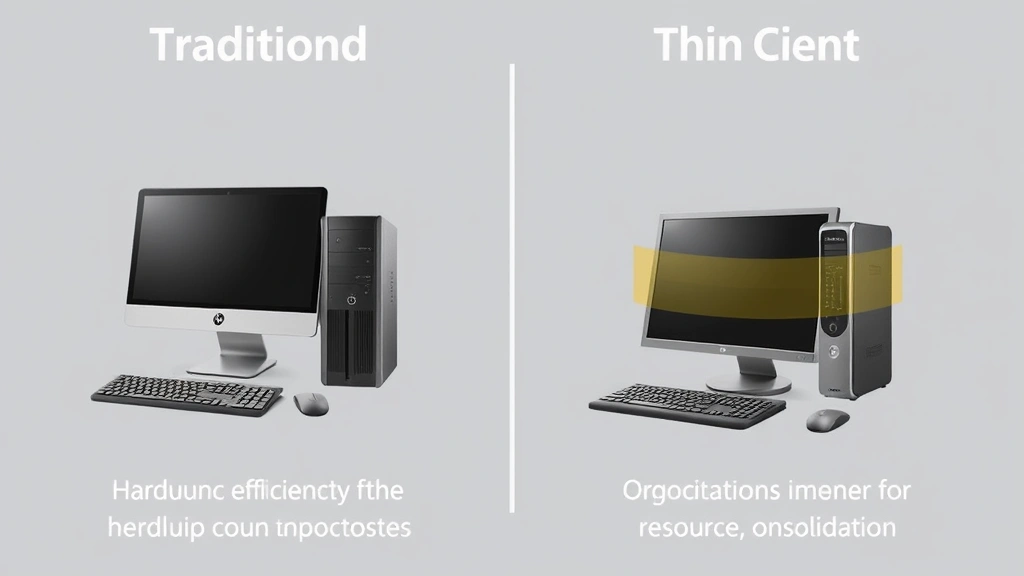
Virtual Desktop Infrastructure consolidates computing power into centralized data centers, delivering personalized desktop experiences to end-users through thin clients or existing hardware. This architectural approach fundamentally reorganizes how organizations allocate capital and operational resources. The economic implications resonate across multiple business functions, from information technology departments to environmental sustainability initiatives.
The relationship between technology infrastructure and environmental impact has become increasingly relevant to business decision-making. VDI environments demonstrate how technological choices directly influence carbon footprints and resource consumption patterns. Organizations implementing VDI often discover that cost savings and environmental benefits align more closely than traditional business models suggest, creating opportunities for integrated value creation.
Economic analysis of VDI requires understanding both direct costs—such as hardware, software licenses, and maintenance—and indirect costs including electricity consumption, cooling requirements, and network infrastructure. Additionally, organizations must account for transition costs, staff training, and potential productivity fluctuations during implementation phases.
Capital Expenditure and Initial Investment Analysis
The initial capital requirements for VDI deployment represent a significant consideration for financial planning. Organizations typically invest in servers, storage systems, networking equipment, and virtualization software licenses. These upfront costs require careful justification through comprehensive return-on-investment analyses.
Traditional desktop computing distributes computing power across numerous individual machines, each requiring separate hardware purchases, maintenance, and replacement cycles. VDI consolidates this infrastructure into fewer, more powerful centralized systems. While the absolute hardware cost may initially appear higher, the per-user cost often decreases substantially when distributed across larger user populations.
Capital expenditure analysis must account for several factors:
- Server infrastructure: Blade servers or rack-mounted systems with significant processing capacity and memory resources
- Storage systems: High-performance SAN or NAS solutions supporting concurrent user access and data persistence
- Virtualization platform licenses: Hypervisor software enabling resource pooling and virtual machine management
- Desktop licensing: Operating system and application licenses for virtual desktop instances
- Networking infrastructure: High-bandwidth connections and quality-of-service configurations ensuring responsive user experiences
- Thin client devices: Cost-effective endpoint devices replacing traditional desktop computers
Forward-looking organizations recognize that capital costs distribute across extended timeframes. VDI infrastructure typically operates efficiently for five to seven years, allowing depreciation schedules that align with technology lifecycles. This extended useful life improves cost amortization compared to traditional desktop replacement cycles, which often occur every three to four years.
Operational Cost Reductions and Efficiency Gains
Operational expenses represent the largest portion of total cost of ownership for most organizations. VDI implementations typically generate substantial savings across multiple operational categories. These reductions emerge from centralized management capabilities, reduced hardware proliferation, and streamlined support processes.
Desktop support represents a significant operational expense in traditional environments. Help desk technicians spend considerable time managing individual machine configurations, troubleshooting hardware issues, and deploying software updates. VDI centralizes these functions, allowing administrators to manage thousands of virtual desktops from unified management consoles. A single patch deployment reaches all users simultaneously, rather than requiring individual system visits or remote connections.
Hardware maintenance costs decline substantially under VDI models. Thin client devices contain minimal moving parts, reducing failure rates and service requirements. Traditional desktop computers require periodic replacement of aging components, extensive troubleshooting for hardware failures, and inventory management for spare parts. VDI environments minimize these expenses through simpler endpoint hardware and centralized replacement strategies.
Software licensing optimization emerges as another significant cost reduction area. Organizations can implement application streaming and dynamic provisioning, delivering software only to users requiring specific applications. This approach reduces overall licensing requirements compared to traditional models where organizations purchase licenses for every desktop, regardless of actual application usage patterns.
Space utilization improvements provide additional operational savings. Thin client devices occupy minimal desk space compared to traditional towers and peripherals. Data center consolidation reduces physical facility requirements, decreasing real estate costs and associated overhead. Many organizations report reducing office space by 15-20% following VDI adoption, translating to substantial facility cost reductions.
Energy Consumption and Environmental Economics
Energy costs represent a growing operational expense for organizations maintaining extensive desktop computing environments. Reducing electricity consumption aligns with both cost management objectives and carbon footprint reduction initiatives. VDI implementations typically achieve significant energy savings through multiple mechanisms.
Traditional desktop computers consume 60-150 watts during active operation, with many systems remaining powered continuously regardless of usage patterns. Organizations with thousands of desktop computers incur substantial electricity costs for computing resources that frequently operate below capacity. Multiplied across global workforces, these inefficiencies compound dramatically.
VDI consolidates computing power into efficient data center environments where power management becomes highly optimized. Virtualization technologies enable dynamic resource allocation, powering virtual machines only when users require access. Servers operate at higher utilization rates compared to individual desktop computers, improving overall efficiency metrics. Modern data center cooling systems employ sophisticated thermal management, reducing energy waste compared to distributed office cooling requirements.
Economic analysis by the World Bank and United Nations Environment Programme documents how technology infrastructure optimization contributes to broader sustainability goals. Organizations implementing VDI report energy consumption reductions of 40-70% per user, translating to both cost savings and reduced environmental impact. Thin client devices consume 5-10 watts compared to traditional desktop computers, representing a 90% reduction in endpoint power consumption.
The environmental economics of VDI extend beyond direct electricity savings. Reduced energy consumption decreases demand on electrical grids, lowering peak load requirements and associated infrastructure investments. For organizations located in regions dependent on renewable energy sources, VDI adoption supports the transition toward sustainable power generation by reducing overall electricity demand.
Workforce Productivity and Economic Value
Productivity impacts represent complex economic considerations that extend beyond traditional cost accounting. VDI implementations influence how employees work, where they work, and their overall effectiveness. These factors generate economic value that often exceeds direct cost reductions.
Remote work capabilities emerge as a significant productivity advantage of VDI environments. Employees can access identical desktop environments from any location with network connectivity, enabling flexible work arrangements that improve recruitment, retention, and employee satisfaction. Organizations implementing VDI often report reduced employee turnover, decreasing recruitment and training costs associated with workforce replacement.
The connection between human-environment interaction and economic productivity reflects how technology choices influence workplace experiences. Employees working in sustainable, efficient environments often demonstrate higher engagement and productivity levels. VDI’s association with modern, efficient infrastructure contributes to positive workplace perceptions and employee morale.
Standardized virtual desktop environments reduce productivity losses from inconsistent system configurations or outdated hardware. Employees experience consistent performance and capability regardless of physical location, improving work quality and reducing frustration-related productivity losses. System crashes and hardware failures, common sources of downtime in traditional environments, become rare in well-managed VDI implementations.
Application deployment timelines accelerate under VDI models. New software rollouts occur instantaneously across entire user populations through centralized provisioning, rather than requiring individual installation visits. This capability reduces time-to-productivity for new applications and improves organizational agility in responding to business requirements.
Disaster recovery and business continuity capabilities provide substantial economic value. VDI environments enable rapid recovery from system failures or data loss incidents. Virtual machine snapshots and replication technologies protect against extended downtime, reducing productivity losses and potential revenue impact from service interruptions.
Risk Mitigation and Long-Term Financial Benefits
Beyond direct cost reductions, VDI implementations provide risk mitigation benefits that enhance long-term financial stability. Security vulnerabilities, data loss incidents, and compliance failures generate substantial financial consequences that extend far beyond direct remediation costs.
Data security improves significantly under VDI architectures. Desktop data remains centralized in secure data centers rather than distributed across thousands of individual devices vulnerable to theft, loss, or unauthorized access. Employees cannot accidentally expose sensitive information through unsecured portable devices or insecure networks. Compliance with regulations including HIPAA, GDPR, and PCI-DSS becomes more manageable when data remains centrally controlled.
Security incident response accelerates when virtualized environments enable rapid isolation and recovery of compromised systems. A single malware infection or data breach affecting a virtual desktop can be remediated through snapshot restoration, restoring clean system state within minutes rather than hours or days required for traditional desktop remediation.
Regulatory compliance costs decrease through centralized audit capabilities and standardized configurations. Organizations can demonstrate consistent security controls across all user environments, reducing audit scope and associated professional services costs. Compliance violations carry substantial financial penalties, making the risk reduction value of VDI implementations particularly significant for regulated industries.
The extended equipment lifecycle in VDI environments reduces technology refresh costs and associated waste. Traditional desktops require replacement every 3-4 years as hardware becomes obsolete. VDI infrastructure operates efficiently for 5-7 years, and virtual desktop instances continue operating on updated hardware platforms indefinitely. This extended lifecycle reduces capital replacement requirements and aligns with sustainable business practices emphasizing resource efficiency.
Comparative Cost Models and ROI Analysis
Comprehensive ROI analysis requires comparing total cost of ownership across traditional and VDI environments over extended timeframes. Analyst firms including Gartner and Forrester document consistent findings demonstrating VDI cost advantages for organizations with specific user profiles and deployment scenarios.
Organizations with 500+ desktop computers typically achieve positive ROI within 18-36 months of VDI implementation. Smaller organizations may require longer payback periods due to reduced economies of scale, though individual organizations report varying results based on specific circumstances.
Cost comparison models should account for:
- Hardware costs: Traditional desktops versus VDI infrastructure and thin clients
- Software licensing: Volume discounts and optimization opportunities specific to each environment
- Support and maintenance: Help desk resource requirements and service contract expenses
- Infrastructure costs: Networking, power, cooling, and facility space
- User productivity: Downtime reduction, remote work enablement, and workflow improvements
- Security and compliance: Risk mitigation value and regulatory compliance cost reduction
- Implementation costs: Professional services, staff training, and transition management
Economic research published by ecological economics journals and environmental economics research institutions increasingly incorporates technology infrastructure into sustainability cost analyses. VDI implementations demonstrate how business cost reduction aligns with environmental objectives, creating shared value across economic and ecological domains.
Organizations should evaluate VDI adoption within broader strategic contexts. Industries experiencing rapid growth or significant workforce fluctuations benefit particularly from VDI’s scalability advantages. Healthcare organizations, financial services firms, and government agencies report particularly strong ROI due to stringent compliance requirements and security-conscious user populations.
The relationship between technology efficiency and energy sustainability extends from individual organizations to broader economic systems. As organizations adopt VDI and similar efficiency-enhancing technologies, aggregate energy consumption decreases, supporting economy-wide sustainability transitions.
FAQ
What is the typical payback period for VDI investments?
Most organizations with 500+ users achieve positive ROI within 18-36 months. Smaller organizations may require 3-5 years due to reduced economies of scale. Payback timelines vary significantly based on existing infrastructure age, current support costs, and specific implementation approaches.
How much can organizations reduce energy consumption through VDI?
Energy consumption typically decreases 40-70% per user following VDI implementation. Thin client devices consume approximately 5-10 watts compared to 60-150 watts for traditional desktop computers, representing dramatic efficiency improvements that directly reduce electricity costs and carbon footprints.
Does VDI implementation require significant staff retraining?
End-user training requirements remain minimal, as virtual desktops function identically to traditional desktops from user perspectives. IT staff requires training in virtualization management, but many organizations leverage vendor training programs and professional services to minimize internal resource requirements during transitions.
What organization sizes benefit most from VDI adoption?
Organizations with 500+ desktop computers typically achieve the strongest financial returns. However, specific industries including healthcare, finance, and government often justify VDI adoption at smaller scales due to heightened security and compliance requirements that VDI addresses effectively.
How does VDI improve disaster recovery capabilities?
VDI enables rapid recovery through virtual machine snapshots and replication technologies. Compromised or failed virtual desktops restore to previous clean states within minutes, compared to hours or days required for traditional desktop recovery, significantly reducing downtime and associated productivity losses.
Can VDI support remote work effectively?
VDI fundamentally enables remote work by delivering consistent desktop environments from any location with network connectivity. This capability improves employee flexibility, supports workforce recruitment and retention, and enables business continuity during disruptions affecting physical office locations.


