UCLA’s Role in Eco-Economy Research: Insights from the Institute of the Environment and Sustainability
The University of California, Los Angeles (UCLA) has emerged as a leading institution in bridging the critical gap between ecological science and economic policy. The UCLA Institute of the Environment and Sustainability (IoES) represents a transformative approach to understanding how environmental systems and economic structures interconnect. As global challenges intensify—from climate change to biodiversity loss—institutions like UCLA provide essential research, frameworks, and trained professionals capable of reimagining prosperity within planetary boundaries.
This institution’s interdisciplinary work challenges conventional economic thinking by demonstrating that environmental degradation and economic growth need not be inexorably linked. Through rigorous research, collaborative partnerships, and innovative educational programs, UCLA’s environmental institute contributes significantly to the emerging field of ecological economics, where natural capital, ecosystem services, and human wellbeing are central to economic analysis rather than peripheral concerns.
UCLA Institute of the Environment and Sustainability: Mission and Structure
Founded with a commitment to environmental leadership, the UCLA Institute of the Environment and Sustainability operates as a catalyst for integrating environmental thinking across academic disciplines and into real-world policy implementation. Unlike traditional environmental programs that focus narrowly on conservation or pollution control, IoES embraces a holistic vision where environment and society are understood as inseparable systems.
The institute’s organizational structure reflects this integration. It houses multiple research centers, each addressing specific dimensions of sustainability: urban sustainability, climate change impacts, water security, food systems, and environmental health. This architecture enables researchers from economics, engineering, public policy, environmental science, and business to collaborate on problems that resist disciplinary silos.
IoES operates with several core principles. First, research must address real-world problems affecting communities and ecosystems. Second, solutions must be grounded in rigorous science while remaining accessible to policymakers and practitioners. Third, the institute recognizes that environmental sustainability cannot be achieved without economic viability and social equity. This tripartite focus—environmental integrity, economic feasibility, and social justice—distinguishes UCLA’s approach from narrower environmental programs.
The institute’s faculty includes economists studying natural resource management, environmental engineers developing sustainable technologies, and social scientists examining how communities adapt to environmental change. This diversity creates intellectual friction that generates innovative insights about complex sustainability challenges.
Research Areas in Ecological Economics
UCLA’s ecological economics research fundamentally questions how economies should account for natural systems. Traditional GDP measurements treat environmental resources as infinite and externalize ecological costs. UCLA researchers demonstrate how incorporating natural capital accounting transforms economic analysis and policy recommendations.
One significant research area focuses on ecosystem services valuation. UCLA economists work to quantify the economic value of benefits humans derive from ecosystems—pollination, water purification, carbon sequestration, flood mitigation, and cultural services. By assigning economic values to these services, researchers make visible what markets typically ignore. This work draws from human environment interaction studies that reveal how economic decisions cascade through ecological systems.
Another critical research domain examines sustainable urban development. Los Angeles itself serves as a living laboratory. UCLA researchers analyze how cities can reduce resource consumption, transition to renewable energy, manage waste sustainably, and create green spaces that enhance both ecological and human health. This research directly informs municipal planning and has influenced policy across California’s urban centers.
UCLA’s work on agricultural economics and food systems sustainability investigates how to feed growing populations while regenerating soil health, conserving water, and reducing agricultural emissions. Researchers examine the hidden costs of industrial agriculture—groundwater depletion, pesticide impacts, and greenhouse gas emissions—and model economic scenarios where regenerative practices become economically competitive.
Climate economics represents another cornerstone. UCLA researchers quantify the economic damages from climate change—property losses, agricultural productivity declines, health impacts—and evaluate the cost-effectiveness of mitigation and adaptation strategies. This work informs carbon pricing mechanisms and climate policy design at state and federal levels.
Water economics research addresses scarcity, pricing mechanisms, and allocation efficiency. In California’s arid regions, UCLA economists model how water markets, conservation incentives, and infrastructure investments can balance agricultural, urban, and environmental water needs under conditions of increasing scarcity.

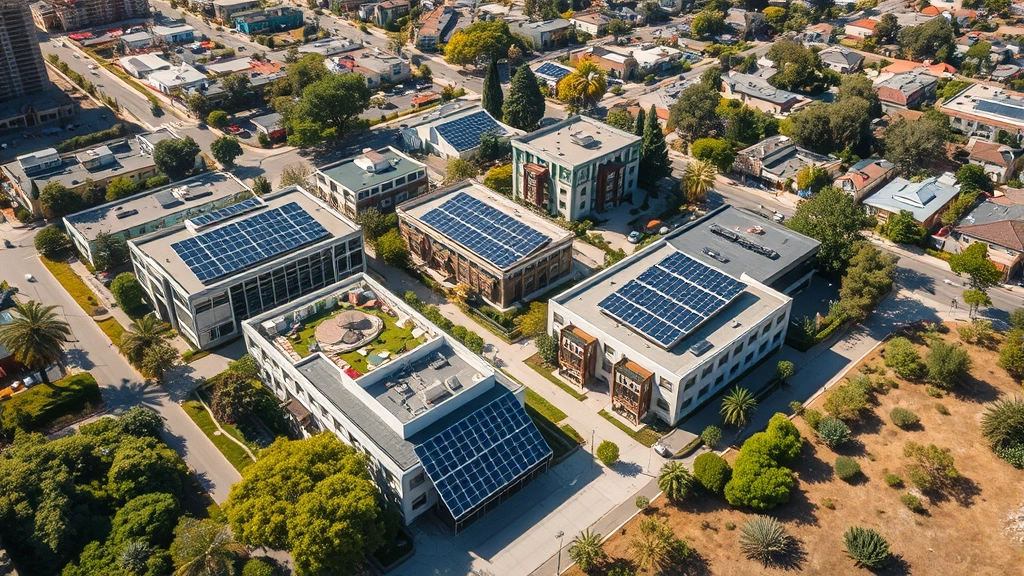
” alt=”Aerial view of UCLA campus with green spaces, sustainable buildings, and surrounding Los Angeles urban landscape with mountains in background”/>
Interdisciplinary Approach to Environmental Solutions
What distinguishes UCLA’s ecological economics research is its genuine interdisciplinarity. Rather than economists simply adding environmental variables to conventional models, IoES integrates insights from ecology, engineering, psychology, anthropology, and policy studies into economic analysis.
This approach recognizes that environmental problems are inherently complex. Climate change, for instance, involves physics (greenhouse gas dynamics), ecology (ecosystem responses), economics (carbon pricing, technology diffusion), psychology (behavior change), and politics (international negotiations). Addressing it requires economists understanding ecological tipping points, ecologists grasping economic incentives, and engineers designing systems that function within both economic and ecological constraints.
UCLA’s research demonstrates how this integration generates superior solutions. For example, studies on renewable energy adoption combine engineering analyses of technology performance with economic models of cost trajectories and consumer behavior, plus policy research on regulatory frameworks. The result is a more accurate understanding of how renewable transitions actually occur—not through price signals alone, but through complex interactions of technology learning curves, policy support, social movements, and infrastructure development.
The institute’s work on environmental justice illustrates interdisciplinary rigor applied to equity concerns. Researchers examine how pollution, environmental hazards, and ecological degradation disproportionately affect low-income communities and communities of color. Economic analysis reveals how market failures and policy neglect concentrate environmental harms among vulnerable populations. Simultaneously, social science research explores how affected communities organize for environmental protection and policy change.
This integrated approach produces insights unavailable through disciplinary isolation. It reveals, for instance, that carbon pricing alone proves insufficient for rapid decarbonization—technology policy, infrastructure investment, and social mobilization matter equally. Similarly, conservation efforts fail when they ignore local economic dependencies; success requires creating alternative livelihoods for communities whose economies depend on resource extraction.
Graduate Programs and Professional Development
UCLA’s educational programs operationalize ecological economics principles, training the next generation of sustainability professionals and researchers. The institute offers graduate degrees and certificates that integrate environmental science, economics, policy, and management.
The Master’s degree in Environmental Science and Management equips students with analytical skills for environmental problem-solving. Coursework covers environmental economics, sustainability assessment, environmental policy, and quantitative methods. Students engage with real projects through practicum courses, applying classroom learning to actual sustainability challenges facing organizations and communities.
Doctoral programs enable deeper specialization. PhD students work on original research advancing knowledge in ecological economics, environmental policy, urban sustainability, or related domains. Dissertation research often addresses policy-relevant questions, ensuring that academic work connects to real-world environmental governance.
Certificate programs serve professionals seeking specialized knowledge without pursuing full degrees. Working professionals—from government agencies, nonprofits, and corporations—enhance their sustainability expertise while maintaining employment. These programs democratize access to cutting-edge environmental knowledge.
The institute’s pedagogy emphasizes systems thinking. Students learn to map complex relationships among environmental, economic, and social variables. They practice scenario analysis, examining how different policy choices produce different outcomes across multiple dimensions. Case-based learning exposes students to real environmental challenges—from water scarcity to urban heat islands to agricultural transitions—and asks them to develop integrated solutions.
Internship and fellowship programs connect students with organizations working on sustainability challenges. Students conduct research for government agencies, environmental nonprofits, sustainable businesses, and international development organizations. These experiences build professional networks, test career interests, and ensure that academic research remains grounded in implementation realities.
Partnerships and Policy Impact
UCLA’s ecological economics research generates policy impact through deliberate engagement with decision-makers. The institute maintains partnerships with California state agencies, local governments, international development organizations, and private sector sustainability leaders.
With California’s state government, UCLA researchers have influenced climate policy, sustainable agriculture programs, water management strategies, and environmental justice initiatives. The state’s ambitious climate targets rely partly on UCLA-developed models for emissions reductions pathways. The state’s sustainable agriculture programs incorporate UCLA research on regenerative practices and their economic viability.
International partnerships extend UCLA’s impact globally. The institute collaborates with universities, research organizations, and government agencies in developing countries addressing sustainability challenges. Research on environmental and economic research helps inform policy in regions facing acute environmental pressures and economic constraints.
Collaboration with the World Bank’s environmental initiatives connects UCLA research to development finance and global environmental policy. UCLA economists contribute to World Bank analyses of natural capital accounting, climate finance, and green growth strategies.
Research partnerships with organizations like the United Nations Environment Programme (UNEP) amplify UCLA’s voice in global environmental governance. UCLA researchers contribute to UNEP assessments, policy analyses, and capacity-building initiatives across developing regions.
These partnerships create feedback loops where academic research informs policy, policy implementation generates new research questions, and researchers learn from implementation challenges. This iterative process ensures that UCLA’s ecological economics work remains both intellectually rigorous and practically relevant.
Case Studies in Eco-Economy Innovation
Examining specific UCLA research projects illustrates how ecological economics principles translate into tangible solutions and policy changes.
Urban Water Sustainability in Los Angeles: UCLA researchers developed integrated models of Los Angeles’s water system, accounting for supply sources (imported water, local groundwater, recycled water), demand patterns across sectors (residential, commercial, agricultural), and ecosystem needs. This analysis revealed how conventional water pricing underinvests in conservation and recycled water infrastructure. Research recommendations influenced LA’s water agency to expand recycled water programs and adjust pricing to incentivize conservation during drought periods. The economic analysis demonstrated that water recycling, while requiring upfront infrastructure investment, proves cost-effective over decades and enhances regional resilience.
Agricultural Sustainability and Farmer Economics: UCLA research on regenerative agriculture examined whether practices like cover cropping, reduced tillage, and diversified rotations can simultaneously improve soil health, reduce input costs, and maintain or increase yields. Economic modeling revealed that transition periods present challenges—short-term income reductions during the shift from conventional to regenerative systems. Research informed development of transition support programs, helping farmers adopt sustainable practices without facing financial distress. This work demonstrated that ecological regeneration and economic viability can align when appropriate support mechanisms exist.
Renewable Energy Transition Economics: UCLA economists modeled California’s transition to renewable electricity. Analysis integrated technology cost trajectories, grid integration challenges, workforce transition needs, and policy mechanisms. Research showed that rapid renewable deployment requires coordinated policy—renewable portfolio standards driving deployment, grid modernization investments enabling integration, and workforce development programs supporting just transitions for fossil fuel workers. This integrated analysis influenced California’s clean energy policy design.
Environmental Justice and Pollution Exposure: UCLA research documented how pollution sources concentrate in low-income neighborhoods and communities of color. Economic analysis revealed that this reflects both market failures (polluters not bearing full costs of pollution) and policy failures (zoning decisions and enforcement patterns). Research informed environmental justice policy initiatives, including stricter permitting for new pollution sources in overburdened communities and remediation programs for legacy pollution.
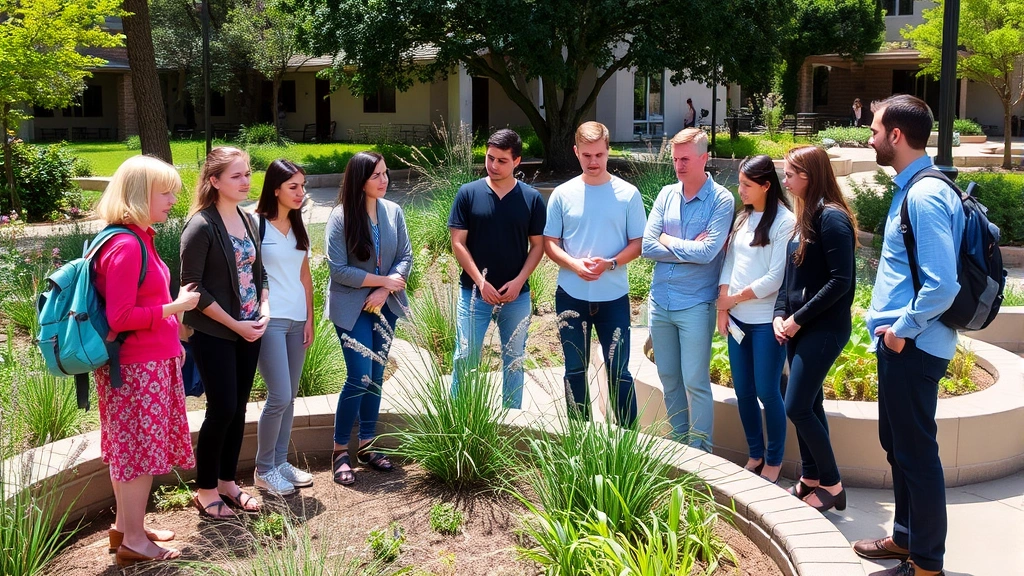
” alt=”Diverse group of researchers and students collaborating outdoors on UCLA campus near sustainable green infrastructure and native plantings”/>
Future Directions in Sustainability Research
UCLA’s ecological economics research continues evolving to address emerging sustainability challenges and incorporate new methodological capabilities.
Natural Capital Accounting Integration: The institute is advancing work on comprehensive natural capital accounting systems that governments can adopt. Rather than treating environmental resources as infinite, these systems track natural capital stocks and flows, much like financial accounting tracks assets and income. This enables economies to measure genuine progress—whether total wealth (human capital plus natural capital plus manufactured capital) is growing or declining. UCLA research aims to make natural capital accounting standard practice in government and corporate reporting.
Climate Economics and Adaptation Finance: As climate impacts accelerate, UCLA research increasingly focuses on adaptation economics—how to finance and implement adaptation in developing countries facing climate impacts they did not cause. Research examines loss and damage financing, adaptation cost estimation, and how adaptation investments can simultaneously build resilience and support development.
Circular Economy Modeling: UCLA researchers are developing economic models of circular systems where waste becomes feedstock, products are designed for disassembly and reuse, and material loops close. This work examines the economic feasibility of circular transitions across industries and identifies policy mechanisms that make circular systems economically competitive with linear extraction-consumption-disposal models.
Biodiversity and Economic Value: Building on ecosystem services research, UCLA is deepening work on biodiversity economics. Beyond valuing ecosystem functions, this research examines how biodiversity itself—the variety of species and genetic diversity—contributes to ecosystem resilience and human wellbeing. Economic analysis informs conservation priorities and payment mechanisms for biodiversity protection.
Technology and Social Innovation: UCLA increasingly integrates technology assessment with social innovation research. Rather than assuming that technological solutions automatically diffuse, research examines how technologies, policies, social movements, and cultural shifts interact to enable or impede sustainability transitions. This includes understanding how social enterprises, cooperative models, and community-based solutions complement technology in creating sustainable systems.
The institute is also expanding work on how individuals reduce carbon footprint through behavioral economics and psychology. Understanding what motivates sustainable choices—beyond price signals—helps design policies and programs that actually shift behavior. Similarly, research on renewable energy for homes examines adoption barriers and success factors, informing policy design for residential clean energy transitions.
Cross-institutional collaboration is expanding. UCLA researchers increasingly work with economists at other leading institutions, with ecological economics journals publishing their work, and with environmental economics research centers advancing the field collectively. This collaborative approach accelerates progress on shared challenges.
Perhaps most significantly, UCLA’s work increasingly grapples with what ecological economics means in practice. Theory suggests that internalizing environmental costs and accounting for natural capital would transform economies toward sustainability. Implementation reveals complexities: political obstacles to pricing pollution, distributional conflicts when policies change, technological lock-in in unsustainable systems, and behavioral patterns resistant to price signals alone. UCLA’s research engages these implementation realities, generating more nuanced understanding of how to actually achieve sustainability transitions.
FAQ
What is the UCLA Institute of the Environment and Sustainability?
IoES is an interdisciplinary research and education institute at UCLA dedicated to understanding and solving environmental sustainability challenges. It integrates expertise from environmental science, economics, engineering, policy, and social sciences to address complex sustainability problems through research, education, and policy engagement.
How does UCLA’s ecological economics research differ from conventional economics?
UCLA’s ecological economics incorporates natural systems and ecosystem services into economic analysis, recognizing that environmental degradation imposes real economic costs. Rather than treating nature as infinite and external to the economy, ecological economics understands economies as embedded within and dependent upon ecological systems.
What educational programs does UCLA offer in sustainability?
UCLA offers Master’s degrees in Environmental Science and Management, doctoral programs in related fields, and professional certificates. Programs combine environmental science, economics, policy analysis, and practical problem-solving skills. Internships and practicums connect students to real-world sustainability challenges.
How does UCLA research influence environmental policy?
Through partnerships with government agencies, international organizations, and nonprofits, UCLA researchers provide evidence and analysis informing policy decisions. California state agencies, the World Bank, and UNEP are among organizations that incorporate UCLA research into policy development.
What are ecosystem services?
Ecosystem services are benefits humans derive from natural systems: pollination, water purification, flood mitigation, climate regulation, carbon sequestration, and cultural services. UCLA research quantifies the economic value of these services, revealing what markets typically ignore and informing conservation and management decisions.
Can economies achieve sustainability while maintaining prosperity?
UCLA research suggests yes, but only through deliberate transitions. Sustainability requires decoupling economic growth from resource consumption and environmental degradation. This requires policy change, technology innovation, and social transformation—not simply hoping markets solve environmental problems automatically.
How does UCLA address environmental justice in sustainability research?
UCLA researchers examine how environmental harms concentrate in low-income communities and communities of color, analyzing both market failures and policy failures responsible. Research informs environmental justice initiatives and policies that prevent pollution sources from concentrating in vulnerable neighborhoods.


