Can Green Economy Boost GDP? Economist Insights
The relationship between environmental sustainability and economic growth has long been contested among economists. Traditional models assumed a trade-off: protecting ecosystems meant sacrificing GDP growth. However, contemporary economic research increasingly demonstrates that green economy investments can simultaneously enhance environmental health and stimulate gross domestic product expansion. This paradigm shift reflects decades of empirical analysis, technological innovation, and policy experimentation across developed and developing nations.
Leading economists now argue that the green economy represents not a constraint on growth but a catalyst for it. From renewable energy sectors creating millions of jobs to circular economy models reducing waste while generating revenue, evidence suggests sustainable economic models can deliver robust GDP gains. Understanding these mechanisms requires examining how environmental investments translate into measurable economic returns, job creation, and long-term productivity improvements that traditional metrics often overlook.
Understanding Green Economy and GDP Growth
The green economy encompasses economic activities that generate income, create employment, and reduce environmental impact while maintaining or enhancing natural capital stocks. Unlike traditional GDP measurements that ignore ecosystem degradation, green economy accounting incorporates natural resource depletion and pollution costs into economic calculations. This comprehensive approach reveals that many conventional economic activities carry hidden environmental liabilities that suppress true economic welfare.
Research from the World Bank demonstrates that countries investing in environmental protection experience sustained GDP growth rates comparable to or exceeding those relying on resource extraction. A landmark 2021 analysis found that green investments generate $4 in economic returns for every dollar spent on environmental protection. This multiplier effect occurs through multiple channels: reduced healthcare costs from cleaner air, improved agricultural productivity from healthier soils, and decreased disaster recovery expenses from climate adaptation.
The conceptual foundation rests on understanding that natural capital—forests, fisheries, mineral deposits, fresh water—functions as productive economic assets. When these assets degrade, economic capacity diminishes regardless of how GDP accounting treats the loss. Nations implementing comprehensive human environment interaction strategies recognize that environmental stewardship and economic prosperity are complementary objectives rather than competing priorities.
Empirical evidence from Nordic countries provides compelling case studies. Denmark, Sweden, and Norway have achieved simultaneous increases in GDP and reductions in carbon emissions and material consumption. Between 2000 and 2020, these nations increased real GDP by approximately 35 percent while reducing greenhouse gas emissions by 40 percent. This decoupling—achieving economic growth with reduced environmental impact—directly contradicts assumptions that sustainability requires economic sacrifice.
Job Creation and Employment Expansion
Green economy sectors generate employment at rates substantially exceeding fossil fuel industries. Renewable energy installation, retrofitting buildings for energy efficiency, sustainable agriculture, and ecosystem restoration create labor-intensive opportunities requiring diverse skill levels. The International Renewable Energy Agency reports that renewable energy employment reached 12.7 million jobs globally in 2021, with growth rates of 5-7 percent annually—nearly double overall employment growth rates.
Manufacturing renewable energy equipment involves complex supply chains requiring engineers, technicians, fabricators, and logistics specialists. A single utility-scale wind turbine requires approximately 600 hours of labor for installation alone, with additional employment throughout manufacturing, transportation, and maintenance phases. Solar installation generates comparable employment intensity: each megawatt of installed capacity creates 7-8 job-years of employment across manufacturing, installation, and operations.
Crucially, green jobs demonstrate superior geographic distribution compared to fossil fuel industries. Renewable energy facilities can be constructed throughout regions, creating employment in rural areas typically dependent on extractive industries. This geographic diversification reduces economic vulnerability to commodity price fluctuations and supports community resilience. Workers transitioning from coal mining to wind turbine manufacturing or solar installation training programs demonstrate that just transition policies successfully redirect labor toward sustainable sectors.
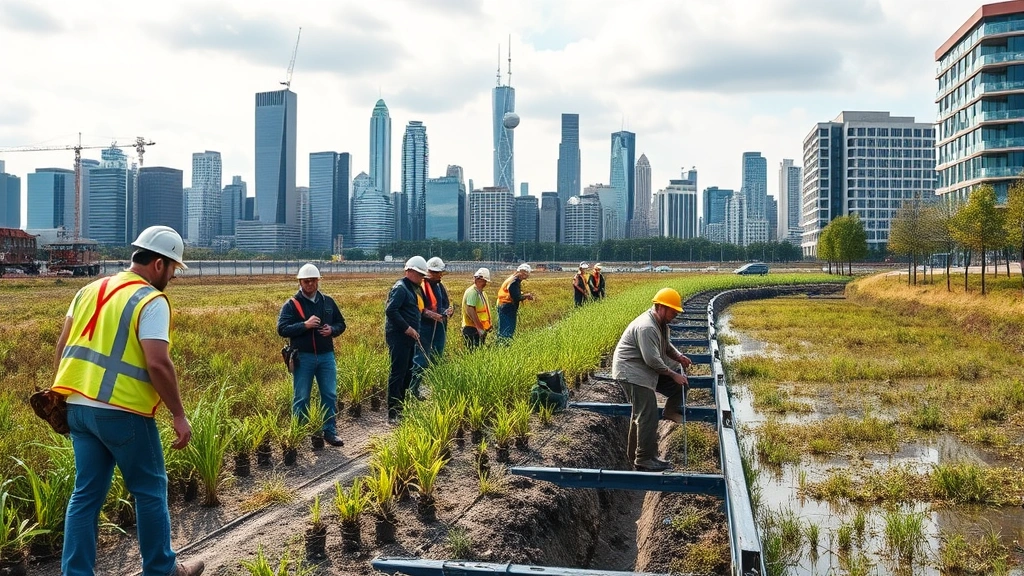
Ecosystem restoration and conservation employment offers additional capacity for job creation. Wetland restoration, reforestation, and habitat management require skilled labor for planning and execution, plus ongoing maintenance employment. A 2019 study found that conservation spending generates 16 percent more employment per dollar invested compared to conventional infrastructure projects, making environmental investment an efficient stimulus mechanism during economic downturns.
Renewable Energy Sector Economics
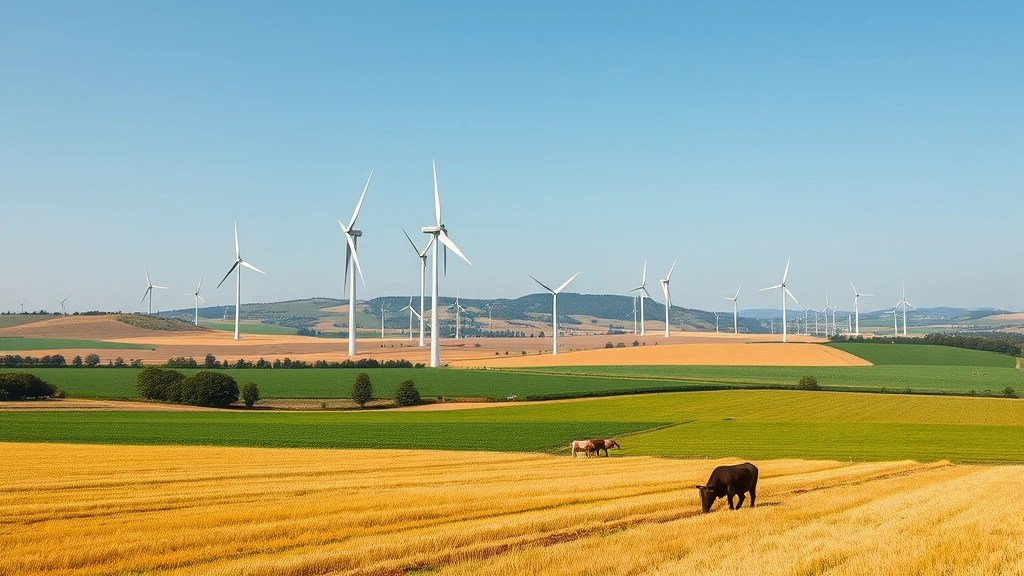
The renewable energy sector exemplifies how environmental investments drive GDP growth through multiple mechanisms. Technological innovation has reduced solar photovoltaic costs by 90 percent since 2010 and wind energy costs by 70 percent, making renewables cost-competitive with fossil fuels in most markets without subsidies. This price trajectory enables rapid deployment scaling, capital investment expansion, and manufacturing sector growth.
Investment in renewable energy infrastructure represents direct GDP contribution through construction spending, equipment manufacturing, and professional services. Global renewable energy investment exceeded $300 billion annually during 2020-2022, comparable to investment in traditional energy infrastructure. This capital allocation toward renewable sectors stimulates equipment manufacturing, supply chain development, and associated service industries including engineering, finance, and project management.
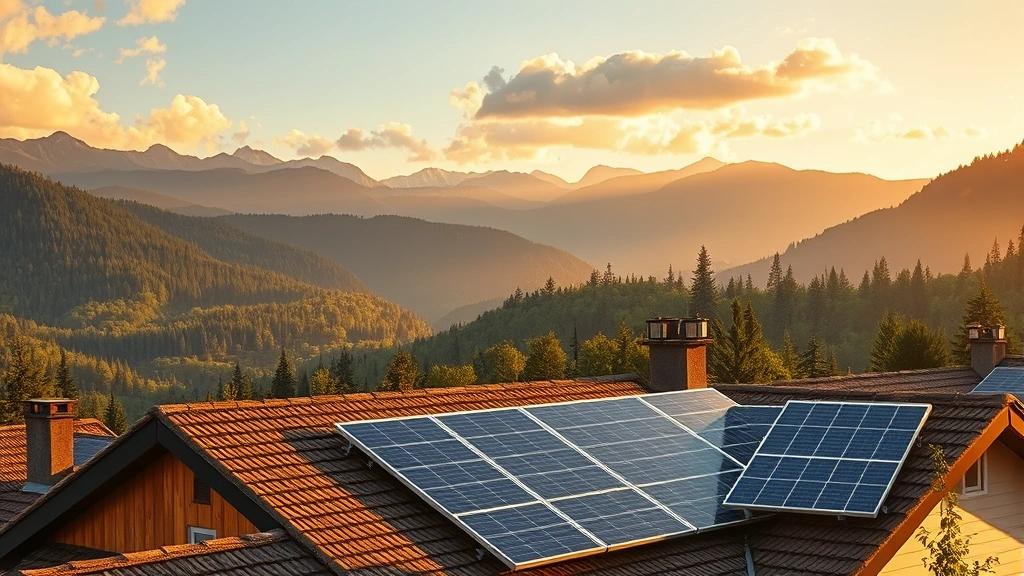
The renewable energy for homes transition demonstrates how distributed energy systems generate economic benefits beyond utility-scale installations. Residential solar adoption creates local installation employment, reduces household energy expenses (freeing capital for other consumption), and generates income through net metering arrangements where homeowners sell excess generation to grid operators. At scale, distributed renewable adoption transfers energy spending from centralized utilities to distributed service providers and equipment manufacturers.
Grid modernization requirements supporting renewable energy integration create substantial economic opportunities. Smart grid technology, battery storage systems, demand management software, and interconnection infrastructure represent multi-trillion-dollar investment opportunities globally. These enabling technologies generate employment in software development, electrical engineering, manufacturing, and installation sectors while improving overall grid efficiency and reliability.
Energy efficiency improvements complement renewable energy expansion, multiplying economic benefits. Building retrofitting programs reduce operational energy consumption by 30-50 percent while creating construction employment and reducing long-term operating costs. Industrial energy efficiency improvements enhance competitiveness through reduced energy expenses, enabling capital reallocation toward productive investments. These efficiency gains represent pure economic gain—reduced input costs without diminished output.
Cost Avoidance and Natural Capital Valuation
Green economy contributions to GDP become apparent when accounting for costs avoided through environmental protection. Climate change impacts—extreme weather damage, agricultural disruption, infrastructure failure, disease spread—impose enormous economic costs. The United Nations Environment Programme estimates annual climate-related damages reaching $280 billion by 2050 absent mitigation efforts. Green economy investments preventing these damages represent genuine economic value creation.
Natural capital provides ecosystem services—pollination, water filtration, flood protection, climate regulation—essential for economic activity yet rarely incorporated into GDP accounting. When forests disappear, the value of carbon storage, water cycle regulation, and biodiversity conservation vanishes from economic accounting despite severe economic consequences. Comprehensive environmental accounting reveals that protecting natural capital generates economic returns through maintained ecosystem services.
Agricultural productivity depends entirely on ecosystem services provided by natural capital: soil formation, water cycling, pollination, pest control, and nutrient cycling. Industrial agriculture depleting these services through chemical inputs and monoculture practices incurs hidden costs through soil degradation, groundwater contamination, and pollinator decline. Transitioning toward regenerative and organic agriculture maintains soil health and ecosystem services while improving long-term productivity and reducing input costs.
Water resource management illustrates cost avoidance economics clearly. Protecting watersheds and wetlands maintains natural water filtration, reducing water treatment expenses while ensuring reliable supply. Wetland restoration costs $10,000-50,000 per acre yet provides water purification services worth $50,000-100,000 annually. Over 20-year periods, wetland protection generates returns exceeding 10:1 compared to conventional water treatment infrastructure.
Disaster prevention through ecosystem protection demonstrates substantial cost avoidance. Mangrove forests, coral reefs, and coastal wetlands provide storm surge protection reducing hurricane damage expenses. Calculating the economic value of protected ecosystems against disaster recovery costs reveals that environmental investment represents highly efficient risk management. Bangladesh’s mangrove protection program prevented estimated $300 million in cyclone damages while supporting fishery productivity worth $100 million annually.
Innovation and Competitive Advantage
Green economy transition drives technological innovation generating competitive advantages and export opportunities. Nations leading renewable energy technology development capture global market share worth hundreds of billions annually. Denmark’s wind turbine industry, Germany’s solar manufacturing, and China’s battery production demonstrate how green economy focus creates dominant industrial sectors.
Clean technology patents increased 15 percent annually during 2010-2020, exceeding growth rates in conventional technologies. This innovation activity generates intellectual property value, licensing revenue, and high-wage employment in technology development. Venture capital investment in clean technology exceeded $60 billion annually during 2020-2022, reflecting investor confidence in green economy profitability.
Innovation spillovers extend beyond environmental sectors, improving overall economic productivity. Battery technology developed for electric vehicles and renewable energy storage applications generates applications across consumer electronics, aerospace, and industrial sectors. Materials science advances enabling renewable energy efficiency improve conventional manufacturing processes. Software development for renewable energy integration creates capabilities applicable across industries.
First-mover advantage in green technology creates long-term competitive positioning. Companies establishing manufacturing expertise in renewable energy components, energy storage systems, and efficiency technologies capture market share as global demand escalates. Nations supporting green technology development through research funding and deployment incentives position domestic industries for decades of growth in expanding global markets.
The systematic reduction of carbon footprints across industries drives efficiency innovations improving competitiveness. Companies achieving carbon reduction goals simultaneously reduce energy expenses, material waste, and supply chain risks. These operational improvements enhance profitability independent of environmental considerations, making green business practices economically rational.
Policy Frameworks Supporting Green GDP
Government policy frameworks substantially influence whether green economy investments translate into GDP growth. Carbon pricing mechanisms—taxes or cap-and-trade systems—internalize environmental costs into market prices, making sustainable alternatives economically advantageous. Studies of carbon pricing implementation across Europe, Canada, and regional U.S. markets demonstrate that moderate carbon prices ($50-150 per ton) accelerate renewable energy deployment and efficiency improvements while generating government revenue.
Renewable energy subsidies and investment tax credits reduce deployment costs, enabling market scaling that drives technological cost reductions benefiting subsequent deployments. Feed-in tariff programs guaranteeing renewable energy prices at profitable levels stimulated German renewable energy deployment from 6 percent to 46 percent of electricity supply between 2000 and 2022, creating substantial employment and manufacturing sector growth.
Building codes and efficiency standards mandate improvements generating long-term cost savings exceeding implementation expenses. Energy efficiency standards in appliances, vehicles, and buildings reduce operational costs throughout equipment lifespans, freeing consumer and business capital for other productive investments. These regulatory approaches generate GDP-positive outcomes through efficiency improvements.
Green infrastructure investment programs funding ecosystem restoration, sustainable transportation, and renewable energy deployment directly stimulate GDP through construction and manufacturing spending. The European Union’s €1 trillion green investment framework and the United States’ Infrastructure Investment and Jobs Act allocate substantial capital toward green economy sectors, generating immediate economic stimulus plus long-term productivity improvements.
Research funding supporting clean technology development accelerates innovation cycles, reducing deployment costs and expanding commercial applications. Public research institutions collaborating with private sector technology developers generate intellectual property and trained workforce capabilities supporting competitive industries. Nations investing heavily in green technology research—Germany, Denmark, South Korea, China—establish dominant industrial positions in expanding global markets.
Just transition policies supporting worker retraining and community economic diversification ensure that green economy transition benefits reach affected populations. When fossil fuel industries decline, targeted investment in workforce development, business incubation, and economic diversification prevents regional economic collapse while enabling productive employment in growing sectors. Communities successfully managing transitions demonstrate that green economy transition need not impose net economic hardship.
International cooperation through climate finance mechanisms and technology transfer agreements accelerates green economy deployment globally. Developing nations gaining access to renewable energy technology and expertise achieve electrification goals while avoiding fossil fuel infrastructure lock-in. Financing mechanisms enabling technology adoption in capital-constrained economies expand global renewable energy markets, supporting equipment manufacturers and technology providers.
FAQ
Does green economy transition require GDP sacrifice?
Contemporary evidence suggests green economy transition can maintain or increase GDP growth while reducing environmental impact. Nordic countries, Costa Rica, and Uruguay demonstrate simultaneous GDP growth and emissions reduction. Economic modeling indicates that delay increases transition costs, making prompt action economically optimal. Short-term transition costs in specific sectors are offset by long-term productivity gains and avoided climate damages.
Which sectors generate strongest green economy GDP contributions?
Renewable energy, energy efficiency retrofitting, sustainable transportation, and ecosystem restoration demonstrate highest employment multipliers and investment returns. Emerging sectors including green hydrogen production, sustainable aviation fuels, and nature-based solutions show substantial growth potential. Sectors integrating green practices—sustainable agriculture, circular economy manufacturing—generate competitive advantages through cost reductions and market opportunities.
How do carbon prices influence green economy growth?
Carbon pricing mechanisms increase renewable energy and efficiency investment returns by making emissions-intensive alternatives more expensive. Moderate carbon prices ($75-100 per ton) accelerate technology deployment while generating government revenue supporting worker transition and additional green investment. Economic modeling indicates carbon pricing represents cost-effective climate policy generating net economic benefits through innovation stimulus and avoided climate damages.
Can developing nations benefit from green economy transition?
Developing nations can leapfrog fossil fuel infrastructure by deploying renewable energy and modern efficiency technologies. Off-grid solar systems provide electricity access more cost-effectively than grid extension in remote areas. Green manufacturing and agricultural practices reduce input costs while improving productivity. Technology transfer and green climate finance enable developing nations to access clean technologies, supporting both development goals and climate objectives.
What employment challenges accompany green economy transition?
Fossil fuel industry workers require targeted retraining and economic support during transition to green sectors. Geographic concentration of coal, oil, and gas industries necessitates community economic diversification strategies. Wage differences between declining and emerging sectors require transition assistance ensuring worker welfare. Comprehensive just transition policies addressing these challenges enable smooth workforce transitions with net employment growth.
How does green economy relate to transportation and environmental research?
Sustainable transportation represents major green economy opportunity, addressing the largest emissions source in many economies. Electric vehicle manufacturing, charging infrastructure deployment, and transit system expansion create substantial employment. Research on transportation-environment interactions informs policy design maximizing economic and environmental benefits simultaneously.


