
Can Economy Thrive Without Ecosystems? Expert View
The fundamental question facing modern economies is whether continued growth remains possible without the ecological systems that sustain all life. This inquiry challenges conventional economic thinking and demands a rigorous examination of the interdependencies between markets and nature. Expert consensus increasingly suggests that the answer is unequivocally no—economies cannot thrive without healthy, functioning ecosystems.
Economic systems are not separate from natural systems; they are embedded within them. Every transaction, every production process, and every consumption pattern ultimately depends on the services that ecosystems provide: clean water, pollination, climate regulation, nutrient cycling, and countless others. When we ignore these dependencies, we create what economists call market failures—situations where prices do not reflect the true environmental costs of economic activity.
This analysis explores the expert consensus on economic-ecological relationships, examining why ecosystem degradation represents an existential threat to economic stability and prosperity. The evidence overwhelmingly demonstrates that environmental protection is not an obstacle to economic growth but rather a prerequisite for sustainable development and long-term economic resilience.
The Myth of Economic Independence
Conventional economic theory has long treated nature as either infinitely abundant or easily replaceable through technological innovation. This perspective, rooted in 20th-century industrial thinking, fundamentally misunderstands the relationship between economic activity and ecological systems. The symbol environ—representing the intersection of economic and environmental concerns—has become increasingly central to policy discussions worldwide.
Modern economics inherited a framework developed during periods of apparent resource abundance. When populations were smaller and industrial capacity limited, it seemed reasonable to treat natural resources as externalities—costs borne by society rather than reflected in market prices. However, we now inhabit a world where human economic activity rivals geological forces in its power to reshape planetary systems.
The notion that economies can decouple from ecological constraints has proven to be largely illusory. While some developed nations have reduced resource consumption per unit of GDP, this often reflects outsourcing of manufacturing to developing countries rather than genuine dematerialization. Global resource extraction and environmental degradation continue accelerating despite efficiency improvements in wealthy economies. Research from the World Bank demonstrates that true economic decoupling—where growth continues while environmental impact decreases—remains rare and incomplete across most sectors.
Understanding environment and society relationships requires abandoning the assumption that these are separate domains. They are fundamentally integrated, with economic prosperity entirely dependent on ecological stability. This realization has prompted a paradigm shift in economic thinking, though implementation lags significantly behind intellectual recognition.
Ecosystem Services and Economic Value
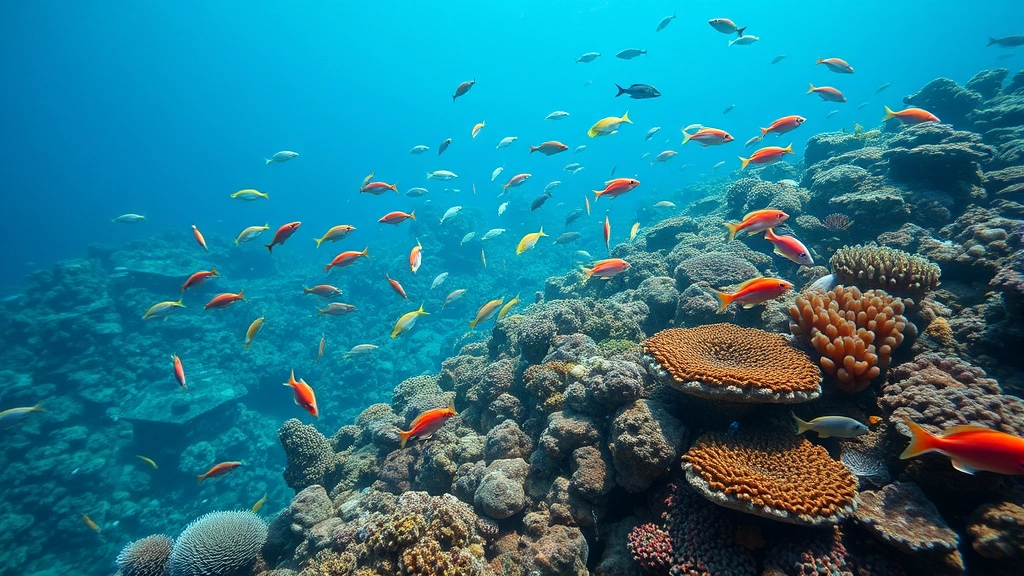
Ecosystems provide a continuous stream of services that underpin all economic activity. These services—often invisible in traditional economic accounting—represent extraordinary economic value when properly quantified. Forests regulate water cycles, sequester carbon, prevent soil erosion, and provide habitat for pollinators. Wetlands filter water, buffer against floods, and support fisheries. Coral reefs protect coastlines while supporting fishing communities and tourism industries.
Quantifying ecosystem services has become a central focus of ecological economics. A landmark study valued global ecosystem services at approximately 125 trillion USD annually—more than double global GDP. This valuation includes:
- Pollination services: Essential for agricultural production, worth approximately 15 billion USD annually in the United States alone
- Water purification: Natural filtration systems provide water treatment services worth billions in avoided costs for artificial treatment
- Climate regulation: Carbon sequestration by forests and oceans prevents catastrophic warming, with value measured in trillions of prevented damages
- Nutrient cycling: Microbial decomposition and nutrient recycling maintain soil fertility, supporting agriculture and terrestrial productivity
- Pest control: Natural predators and parasites prevent crop damage worth billions annually
- Genetic resources: Biodiversity provides the raw material for pharmaceutical development and agricultural breeding
Yet these services remain largely unpriced in market transactions. A farmer benefits from pollination but pays nothing to the ecosystems providing it. A factory discharges waste into rivers without compensating communities downstream for water contamination. This pricing failure means economic decisions systematically undervalue environmental protection and overvalue resource extraction.
The concept of human environment interaction becomes critical here. Humans do not simply use ecosystems; we fundamentally depend on their continued functioning. Recognition of this dependency marks a crucial shift from viewing nature as a resource to managing to recognizing it as capital—specifically, natural capital that requires maintenance and careful stewardship.
Natural Capital Depletion and Economic Costs
Conventional accounting treats natural capital depletion as income rather than asset loss. When a nation harvests forests faster than they regenerate, this appears as economic gain in GDP calculations. When fisheries collapse from overharvesting, the immediate economic activity registers positively even as the underlying productive asset disappears. This accounting error has enabled decades of unsustainable economic practices that extract short-term gains at the cost of long-term economic viability.
The economic consequences of ecosystem degradation manifest across multiple sectors and timeframes. Deforestation reduces water availability, affecting agricultural productivity and hydroelectric power generation. Soil degradation decreases crop yields, requiring increased fertilizer inputs and reducing profitability. Pollinator decline threatens food security across regions dependent on insect-pollinated crops. Ocean acidification damages fisheries that provide protein for billions. These impacts are not merely environmental concerns—they represent direct economic losses.
Climate change, driven primarily by ecosystem disruption and fossil fuel combustion, imposes enormous economic costs. Extreme weather events damage infrastructure, disrupt supply chains, and require emergency responses. Agricultural productivity declines in many regions. Coastal communities face inundation from rising seas. Migration pressures increase as environmental refugees flee degraded lands. The economic costs of climate change are projected to reach trillions of dollars annually by mid-century if current trajectories continue.
Research from institutions studying how humans affect the environment consistently demonstrates that environmental degradation represents a massive drag on economic performance. Yet these costs remain largely external to market prices, allowing destructive practices to appear economically rational from narrow perspectives even as they undermine broader economic stability.
Expert Perspectives on Economic-Ecological Linkages
Leading economists and ecologists increasingly converge on the recognition that economic-ecological integration is non-negotiable. The field of ecological economics has developed sophisticated frameworks for understanding these relationships, moving beyond the false dichotomy between environmental protection and economic prosperity.
Ecological economists argue that the economy is a subsystem of the finite Earth ecosystem, not the reverse. This perspective inverts conventional thinking: rather than asking how much environmental protection the economy can afford, we should ask what level of economic activity the ecosystem can sustain. This reframing acknowledges biophysical limits—the fact that Earth’s regenerative and absorptive capacities are finite.
Research published in leading environmental economics journals demonstrates that investments in positive impacts on the environment by humans generate significant economic returns. Renewable energy infrastructure creates more jobs per dollar invested than fossil fuel industries. Ecosystem restoration enhances water security and agricultural productivity. Sustainable fisheries management maintains long-term yields compared to depleting fishing practices. Nature-based solutions for climate adaptation—mangrove restoration, wetland preservation, forest protection—prove more cost-effective than purely technological approaches.
The United Nations Environment Programme has extensively documented the economic case for environmental protection. Their reports consistently show that the costs of environmental degradation—lost productivity, health impacts, infrastructure damage, and ecosystem service loss—far exceed the costs of prevention and restoration. For every dollar spent on ecosystem protection, economic benefits typically range from five to ten dollars.
Expert consensus from institutions like the International Union for Conservation of Nature emphasizes that ecosystem collapse represents an economic threat of unprecedented magnitude. The potential failure of critical systems—pollination networks, water cycles, ocean productivity—would trigger economic catastrophe affecting every sector and every nation.
Real-World Economic Collapse from Ecosystem Failure
History provides sobering examples of economic systems that collapsed when they exceeded their ecological carrying capacity. The Maya civilization, despite remarkable technological and organizational achievements, collapsed partly due to deforestation and water management failures that undermined agricultural productivity. The Norse settlements in Greenland disappeared as climate cooling and overgrazing degraded the ecosystems supporting pastoral economies. These cases demonstrate that economic sophistication offers no protection against ecological limits.
Contemporary examples abound. The Aral Sea environmental disaster destroyed a fishing industry and regional economy through unsustainable water extraction. Cod fisheries off Newfoundland collapsed from overharvesting, devastating communities that had depended on these fisheries for centuries. Groundwater depletion in aquifer systems across the Middle East and North America threatens agricultural productivity and water security for millions. These are not abstract environmental problems—they are concrete economic catastrophes resulting from ignoring ecological constraints.
The economic impacts of biodiversity loss extend beyond individual species or ecosystems. As genetic diversity declines, agricultural crops become more vulnerable to pests and diseases. As pollinator populations crash, crop yields decline. As soil microbiomes degrade from intensive agriculture, soil fertility decreases despite chemical fertilizer inputs. These cascading failures create economic vulnerabilities that compound over time.
Climate change represents perhaps the most significant economic-ecological linkage. Rising temperatures alter precipitation patterns, affecting water availability for agriculture and hydroelectric power. Changing growing seasons disrupt agricultural systems optimized for historical climate patterns. Extreme weather events damage infrastructure worth trillions. Migration pressures increase as environmental degradation drives people from their homes. These impacts disproportionately affect developing nations and vulnerable populations, yet they ultimately threaten global economic stability.
Transitioning to Ecologically-Sustainable Economics
The recognition that economies cannot thrive without ecosystems demands fundamental transformations in how we measure, value, and conduct economic activity. This transition is not merely desirable—it is economically imperative for long-term prosperity and stability.
First, accounting systems must be reformed to incorporate natural capital. GDP remains the dominant measure of economic success despite well-documented limitations. It counts environmental degradation as economic gain and ignores ecosystem service provision. Alternative metrics like genuine progress indicators (GPI) and natural capital accounting provide more accurate pictures of economic sustainability. Transitioning to these frameworks would immediately reveal the unsustainability of current trajectories.
Second, prices must reflect true costs. Carbon pricing mechanisms, water pricing that reflects scarcity, and biodiversity impact assessments can internalize environmental costs into market prices. This does not require eliminating markets but rather correcting the massive pricing failures that currently undervalue environmental protection. Research from ecological economics institutions demonstrates that properly-priced environmental externalities would shift investment patterns toward sustainability without requiring command-and-control regulation.
Third, economic policy must explicitly incorporate ecological limits. Sustainable yield management in fisheries and forestry demonstrates that respecting regeneration rates enables indefinite resource provision. Circular economy approaches minimize waste and resource extraction by keeping materials in productive use. Regenerative agriculture rebuilds soil health while maintaining productivity. These approaches prove economically viable when environmental costs are properly accounted.
Fourth, investment patterns must shift toward sustainable sectors. Renewable energy, ecosystem restoration, sustainable agriculture, and nature-based solutions all generate economic returns while enhancing ecological health. Redirecting the trillions in subsidies currently supporting fossil fuels and destructive agriculture would accelerate this transition. The economic opportunities in sustainable development are enormous—estimates suggest that the transition to sustainability could generate trillions in new economic value while creating millions of jobs.
Understanding the latest developments in environmental economics reveals that this transition is already beginning. Businesses recognize that environmental degradation threatens supply chains and market access. Investors increasingly recognize that environmental risks represent financial risks. Consumers increasingly prefer sustainable products. Governments are implementing climate and biodiversity policies. This movement remains insufficient relative to the scale of challenges, but it demonstrates the economic logic of sustainability.
The transition requires international cooperation, technological innovation, and policy reform. Yet the alternative—continuing current trajectories toward ecosystem collapse—guarantees economic catastrophe. From a purely economic perspective, investing in sustainability is not altruism but rational self-interest.
FAQ
Can technology substitute for ecosystem services?
Partially, but at enormous cost and with significant limitations. Technological solutions like artificial pollination, water treatment plants, and carbon capture systems can supplement natural processes but cannot fully replace them at scale. Natural systems typically provide these services more efficiently and cheaply than technological alternatives. Moreover, technology requires energy inputs and material resources, creating new environmental impacts. The most economically rational approach combines technological innovation with ecosystem protection rather than treating them as alternatives.
Don’t wealthy economies prove we can thrive without healthy ecosystems?
Wealthy economies have temporarily insulated themselves from local ecosystem degradation through global trade and outsourcing of environmental costs. Yet they remain fundamentally dependent on global ecosystem services—climate stability, ocean productivity, pollination, water cycles. Moreover, their prosperity rests partly on historical resource exploitation that degraded ecosystems now affecting global stability. No economy is truly independent of ecological systems; wealthy nations have simply externalized their environmental costs to other regions and future generations.
How do we balance economic needs with ecosystem protection?
This framing presents a false dichotomy. Ecosystem protection enables long-term economic prosperity. The real balance is between short-term extraction and long-term sustainability, between private profit and public welfare, between immediate consumption and intergenerational equity. When properly valued, ecosystem protection and economic prosperity align. The challenge is implementing policies that reflect true costs rather than maintaining accounting systems that obscure them.
Can developing nations afford ecosystem protection?
Developing nations can least afford NOT to protect ecosystems. Their economies typically depend more directly on natural resources—agriculture, fisheries, forestry, tourism. Environmental degradation directly undermines their economic opportunities. Moreover, they are most vulnerable to climate change impacts despite contributing least to the problem. International support for ecosystem protection in developing nations represents both an equity imperative and a rational investment in global economic stability.
What happens if we transition too quickly to sustainability?
Rapid transitions create adjustment costs and disruptions. However, the costs of delayed transition prove far greater. Every year of delay allows further ecosystem degradation, increasing the scale of eventual adjustments required. Moreover, gradual transitions allow time for technological innovation, workforce retraining, and institutional adaptation. The real risk lies not in moving too quickly toward sustainability but in continuing business-as-usual until ecological and economic collapse force catastrophic, chaotic transitions.


