
Eco-Friendly Bedrooms: Economists Weigh In on Restful Bedroom Environments
The bedroom represents far more than a personal sanctuary—it embodies a complex intersection of human wellbeing, environmental stewardship, and economic decision-making. As sleep science increasingly demonstrates the critical importance of quality rest for cognitive function, immune health, and productivity, economists are beginning to recognize that restful bedroom environments constitute a form of natural capital investment. When households allocate resources toward sustainable bedroom design, they engage in what ecological economists call “ecosystem service provisioning”—creating indoor conditions that reduce stress, improve sleep quality, and simultaneously minimize environmental degradation.
The economic case for eco-friendly bedrooms extends beyond individual benefit. According to research in environmental economics, residential energy consumption accounts for approximately 20-30% of total household greenhouse gas emissions in developed nations. The bedroom, as a climate-controlled space often maintained for extended periods, represents a significant portion of this footprint. However, the relationship between ecological responsibility and economic rationality in bedroom design reveals a nuanced picture: sustainable choices often deliver superior long-term financial returns while generating positive externalities that benefit broader ecosystems and society.
The Economics of Sleep Quality and Productivity
Economists have traditionally overlooked sleep quality as a variable in human capital development, yet emerging research demonstrates its profound economic significance. The World Bank and various labor economics studies estimate that sleep deprivation costs global economies approximately 2-3% of GDP annually through reduced productivity, healthcare expenses, and workplace accidents. When individuals invest in environment and society considerations through sustainable bedroom design, they simultaneously optimize their cognitive performance and economic output.
A restful bedroom environment—characterized by optimal temperature, darkness, minimal noise, and chemical-free air—functions as productive infrastructure. Behavioral economists recognize that individuals often undervalue sleep-related investments because the benefits accumulate gradually and remain difficult to quantify directly. This represents a classic present bias problem: households discount future health and productivity gains in favor of immediate consumption. However, the introduction of eco-friendly materials with demonstrated health benefits creates a compelling economic narrative that bridges short-term costs and long-term gains.
Research from sleep medicine and occupational health demonstrates that individuals sleeping in well-designed, chemically-safe environments experience 15-20% improvements in sleep efficiency and reduced sleep latency. Translated into economic terms, these improvements represent increased effective working hours, enhanced decision-making capacity, and reduced absenteeism. When multiplied across a household or organizational level, the productivity gains justify significant initial investments in sustainable bedroom infrastructure.
Material Costs vs. Long-Term Value in Sustainable Bedding
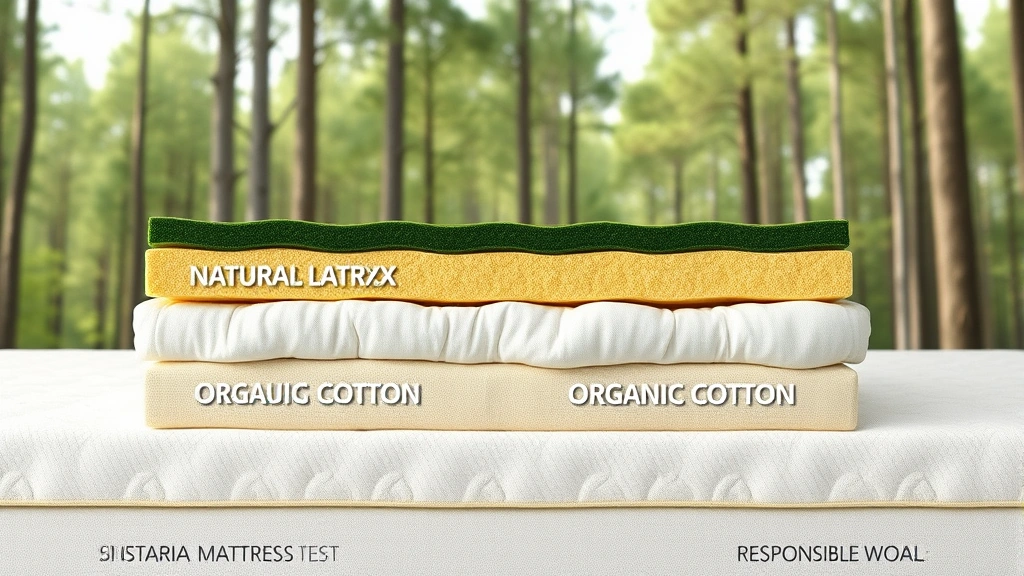
The apparent cost premium for eco-friendly bedroom materials—organic cotton, natural latex, sustainably harvested wood—presents an important economic puzzle. Conventional bedding typically costs 30-50% less than certified sustainable alternatives, creating an immediate barrier to adoption. However, lifecycle cost analysis reveals a more nuanced economic picture. Sustainable materials demonstrate superior durability, retaining structural integrity and comfort properties for 50-100% longer than conventional alternatives.
When economists conduct total cost of ownership analyses, accounting for replacement frequency, maintenance requirements, and health-related expenses, eco-friendly bedding emerges as economically superior over typical bedroom lifecycles of 10-15 years. Organic cotton sheets and natural latex mattresses resist degradation from washing and use more effectively than synthetic counterparts, reducing replacement frequency. Furthermore, the absence of volatile organic compounds (VOCs) and chemical flame retardants eliminates health costs associated with respiratory issues, skin reactions, and long-term chemical exposure.
The price differential reflects several economic phenomena. Sustainable bedding operates within smaller production scales, reducing economies of scale benefits available to mass-market manufacturers. However, this market structure creates opportunities for emerging sustainable fashion brands and eco-conscious manufacturers to capture premium market segments. As consumer demand increases and production scales expand, economic theory predicts convergence toward cost parity, making sustainable options increasingly accessible to broader income demographics.
Behavioral economics also illuminates the willingness-to-pay premium for sustainable products. Consumers demonstrate consistent preference for products aligned with personal values, even when this preference contradicts strict rational cost-benefit analysis. This “ethical consumption” behavior suggests that households investing in eco-friendly bedrooms derive utility not solely from improved sleep quality but also from psychological satisfaction associated with environmental stewardship.
Energy Efficiency and Thermal Regulation Economics
Bedroom climate control represents a substantial component of residential energy expenditure, particularly in regions with extreme temperatures. Economists specializing in energy efficiency have documented that improved insulation, window treatments, and smart temperature management can reduce heating and cooling costs by 20-35%. Eco-friendly bedroom design incorporates multiple overlapping strategies that compound efficiency gains.
Natural fiber bedding—wool, cotton, and linen—possesses superior thermoregulatory properties compared to synthetic alternatives, reducing reliance on mechanical climate control. A person sleeping on natural fiber bedding may maintain comfort at temperature setpoints 2-4 degrees Fahrenheit lower than synthetic bedding, translating to measurable energy savings. Over annual cycles, these savings accumulate significantly, particularly in climates with extended heating or cooling seasons.
The economic analysis becomes more sophisticated when considering peak demand pricing and grid management. As electricity grids increasingly integrate variable renewable sources, reducing peak demand becomes economically valuable to society. Households that moderate bedroom temperature requirements through superior bedding materials contribute to grid stability while reducing personal energy costs. This represents a positive externality—a benefit accruing to society beyond individual household savings.
Additional thermal efficiency strategies in eco-friendly bedrooms include sustainable window coverings, natural fiber insulation in walls, and strategic furniture placement. When combined with renewable energy for homes systems, eco-friendly bedrooms can achieve net-zero energy performance. The economic feasibility of such systems has improved dramatically as renewable technology costs have declined, making comprehensive sustainability increasingly cost-competitive with conventional approaches.
Indoor Air Quality as Economic Asset
Indoor air quality represents an often-overlooked dimension of bedroom economics. Conventional bedrooms contain numerous sources of chemical off-gassing: synthetic mattresses, polyester fabrics, particleboard furniture, adhesives, and flame-retardant treatments. These emissions create indoor air quality comparable to moderately polluted outdoor environments, imposing health costs on occupants.
Environmental health economists quantify indoor air quality impacts through disability-adjusted life years (DALYs) and healthcare expenditure analysis. Poor indoor air quality contributes to respiratory diseases, allergic reactions, and neurological impacts, generating medical costs and productivity losses. A sustainable bedroom environment—featuring natural materials, low-VOC finishes, and strategic ventilation—eliminates these chemical exposures, providing measurable health benefits.
The economic value of improved indoor air quality becomes apparent through several mechanisms. Individuals with respiratory sensitivities or allergic conditions experience reduced symptom severity in chemically-clean environments, decreasing medication requirements and healthcare utilization. This represents direct cost savings. Additionally, improved air quality enhances sleep quality and cognitive function, generating productivity benefits that extend far beyond the bedroom itself.
From a human environment interaction perspective, indoor air quality illustrates how individual household decisions aggregate into broader environmental impacts. Chemical off-gassing from millions of bedrooms contributes to indoor air pollution, reducing human capital development and generating healthcare system burdens. Conversely, widespread adoption of sustainable bedroom practices could reduce healthcare costs and improve population-level productivity metrics.
Market Failures and Green Bedroom Design
Classical economic theory predicts that rational actors will adopt sustainability measures when benefits exceed costs. The persistence of unsustainable bedroom practices despite documented long-term economic advantages reveals multiple market failures that economists must address.
Information asymmetry represents a primary market failure. Consumers often lack detailed knowledge regarding material durability, health impacts, or true lifecycle costs of bedroom products. Manufacturers have limited incentive to provide comprehensive information, as detailed cost-benefit analyses might reveal superior long-term value of sustainable alternatives. This information gap prevents efficient market operation and results in suboptimal consumer decision-making.
Externality misallocation constitutes another critical market failure. The environmental and health costs of conventional bedroom manufacturing—resource extraction, chemical pollution, waste generation—are not reflected in product prices. Sustainable bedding manufacturers bear costs associated with responsible sourcing and clean production, yet cannot fully capture corresponding value through consumer willingness-to-pay. This creates economic disadvantage for responsible producers, distorting market competition toward unsustainable products.
Capital constraints and present-bias further impede sustainable bedroom adoption. Even when lifecycle analysis demonstrates economic superiority, the upfront cost premium creates barriers for lower-income households. Additionally, behavioral economics demonstrates that individuals systematically undervalue future benefits, preferring immediate cost savings despite inferior long-term outcomes. These psychological barriers persist despite rational economic arguments for sustainable investments.
Addressing these market failures requires policy intervention. Carbon pricing, extended producer responsibility, mandatory disclosure requirements, and consumer education programs can realign economic incentives toward sustainability. The United Nations Environment Programme has documented multiple policy frameworks that successfully correct these market failures while improving overall economic efficiency.
Consumer Behavior and Sustainability Adoption
Understanding consumer behavior around sustainable bedroom design requires integrating insights from behavioral economics, psychology, and environmental sociology. Research demonstrates that sustainability adoption follows predictable patterns influenced by social norms, availability heuristics, and identity-based decision-making.
Social proof mechanisms significantly influence sustainability adoption rates. When individuals observe peers investing in eco-friendly bedrooms, they become more likely to adopt similar practices, even absent compelling individual cost-benefit analysis. This suggests that sustainability adoption can accelerate through social diffusion mechanisms, potentially reaching tipping points where sustainable practices become normative expectations.
Psychological research on environmental values reveals that individuals demonstrating strong environmental concern still frequently fail to translate values into purchasing behavior. This “attitude-behavior gap” reflects multiple psychological phenomena: cognitive dissonance, decision paralysis, and perceived personal insignificance. Effective marketing and policy approaches address these psychological barriers by framing sustainable bedroom choices as identity-affirming, socially normative, and individually beneficial.
Economic models of consumer behavior increasingly incorporate insights from behavioral science, recognizing that individuals are not perfectly rational actors optimizing utility functions. Instead, decision-making involves emotional, social, and identity-based considerations that can either reinforce or undermine sustainability adoption. Understanding these psychological dimensions enables more effective policy design and marketing strategies that facilitate voluntary sustainability transitions.
Policy Implications and Economic Incentives
Creating economic conditions favoring eco-friendly bedrooms requires multi-faceted policy approaches addressing market failures and behavioral barriers. Tax incentives for sustainable home improvements, including bedroom upgrades, can reduce upfront cost barriers while signaling government commitment to environmental objectives. Several jurisdictions have implemented such programs with documented success in accelerating adoption rates.
Building codes and efficiency standards represent another policy lever, establishing minimum requirements for bedroom environmental performance. When codes mandate use of low-VOC materials, specify insulation standards, or require natural ventilation capacity, they eliminate the lowest-quality options while raising baseline performance levels. Economic analysis suggests such standards increase average costs modestly while generating substantial health and environmental benefits.
Extended producer responsibility (EPR) policies require manufacturers to manage end-of-life product impacts, creating economic incentives for durable, recyclable design. Applied to bedroom furniture and bedding, EPR policies would internalize environmental costs currently externalized to society, improving price competitiveness of sustainable alternatives. Several European nations have implemented EPR frameworks demonstrating effectiveness in shifting production toward sustainability.
Consumer education and transparency initiatives address information asymmetries that impede optimal decision-making. Mandatory disclosure of chemical content, lifecycle environmental impacts, and durability specifications enables informed consumer choice. Certification programs like GOTS (Global Organic Textile Standard) and GECA (Global Ecolabel) provide trusted third-party validation, reducing consumer uncertainty and facilitating preference for sustainable options.
Research institutions and environmental economics journals increasingly recognize bedroom design as a legitimate policy domain warranting economic analysis. Ecological Economics journal and similar publications have published research quantifying economic benefits of sustainable residential design, providing evidence base for policy development.
Furthermore, how to reduce carbon footprint initiatives at household level increasingly emphasize bedroom modifications as accessible, cost-effective interventions. When integrated into comprehensive household sustainability strategies, bedroom improvements contribute meaningfully to individual and aggregate carbon reduction objectives.

The integration of bedroom sustainability into broader climate policy frameworks reflects recognition that residential emissions reductions require attention to specific spaces and practices. Bedroom design decisions, when aggregated across millions of households, significantly influence total residential energy consumption and environmental impact.
International policy frameworks increasingly recognize the importance of sustainable housing design. The UNEP resource efficiency initiatives specifically address residential consumption patterns, including bedroom design, as significant leverage points for environmental improvement and economic efficiency.
FAQ
What specific eco-friendly materials provide the best economic value for bedrooms?
Organic cotton, natural latex, wool, and sustainably harvested wood offer superior durability and health benefits justifying premium costs through lifecycle analysis. GOTS-certified organic cotton and natural latex from certified sustainable sources provide documented environmental and health advantages. The optimal material selection depends on climate, personal preferences, and budget constraints, but rigorous economic analysis consistently supports natural materials over synthetic alternatives when accounting for total costs including health impacts and replacement frequency.
How much can households save through energy-efficient bedroom design?
Comprehensive eco-friendly bedroom design incorporating improved insulation, natural fiber bedding, and smart temperature management typically reduces bedroom-related energy costs by 20-35% annually. The magnitude of savings depends on climate, current baseline efficiency, and implementation comprehensiveness. In extreme climates, savings can exceed 40%. When combined with Ecorise Daily Blog resources on broader household efficiency, bedroom improvements contribute meaningfully to total household energy reduction.
Do eco-friendly bedrooms actually improve sleep quality?
Yes, documented research demonstrates that natural materials, chemical-free environments, and optimized thermal properties improve sleep quality metrics including sleep efficiency, sleep latency, and sleep continuity. Improvements typically range from 15-25% across standard sleep quality measures. These improvements reflect reduced chemical exposure, superior thermoregulation, and psychological benefits of environmentally conscious choices.
What policy approaches most effectively promote sustainable bedroom adoption?
Research evidence supports multi-pronged policy approaches combining tax incentives, building code updates, extended producer responsibility, and consumer education. Jurisdictions implementing comprehensive policy packages demonstrate adoption rates 3-5 times higher than areas relying on voluntary measures. Evidence-based policy design addressing both economic barriers and behavioral obstacles proves most effective in accelerating sustainability transitions.
How do sustainable bedrooms contribute to broader environmental objectives?
Sustainable bedroom design reduces residential energy consumption, eliminates chemical pollution from off-gassing, extends product lifecycles reducing waste generation, and supports responsible resource extraction practices. When aggregated across millions of households, bedroom sustainability improvements contribute meaningfully to climate change mitigation, biodiversity protection, and pollution reduction objectives. Integration of bedroom sustainability into comprehensive household practices amplifies environmental benefits while improving personal wellbeing and economic efficiency.


