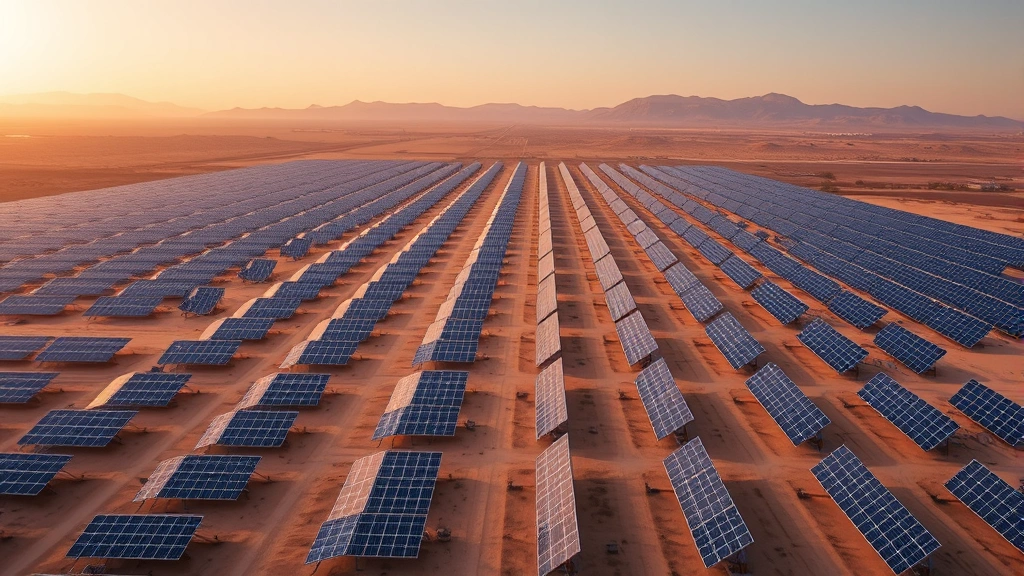
Is Green Energy Cost-Effective? Economist Insights
The transition to renewable energy represents one of the most significant economic shifts of the 21st century. As policymakers and businesses worldwide grapple with climate commitments, a critical question emerges: can green energy actually compete economically with fossil fuels? This question sits at the intersection of environmental economics, energy policy, and fiscal analysis—domains that increasingly shape our understanding of sustainable development. Recent data suggests the answer is nuanced, revealing that while green energy costs have declined dramatically, true cost-effectiveness depends on how we account for externalities, infrastructure investments, and long-term systemic changes.
The debate surrounding green energy’s economic viability has shifted considerably over the past decade. Where renewable technologies once commanded premium prices, they now frequently undercut conventional energy sources in competitive markets. However, this apparent victory masks deeper economic complexities that economists, environmental scientists, and energy analysts continue to scrutinize. Understanding whether green energy is truly cost-effective requires examining not just direct production costs, but also the broader economic framework that determines energy system value.
The Cost Decline Revolution in Renewable Energy
Over the past fifteen years, the cost of solar photovoltaic technology has plummeted by approximately 89%, while wind energy costs have declined by roughly 70%. These reductions represent one of the most dramatic technological cost curves in modern industrial history, comparable only to semiconductor manufacturing and information technology. According to the International Renewable Energy Agency (IRENA), global renewable electricity generation costs continue falling, with solar and onshore wind now the cheapest sources of electricity in most markets worldwide.
This cost revolution fundamentally altered the economic calculus of energy systems. What began as government-subsidized experimental technologies have matured into competitive commodities. The learning curve effect—where each doubling of cumulative production reduces costs by a consistent percentage—has proven remarkably consistent across renewable technologies. Manufacturing scale, supply chain optimization, and technological innovation have compounded these reductions, creating a self-reinforcing cycle of affordability.
The economic implications extend beyond simple price comparisons. As renewable energy costs approach marginal cost of zero for fuel, the nature of energy economics itself transforms. Traditional power plants with high operating costs become economically vulnerable in markets with significant renewable penetration. This dynamic has already triggered substantial industrial restructuring in several countries, affecting employment, investment patterns, and grid operations.
Levelized Cost of Energy and Market Competitiveness
Economists employ the Levelized Cost of Energy (LCOE) as a standardized metric for comparing different energy sources. LCOE calculates the average cost per unit of electricity over a project’s lifetime, accounting for capital expenditures, operating expenses, fuel costs, and financing. By this measure, renewable energy has achieved remarkable competitiveness. Recent analyses demonstrate that new solar and wind installations frequently achieve LCOE values below $50 per megawatt-hour in favorable locations, undercutting coal ($70-$150/MWh) and competing aggressively with natural gas ($40-$100/MWh).
However, LCOE presents a simplified view that obscures important economic dimensions. The metric assumes relatively consistent capacity factors and ignores variability costs, grid integration expenses, and storage requirements. When these elements factor into comprehensive economic analysis, the picture becomes more complex. A solar installation with a 25% capacity factor operates fundamentally differently than a coal plant with 85% capacity factor, despite potentially lower LCOE calculations.
Market data increasingly validates renewable competitiveness in real-world scenarios. Auction-based procurement mechanisms in countries ranging from Chile to Denmark have consistently selected renewable projects as lowest-cost options. Corporate renewable energy procurement through power purchase agreements has expanded dramatically, with companies like Google, Microsoft, and Amazon collectively investing billions in renewable capacity. These market-driven decisions reflect genuine economic calculations rather than environmental preferences, suggesting that green energy cost-effectiveness extends beyond theoretical models into practical business decision-making.
The relationship between renewable penetration and system costs introduces additional economic considerations. As renewable capacity increases, the value of individual projects declines due to price cannibalization—a phenomenon where abundant renewable generation during peak production hours suppresses wholesale electricity prices. Understanding this dynamic requires sophisticated economic modeling that considers environmental and society interactions with energy markets.

” alt=”Solar panels on hillside landscape with wind turbines in distant valley during golden hour”/>
Hidden Costs and Externalities in Energy Economics
A fundamental principle in ecological economics and environmental economics holds that market prices rarely capture full social costs. Fossil fuel energy production generates substantial externalities—costs imposed on society without market compensation. These include air pollution health impacts, climate change damages, water contamination, and ecosystem degradation. When economists attempt to quantify these externalities, the economic advantage of green energy expands considerably.
Research from the World Bank and various environmental economics institutions estimates that coal energy’s true cost, including health and environmental externalities, ranges from $150-$340 per megawatt-hour when accounting for social damages. Natural gas externalities add $30-$80 per megawatt-hour. These calculations fundamentally alter cost-competitiveness assessments. Even expensive renewable technologies appear economically rational when compared against true social costs of fossil fuels.
The challenge in internalizing externalities reflects broader economic policy questions. Without regulatory mechanisms or carbon pricing, markets fail to reflect environmental costs. This creates what economists call market failure—a situation where unfettered markets produce inefficient outcomes. Addressing this requires policy intervention through carbon taxes, cap-and-trade systems, or regulatory mandates. The economic case for green energy strengthens dramatically under these policy frameworks, which increasingly characterize advanced economies.
Beyond production externalities, energy systems generate positive externalities from renewable deployment. Distributed solar installation creates local employment, reduces transmission losses through distributed generation, and enhances energy security through decentralized systems. Wind farms in rural areas provide landowner income and property tax revenues. These benefits, while harder to quantify than pollution costs, represent genuine economic value that traditional LCOE calculations omit.
Infrastructure Investment and Grid Integration
Transitioning to high renewable penetration requires substantial infrastructure investment in grid modernization, energy storage, and transmission expansion. These capital requirements represent significant economic costs that must factor into comprehensive cost-effectiveness analyses. A modern grid capable of managing variable renewable generation requires sophisticated forecasting systems, demand response mechanisms, and storage capacity that traditional grids did not need.
Battery storage costs have declined dramatically, falling approximately 89% since 2010, making grid-scale storage increasingly economically viable. However, the investment requirements remain substantial. Utility-scale battery systems, pumped hydroelectric storage, compressed air systems, and other storage technologies represent capital outlays that ultimately appear in electricity prices. Economic analyses must account for these investments as necessary components of renewable-dominant systems.
Grid integration economics reveals important regional variations. Areas with abundant hydroelectric capacity can leverage existing storage for renewable integration at lower cost. Regions with poor renewable resources face higher costs for importing renewable energy or deploying alternative technologies. Island nations and areas with limited interconnection capacity face distinct economic challenges compared to continental grid systems. These variations suggest that green energy cost-effectiveness inherently involves geographic specificity rather than universal applicability.
Transmission infrastructure represents another major investment category. Renewable resources often locate in areas distant from population centers—solar in deserts, wind in plains, hydroelectric in mountains. Connecting these resources to demand centers requires transmission investment that centralized fossil fuel generation could avoid. Economic analyses of renewable transition must incorporate these transmission costs, which vary substantially depending on existing infrastructure and geographic factors.
Long-Term Economic Benefits and Job Creation
While upfront renewable energy costs have declined substantially, comprehensive economic analyses must examine lifetime system costs and benefits. Renewable energy systems, once constructed, generate electricity with minimal operating costs for 25-40 years. This contrasts with fossil fuel systems requiring continuous fuel purchases, with attendant price volatility and supply chain risks. From an energy security perspective, renewable systems reduce vulnerability to fuel price shocks and supply disruptions.
Employment generation represents a significant economic dimension often overlooked in narrow cost analyses. Renewable energy industries employ more workers per unit of energy produced than fossil fuel systems. Manufacturing, installation, maintenance, and decommissioning activities create distributed employment opportunities, particularly in rural areas. The International Labour Organization estimates that renewable energy employment already exceeds fossil fuel employment globally, with continued growth projected. From a labor economics perspective, renewable transition offers economic diversification opportunities for communities dependent on declining fossil fuel industries.
The relationship between green energy adoption and broader economic development patterns remains an active research area. Some analyses suggest that renewable energy adoption for homes and communities catalyzes innovation ecosystems and attracts investment to regions with strong renewable capacity. Denmark, for instance, has built substantial manufacturing and service industries around wind energy, generating economic activity beyond direct electricity production. These dynamic effects complicate simple cost-benefit analyses but suggest long-term economic advantages beyond direct energy cost reductions.
Regional Variations and Market Dynamics
Green energy cost-effectiveness varies dramatically across geographic regions, reflecting differences in renewable resources, existing infrastructure, labor costs, and policy frameworks. Solar energy proves most cost-effective in high-insolation regions, while wind generation favors areas with consistent wind resources. Hydroelectric potential concentrates in mountainous regions with appropriate precipitation patterns. These geographic constraints mean that renewable transition strategies must account for regional variation rather than applying universal approaches.
Emerging market and developing economy contexts present distinct economic dynamics. Many developing nations have limited existing electricity infrastructure, creating opportunities to deploy renewable systems without retrofitting centralized grids. India’s solar deployment strategy, for example, leverages abundant solar resources and declining technology costs to expand electricity access while avoiding fossil fuel lock-in. Conversely, developed nations with extensive fossil fuel infrastructure face substantial stranded asset challenges and transition costs that complicate economic calculations.
Market structure and regulatory frameworks profoundly influence renewable energy economics. Competitive wholesale electricity markets with transparent pricing mechanisms facilitate renewable deployment by allowing lowest-cost technologies to win procurement auctions. Regulated utility systems with cost-of-service regulation may create perverse incentives against renewable adoption, as utilities recover returns on capital investment rather than on efficient service provision. Understanding green energy cost-effectiveness requires examining these institutional economic structures alongside technological and biophysical factors.
The relationship between renewable penetration levels and system costs exhibits nonlinear characteristics. Initial renewable deployment may prove highly cost-effective, with favorable wind and solar sites providing electricity cheaper than fossil alternatives. However, as penetration increases, system integration costs rise due to variability management, storage requirements, and transmission expansion. Economic analysis must distinguish between marginal costs of additional renewable capacity at different penetration levels rather than assuming consistent economics across all deployment scenarios.
Policy Frameworks and Economic Incentives
Green energy economics fundamentally depends on policy frameworks that either facilitate or impede renewable deployment. Carbon pricing mechanisms—whether through carbon taxes or cap-and-trade systems—internalize climate externalities and enhance renewable competitiveness. Feed-in tariffs guarantee renewable generators fixed prices for electricity, reducing investment risk and facilitating financing. Renewable portfolio standards mandate minimum renewable energy percentages, creating demand drivers independent of cost considerations.
Subsidy structures significantly influence renewable energy economics. While direct subsidies have declined as renewable costs fell, indirect subsidies for fossil fuels remain substantial globally. The International Monetary Fund estimates annual fossil fuel subsidies at approximately $7 trillion when accounting for environmental and health externalities. From an economic efficiency perspective, removing these implicit subsidies would dramatically improve renewable competitiveness without requiring new renewable support mechanisms.
Investment in research and development represents another crucial policy lever. Government funding for renewable energy innovation, grid modernization, and storage technology development generates positive externalities by advancing technology frontiers. These public investments create knowledge spillovers benefiting private sector innovation. Economic analyses of renewable transition must account for these dynamic effects where policy-supported research reduces future technology costs and system integration expenses.
The relationship between climate policy stringency and green energy economics creates important feedback loops. Aggressive climate targets increase the economic value of decarbonization, making renewable investments more attractive despite higher near-term costs. Conversely, weak climate policy reduces renewable value propositions, potentially slowing transition despite technological feasibility. This dynamic suggests that green energy cost-effectiveness ultimately depends on societal willingness to value climate mitigation—a question extending beyond narrow economic analysis into normative questions about intergenerational equity and environmental stewardship.
International policy coordination affects renewable economics through technology transfer, manufacturing scale, and supply chain integration. Countries sharing renewable technology standards and supporting coordinated deployment benefit from larger markets, greater manufacturing competition, and supply chain efficiency. This suggests that comprehensive economic analysis of green energy must incorporate international political economy dimensions alongside domestic cost considerations.

” alt=”Vast wind farm across rolling grassland with clear sky and distant mountains at sunset”/>
FAQ
What is the primary reason renewable energy costs have declined so dramatically?
Learning curve effects and manufacturing scale have driven renewable cost reductions. As cumulative renewable production doubled, costs declined by consistent percentages. Technological innovation, supply chain optimization, and competitive manufacturing have compounded these reductions, creating self-reinforcing cost decreases unmatched in industrial history.
How do economists account for intermittency in renewable energy cost calculations?
Comprehensive economic analyses incorporate storage costs, grid integration expenses, and demand response mechanisms when evaluating renewable economics. Simple LCOE calculations may underestimate total system costs by ignoring variability management. However, declining battery storage costs increasingly make these integration costs economically manageable.
Why do fossil fuels remain economically competitive if externalities are so substantial?
Market prices fail to reflect environmental and health externalities without policy intervention. Carbon pricing, pollution regulations, and environmental accounting mechanisms are necessary to internalize these costs. Without such policies, markets systematically undervalue fossil fuel true costs and overvalue renewable energy relative to actual social efficiency.
Does green energy cost-effectiveness vary by region and technology type?
Substantially. Solar proves most cost-effective in high-insolation regions, wind in consistent wind areas, and hydroelectric in mountainous regions. Existing infrastructure, labor costs, renewable resource quality, and policy frameworks all influence regional renewable economics. Universal statements about green energy cost-effectiveness obscure important geographic and technological variation.
What role do subsidies play in renewable energy economics?
While renewable subsidies have declined as costs fell, fossil fuel subsidies—both explicit and implicit—remain substantial globally. From an economic efficiency perspective, subsidy removal would enhance renewable competitiveness without requiring new renewable support. However, subsidy structures influence investment decisions and technology deployment patterns substantially.
How should policymakers evaluate green energy cost-effectiveness?
Comprehensive evaluation requires examining levelized costs, externalities, infrastructure requirements, job creation, energy security benefits, and dynamic innovation effects. Simple price comparisons obscure important dimensions of energy economics. Policymakers should employ integrated assessment models incorporating physical, economic, and social dimensions of energy transition.
What does research suggest about renewable energy and long-term economic growth?
Emerging evidence suggests renewable energy deployment supports long-term economic growth through innovation stimulus, employment creation, and reduced exposure to fuel price volatility. However, transition costs and stranded asset challenges require policy support in regions with existing fossil fuel infrastructure. The relationship between renewable transition and economic development varies substantially across contexts.


