Human Actions Boost Ecosystems: Research Insights
For decades, environmental discourse has centered on humanity’s destructive capacity—deforestation, pollution, climate change, and biodiversity loss. Yet emerging research reveals a compelling counter-narrative: humans are increasingly capable of restoring, enhancing, and actively improving ecosystem health. From rewilding initiatives to sustainable agriculture practices, evidence demonstrates that strategic human intervention can regenerate degraded landscapes, increase species populations, and strengthen ecological resilience. This paradigm shift challenges the notion that nature thrives best without human presence, instead revealing how informed stewardship creates synergies between economic development and environmental restoration.
The relationship between human society and natural systems has long been framed as inherently antagonistic. However, contemporary ecological economics and conservation science increasingly document cases where deliberate human action produces measurable ecosystem benefits. Whether through habitat restoration, species reintroduction, sustainable land management, or innovative conservation technologies, humans demonstrate capacity to reverse ecological damage and actively strengthen biological communities. Understanding these positive dynamics matters profoundly for policy, investment, and cultural narratives about our environmental future.

Ecosystem Restoration Through Active Management
Contrary to preservationist assumptions that wilderness requires isolation from human influence, evidence increasingly shows that many degraded ecosystems benefit from strategic management intervention. Ecological restoration—the intentional activity of assisting recovery of damaged ecosystems—has emerged as a scientifically rigorous discipline producing quantifiable results across diverse biomes.
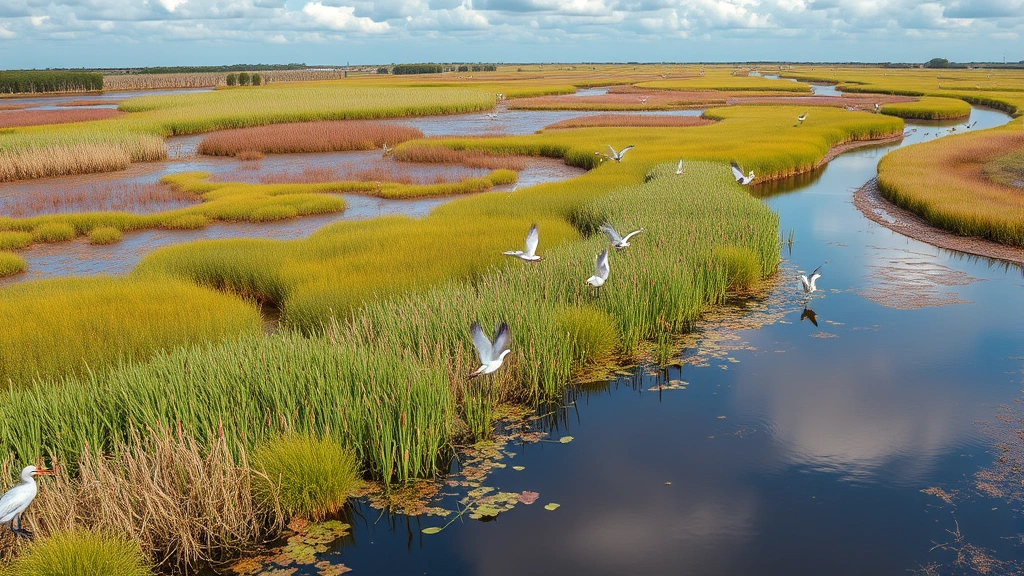
Wetland restoration projects exemplify this principle. The Everglades restoration initiative in Florida represents one of Earth’s most ambitious ecosystem recovery efforts. By reengineering water flow patterns and removing invasive species, managers have expanded native habitat, increased wading bird populations by over 40% in certain regions, and improved water quality metrics significantly. These outcomes required sustained human effort, technical expertise, and substantial investment—demonstrating that ecosystem recovery often demands active intervention rather than passive protection.
Similarly, how humans affect the environment increasingly includes deliberate restoration of fire-adapted ecosystems. Indigenous fire management practices, employed for millennia, are being reintegrated into landscape management across Australia, California, and other regions. Research confirms that strategic, low-intensity burns reduce catastrophic wildfire risk while promoting biodiversity and improving ecosystem function. This represents human knowledge systems enhancing ecological outcomes—a powerful demonstration of beneficial human-nature interaction.
Forest restoration initiatives document similar success. The Atlantic Forest region of Brazil, reduced to 12% of historical extent, is experiencing recovery through both natural regeneration and active planting programs. Studies show that restored forests develop complex structure, support increasing wildlife populations, and provide carbon sequestration benefits within decades. Human-initiated restoration accelerates natural processes, compressing what might require centuries into manageable timescales.

Species Recovery and Reintroduction Success Stories
Perhaps the most compelling evidence of human positive environmental impact emerges from species recovery programs. Several globally significant species have rebounded from near-extinction exclusively through human intervention—a reality that challenges narratives of inevitable ecological decline.
The Arabian oryx represents a remarkable case study. Hunted to near-extinction by the 1970s, fewer than 20 individuals survived in captivity. Through the “Operation Oryx” breeding program, this antelope now numbers over 1,000 individuals in protected reserves across the Arabian Peninsula. This constitutes the first species to improve in conservation status through reintroduction efforts—a direct result of coordinated human action.
California condor recovery demonstrates similar commitment. With only 27 birds remaining in 1987, an intensive captive breeding program has expanded the population to over 500, with approximately half flying free in western skies. The program required developing novel veterinary techniques, addressing behavioral challenges, and maintaining meticulous genetic records—scientific innovation directly enabling species survival.
Humpback whale populations illustrate how positive impacts on the environment by humans operate at oceanic scales. Commercial whaling reduced populations from approximately 125,000 to around 5,000 by the 1960s. International whaling moratoriums and marine protection efforts have enabled recovery to approximately 25,000 individuals—a population expansion unprecedented in modern conservation. This achievement required international cooperation, economic sacrifice, and sustained political commitment.
Black-footed ferret reintroduction in North America shows how ecosystem restoration and species recovery interconnect. Ferrets depend entirely on prairie dog colonies for habitat. By protecting and restoring prairie dog populations, managers simultaneously created conditions for ferret survival. Current reintroduction efforts have established multiple ferret populations across western rangelands—an achievement requiring coordinated habitat management and species-specific intervention.
Sustainable Agriculture Enhancing Biodiversity
Agricultural systems, often portrayed as inherently destructive to ecosystems, increasingly demonstrate capacity to support robust biodiversity when managed sustainably. This represents a profound shift in understanding human environment interaction within food production systems.
Regenerative agriculture practices—including cover cropping, reduced tillage, crop rotation, and integrated pest management—actively enhance soil health, water retention, and biodiversity. Research from the World Bank documents that farms implementing regenerative practices support 30-40% higher insect biodiversity than conventional operations, while simultaneously improving productivity and farmer profitability. This demonstrates how economic incentives and ecological benefits can align.
Agroforestry systems exemplify this integration. By cultivating tree-crop combinations, farmers create multi-layered habitats supporting birds, insects, and mammals while producing food and timber. Studies across Africa, Asia, and Latin America show that agroforestry systems support biodiversity comparable to natural forests while generating substantial income. These systems represent human economic activity enhancing rather than diminishing ecosystem services.
Organic farming networks across Europe have documented significant pollinator recovery. By eliminating synthetic pesticides and creating habitat corridors through field margins and hedgerows, organic operations support bee populations and other beneficial insects at densities 20-50% higher than conventional farms. Farmer-led conservation initiatives demonstrate how economic models can align with ecological restoration.
Rice paddies in Asia, managed sustainably, create seasonal wetland ecosystems supporting waterfowl, fish, and amphibians. Research indicates that traditional rice-fish systems increase food production while supporting biodiversity equivalent to natural wetlands. These systems exemplify how cultural practices evolved over millennia can enhance ecological function while meeting human nutritional needs.
Economic Incentives Driving Conservation
Market-based conservation mechanisms represent innovative approaches where economic self-interest directly funds ecosystem protection. Payment for ecosystem services programs create financial incentives for landowners to maintain or restore natural habitats.
Costa Rica’s Payment for Environmental Services program, operating since 1997, compensates landowners for forest conservation and restoration. The program has protected over 2 million hectares while maintaining forest cover at 52%—remarkable given regional deforestation trends. Participating farmers earn income from ecosystem services while maintaining productive landscapes, demonstrating how how to reduce carbon footprint initiatives create economic opportunity rather than constraint.
Carbon credit markets, despite implementation challenges, have funded substantial reforestation and avoided deforestation across tropical regions. While imperfect, these mechanisms mobilize investment capital toward conservation objectives. A UNEP analysis indicates that carbon finance contributed over $5 billion to forest conservation projects between 2005-2020, directly preventing deforestation across millions of hectares.
Ecotourism creates economic rationale for wildlife protection. Communities adjacent to protected areas increasingly recognize that living wildlife generates greater long-term income than consumptive uses like hunting or logging. This economic reframing has enabled conservation of endangered species including gorillas, rhinos, and orangutans in regions where alternative livelihoods are limited.
Biodiversity offsets, where developers compensate for habitat loss through restoration elsewhere, represent controversial but increasingly utilized mechanisms. While subject to legitimate criticism regarding implementation quality, offsets create market mechanisms valuing ecosystem services and funding restoration projects at scales otherwise impossible.
Urban Ecosystems and Green Infrastructure
Cities, often portrayed as ecological dead zones, increasingly function as sites of deliberate ecosystem creation and enhancement. Green infrastructure initiatives demonstrate how dense human settlements can support significant biodiversity while providing economic and health benefits.
Green roofs and living walls transform building surfaces into habitat. Studies across European cities document that vegetated roofs support diverse arthropod communities, provide stormwater management, reduce urban heat island effects, and improve building energy efficiency. Cities like Copenhagen, Berlin, and Singapore have implemented policies incentivizing green infrastructure, creating thousands of hectares of new habitat within urban matrices.
Urban wetland restoration creates biodiversity hotspots within metropolitan areas. The Cheonggyecheon restoration in Seoul, South Korea, converted a buried stream into an open waterway spanning 10.8 kilometers through downtown. The project increased water quality, created habitat for fish and birds, and enhanced urban livability. Monitoring documents that the restored stream supports diverse aquatic and riparian species despite surrounding urban intensity.
Community gardens and urban forests actively enhance local biodiversity while providing food security, carbon sequestration, and social cohesion benefits. Research indicates that cities with substantial tree canopy support 30-50% higher avian diversity than heavily built alternatives. Cities like Melbourne and Vancouver have implemented urban forest strategies explicitly designed to enhance ecosystem services through deliberate planting and management.
Pollinator corridors created through strategic plantings of native vegetation connect urban green spaces, enabling bee and butterfly populations to persist within cities. Cities from Toronto to Melbourne have implemented programs creating thousands of kilometers of pollinator habitat, enabling species persistence and movement across urbanized landscapes.
Technological Innovation in Environmental Restoration
Emerging technologies expand human capacity to monitor, understand, and actively restore ecosystem function at unprecedented scales and precision.
Drone technology enables detailed habitat monitoring, species population surveys, and precision restoration activities. Researchers use drones to map forest structure, monitor endangered species populations, and identify restoration priorities—activities previously requiring extensive fieldwork. Some programs now use drones for seed dispersal, planting thousands of seeds across degraded areas daily.
Environmental DNA analysis revolutionizes biodiversity assessment. By analyzing water or soil samples for genetic material, scientists can document species presence without visual observation, enabling comprehensive biodiversity surveys of aquatic and soil ecosystems. This technology accelerates understanding of ecosystem composition and recovery progress in restoration projects.
Artificial intelligence applications in conservation optimize resource allocation. Machine learning models analyze satellite imagery to identify deforestation hotspots, predict species distributions, and optimize protected area networks. These technologies enable conservation organizations to direct limited resources toward highest-impact interventions.
Restoration ecology has developed species-specific propagation techniques, enabling production of millions of native plants for restoration projects. Seed banking programs preserve genetic diversity while enabling rapid-scale restoration activities. The Millennium Seed Bank partnership has banked over 2 billion seeds from 35,000 species, providing genetic resources for future restoration efforts.
Coral restoration technology demonstrates human capacity to intervene in marine ecosystems. Scientists now cultivate heat-resistant coral strains, develop artificial reef structures, and employ assisted evolution techniques. While not replacing natural processes, these interventions enable coral persistence in warming oceans where natural recovery seems increasingly unlikely without assistance.
Scaling Solutions for Global Impact
Individual restoration projects demonstrate ecological possibility; scaling solutions globally requires integrating ecosystem restoration into economic systems, policy frameworks, and development paradigms. Emerging evidence suggests this transition is accelerating.
The UN Decade on Ecosystem Restoration (2021-2030) mobilizes commitment toward restoring 1 billion hectares of degraded land globally. Participating nations commit to ecosystem-based approaches in agriculture, forestry, freshwater, and urban systems. This represents unprecedented policy alignment recognizing that ecosystem restoration constitutes essential development infrastructure rather than luxury conservation.
Nature-based solutions increasingly feature in climate policy frameworks. Restoration of forests, wetlands, and grasslands provides carbon sequestration while enhancing biodiversity and watershed function. Analysis from ecological economics research indicates that nature-based climate solutions cost 50-80% less than purely technological approaches while generating co-benefits across multiple ecosystem services.
Corporate sustainability commitments increasingly include restoration targets. Companies from Unilever to Patagonia have committed to net-positive environmental impact, incorporating sustainable fashion brands principles and ecosystem restoration into supply chains. While implementation quality varies, these commitments mobilize substantial capital toward conservation objectives.
Indigenous land management, recognized as supporting 80% of remaining biodiversity despite comprising 22% of global land area, increasingly receives policy and financial support. Research demonstrates that ecosystem outcomes improve when Indigenous communities maintain management authority and receive adequate compensation. This represents recognition that human-nature relationships evolved over millennia often enhance rather than diminish ecosystem function.
Landscape-scale restoration initiatives coordinate activities across jurisdictions, property boundaries, and sectors. The Atlantic Forest restoration initiative, involving multiple countries and thousands of private landowners, demonstrates how coordinated action enables ecosystem recovery at scales meaningful for biodiversity conservation. Monitoring shows that landscape-scale approaches generate synergies impossible in isolated projects.
FAQ
Can humans truly restore damaged ecosystems?
Yes, substantial evidence demonstrates that strategic human intervention accelerates ecosystem recovery. The Everglades, Atlantic Forest, and numerous other projects show measurable improvements in biodiversity, ecosystem function, and species populations. However, restoration typically requires sustained effort and investment—recovery often takes decades rather than occurring spontaneously.
Are species reintroduction programs successful?
Success varies by species and context, but numerous examples demonstrate viability. Humpback whales, Arabian oryx, and California condors exemplify species that rebounded from near-extinction through coordinated human effort. Success requires addressing root causes of decline, maintaining adequate habitat, and sustaining long-term commitment.
How do economic incentives support conservation?
Payment for ecosystem services, carbon credits, and ecotourism create financial rationale for conservation. When landowners recognize greater income from protecting wildlife and forests than from consumptive uses, economic self-interest aligns with conservation objectives. This approach has protected millions of hectares globally.
Can cities support significant biodiversity?
Increasingly yes. Green infrastructure, urban forests, and restored wetlands create habitat supporting diverse species within urban areas. Cities like Copenhagen and Singapore demonstrate that intensive human settlement can coexist with robust ecosystem function through intentional design and management.
What role does technology play in ecosystem restoration?
Technology enables restoration at unprecedented scales and precision. Drones, environmental DNA analysis, artificial intelligence, and restoration ecology techniques expand human capacity to monitor, understand, and actively restore ecosystem function. These tools accelerate progress while reducing costs.
How can restoration be scaled globally?
Scaling requires integrating ecosystem restoration into economic systems, policy frameworks, and development paradigms. The UN Decade on Ecosystem Restoration, nature-based climate solutions, corporate sustainability commitments, and support for Indigenous land management represent mechanisms mobilizing capital and commitment toward global-scale restoration efforts.


