
Managed Environments: Boosting Economic Growth?
The concept of a managed environment represents one of the most contested intersections between ecological sustainability and economic development in contemporary policy discourse. As nations grapple with climate change, biodiversity loss, and resource depletion, the question of whether deliberately managing natural systems can simultaneously drive economic growth has moved from academic periphery to policy center stage. This exploration demands rigorous analysis of how environmental management strategies interact with economic systems, productivity metrics, and long-term wealth creation.
Managed environments span diverse interventions: from precision agriculture and sustainable forestry to urban green infrastructure and marine protected areas. Each represents an attempt to optimize ecosystem services while maintaining or enhancing economic output. Yet the relationship between environmental stewardship and economic prosperity remains complex, shaped by market failures, institutional frameworks, measurement methodologies, and the temporal scales across which we evaluate success.

Defining Managed Environments in Economic Context
A managed environment refers to ecosystems or natural resource systems where human intervention deliberately shapes ecological processes to achieve specific outcomes—typically balancing productivity with sustainability. Unlike pristine wilderness or completely unmanaged systems, managed environments incorporate active monitoring, adaptive strategies, and intentional design to influence outcomes. This distinguishes them from exploited environments where extraction occurs without systematic stewardship.
The economic significance of managed environments lies in their potential to address market failures inherent in unregulated natural resource use. When ecosystems are treated as infinite commons with no pricing mechanism for their services, rational economic actors tend toward overexploitation. Managed environments attempt to internalize these externalities through various mechanisms: property rights clarification, payments for ecosystem services, certification systems, and regulatory frameworks.
Understanding human-environment interaction requires acknowledging that economic systems are embedded within ecological systems, not vice versa. This fundamental reorientation shapes how we conceptualize managed environments. Rather than viewing nature as an input factor to be optimized for output, ecological economics treats economic activity as constrained by biophysical limits and dependent on ecosystem resilience.
The distinction between weak and strong sustainability becomes crucial here. Weak sustainability assumes natural capital can be substituted with manufactured capital, permitting economic growth even with declining ecosystem health, provided total capital stocks remain constant. Strong sustainability maintains that critical natural capital—systems providing irreplaceable services like water purification, pollination, or climate regulation—cannot be substituted and must be preserved below minimum thresholds.
The Economics of Ecosystem Services
The ecosystem services framework provides the economic language through which managed environments create measurable value. Ecosystem services encompassing provisioning (food, water, raw materials), regulating (climate, flood, disease), supporting (nutrient cycling, soil formation), and cultural services (recreation, spiritual, educational) generate economic value that historically remained invisible in national accounts.
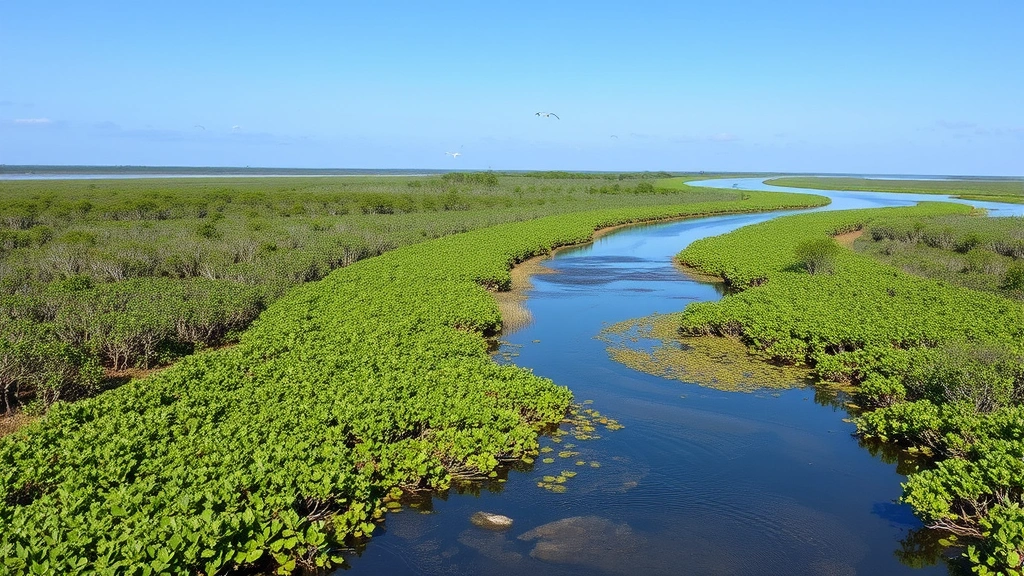
Research from the World Bank and various ecological economics institutes demonstrates that ecosystem service values often exceed direct extraction values. For instance, mangrove forests provide fishery support, coastal protection, and carbon sequestration services worth $37,000-$40,000 per hectare annually in some regions, yet their conversion to aquaculture generates only $200-$2,000 per hectare annually in short-term revenue. This valuation gap reveals how unmanaged resource exploitation systematically underprices environmental degradation.
When environments are actively managed to enhance ecosystem service provision, economic returns can be substantial. Watershed management investments that maintain forest cover generate water supply reliability worth billions to downstream municipalities. Pollinator habitat restoration supports agricultural productivity valued at $15-20 billion annually across major agricultural regions. These managed ecosystem services represent genuine economic growth—increased productive capacity and wealth creation—rather than mere redistribution.
However, valuing ecosystem services presents methodological challenges. Market prices exist for some services (timber, fish), but many services lack clear price signals. Techniques like contingent valuation, hedonic pricing, and benefit transfer attempt to assign monetary values to non-market services, yet inherent uncertainties limit precision. This creates policy challenges: should we base environmental management decisions on uncertain valuations, or acknowledge limitations and adopt precautionary approaches?
Growth Mechanisms Through Environmental Management
Several pathways connect managed environments to economic growth, though mechanisms vary by context and implementation quality:
- Productivity Enhancement: Sustainable management practices often increase long-term productivity through soil conservation, pest management via ecological methods, and water efficiency. Understanding how humans affect the environment helps identify management strategies that reduce harmful impacts while maintaining yields. Regenerative agriculture demonstrates that managed soil health increases crop productivity while reducing input costs and environmental damage.
- Risk Reduction: Environmental management reduces economic volatility from climate shocks, resource scarcity, and ecosystem collapse. Diversified, managed agricultural systems show greater resilience to drought, pest outbreaks, and market fluctuations compared to monoculture systems. This reduced risk justifies investment in management infrastructure.
- Innovation and Technology Development: Addressing environmental constraints through management spurs technological innovation. Precision agriculture, renewable energy systems, and waste-to-resource technologies emerged largely from environmental necessity. These innovations generate intellectual property, employment, and export opportunities—genuine growth mechanisms.
- New Market Creation: Environmental management opens entirely new economic sectors: sustainable certification, ecosystem service markets, green infrastructure, and nature-based tourism. Costa Rica’s payment for ecosystem services program, for example, created economic opportunities while increasing forest cover from 25% (1987) to over 50% by 2020.
- Cost Avoidance: Preventing ecosystem degradation proves far cheaper than attempting restoration. Managing coastal environments to prevent wetland loss avoids catastrophic hurricane damage costs. Protecting forest watersheds avoids expensive water treatment infrastructure. These cost savings represent real economic gains—resources freed for productive investment rather than damage remediation.
The crucial insight is that managed environments can decouple economic growth from resource depletion, potentially enabling green growth or sustainable development—economic expansion without proportional increases in environmental impact. Whether this decoupling is sufficient for climate and biodiversity goals remains contested, with some scholars arguing absolute reductions in material throughput are necessary, not merely improved efficiency.
Trade-offs and Constraints
Despite potential benefits, managed environments present genuine trade-offs and limitations:
Management Costs: Active management requires investment in monitoring, enforcement, research, and adaptive capacity. These costs can exceed benefits, particularly in developing economies with limited institutional capacity. A managed fishery requires vessel monitoring systems, stock assessments, enforcement patrols, and scientific research—substantial expenditures that reduce net benefits compared to unmanaged extraction.
Opportunity Costs: Land or resource use dedicated to environmental management cannot simultaneously serve other economic purposes. Preserving forest for watershed protection prevents logging revenue. Setting aside marine areas for conservation reduces fishing opportunities. These genuine trade-offs require difficult prioritization decisions, and communities dependent on extractive activities face real hardship when management restrictions apply.
Temporal Mismatches: Ecological restoration and ecosystem service recovery operate on decades-to-centuries timescales, while economic pressures demand immediate returns. Reforestation takes 30-50 years to provide full carbon sequestration benefits. Soil recovery through sustainable practices requires 5-10 years before productivity improvements materialize. This temporal mismatch creates political pressure to abandon management strategies before benefits accrue.
Distributional Inequities: Environmental management benefits and costs distribute unevenly across populations. Wealthy nations and communities can afford management investments and accept reduced near-term extraction for long-term benefits. Poor communities dependent on immediate resource extraction face management restrictions without adequate compensation or alternative livelihood opportunities. This equity dimension remains central to environmental management’s political feasibility.
Limits to Growth: Even optimally managed environments operate within biophysical constraints. Planetary boundaries for climate change, biodiversity loss, land use, and nutrient cycling define maximum sustainable economic activity. Some scholars argue we’ve already exceeded several boundaries, meaning further growth—even green growth—remains impossible without absolute reductions in material consumption. This critique challenges whether managed environments can truly support continued economic expansion.
Case Studies in Managed Environment Economics
Examining specific managed environment cases reveals context-dependent outcomes:
Costa Rican Payments for Ecosystem Services: Beginning in 1997, Costa Rica implemented a pioneering payment scheme compensating landowners for maintaining forests, protecting watersheds, and sequestering carbon. The program reversed deforestation trends and generated economic benefits through watershed protection, hydroelectric generation, and tourism development. Yet costs remain substantial—the program required external financing and couldn’t fully compensate opportunity costs of foregone agricultural expansion. Success depended on Costa Rica’s institutional capacity and international support unavailable to many developing nations.
New Zealand Freshwater Management: New Zealand’s shift toward managed freshwater environments through the National Policy Statement for Freshwater Management aimed to restore degraded rivers while maintaining agricultural productivity. Results remain mixed: some regions achieved improvements in water quality and ecosystem health, while agricultural regions resisted restrictions on irrigation and pollution, demonstrating political constraints on environmental management implementation.
Indonesian Sustainable Forestry: Indonesia’s managed forest concessions theoretically balanced timber production with ecosystem preservation. However, weak governance, corruption, and insufficient enforcement undermined management objectives. Despite management framework existence, deforestation continued, revealing that management systems only function with adequate institutional capacity—a constraint many developing nations face.
Urban Green Infrastructure: Cities implementing managed green infrastructure—green roofs, rain gardens, permeable pavements, urban forests—generated documented economic benefits through stormwater management, reduced flooding, improved air quality, and heat reduction. These managed environments demonstrated clear economic returns in developed urban contexts, though benefits required initial capital investment and ongoing maintenance commitment.
Measurement and Valuation Challenges
Determining whether managed environments actually boost economic growth encounters fundamental measurement problems. Traditional GDP accounting excludes or undervalues environmental services, making managed environment benefits invisible in standard economic metrics.
When a forest provides carbon sequestration, water purification, and biodiversity habitat worth $50,000 annually but remains uncut, this value doesn’t appear in GDP. If the forest is logged, generating $10,000 in timber sales, GDP increases despite massive value destruction. This accounting framework systematically biases policy toward environmental degradation.
UNEP and other environmental agencies have developed natural capital accounting systems attempting to correct this bias by integrating ecosystem service values into national accounts. Genuine Progress Indicator (GPI) and other alternative metrics subtract environmental degradation from economic growth calculations. However, these remain supplementary metrics; official GDP continues dominating policy decisions.
The challenge intensifies when valuing non-market ecosystem services. How much is a species worth? What’s the economic value of cultural ecosystem services like spiritual fulfillment? Attempting to monetize these inherently non-market values raises philosophical questions about commodifying nature while potentially obscuring genuine incommensurable values.
Additionally, managed environment benefits often accrue to distant beneficiaries while costs concentrate locally. Watershed protection benefits downstream populations and hydroelectric consumers, but upstream communities bear management restrictions. Biodiversity conservation provides global existence value but restricts local resource access. These distributional patterns require political mechanisms—compensation schemes, benefit-sharing arrangements—that remain underdeveloped in many contexts.
Future Pathways and Policy Integration
Moving forward, several approaches show promise for integrating managed environments with economic growth objectives:
Natural Capital Accounting Integration: Incorporating ecosystem service values into national accounting systems would align economic metrics with ecological reality. The UN System of Environmental-Economic Accounting provides frameworks for this integration. As more nations adopt natural capital accounts, policy decisions increasingly reflect environmental values, potentially shifting development trajectories toward greater sustainability.
Payments and Markets for Ecosystem Services: Expanding mechanisms that compensate environmental stewardship—carbon markets, biodiversity credits, water quality trading—creates financial incentives for management. These market mechanisms work best with clear property rights, transparent pricing, and effective monitoring. However, they risk commodifying nature and may not capture values that resist monetization.
Regenerative Development: Moving beyond sustainability (maintaining current states) toward regeneration (improving ecosystem health while meeting human needs) offers a growth-oriented environmental approach. Regenerative agriculture, circular economy models, and ecosystem restoration simultaneously provide economic and ecological benefits, though scaling these approaches remains challenging.
Adaptive Management Integration: Recognizing uncertainty about ecosystem responses to management, adaptive frameworks that monitor outcomes and adjust strategies based on results improve management effectiveness. However, adaptive management requires institutional flexibility, scientific capacity, and long-term commitment—resources constrained in many developing contexts.
Bioregional Economics: Aligning economic systems with bioregional boundaries—watersheds, ecosystems, biomes—enables management at scales matching ecological processes. This approach recognizes that economic sustainability depends on ecological integrity within specific regions, requiring locally-adapted management strategies rather than universal prescriptions.
The Ecorise Daily Blog explores emerging approaches to environmental management and economic integration, providing current analysis of policy innovations and implementation challenges. Additionally, understanding how to reduce carbon footprint at individual and organizational scales connects personal environmental choices with broader managed environment strategies.
Examining sustainable fashion brands demonstrates how market-based approaches to environmental management function in consumer sectors, showing that economic growth can occur within environmental constraints when management systems align incentives with sustainability objectives.
FAQ
Do managed environments always generate economic growth?
No. Managed environments can generate economic benefits through ecosystem service provision, cost avoidance, and innovation, but benefits depend heavily on context, implementation quality, and institutional capacity. Some managed environments require net economic sacrifice in short term for long-term gains. Success requires matching management intensity to local conditions and capacity.
How do managed environments differ from conservation areas?
Managed environments actively optimize human use alongside ecological health, balancing productivity with sustainability. Conservation areas prioritize ecosystem protection, often excluding or minimizing human extraction. Managed environments assume humans can beneficially shape ecological processes; conservation often assumes human withdrawal enables recovery. Both approaches have valid applications in different contexts.
Can managed environments support continued economic growth indefinitely?
This remains contested. Some argue that optimally managed environments enable green growth—economic expansion without proportional environmental impact. Others contend planetary boundaries impose absolute limits, requiring eventual economic contraction or radical efficiency improvements. The answer likely depends on how aggressively we pursue decoupling and whether current consumption patterns are sustainable even at current scale.
What makes managed environment implementation fail?
Common failure factors include insufficient funding, weak institutional capacity, inadequate enforcement, inequitable benefit distribution, political opposition from affected communities, temporal mismatches between management timescales and political cycles, and underestimation of complexity. Successful implementation requires sustained commitment, adequate resources, and legitimacy among affected populations.
How do managed environments affect employment?
Managed environments can create employment in management, restoration, monitoring, and ecosystem-based industries (ecotourism, sustainable agriculture, conservation). However, they may eliminate employment in extractive industries. Net employment effects depend on transition speed, worker retraining availability, and new opportunity development. Rapid transitions typically create hardship; gradual transitions allow workforce adaptation.
Are there alternatives to managed environments?
Yes. Options include complete ecosystem protection through conservation, unmanaged extraction relying on market mechanisms and technology to address problems, and accepting ecosystem degradation as an acceptable cost of economic development. Each approach has advocates; practical policy typically combines elements of multiple approaches in different contexts.


