Can Economic Growth Harm Ecosystems? Study Insights
The relationship between economic growth and environmental degradation has become one of the most pressing questions in contemporary policy debates. For decades, economists and ecologists have grappled with a fundamental tension: can societies achieve prosperity without compromising the natural systems upon which all life depends? Recent research reveals a complex picture where traditional growth models often externalize ecological costs, creating what economists call “uneconomic growth”—expansion that destroys more value than it creates when environmental losses are properly accounted for.
This comprehensive analysis examines the empirical evidence linking economic expansion to ecosystem damage, explores the mechanisms driving this relationship, and investigates alternative frameworks that challenge the assumption that growth and environmental health are inevitably opposed. The insights presented here draw from ecological economics, environmental accounting, and longitudinal environmental studies to provide a data-driven perspective on one of our era’s most critical dilemmas.

The Growth-Degradation Nexus: What Research Shows
The empirical relationship between Gross Domestic Product (GDP) expansion and ecosystem degradation has been extensively documented across multiple studies. A World Bank analysis found that in developing economies, each percentage point of GDP growth correlates with measurable increases in deforestation rates, soil degradation, and biodiversity loss. The research demonstrates that the environmental impact intensity of growth—the amount of ecological damage per unit of economic output—varies significantly by sector and geography, but remains consistently positive in aggregate terms.
The Kuznets Curve hypothesis, which proposes an inverted-U relationship where environmental quality initially declines with growth before improving at higher income levels, has been largely debunked by contemporary research. Studies examining long-term environmental trajectories in wealthy nations reveal that while some local pollution indicators improve, how humans affect the environment through consumption patterns and supply chain externalities actually intensifies. Wealthy economies often simply export their environmental liabilities to lower-income countries, creating a false appearance of decoupling.
Research from ecological economics journals demonstrates that traditional GDP accounting fundamentally miscalculates economic value by ignoring natural capital depreciation. When environmental assets—fisheries, forests, mineral deposits, atmospheric stability—are properly valued and deducted from economic output, the picture changes dramatically. Studies show that many economies reporting strong GDP growth are actually experiencing substantial net wealth decline when environmental degradation is factored into national accounts.
Mechanisms of Ecosystem Harm from Economic Expansion
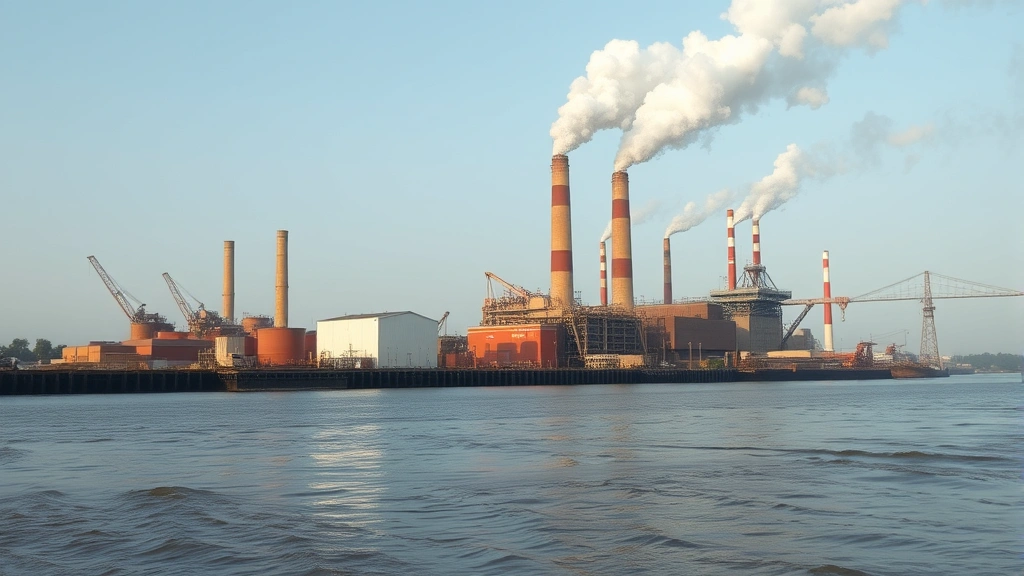
Economic growth operates through several distinct pathways to damage ecosystems. The scale effect describes how larger economies simply consume more resources—more energy, water, raw materials, and land. An economy growing at 3% annually doubles in size every 23 years, creating exponential pressure on finite ecological systems. This mechanism is particularly severe in resource extraction industries: mining, agriculture, and forestry directly convert natural capital into economic output while simultaneously destroying the biological infrastructure that provides these resources.
The composition effect refers to changes in what an economy produces. Rapid growth often prioritizes industries with high environmental intensity: heavy manufacturing, petrochemicals, intensive agriculture, and construction. Developing economies pursuing growth frequently specialize in extractive and manufacturing sectors precisely because these offer rapid output expansion, but at tremendous ecological cost. The environment and society relationship reveals that growth-focused policies systematically favor activities that degrade natural systems.
The technique effect describes how production methods become more or less efficient over time. While technological improvements can reduce environmental impact per unit of output, this efficiency gain is frequently overwhelmed by the scale and composition effects. This phenomenon, called “rebound effects,” means that more efficient production often leads to increased consumption, negating environmental benefits. A factory producing goods 30% more efficiently may see total resource consumption increase because lower costs stimulate demand.
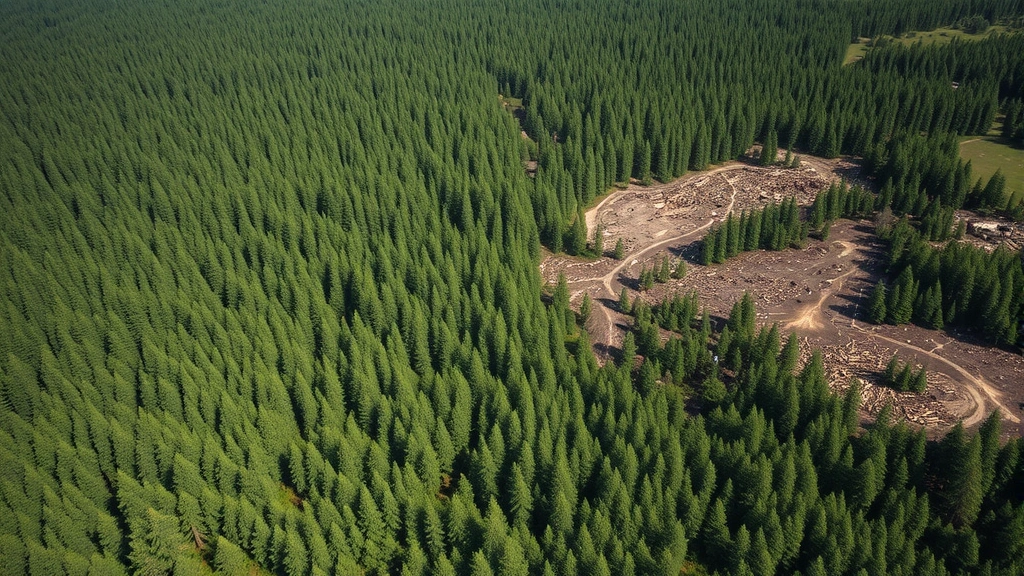
Perhaps most critically, economic growth typically requires continuous capital accumulation and investment. This drives relentless pressure to convert natural systems into economic assets. Forests become timber plantations, wetlands become agricultural land, coral reefs become tourism infrastructure, and wild fish populations become industrial fishing operations. The transformation of ecosystems from complex, self-regulating systems into simplified, managed resources inevitably reduces biodiversity, resilience, and the capacity to provide ecosystem services.
Measuring Hidden Environmental Costs
One fundamental problem with assessing economic growth is that standard GDP accounting ignores environmental externalities—costs imposed on ecosystems and future generations that markets don’t price. A tropical forest cleared for cattle ranching counts as economic gain in national accounts, even though the loss of carbon storage, biodiversity habitat, water regulation, and indigenous livelihoods represents enormous value destruction.
Natural capital accounting attempts to correct this by valuing ecosystem services and natural resource stocks. The United Nations Environment Programme has pioneered ecosystem accounting frameworks that measure the contribution of natural capital to economic activity. Studies using these methods consistently show that when environmental costs are properly internalized, economic growth rates are substantially lower than conventional GDP figures suggest. Some analyses indicate that wealthy nations have experienced net economic decline over the past two decades when environmental depreciation is accounted for.
The concept of “uneconomic growth” describes situations where additional economic expansion actually reduces total welfare because environmental and social costs exceed economic benefits. Research suggests that many high-income economies have already surpassed optimal growth thresholds and are now in uneconomic growth territory. Expanding these economies further generates more harm than good, yet policy frameworks continue to incentivize growth regardless of its net welfare impact.
Carbon accounting reveals another hidden cost dimension. The true price of fossil fuel-dependent economic growth—when climate damages are properly valued—far exceeds the market price of energy. Studies estimate that factoring in climate change costs increases the effective price of fossil fuels by 300-400%, meaning that much growth built on cheap energy is economically irrational when full costs are considered.
Case Studies: Growth Gone Wrong
The collapse of the Aral Sea provides a stark illustration of growth-driven ecosystem destruction. Soviet economic planners prioritized cotton production to support industrial growth and export revenue. Irrigation projects diverted water from the Aral Sea, causing it to shrink by 90% within four decades. The environmental catastrophe—salt storms, fishery collapse, contaminated drinking water affecting millions—represents one of history’s worst environmental disasters, directly caused by growth-focused economic policies that ignored ecological constraints.
Indonesia’s rapid economic expansion from the 1970s through 1990s was built substantially on deforestation. Forest conversion to palm oil plantations and timber operations generated short-term growth while destroying one of Earth’s most biodiverse ecosystems. The human environment interaction in this case demonstrates how growth metrics masked catastrophic biodiversity loss and contributed to the 1997 forest fires that killed thousands and affected regional air quality for months.
China’s extraordinary economic growth over the past three decades occurred alongside some of the world’s worst environmental degradation. Industrial expansion created toxic air quality in major cities, poisoned waterways, and generated enormous waste streams. While living standards improved for many, the environmental costs—estimated at 8-15% of GDP annually in some studies—substantially offset economic gains. Recent policy shifts toward environmental protection represent an implicit recognition that growth without ecological limits is unsustainable.
The Gulf of Mexico dead zone illustrates how agricultural growth creates ecosystem collapse. Intensive farming in the Mississippi River basin, driven by subsidies and growth-oriented policies, generates nutrient runoff that creates a hypoxic zone where aquatic life cannot survive. This 8,000-square-mile dead zone represents an ecological tragedy directly traceable to growth-maximizing agricultural expansion.
Decoupling: Is Green Growth Possible?
The concept of “decoupling” proposes that economic growth can be separated from environmental impact through technological innovation and policy reform. Proponents argue that renewable energy, circular economy practices, and efficiency improvements allow continued GDP expansion without ecosystem harm. This framework underpins contemporary “green growth” strategies adopted by major economies and international institutions.
Evidence for absolute decoupling—where environmental impact declines while GDP increases—remains limited and contested. Some nations show decoupling for specific pollutants (particulate matter, sulfur dioxide) or within certain sectors (energy efficiency in manufacturing). However, comprehensive decoupling across all environmental indicators simultaneously has never been achieved by any major economy. Wealthy nations showing apparent decoupling typically achieve this through exporting manufacturing to countries with weaker environmental regulations, essentially outsourcing environmental damage.
The rebound effect poses a fundamental challenge to decoupling strategies. When renewable energy becomes cheaper, people use more energy. When agriculture becomes more efficient, more land converts to farming. When transportation becomes more efficient, people travel more. These behavioral responses mean that efficiency gains rarely translate to proportional environmental improvements. Studies suggest rebound effects offset 30-60% of theoretical efficiency gains, with potential for complete offset in some sectors.
Material throughput analysis reveals another decoupling problem: even with renewable energy and efficiency improvements, economic growth still requires increasing material extraction, processing, and waste generation. The physical economy cannot decouple from material flows indefinitely. At some point, planetary boundaries on resource extraction and waste absorption become binding constraints. Evidence suggests high-income economies are already approaching or exceeding several planetary boundaries, making continued growth incompatible with ecological stability.
Some research suggests that relative decoupling—where environmental impact grows slower than GDP—represents the realistic limit of technological and policy interventions. However, this still means environmental degradation continues, just at a slower rate. For ecosystems already under severe stress, even slower degradation may be insufficient to prevent critical tipping points and biodiversity collapse.
Policy Solutions and Economic Restructuring
Addressing the growth-degradation nexus requires moving beyond efficiency improvements toward fundamental economic restructuring. Carbon pricing represents one policy approach, using taxes or cap-and-trade systems to internalize climate costs. However, research suggests that carbon prices must exceed $100-200 per ton to substantially alter economic behavior, levels that remain politically difficult to implement. Moreover, carbon pricing addresses only one environmental dimension and doesn’t resolve the broader resource depletion and biodiversity loss problems.
Circular economy frameworks aim to eliminate waste by designing products for reuse, repair, and recycling. While valuable, circular economy approaches still operate within growth-oriented frameworks and cannot fully overcome the scale and composition effects of continuous economic expansion. A circular economy growing at 3% annually still requires exponentially increasing material processing and energy throughput.
Natural capital accounting and integrated environmental-economic reporting could reshape policy priorities by making environmental costs visible in national accounts. If GDP figures explicitly showed environmental depreciation, growth targets might shift toward maintaining or improving natural capital stocks rather than maximizing monetary output. The types of environment that require protection could be better prioritized through accounting frameworks that recognize their economic value.
Degrowth or post-growth economics represents a more radical alternative, proposing that wealthy economies should deliberately reduce material throughput and economic scale while maintaining or improving human wellbeing through redistribution, shorter work weeks, and enhanced public services. This framework aligns with ecological constraints and suggests that optimal human welfare occurs at lower consumption levels than currently pursued in wealthy nations. Research on life satisfaction demonstrates that beyond a certain income threshold, additional consumption provides minimal wellbeing benefits while environmental costs continue accumulating.
Regenerative economic models go further, proposing that economies should operate to actively restore natural systems rather than merely minimizing harm. This requires fundamentally different production and consumption patterns, with economic activity designed to enhance soil health, increase biodiversity, restore watersheds, and sequester carbon. While scaling such approaches remains challenging, pilot programs demonstrate feasibility in agriculture, forestry, and energy sectors.
Policy implementation requires addressing the political economy of growth. Fossil fuel subsidies, agricultural supports, and trade agreements systematically incentivize growth-maximizing, environmentally destructive activities. Redirecting these subsidies toward regenerative practices, supporting local and regional economies, and reforming international trade rules could shift economic incentives toward ecological sustainability. However, these changes face intense opposition from incumbent industries benefiting from current arrangements.
FAQ
Does all economic growth harm ecosystems?
Research indicates that growth in physical resource consumption and material throughput consistently correlates with ecosystem degradation. However, growth in specific sectors—renewable energy installation, ecosystem restoration, education—may provide net ecological benefits. The critical distinction involves whether growth expands total material and energy throughput or merely reallocates it. Most macroeconomic growth remains coupled to increased resource extraction and waste generation, making broad-based growth fundamentally incompatible with ecological sustainability at current scales.
Can renewable energy solve the growth-environment problem?
Renewable energy is necessary but insufficient for sustainable growth. While transitioning from fossil fuels to renewables addresses climate emissions, it doesn’t resolve resource depletion, biodiversity loss, or ecosystem degradation from material extraction and land conversion. Moreover, renewable energy infrastructure requires substantial material inputs and manufacturing, which carry environmental costs. Rebound effects mean that cheap renewable energy often stimulates increased energy consumption, limiting net environmental benefits.
What does the research say about wealthy nations and environmental impact?
Wealthy nations have substantially improved some local environmental indicators while externalizing environmental costs to poorer countries through supply chains and waste export. When global supply chains are properly accounted for, wealthy nation environmental impact has continued growing. Additionally, wealthy nations consume disproportionate shares of global resources—the richest 10% of humanity generates roughly 50% of global emissions despite comprising a tiny fraction of population.
Is degrowth economically feasible?
Degrowth in wealthy economies is economically feasible if accompanied by redistribution and restructuring toward meeting human needs through lower-consumption pathways. Shorter work weeks, enhanced public services, local food systems, and cooperative ownership models can maintain or improve wellbeing while reducing material throughput. However, degrowth requires political will to overcome incumbent power structures benefiting from current growth-oriented arrangements.
How do ecosystem services relate to economic growth?
Ecosystem services—pollination, water purification, climate regulation, nutrient cycling—provide foundation for all economic activity. Paradoxically, growth often destroys the ecosystems providing these services while generating short-term economic gains. When ecosystem service values are properly calculated, environmental degradation from growth frequently represents net wealth destruction, even though conventional GDP accounting records it as gain. Understanding definition of environment science principles reveals that human economies are embedded within and dependent upon natural systems, not separate from them.


