
Can Sustainable Economy Save Ecosystems? Insights from Ecological Economics
The relationship between economic systems and environmental health has reached a critical juncture. As global ecosystems face unprecedented pressures from climate change, biodiversity loss, and resource depletion, a fundamental question emerges: can a sustainable economy genuinely restore and preserve the natural world? This inquiry demands more than optimistic rhetoric—it requires rigorous analysis of how economic structures either regenerate or degrade ecological systems.
Traditional economic models have treated nature as an infinite resource and environmental degradation as an acceptable externality. However, mounting scientific evidence reveals that this paradigm is not merely ethically problematic but economically unsustainable. The World Bank estimates that ecosystem services loss costs the global economy $2.7 trillion annually, while biodiversity decline threatens food security, water availability, and climate stability. Understanding whether a sustainable economy can reverse these trends requires examining the theoretical foundations, practical implementations, and inherent limitations of economic transformation.
Understanding Ecological Economics and Its Principles
Ecological economics represents a fundamental departure from conventional economic thought by positioning the economy as a subsystem within Earth’s finite biosphere. Unlike neoclassical economics, which assumes infinite substitutability of resources and perpetual growth, ecological economics recognizes biophysical limits and establishes clear hierarchies: the economy depends entirely on ecosystems, not vice versa.
This framework rests on several core principles. First, the first law of thermodynamics establishes that matter and energy cannot be created or destroyed, only transformed—meaning infinite growth is physically impossible on a finite planet. Second, ecosystem services provide irreplaceable functions: pollination, water purification, climate regulation, and nutrient cycling that no technological innovation can fully replicate. Third, natural capital must be valued within economic decision-making, accounting for both renewable resources like forests and non-renewable reserves like mineral deposits.
According to research from the United Nations Environment Programme, incorporating natural capital accounting into national GDP calculations could fundamentally reshape policy priorities. Countries like Bhutan have pioneered this approach through Gross National Happiness metrics, which measure progress beyond monetary expansion to include environmental sustainability and social wellbeing.
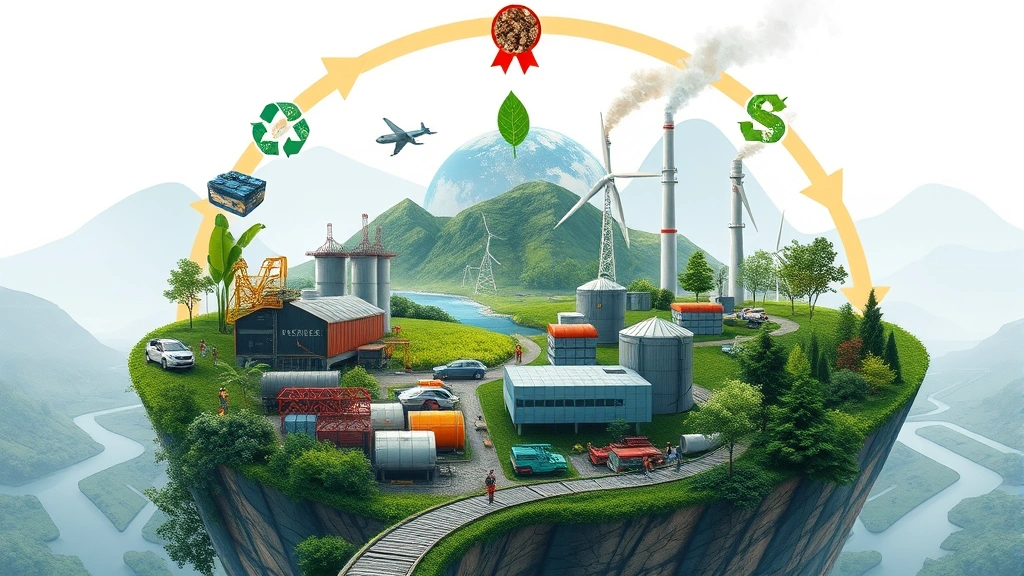
The sustainable economy model emphasizes circular design, where waste from one process becomes input for another, mimicking natural ecosystems. This contrasts sharply with linear “take-make-dispose” models that dominate industrial production. By closing material loops and reducing extraction rates below regeneration thresholds, sustainable economies theoretically minimize ecosystem degradation while maintaining productive capacity.
The Limitations of Traditional Economic Growth Models
Before sustainable alternatives can be assessed, understanding why conventional economics fails to protect ecosystems is essential. The growth-at-all-costs paradigm, which has dominated since the 1950s, contains several structural flaws regarding environmental outcomes.
GDP measurement itself proves problematic. The metric counts resource extraction as income rather than capital depletion—harvesting an ancient forest contributes equally to GDP whether it regenerates in 50 years or never. Environmental degradation from pollution, soil erosion, or biodiversity loss simply doesn’t register economically until market prices suddenly shift. This accounting illusion creates perverse incentives where destroying ecosystems appears profitable in quarterly reports but generates massive long-term costs borne by society.
Externalities represent another critical failure. Corporations generating pollution don’t bear its health costs; communities downstream absorb them. This cost shifting artificially inflates corporate profits while hiding true economic expenses. Research from ecological economics journals demonstrates that when environmental costs are properly internalized, many “profitable” industries become economically unviable—revealing that conventional growth depends on environmental theft.
The World Bank’s natural capital accounting initiatives show that nations with high GDP growth often experience simultaneous ecosystem collapse. Brazil’s economic expansion correlates with Amazon deforestation; China’s industrial growth accompanied severe air and water pollution. These patterns suggest that traditional growth models and ecosystem preservation are fundamentally incompatible.
Additionally, discount rates in conventional economics systematically undervalue future environmental damage. A 3% annual discount rate makes environmental harm occurring in 50 years economically insignificant today, justifying present-day extraction even if it causes permanent ecosystem loss. This temporal bias institutionalizes intergenerational injustice, sacrificing future wellbeing for current consumption.
How Sustainable Economies Integrate Natural Capital
Sustainable economy frameworks attempt to overcome these limitations through structural reforms that recognize nature’s economic value and establish regeneration as a core operational principle.
The most comprehensive approach involves natural capital accounting, which quantifies ecosystem services in monetary terms alongside traditional assets. Forests aren’t merely carbon sinks and biodiversity repositories—they’re economic assets generating measurable value through oxygen production, water filtration, erosion prevention, and recreational opportunities. When these services are priced and incorporated into national accounts, policy decisions shift dramatically. Protecting a mangrove forest becomes economically rational because its ecosystem services (fish nursery, storm protection, carbon sequestration) exceed timber harvest value.
Carbon pricing mechanisms represent another key integration strategy. By establishing market prices for greenhouse gas emissions through carbon taxes or cap-and-trade systems, sustainable economies force polluters to internalize climate costs. The UNEP Emissions Gap Report indicates that effective carbon pricing could reduce emissions 5-10% annually, though current prices remain far below actual climate damage costs.
Regenerative design principles extend beyond reducing harm to actively restoring ecosystems. Sustainable agriculture practices—crop rotation, cover cropping, agroforestry—simultaneously produce food and rebuild soil health. Regenerative fishing practices allow stock recovery while maintaining livelihoods. These approaches recognize that economic activity and ecological restoration aren’t opposing forces but can be integrated through thoughtful system design.
The circular economy model specifically addresses material flows. Rather than extracting virgin resources indefinitely, circular systems design products for disassembly and reuse, recover valuable materials from waste streams, and eliminate toxic substances preventing biological cycling. Companies adopting circular principles often discover that efficiency improvements reduce costs while decreasing environmental impact—profitability and sustainability align when systems are properly redesigned.
Stakeholder capitalism and benefit corporation structures represent governance innovations supporting sustainable economics. These frameworks legally obligate companies to consider environmental and social impacts alongside shareholder returns, aligning incentive structures with sustainability goals. While imperfect, they create legal accountability for ecosystem impacts previously treated as irrelevant externalities.
Real-World Examples of Ecosystem-Centered Economics
Theoretical frameworks require validation through implementation. Several countries and regions have pioneered sustainable economy models with measurable ecosystem outcomes.
Costa Rica demonstrates that conservation and economic development can coexist. Through payment for ecosystem services programs, the government compensates landowners for maintaining forests, protecting water sources, and sequestering carbon. This approach reversed deforestation trends—forest coverage increased from 21% in 1987 to 52% by 2020. Simultaneously, Costa Rica’s economy diversified into eco-tourism and sustainable agriculture, proving that conservation needn’t mean economic stagnation.
Scotland’s natural capital approach integrates ecosystem values into policy frameworks. By assessing natural capital stocks and flows, Scotland identified that peatland restoration generates greater long-term value than drainage for agriculture. This insight redirected subsidies toward conservation, improving both carbon sequestration and water quality while supporting rural livelihoods through ecosystem management employment.
The Aichi Biodiversity Targets and subsequent Kunming-Montreal Global Biodiversity Framework represent international commitments to sustainable economy principles, though implementation remains inconsistent. Countries establishing protected areas, reducing agricultural chemical use, and restoring degraded ecosystems demonstrate that policy frameworks can align economic incentives with ecological protection.
Understanding how to implement these principles requires examining how humans affect the environment through economic activities. When organizations recognize this relationship, they can redesign operations to minimize harm. This connects to broader questions about human environment interaction and how economic systems either exacerbate or alleviate environmental pressures.
Workplace Dynamics and Environmental Implementation
The question of “how to deal with a toxic work environment” proves directly relevant to sustainable economy transitions. Organizations implementing sustainability initiatives often face internal resistance, conflicting priorities, and cultural obstacles that create workplace tensions.
When companies transition toward sustainable practices, employees may experience unclear expectations, competing demands between short-term profitability and long-term sustainability, or insufficient resources for implementation. These tensions can create genuinely toxic dynamics if leadership fails to communicate clearly, align incentives, or support affected workers through transitions.
Sustainable economy implementation requires organizational alignment where sustainability goals are integrated throughout corporate strategy rather than siloed in environmental departments. This involves training, clear communication about why changes matter ecologically and economically, and ensuring that employee evaluation systems reward sustainability contributions. When workers understand that protecting ecosystems serves business interests and societal wellbeing, resistance typically diminishes.
Practical strategies for managing this transition include:
- Transparent communication about why sustainability initiatives matter and how they affect different roles
- Employee involvement in designing sustainable practices rather than imposing changes top-down
- Clear metrics demonstrating progress and connecting employee actions to ecological outcomes
- Skill development through training programs ensuring workers can succeed in sustainability-focused roles
- Fair transition support for workers in declining sectors, ensuring sustainability doesn’t mean unemployment
Organizations that handle this transition well discover that sustainability initiatives improve workplace culture. When employees understand they’re contributing to ecosystem protection and long-term viability, engagement increases. The reduction of carbon footprints becomes a shared organizational goal rather than an imposed burden, transforming workplace dynamics positively.
Policy Mechanisms for Economic-Ecological Integration
Individual corporate action proves insufficient without policy frameworks establishing rules that make sustainable practices economically advantageous across entire economies.
Environmental taxation represents the most direct policy mechanism. Carbon taxes, pollution fees, and resource extraction taxes force companies to internalize environmental costs. When properly designed, these taxes shift competitive advantage toward sustainable producers while funding conservation initiatives. However, effectiveness depends on tax rates reflecting true environmental damage—most current carbon prices remain 5-10 times below scientific estimates of climate costs.
Subsidy reform addresses another critical policy lever. Governments globally spend approximately $7 trillion annually on subsidies for fossil fuels, industrial agriculture, and resource extraction when environmental costs are included. Redirecting these subsidies toward renewable energy, sustainable agriculture, and ecosystem restoration would fundamentally reshape economic incentives. Research from International Monetary Fund climate finance analyses demonstrates that subsidy reform alone could achieve 30-40% emissions reductions while improving government finances.
Regulatory frameworks establish minimum environmental standards, preventing a “race to the bottom” where corporations relocate to jurisdictions with weaker protections. The European Union’s environmental directives, while imperfect, have driven significant ecosystem improvements through mandatory standards for air quality, water pollution, and chemical safety.
Biodiversity protections through expanded protected areas and habitat restoration programs provide direct ecosystem benefits. When combined with community benefit-sharing mechanisms, these policies can advance conservation while improving local livelihoods. Indigenous land management, which covers 22% of Earth’s surface yet protects 80% of remaining biodiversity, demonstrates that sustainable economy models must center indigenous rights and knowledge.
Examining renewable energy adoption reveals how policy mechanisms accelerate sustainable transitions. Feed-in tariffs, renewable energy mandates, and investment tax credits have driven solar and wind deployment, proving that well-designed policies can rapidly transform energy systems. Similar approaches can accelerate sustainable agriculture, circular manufacturing, and ecosystem restoration across economic sectors.
Challenges and Realistic Expectations
While sustainable economy frameworks offer genuine promise, honest assessment requires acknowledging substantial challenges and realistic limitations regarding ecosystem salvation.
Scale and speed mismatches represent the first critical challenge. Ecosystem recovery occurs on decades-to-centuries timescales, while economic transitions typically require 20-30 years even under optimistic assumptions. Species extinctions and ecosystem collapses happen far faster than restoration. Current biodiversity loss rates exceed background extinction by 1,000 times; even with perfect sustainable economy implementation, some species loss is inevitable. The question becomes not whether we can save all ecosystems but which ones we can preserve and restore.
Path dependency and incumbent resistance create structural obstacles. Trillions in fossil fuel infrastructure, agricultural systems, and industrial manufacturing represent sunk costs that corporations and governments defend fiercely. Transitioning away from these systems threatens powerful interests, generating political resistance that slows sustainable economy adoption. Countries dependent on fossil fuel exports face genuine economic disruption during transitions, requiring massive investment in alternative livelihoods—commitments most wealthy nations haven’t made.
Technological limitations constrain sustainable economy viability. Renewable energy transitions face challenges regarding energy storage, grid stability, and material requirements (solar panels require rare earth elements with significant mining impacts). Circular economy principles encounter obstacles with mixed-material products and certain chemical processes. Carbon capture technology remains expensive and energy-intensive. While innovation continues, expecting technology alone to solve ecological crises without consumption reduction proves unrealistic.
Equity and justice concerns complicate sustainable transitions. Developing nations argue that wealthy countries industrialized using fossil fuels and now demand others adopt expensive sustainable alternatives, creating unfair competitive disadvantages. Without genuine climate finance and technology transfer, sustainable economy adoption in low-income countries remains economically impossible. Addressing these justice concerns requires wealthy nations to fund transitions globally—a political commitment currently lacking.
Rebound effects undermine efficiency gains. When sustainable products become cheaper through efficiency improvements, consumption often increases, offsetting environmental benefits. Electric vehicles reduce per-mile emissions but may encourage more driving; efficient agriculture may enable agricultural expansion into remaining wild areas. Sustainable economy success requires coupling efficiency improvements with consumption limits—a politically challenging requirement in growth-oriented societies.
Despite these challenges, evidence suggests sustainable economy frameworks represent the only viable path forward. The alternative—continuing current trajectories—guarantees ecosystem collapse, climate catastrophe, and economic disruption far exceeding transition costs. Sustainable economics doesn’t promise to save all ecosystems but offers genuine possibility of preserving core ecological functions and biodiversity while maintaining human wellbeing.
The transition requires unprecedented political will, international cooperation, and willingness to reimagine prosperity beyond consumption expansion. Whether humanity possesses these capacities remains history’s unanswered question.
FAQ
Can sustainable economy models actually protect biodiversity?
Sustainable economy frameworks can significantly reduce biodiversity loss by eliminating habitat destruction, reducing pollution, and funding restoration. However, they cannot reverse extinctions already occurred or protect all remaining species given current extinction rates. Success requires combining economic transformation with expanded protected areas and indigenous land rights recognition.
How quickly can sustainable economy transitions occur?
Economic transitions typically require 20-30 years even under optimistic conditions. Denmark’s renewable energy transition took 30 years to reach 80% wind power; similar timelines apply to agriculture, manufacturing, and transportation sectors. This creates urgent tension with ecosystem collapse timescales, necessitating immediate action despite transition difficulties.
Will sustainable economies reduce living standards?
Evidence suggests sustainable transitions could maintain or improve wellbeing for most populations while reducing material consumption. Studies of voluntary simplicity, reduced work hours, and community-based economies show that beyond basic needs satisfaction, additional consumption contributes minimally to happiness. Sustainable economies prioritizing health, education, relationships, and community often increase wellbeing despite lower material throughput.
How do sustainable economies address global inequality?
Genuine sustainable economy transitions must redistribute wealth and technology globally, enabling low-income nations to develop sustainably without repeating wealthy nations’ destructive industrialization. This requires wealthy countries providing climate finance, technology transfer, and debt forgiveness—commitments currently inadequate. Without addressing inequality, sustainable economy adoption remains impossible globally.
What’s the relationship between sustainable economy and workplace culture?
Organizations implementing sustainable practices often experience improved workplace culture when transitions are managed transparently with employee involvement. However, poorly managed transitions create toxic environments through unclear expectations and competing demands. Success requires clear communication, skill development, and ensuring sustainability benefits workers rather than merely shifting burdens.


