
Cloud Integration for Homelabs: Expert Guide to Connecting Devices to Cloud Environments
Homelab environments have become increasingly sophisticated, with practitioners seeking to maximize computational efficiency while minimizing physical infrastructure overhead. Cloud integration represents a critical evolution in how personal laboratories operate, enabling seamless data synchronization, remote access, and scalable resource management. This comprehensive guide explores the intersection of homelab technology and cloud ecosystems, examining both technical implementation and the broader implications for resource consumption and environmental impact.
The transition from isolated homelab systems to cloud-integrated architectures reflects changing priorities in computing infrastructure. As individuals and small organizations expand their technical capabilities, understanding how to effectively connect homelab devices to cloud environments becomes essential for operational success. This guide addresses the technical, economic, and sustainability dimensions of cloud integration, providing actionable insights for practitioners at all experience levels.
Understanding Cloud Integration Architecture
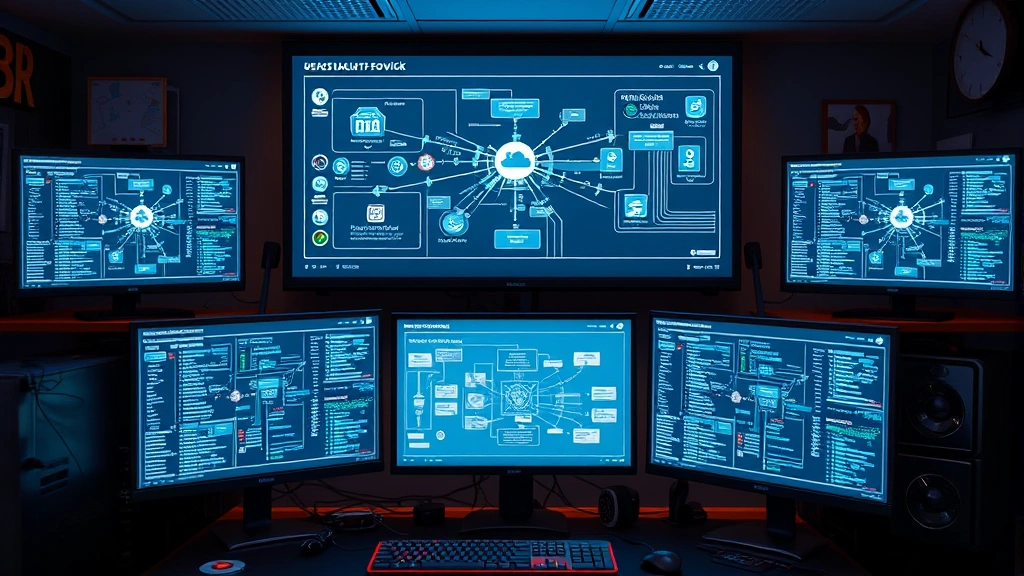
Cloud integration for homelabs involves establishing secure, reliable connections between on-premises equipment and remote cloud infrastructure. The fundamental architecture comprises three primary components: the homelab environment containing physical or virtualized servers, the cloud provider infrastructure offering computational resources, and the networking layer facilitating communication between these systems.
Modern homelab cloud integration typically employs a hybrid architecture where certain workloads remain on-premises while others migrate to cloud providers like AWS, Google Cloud Platform, or Microsoft Azure. This approach balances the control and customization benefits of local infrastructure with the scalability and accessibility advantages of cloud environments. Understanding this architectural foundation is crucial before implementing specific technical solutions.
The decision to integrate homelab devices with cloud infrastructure involves evaluating several factors: computational requirements, data sensitivity, bandwidth availability, and cost considerations. Organizations pursuing environmental responsibility must also consider the energy efficiency implications of distributed computing across multiple infrastructure locations.
Cloud integration architectures typically follow one of three patterns: lift-and-shift migration moving existing applications directly to cloud platforms, refactoring applications to leverage cloud-native capabilities, or maintaining parallel environments with selective workload distribution. Each approach presents distinct technical requirements and operational considerations that directly impact system performance and resource utilization.
The economic implications of cloud integration extend beyond simple computational costs. When properly implemented, cloud integration can reduce overall infrastructure expenses by consolidating underutilized homelab resources while scaling cloud capacity during peak demand periods. This dynamic resource allocation represents more efficient infrastructure utilization compared to maintaining static on-premises capacity.
[IMAGE_1]
Network Configuration and Security Fundamentals
Establishing secure network connections between homelab and cloud environments requires careful attention to multiple security layers and configuration parameters. The network perimeter represents the first critical control point where unauthorized access attempts are intercepted and legitimate traffic is verified.
Firewall configuration forms the foundation of network security in cloud-integrated homelabs. Organizations must implement stateful firewalls that maintain awareness of established connections while blocking unsolicited inbound traffic. Most homelab practitioners operate behind residential or small business internet connections that provide Network Address Translation (NAT), effectively hiding internal IP addresses from external networks.
IP addressing strategies become more complex in hybrid architectures. Organizations must maintain clear separation between internal homelab network ranges and cloud provider address spaces. Implementing proper subnetting prevents IP conflicts and enables granular traffic control through network segmentation. The technical community increasingly emphasizes zero-trust network architecture principles where every connection attempt receives verification regardless of apparent origin.
DNS configuration represents another critical element of network integration. Hybrid environments typically employ split-DNS approaches where internal queries resolve to on-premises resources while external queries route to cloud services. This configuration maintains performance for local resource access while enabling seamless access to cloud-hosted services from remote locations.
Domain Name System Security Extensions (DNSSEC) provide cryptographic verification of DNS responses, preventing man-in-the-middle attacks that could redirect traffic to malicious endpoints. Implementing DNSSEC in homelab environments requires careful key management and monitoring procedures to prevent service disruption from misconfiguration.
Bandwidth management becomes increasingly important as homelab devices transmit data to cloud infrastructure. Most residential internet connections provide asymmetrical bandwidth with significantly higher download than upload speeds. Understanding these limitations enables proper capacity planning and traffic prioritization to ensure critical workloads receive adequate bandwidth while preventing network saturation.
Implementing VPN and Secure Tunneling Solutions
Virtual Private Networks (VPNs) provide encrypted tunnels through which homelab devices and cloud resources communicate securely over untrusted networks. VPN technology encrypts all traffic between endpoints, preventing eavesdropping and ensuring data confidentiality across internet connections.
Site-to-site VPN configurations establish permanent encrypted connections between the homelab network and cloud provider infrastructure. This approach enables seamless communication between resources as if they existed on a single local network. Configuration requires establishing VPN gateways at both endpoints, defining network ranges that should traverse the tunnel, and implementing IPsec or alternative encryption protocols.
The IPsec protocol suite provides industry-standard encryption and authentication mechanisms for site-to-site VPN implementations. IPsec operates at the network layer, encrypting all traffic between specified networks transparently to applications. This transparency enables existing applications to function without modification while gaining security benefits of encrypted communication.
Alternative VPN technologies like WireGuard offer modern implementations with improved performance and simplified configuration compared to traditional IPsec deployments. WireGuard’s minimal codebase reduces attack surface while its streamlined configuration approach lowers operational complexity. Many cloud providers now offer native WireGuard integration, simplifying implementation for homelab practitioners.
Client-to-site VPN configurations enable remote access to homelab resources from external locations. Individuals traveling or working from external networks can establish secure connections to homelab infrastructure, accessing services as if physically present on the local network. This capability requires implementing VPN server software on homelab infrastructure with appropriate authentication mechanisms.
Multi-factor authentication (MFA) integration with VPN access significantly improves security posture by requiring multiple verification methods before granting access. Combining something you know (passwords), something you have (hardware tokens), and something you are (biometric data) creates substantial barriers against unauthorized access even if credentials become compromised.
Implementing energy-efficient VPN infrastructure becomes increasingly important as homelab practitioners seek to minimize power consumption. Hardware VPN appliances designed for efficient operation consume significantly less electricity than general-purpose servers configured for VPN duties, reducing both operational costs and environmental impact.

Container Orchestration and Cloud-Native Deployment
Container technology enables packaging applications with all dependencies into portable units that execute consistently across different infrastructure environments. Kubernetes orchestration platforms manage containerized workloads across homelab and cloud infrastructure, automating deployment, scaling, and lifecycle management.
Kubernetes architecture comprises control plane components managing cluster state and worker nodes executing containerized applications. Homelab implementations typically run lightweight Kubernetes distributions like K3s or Minikube that reduce resource requirements compared to full-featured distributions. These distributions maintain compatibility with standard Kubernetes APIs while optimizing for resource-constrained environments.
Hybrid Kubernetes deployments span on-premises homelab clusters and cloud provider managed services, enabling workload distribution based on resource availability and cost efficiency. Container images built in homelab environments can deploy directly to cloud infrastructure with zero modification, leveraging container technology’s portability benefits.
Container registries store built images for deployment across infrastructure. Organizations can maintain private registries within homelab environments, reducing egress bandwidth costs while maintaining security control over container images. Cloud provider registries integrate seamlessly with their Kubernetes services, simplifying deployment workflows.
StatefulSets in Kubernetes manage applications requiring persistent state and stable identities across pod restarts. Database applications and message brokers typically employ StatefulSets to maintain consistency and enable reliable data persistence. Hybrid deployments might maintain stateful services on-premises while scaling stateless services to cloud infrastructure during peak demand.
Service mesh technologies like Istio provide sophisticated traffic management, security policies, and observability across distributed applications. These technologies become particularly valuable in hybrid environments where applications span multiple infrastructure locations and require complex routing policies based on performance characteristics or security requirements.
Data Synchronization and Backup Strategies
Data synchronization between homelab and cloud environments requires careful planning to ensure consistency, prevent data loss, and minimize bandwidth consumption. Different synchronization strategies address distinct use cases with varying consistency guarantees and operational complexity.
Continuous replication provides near-real-time data synchronization by transmitting changes immediately after occurrence. This approach minimizes recovery time objective (RTO) and recovery point objective (RPO) metrics, ensuring minimal data loss in failure scenarios. Continuous replication demands reliable network connectivity and sufficient bandwidth to handle change rates without creating bottlenecks.
Scheduled synchronization performs periodic data transfers at predetermined intervals, reducing bandwidth requirements compared to continuous replication. This approach suits use cases where slight delays in data propagation are acceptable, such as daily backup operations or weekly analytics data transfers.
Backup strategies for hybrid environments must address data stored in multiple locations. Implementing comprehensive backup policies ensures data protection regardless of where information resides. Cloud provider backup services integrate with homelab infrastructure through APIs, enabling centralized backup management across distributed systems.
Incremental backup approaches reduce bandwidth consumption and storage requirements by transmitting only changes since the previous backup. Full backups establish baseline copies while subsequent incremental backups capture modifications, dramatically reducing data transfer volumes for large datasets.
Deduplication technologies identify and eliminate redundant data blocks, further reducing storage and bandwidth requirements. Deduplication is particularly effective for backup operations where multiple versions of similar files create substantial redundancy. Some cloud providers offer deduplication services that operate transparently across data transfers.
Encryption of data in transit and at rest protects sensitive information throughout the synchronization process. Transport layer security (TLS) encrypts data crossing networks while storage encryption protects data at rest in both homelab and cloud environments. Key management systems ensure encryption keys remain secure and accessible only to authorized systems.
Monitoring, Logging, and Performance Optimization
Comprehensive monitoring across hybrid homelab-cloud environments provides visibility into system performance, identifies bottlenecks, and enables proactive issue resolution. Monitoring tools must aggregate metrics from diverse sources including on-premises equipment and cloud provider services.
Prometheus and similar time-series databases collect detailed performance metrics from instrumented applications and infrastructure components. These systems enable sophisticated analysis of performance trends, capacity planning based on historical patterns, and alerting when metrics exceed defined thresholds.
Centralized logging aggregates events from all system components into unified repositories enabling correlation of related events across infrastructure. Log aggregation systems like Elasticsearch enable powerful search and analysis capabilities, facilitating rapid troubleshooting when issues occur.
Distributed tracing technologies track individual requests across microservices deployed across homelab and cloud infrastructure. These tools identify performance bottlenecks by showing exactly where requests spend time as they traverse multiple services and infrastructure components.
Application performance monitoring (APM) tools provide end-user perspective visibility into system behavior. APM systems measure actual user experience rather than just infrastructure metrics, enabling optimization focused on real-world impact.
Network performance optimization becomes critical in hybrid environments where data traverses internet connections with variable bandwidth and latency. Quality of Service (QoS) configurations prioritize critical traffic while limiting non-essential traffic during congestion periods. Edge computing techniques move computation closer to data sources, reducing data transfer volumes and associated latency.
Resource optimization in hybrid environments requires continuous analysis of workload placement decisions. Machine learning algorithms can analyze historical resource utilization patterns and predict optimal workload distribution, automatically migrating services to minimize costs while maintaining performance targets.
Cost Analysis and Resource Efficiency
Cloud integration economic analysis must account for direct computational costs, bandwidth expenses, and operational overhead. Understanding the total cost of ownership enables informed decisions about workload placement and infrastructure investment.
Cloud provider pricing models vary significantly between services and providers. Compute services charge per second of utilization, storage services charge per gigabyte stored, and bandwidth charges apply to data egress from cloud infrastructure. Careful analysis of actual usage patterns reveals opportunities to optimize costs through reserved instances, spot instances, or alternative service selections.
Homelab infrastructure requires capital investment in hardware and ongoing operational expenses for electricity, cooling, and maintenance. Comparing these costs against cloud alternatives helps determine optimal infrastructure distribution. Some workloads may be more cost-effective on-premises while others benefit from cloud deployment.
Bandwidth costs represent significant expenses in hybrid architectures. Data egress from cloud infrastructure typically incurs charges while ingress remains free. Minimizing data transfers through efficient synchronization strategies and edge computing techniques substantially reduces bandwidth expenses.
Energy consumption analysis reveals the environmental and economic implications of infrastructure choices. On-premises equipment consumes electricity continuously while cloud resources typically scale with actual usage. Understanding the energy efficiency of different infrastructure options enables decisions aligned with both economic and environmental objectives.
The carbon footprint implications of cloud infrastructure merit careful consideration. Large cloud providers typically operate highly efficient data centers powered partially by renewable energy, potentially offering lower per-unit carbon emissions compared to on-premises alternatives. However, comprehensive lifecycle analysis should account for embodied carbon in equipment manufacturing and end-of-life disposal.
Implementing sustainable computing practices requires balancing performance requirements against resource consumption. Oversizing infrastructure creates unnecessary waste while undersizing limits functionality. Right-sizing infrastructure based on actual requirements optimizes both economic efficiency and environmental impact.
Organizations pursuing sustainability goals should evaluate cloud providers’ renewable energy commitments and carbon neutrality claims. Many major cloud providers have published detailed sustainability reports documenting their progress toward environmental objectives. Selecting providers aligned with organizational values supports broader sustainability initiatives.
FAQ
What network bandwidth is required for homelab cloud integration?
Bandwidth requirements depend on specific workloads and synchronization strategies. Continuous replication of large datasets requires substantial bandwidth, while scheduled synchronization can function effectively with limited connections. Most homelab practitioners successfully operate with standard residential broadband, though dedicated business internet connections provide better reliability and symmetrical bandwidth beneficial for bidirectional data transfers.
How do I ensure security when connecting homelab devices to cloud infrastructure?
Implement multiple security layers including firewalls, VPN encryption, multi-factor authentication, and network segmentation. Use established security protocols like IPsec or WireGuard for encrypted communication. Regularly update all systems and monitor for suspicious activity through centralized logging. Consider implementing zero-trust architecture principles where every connection receives verification.
Can I run Kubernetes across homelab and cloud infrastructure?
Yes, hybrid Kubernetes deployments are common and well-supported. Lightweight distributions like K3s enable homelab Kubernetes clusters that integrate with cloud provider managed services. Applications packaged as containers deploy identically across both environments, leveraging container technology’s portability benefits.
What backup strategy is best for hybrid homelab-cloud environments?
Implement comprehensive backup policies addressing data in all locations. Combine continuous replication for critical data with scheduled incremental backups for cost efficiency. Use cloud provider backup services that integrate with homelab infrastructure. Encrypt all backups and maintain geographic diversity by storing copies in multiple locations.
How can I optimize costs in cloud-integrated homelabs?
Analyze actual workload patterns to identify cost optimization opportunities. Use cloud provider reserved instances for predictable workloads and spot instances for flexible tasks. Minimize bandwidth expenses through efficient data synchronization. Consider keeping compute-intensive workloads on-premises while using cloud for variable-demand services. Regularly review cloud billing to identify unexpected expenses.
What environmental impact should I consider with cloud integration?
Cloud providers typically operate more efficient data centers than on-premises alternatives, potentially reducing per-unit energy consumption and carbon emissions. However, comprehensive analysis should account for embodied carbon in equipment manufacturing and end-of-life disposal. Select cloud providers committed to renewable energy and carbon neutrality. Optimize infrastructure sizing to eliminate unnecessary resource consumption regardless of location.


