
Monster Hunter’s Economy: Ecological Impact Analysis of Gaming’s Resource Extraction Systems
The Monster Hunter franchise, particularly with the anticipated Monster Hunter Wilds release, presents a fascinating case study in how virtual economies mirror real-world environmental challenges. Within these games, players engage in systematic resource extraction, habitat disruption, and species management that directly parallels contemporary ecological economics. This analysis examines how the game’s economic systems reflect actual environment and society relationships, offering unexpected insights into sustainable resource management and the costs of unchecked exploitation.
Monster Hunter Wilds introduces expanded ecosystems where every hunted creature, harvested material, and cleared habitat carries economic consequences that ripple through the game world. By analyzing these virtual systems through an ecological economics lens, we can better understand the interconnections between human activity, biodiversity loss, and economic sustainability that define our actual environmental crisis.
Virtual Resource Extraction and Real Environmental Economics
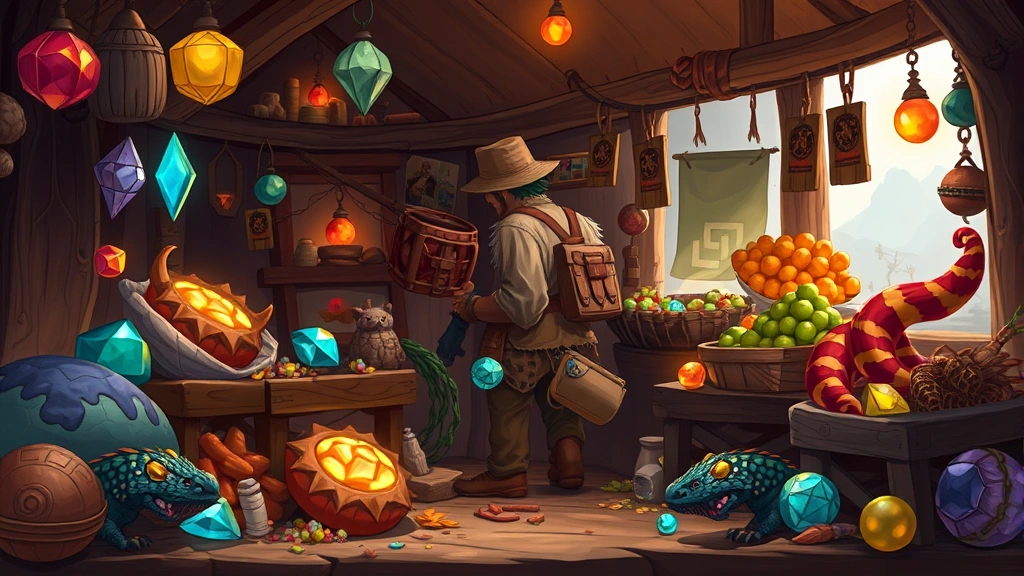
Monster Hunter Wilds constructs an economy fundamentally based on the extraction of biological resources from natural systems. Players hunt creatures for materials—scales, gems, organs, and bones—that become commodities within the game’s market system. This mirrors the extractive industries that dominate global economies: fishing, logging, mining, and agriculture. The economic incentive structure in Monster Hunter directly parallels real-world resource extraction, where immediate profit maximization often supersedes long-term ecological sustainability.
In ecological economics, this phenomenon is analyzed through the lens of natural capital depletion. According to research from the World Bank’s environmental economics division, extractive industries generate approximately $2.5 trillion annually in global economic value while simultaneously degrading natural capital worth significantly more. Monster Hunter Wilds replicates this paradox: hunting a rare elder dragon yields substantial monetary rewards and crafting materials, yet the creature’s removal diminishes the ecosystem’s biological wealth and structural integrity.
The game’s quest system creates economic pressure analogous to real market demand. When players need specific materials—perhaps rare scales for armor upgrades—they systematically hunt target species. This behavior reflects actual economic patterns where consumer demand drives species toward overexploitation. The how humans affect the environment through consumption is precisely what Monster Hunter Wilds gamifies, making the economic-ecological relationship tangible and measurable within a controlled system.
The virtual marketplace in Monster Hunter Wilds operates without explicit environmental accounting. Players receive payment for hunted materials without considering the ecological costs of species removal. This absence of environmental pricing mechanisms reflects real-world economic systems where ecosystem services remain largely unpriced. Water purification, pollination, climate regulation, and biodiversity maintenance—services worth trillions globally—generate no revenue in conventional accounting, creating a fundamental market failure that encourages overexploitation.
Ecosystem Services in Monster Hunter Wilds
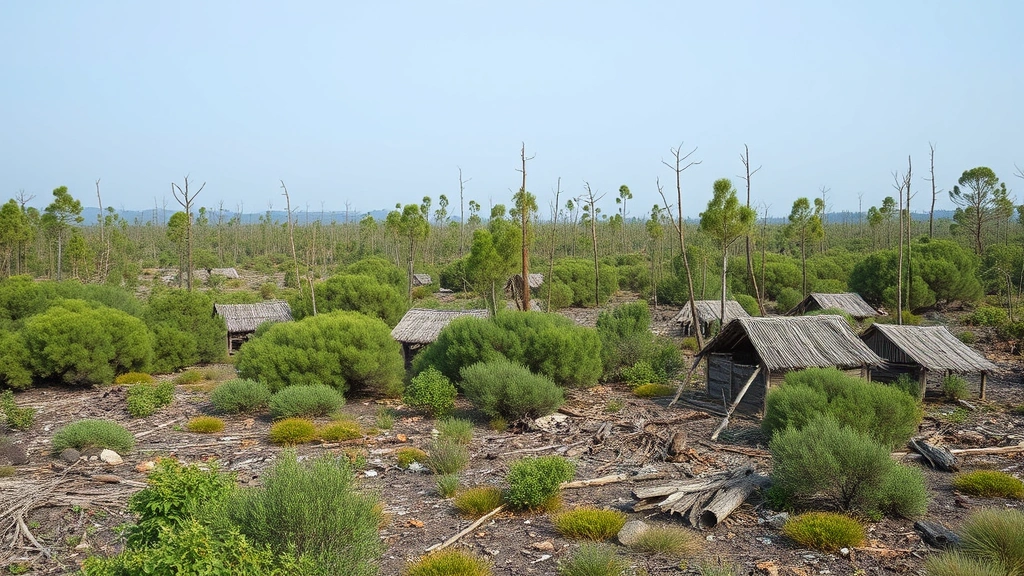
Monster Hunter Wilds’ environments provide multiple ecosystem services that players can exploit or protect. Forests offer timber and medicinal herbs; water systems contain unique creatures and resources; volcanic regions yield rare minerals. Each biome functions as a provider of ecosystem services, yet the game’s economic structure typically rewards their degradation rather than their preservation.
Ecological economists define ecosystem services through four categories: provisioning (food, water, materials), regulating (climate, flood control, disease regulation), supporting (nutrient cycling, soil formation, primary production), and cultural (aesthetic, recreational, spiritual value). Monster Hunter Wilds emphasizes provisioning services—the direct material extraction players conduct—while largely ignoring regulating and supporting services that maintain ecosystem functionality.
Consider the game’s water systems: players hunt aquatic monsters and harvest water-based materials, receiving immediate economic rewards. However, the removal of apex predators from aquatic ecosystems would, in real ecological terms, destabilize trophic cascades and reduce water quality. Monster Hunter Wilds rarely models these secondary effects, creating an economic incentive structure divorced from ecological reality. This reflects actual environmental policy failures where environment and society relationships remain economically invisible until ecosystem collapse forces sudden, costly interventions.
The game’s ancient forests and coral ecosystems represent particularly valuable ecosystem service providers. These biodiverse regions support countless species and generate significant regulating services—carbon sequestration in forests, larval nurseries in coral systems. Yet Monster Hunter Wilds’ economic systems typically incentivize their exploitation. Players hunt rare forest creatures, harvest endemic plants, and extract resources that would, in reality, represent irreplaceable natural capital worth vastly more than any craftable item.
Research from ecological economics suggests that properly valuing ecosystem services would fundamentally restructure economic incentives. Studies indicate that protecting natural ecosystems generates 5-10 times greater economic value through ecosystem service preservation than extractive exploitation yields. Monster Hunter Wilds could incorporate similar mechanics: protecting ancient forests might generate economic returns through ecosystem service payments, creating competition between extraction and conservation strategies.
The Tragedy of the Commons in Gaming Systems
Garrett Hardin’s 1968 essay “The Tragedy of the Commons” describes how rational individual actors, each maximizing personal benefit from a shared resource, collectively destroy that resource’s viability. Monster Hunter Wilds’ multiplayer systems create precisely this dynamic. When multiple hunters pursue the same rare creatures or harvest from identical resource nodes, individual incentives drive overexploitation of shared ecological commons.
The game’s shared-world ecosystem (particularly in multiplayer contexts) demonstrates classic commons tragedy mechanics. Each hunter rationally pursues the most valuable creatures and resources, yet collective hunting pressure depletes populations below sustainable levels. In real ecological economics, this explains fisheries collapse, deforestation, and wildlife extinction—phenomena where individual economic rationality produces collective ecological irrationality.
Monster Hunter Wilds’ handling of creature respawning and population dynamics affects whether true commons tragedy emerges. If creatures respawn instantly and infinitely, the tragedy becomes theoretical rather than practical. However, if respawn rates reflect actual population dynamics—where hunted species require time to recover—then player behavior directly determines ecosystem sustainability. This creates economic incentives for either conservation or exploitation depending on time horizons and discount rates.
Real-world commons management offers solutions applicable to Monster Hunter Wilds’ economic systems. UNEP’s research on commons governance identifies successful approaches: property rights assignment, quota systems, monitoring and enforcement, graduated sanctions, and community-based management. Games implementing these mechanics—limiting hunts per creature type, requiring licenses for rare species, or establishing community harvest quotas—could model sustainable commons management while maintaining engaging gameplay.
The tragedy of the commons in Monster Hunter Wilds reveals how human-environment interaction produces unintended consequences. Individual hunters pursuing rational economic strategies collectively damage the resource base supporting their livelihoods. This perfectly encapsulates the fundamental ecological economics problem: how to align individual incentives with collective sustainability.
Economic Externalities and Hidden Environmental Costs
Externalities—costs imposed on third parties without compensation—represent a core concept in ecological economics. Monster Hunter Wilds’ hunting activities generate substantial negative externalities that the game’s economic system fails to price or account for. When a hunter kills an apex predator, they externalize costs onto the entire ecosystem: trophic cascade disruption, prey population explosion, herbivory pressure on vegetation, and downstream effects on nutrient cycling.
The economic value of these externalized costs remains invisible in Monster Hunter Wilds’ accounting systems. A player receives payment for hunting an elder dragon but bears no cost for the ecological damage their action imposes on the broader ecosystem. This mirrors real environmental economics, where carbon emissions, habitat destruction, and species extinction remain largely unpriced in market transactions. A barrel of oil’s price reflects extraction and refining costs but not the climatic and ecological externalities imposed on society.
Ecological economists advocate for internalizing environmental externalities through mechanisms like carbon pricing, ecosystem service payments, or biodiversity offsets. Monster Hunter Wilds could implement similar systems: hunting a rare species might trigger ecosystem degradation that increases the cost of future hunts, or conservation efforts might generate economic rewards offsetting extraction income. Such mechanics would transform the game’s economy to reflect ecological reality more accurately.
The concept of shadow prices—the implicit value of environmental goods—applies directly to Monster Hunter Wilds. Each creature killed possesses not only its material market value but also an ecological shadow price reflecting its role in ecosystem functioning. An apex predator’s shadow price might be substantially higher than its material value, reflecting the predator’s crucial role in maintaining trophic balance. Incorporating shadow pricing into game economics would create more realistic incentive structures.
Hidden environmental costs accumulate as players progress through Monster Hunter Wilds. Early-game hunting of common species generates minimal externalities, but late-game pursuit of rare elder dragons imposes massive ecological costs. If these costs remained hidden—never reflected in gameplay consequences—players experience no feedback connecting their economic behavior to environmental degradation. Conversely, if environmental costs manifested as increased hunt difficulty, ecosystem instability, or resource scarcity, players would directly experience the economic consequences of environmental destruction.
Biodiversity Loss and Economic Valuation
Monster Hunter Wilds features dozens of creature species, each representing unique genetic and phenotypic diversity. The game’s biodiversity constitutes natural capital—biological wealth that generates ecosystem services and supports ecosystem resilience. Yet the economic system treats individual creatures as interchangeable commodities, failing to account for the unique value each species contributes to ecosystem functioning.
Ecological economics recognizes that biodiversity loss imposes substantial economic costs. Research indicates that species extinction reduces ecosystem productivity, stability, and resilience. A forest with 100 species provides greater ecosystem services and maintains those services more reliably than a forest with 50 species. Monster Hunter Wilds could incorporate this principle: as player hunting drives species toward extinction, remaining ecosystems become less productive, generating fewer resources and supporting fewer creatures.
The game’s endemic species—creatures found only in specific regions—represent particularly valuable natural capital. These species possess unique evolutionary history and ecological roles that cannot be replicated by other creatures. Their extinction would represent irreversible loss of biological and cultural value. Yet Monster Hunter Wilds’ economic systems typically incentivize hunting endemic species precisely because their rarity makes their materials valuable for crafting.
Valuing biodiversity presents a fundamental challenge in both game design and real ecological economics. The Convention on Biological Diversity estimates that ecosystem services from biodiversity generate $125 trillion in global economic value. Yet conventional economics struggles to price individual species contributions to this total. Monster Hunter Wilds faces similar challenges: how to economically value a creature’s ecological role while maintaining engaging gameplay incentives?
One approach involves differentiating between renewable and non-renewable harvesting. Common creatures might respawn quickly, representing renewable resources that players can sustainably harvest. Rare endemic species might respawn slowly or not at all, representing non-renewable natural capital that extraction permanently depletes. This mirrors real resource economics where renewable resources (fish, timber) differ fundamentally from non-renewable resources (fossil fuels, minerals) in their economic and ecological characteristics.
Sustainable Hunting Models and Economic Equilibrium
Monster Hunter Wilds’ potential to model sustainable resource management offers valuable insights into ecological economics. A sustainable hunting system would establish economic equilibrium where harvest rates equal population growth rates, maintaining both creature populations and hunter income indefinitely. Achieving this equilibrium requires pricing mechanisms that reflect ecological limits.
Sustainable yield models, developed in fisheries economics and forestry, provide frameworks applicable to Monster Hunter Wilds. Maximum sustainable yield (MSY) represents the largest harvest that can continue indefinitely without depleting the resource base. Below MSY, populations remain stable and resources regenerate; above MSY, populations decline toward collapse. Monster Hunter Wilds could implement explicit MSY mechanics: each creature type possesses a sustainable harvest quota, and exceeding this quota triggers population decline and resource scarcity.
Economic instruments for achieving sustainable harvesting include harvest taxes, tradeable quotas, and species-specific licensing fees. A harvest tax might charge hunters a fee proportional to the creature’s rarity or ecological importance, internalizing environmental costs. Tradeable quotas would allow hunters to buy and sell harvest rights, creating market-based allocation of sustainable resource use. Species-specific licenses would require hunters to pay for the privilege of hunting rare creatures, generating revenue for ecosystem restoration.
The game’s economic equilibrium depends on balancing hunter income against creature scarcity. If common creatures provide insufficient income, hunters rationally pursue rare species regardless of sustainability. Conversely, if sustainable harvesting of common creatures generates adequate income, hunters have economic incentive to maintain populations. This mirrors real resource economics where sustainable practices require that conservation generates greater economic value than extraction.
Monster Hunter Wilds could implement dynamic pricing reflecting creature scarcity: as a species becomes rarer, its material value increases, but simultaneously the hunting license fee increases more steeply, creating economic incentive to switch to more abundant species. This creates a self-regulating system where market prices automatically discourage overexploitation of rare creatures while encouraging sustainable harvesting of abundant species.
Research on sustainable resource management from IUCN demonstrates that communities successfully managing commons often employ adaptive management: monitoring resource status, adjusting harvest regulations based on population data, and sanctioning violators. Monster Hunter Wilds could incorporate similar mechanics, where players collectively monitor ecosystem health and adjust hunting regulations to maintain sustainability.
The concept of natural capital accounting—measuring and monitoring ecosystem health alongside economic production—provides another framework for Monster Hunter Wilds. Rather than tracking only monetary wealth, the game could display ecosystem health metrics: creature population sizes, species diversity indices, ecosystem service provision levels, and habitat integrity. Players would see how their economic activities affect these metrics, creating feedback connecting economic behavior to ecological outcomes.
Achieving sustainable equilibrium requires that types of environment receive protection proportional to their ecological value. Ancient forests, coral reefs, and volcanic ecosystems might be designated protected areas with restricted hunting, allowing ecosystem restoration while maintaining player access to resources. This reflects real conservation strategy where protected areas preserve ecosystem services and biodiversity while sustainable use zones allow regulated resource extraction.
FAQ
How does Monster Hunter Wilds’ economy reflect real environmental economics?
Monster Hunter Wilds models fundamental ecological economics principles: resource extraction, ecosystem service provision, commons management, and externality problems. The game’s hunting-based economy directly parallels real extractive industries, where immediate profit maximization often conflicts with long-term ecological sustainability. By analyzing the game through an ecological economics lens, players and researchers can better understand how market systems either promote or undermine environmental conservation.
What are ecosystem services and why do they matter in Monster Hunter Wilds?
Ecosystem services are benefits humans derive from natural systems: provisioning services like food and materials, regulating services like climate control and water purification, supporting services like nutrient cycling, and cultural services like recreation and aesthetic value. In Monster Hunter Wilds, players exploit provisioning services through hunting while ignoring regulating and supporting services that maintain ecosystem functionality. Real-world environmental economics emphasizes that underpricing or ignoring ecosystem services creates market failures encouraging overexploitation.
Can Monster Hunter Wilds model sustainable resource management?
Yes. The game could implement maximum sustainable yield mechanics, harvest quotas, species-specific licensing fees, dynamic pricing reflecting scarcity, and ecosystem health monitoring systems. These mechanisms would create economic incentives for sustainable harvesting while maintaining engaging gameplay. Research on commons management demonstrates that properly designed institutions can achieve sustainability while allowing continued resource use.
What is the tragedy of the commons and how does it apply to Monster Hunter Wilds?
The tragedy of the commons occurs when rational individual actors, each maximizing personal benefit from shared resources, collectively destroy those resources. In Monster Hunter Wilds’ multiplayer systems, each hunter rationally pursues rare creatures and valuable materials, yet collective hunting pressure depletes populations unsustainably. This mirrors real environmental problems like fisheries collapse and deforestation, where individual economic rationality produces collective ecological irrationality.
How could Monster Hunter Wilds incorporate environmental externalities into its economy?
The game could implement ecological feedback systems where hunting rare creatures triggers ecosystem degradation that increases future hunt difficulty, reduces resource availability, or requires ecosystem restoration investments. Shadow pricing—assigning implicit value to ecological roles—could make rare species economically valuable for conservation rather than just extraction. Internalizing environmental externalities would create more realistic economic incentives reflecting ecological reality.
What role does biodiversity play in Monster Hunter Wilds’ economics?
Biodiversity represents natural capital generating ecosystem services and maintaining ecological resilience. As species diversity declines, ecosystem productivity and stability decrease. Monster Hunter Wilds could model this by making rare endemic species particularly valuable for conservation while making their extinction increasingly costly through ecological feedback. This would reflect ecological economics principles where biodiversity loss imposes substantial economic costs through reduced ecosystem service provision.


