
How Biodiversity Boosts Economies: Study Insights
Biodiversity represents far more than aesthetic value or ecological balance—it constitutes a fundamental economic asset that drives productivity, resilience, and long-term prosperity across sectors. Recent comprehensive research reveals that the economic contributions of biological diversity extend from pharmaceutical development and agricultural productivity to climate regulation and tourism revenue, creating a compelling case for conservation as sound economic policy.
The intersection of biology and economics has historically remained fragmented, with environmental concerns treated separately from financial analysis. However, emerging evidence demonstrates that this artificial separation masks profound interdependencies. When ecosystems lose species and genetic diversity, economies experience measurable declines in productivity, increased vulnerability to shocks, and reduced capacity for innovation. Understanding these mechanisms requires examining how biodiversity translates into tangible economic benefits across multiple industries and scales.
The Economic Value of Biodiversity: Core Mechanisms
Biodiversity generates economic value through multiple interconnected pathways that economists increasingly recognize as essential to national accounting systems. The World Economic Forum estimates that over half of global GDP—approximately $44 trillion annually—depends moderately or highly on ecosystem services supported by biological diversity. This figure represents a paradigm shift from viewing nature as external to economic calculations toward recognizing it as foundational infrastructure.
The mechanisms through which biodiversity creates economic value operate at distinct but reinforcing levels. First, genetic diversity within species enables adaptation to changing environmental conditions, directly affecting yield stability in agriculture and resilience in wild-harvest industries. Second, species diversity maintains ecosystem function—the capacity of natural systems to process energy, cycle nutrients, and provide services. Third, ecosystem diversity ensures that landscapes can perform multiple functions simultaneously, preventing catastrophic collapse when single systems fail.
Understanding environment science fundamentals reveals how biological complexity translates to economic stability. Research from the United Nations Environment Programme documents that every 10% loss in biodiversity correlates with measurable productivity declines across dependent economic sectors. This relationship holds across agricultural systems, fisheries, and pharmaceutical industries, suggesting fundamental rather than marginal economic importance.
Ecosystem Services and Market Economics
Ecosystem services—the benefits humans derive from natural systems—constitute the primary mechanism linking biodiversity to economic output. These services fall into four categories: provisioning (food, water, materials), regulating (climate, disease, flood control), supporting (nutrient cycling, soil formation), and cultural (recreation, spiritual, educational). Each category generates measurable economic value, though measurement methodologies continue evolving.
Provisioning services represent the most straightforward economic linkage. Fisheries dependent on marine biodiversity generate approximately $150 billion annually in direct revenue, while supporting employment for over 10 million people globally. Freshwater ecosystems provide water purification services valued at $60-100 billion yearly, reducing treatment costs for municipalities and industries. Forest ecosystems supply timber, non-timber forest products, and genetic resources generating $700 billion in annual economic value.
Regulating services operate through less visible but equally critical mechanisms. Wetland ecosystems provide flood regulation services worth $5,000-10,000 per hectare annually in avoided flood damage costs. Pollination services from wild and managed bees generate agricultural value estimated at $15 billion yearly in the United States alone, with global estimates exceeding $300 billion. These services function as natural insurance mechanisms, reducing the costs of technological alternatives and protecting against catastrophic risk.
The relationship between environment and society becomes economically quantifiable when examining ecosystem service provision. Tropical forests provide climate regulation services through carbon sequestration valued at $2-5 trillion globally, representing a significant hedge against climate-related economic disruption. This value proposition increasingly attracts institutional investment, with carbon finance mechanisms channeling billions toward biodiversity conservation in developing economies.
Cultural ecosystem services, historically undervalued in economic analysis, drive substantial revenue streams. Nature-based tourism generates $600 billion annually, supporting livelihoods in developing regions while creating economic incentives for habitat preservation. Recreational use of biodiverse landscapes contributes an additional $120 billion in direct spending, with multiplier effects throughout local economies.
Agricultural Productivity and Food Security
Agricultural systems demonstrate direct, measurable relationships between biodiversity and economic output. Crop genetic diversity enables farmers to maintain stable yields across varying environmental conditions—a service that becomes economically critical as climate variability increases. Studies document that farms with higher on-farm biodiversity experience 20-30% lower yield variance compared to monoculture systems, reducing risk premiums in crop insurance and stabilizing farm incomes.
The economic importance of agricultural biodiversity extends beyond individual farms to supply chain resilience. Genetic diversity within crop species provides insurance against disease outbreaks, pest infestations, and environmental stress. The Irish Potato Famine illustrates the catastrophic cost of agricultural homogeneity—economic losses exceeded $1 trillion in contemporary values, with mortality consequences extending across Atlantic migration patterns. Modern monoculture agriculture faces similar vulnerabilities, with global wheat production dependent on a handful of varieties susceptible to emerging fungal diseases.
Pollinator biodiversity directly correlates with agricultural productivity and profitability. Farms in regions with diverse wild pollinator communities experience higher yields for pollinator-dependent crops (almonds, apples, cucumbers, blueberries) compared to regions where pollinator diversity has declined. Research quantifies this relationship: a 10% increase in pollinator species diversity correlates with 3-5% yield increases for dependent crops, translating to $200-400 additional revenue per hectare for farmers.
Soil biodiversity—the microbial and invertebrate communities within soil ecosystems—drives agricultural productivity through nutrient cycling, pathogen suppression, and soil structure maintenance. Soils with higher microbial diversity exhibit 15-25% greater nutrient availability, reducing fertilizer requirements and associated costs. This biodiversity benefit reduces input costs by $50-100 per hectare annually while improving environmental outcomes through reduced chemical runoff.
The connection between how humans affect the environment through agricultural practices demonstrates that biodiversity preservation generates direct financial returns. Farmers implementing biodiversity-enhancing practices (crop rotation, hedgerow maintenance, reduced tillage) report 15-20% net income improvements over 5-10 year periods, after accounting for transition costs and management intensity changes.

Pharmaceutical and Biotechnology Innovation
Biodiversity represents the foundational resource for pharmaceutical innovation, with approximately 25% of modern drugs derived from plant species and another 13% from fungi and marine organisms. The economic value of this resource stream remains difficult to quantify precisely, but conservative estimates place the annual pharmaceutical value derived from biodiversity at $100-200 billion. This figure represents only current market value; potential value from undiscovered species and genetic variants likely exceeds these estimates by orders of magnitude.
The economic model underlying pharmaceutical development from biodiversity demonstrates clear return-on-investment patterns. A single pharmaceutical compound from a tropical plant species can generate $1-10 billion in lifetime sales. The cost of biodiversity prospecting—surveying ecosystems, screening compounds, and conducting preliminary research—averages $100,000-500,000 per promising lead compound. This cost structure creates powerful incentives for conservation in biodiverse regions, particularly when coupled with benefit-sharing agreements that ensure local communities capture value.
Biotechnology industries increasingly recognize biodiversity as essential infrastructure for innovation. Enzymes derived from thermophilic bacteria enable industrial-scale DNA sequencing and synthesis, generating $50 billion annually in biotechnology services. Microbial diversity provides organisms for industrial fermentation, producing antibiotics, vaccines, and biofuels worth hundreds of billions annually. Loss of microbial biodiversity through habitat destruction directly threatens the discovery pipeline for future pharmaceutical breakthroughs.
Marine biodiversity particularly demonstrates pharmaceutical potential, with preliminary screening suggesting that marine organisms contain bioactive compounds at 10-20 times higher rates than terrestrial organisms. Coral reef ecosystems, occupying less than 1% of ocean area, harbor organisms generating compounds with pharmaceutical potential valued at $10-100 billion. This economic reality transforms coral conservation from environmental concern to pharmaceutical industry infrastructure investment.
Tourism and Recreation Revenue
Nature-based tourism represents one of the fastest-growing economic sectors, with global nature tourism revenue increasing 3-4% annually compared to 2-3% for overall tourism. Biodiverse destinations command premium pricing, with visitors spending 30-50% more for experiences in high-biodiversity regions compared to degraded ecosystems. Costa Rica’s ecotourism industry illustrates this dynamic: the country generates $3-4 billion annually through nature tourism despite representing only 0.03% of global land area, demonstrating the economic value concentration in biodiverse regions.
Wildlife viewing generates substantial direct revenue and employment. African safari tourism contributes $29 billion annually to regional economies, supporting 1.5 million direct jobs. This revenue creates economic incentives for wildlife protection, with individual elephants generating estimated lifetime tourism revenue of $76,000-$1.6 million depending on location and tourism infrastructure. This economic reality has motivated African nations to implement conservation policies that increase wildlife populations while improving rural incomes.
Recreational use of biodiverse landscapes generates significant consumer expenditure. Hiking, birdwatching, fishing, and nature photography in the United States generate $120 billion in annual spending, supporting 2 million jobs. This spending concentrates in regions with high biodiversity—national parks, coastal areas, and mountain ecosystems—creating economic incentives for habitat preservation and restoration.
The multiplier effects of nature-based tourism extend throughout regional economies. Visitor spending circulates through local businesses, with each dollar of direct tourism spending generating $1.50-2.50 in total economic activity. This multiplier effect makes biodiversity conservation economically competitive with extractive industries in many regions, particularly when accounting for long-term sustainability and risk management.
Climate Resilience and Risk Management
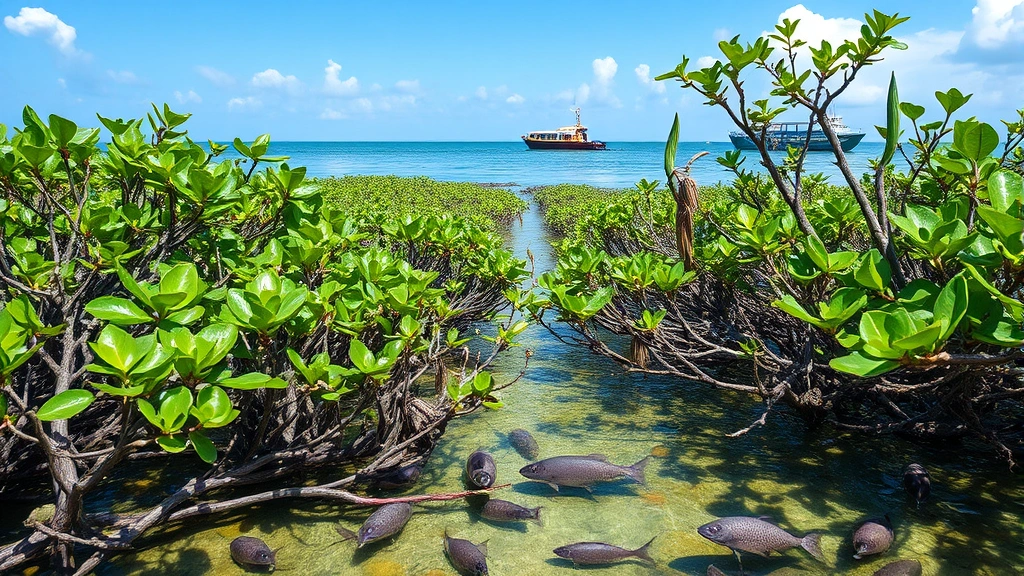
Biodiversity functions as natural infrastructure for climate adaptation and resilience, with economic value increasing as climate variability escalates. Mangrove ecosystems provide storm surge protection valued at $65 billion annually in avoided property damage, while supporting fisheries worth $10 billion yearly. Coral reefs provide wave attenuation services worth $480 billion annually and support fisheries feeding 500 million people. The economic logic for protecting these systems becomes compelling when calculating avoided disaster costs against protection investment requirements.
Forest biodiversity provides climate regulation services through carbon sequestration and albedo effects, with economic value estimated at $2-5 trillion globally. This value proposition has attracted institutional capital, with carbon finance mechanisms generating billions annually for forest conservation. The economic incentive structure increasingly aligns conservation with financial returns, creating sustainable funding mechanisms for biodiversity protection in developing economies.
Crop and livestock genetic diversity provides insurance against climate-related production shocks. Farmers with genetically diverse crop portfolios experience 20-30% lower income volatility compared to monoculture farmers, reducing agricultural risk premiums and supporting more stable food supplies. This risk management function becomes economically critical in regions experiencing increasing climate variability, with the economic value of genetic diversity increasing as climate change accelerates.
Regional Case Studies and Quantified Returns
Madagascar demonstrates biodiversity’s economic potential in developing regions. The country contains 80% endemic species found nowhere else globally, with pharmaceutical and biotechnology potential valued at $50-100 billion. However, deforestation reduces this potential annually, with forest loss estimated to cost the country $1.5-2 billion in lost ecosystem services, pharmaceutical potential, and tourism revenue. This cost-benefit analysis reveals that conservation investment generates 3-5x returns compared to forest conversion for agriculture.
The Pantanal wetland ecosystem in South America provides flood regulation, carbon sequestration, and fisheries services worth $8-12 billion annually to surrounding regions. This ecosystem also supports tourism generating $500 million yearly. Drainage for agriculture would generate short-term gains of $2-3 billion but would eliminate the $8-12 billion annual ecosystem service flow, representing a net loss of $5-10 billion in perpetuity. This analysis demonstrates that intact types of environment often generate superior economic returns compared to conversion.
Indonesia’s coral reef ecosystems generate $2-3 billion annually through fisheries and tourism while providing storm protection valued at $480 million yearly. Recent research documents that maintaining reef biodiversity generates $50,000-100,000 per hectare in net present value compared to $10,000-20,000 for reef conversion to aquaculture. This economic analysis drives Indonesian government policies toward marine protected area expansion and coral restoration investment.
The Cerrado ecosystem in Brazil contains 5% of global plant species and 3% of global vertebrate species, with pharmaceutical and agricultural genetic resource value estimated at $100-200 billion. Conversion to agriculture generates short-term returns of $5-10 billion, but eliminates ecosystem services and genetic resources worth $50-100 billion in perpetuity. This comparison reveals that preserving human environment interaction patterns that maintain biodiversity generates superior long-term economic returns.
Policy Integration and Investment Strategies
Translating biodiversity’s economic value into policy and investment requires integrating natural capital accounting into national economic frameworks. The World Bank’s environmental economics initiatives promote natural capital accounting that measures biodiversity loss alongside GDP, revealing that many countries experiencing GDP growth simultaneously experience net wealth decline through biodiversity loss. When biodiversity loss is properly valued—typically $2-8 trillion annually globally—it becomes clear that conservation represents sound economic policy.
Payment for ecosystem services (PES) mechanisms create direct economic incentives for biodiversity conservation. Costa Rica’s PES program has protected 2 million hectares while generating $1 billion in conservation payments, demonstrating that direct payment mechanisms can sustain conservation at scale. Expanding these mechanisms globally could generate $50-100 billion annually in conservation funding while aligning economic incentives with environmental protection.
Biodiversity-inclusive agricultural policies generate measurable economic returns while maintaining productivity. Countries implementing agroforestry, crop rotation, and integrated pest management report 15-30% yield increases over 5-10 years compared to conventional monoculture, while reducing input costs and environmental impacts. The economic case for transitioning to biodiversity-intensive agriculture becomes increasingly compelling as input costs rise and environmental regulations tighten.
Investment in biodiversity restoration generates substantial returns. Restoring degraded ecosystems costs $1,000-5,000 per hectare but generates ecosystem service flows worth $10,000-50,000 per hectare annually within 10-20 years. This return profile attracts institutional investment, with conservation finance mechanisms channeling billions toward restoration projects that generate both environmental and financial returns.
Corporate biodiversity commitments increasingly reflect economic rather than purely environmental motivations. Companies dependent on ecosystem services (food producers, pharmaceutical firms, tourism operators) invest in biodiversity conservation to protect supply chains and reduce operational risk. This alignment of corporate and environmental interests creates powerful incentives for conservation at scale, with companies controlling billions in investment capital increasingly incorporating biodiversity metrics into investment decisions.
International frameworks increasingly recognize biodiversity’s economic importance. The UN Convention on Biological Diversity’s post-2020 targets emphasize economic integration, requiring signatory nations to incorporate biodiversity value into national accounting systems and investment decisions. This policy shift creates structural incentives for conservation across economies, with early adopters gaining competitive advantages through superior risk management and resource efficiency.
FAQ
How much economic value does biodiversity generate annually?
Global estimates suggest biodiversity generates $125-145 trillion in ecosystem services annually, with $44 trillion representing services directly dependent on biological diversity. This value spans agriculture ($1-2 trillion), fisheries ($150 billion), pharmaceutical development ($100-200 billion), tourism ($600 billion), and climate regulation ($2-5 trillion). These estimates continue expanding as valuation methodologies improve and previously unquantified services receive economic assessment.
Which sectors show the strongest economic dependence on biodiversity?
Agriculture demonstrates the strongest economic dependence, with $1-2 trillion in annual value dependent on pollinator diversity, genetic diversity, and soil biodiversity. Pharmaceutical development ranks second, with 25% of modern drugs derived from biodiversity. Fisheries, tourism, and climate regulation services follow, demonstrating that multiple major economic sectors depend fundamentally on biological diversity for productivity and sustainability.
Can biodiversity loss be reversed economically?
Ecosystem restoration generates substantial economic returns, with restored ecosystems typically producing ecosystem service flows worth 10-50x restoration costs within 10-20 years. However, some biodiversity losses prove irreversible economically—extinct species cannot be restored, and ecosystem function recovery requires decades. This reality emphasizes prevention over restoration, as maintaining biodiversity costs substantially less than restoring it after loss.
How do developing countries benefit economically from biodiversity conservation?
Developing countries hosting high-biodiversity regions benefit through pharmaceutical development potential, nature-based tourism revenue, agricultural productivity from genetic diversity, and ecosystem services provision. Payment for ecosystem services mechanisms, conservation finance, and ecotourism development provide direct revenue streams that can exceed extractive industry returns while maintaining long-term sustainability. Countries like Costa Rica demonstrate that biodiversity conservation generates superior economic returns compared to forest conversion.
What policy changes best translate biodiversity value into economic incentives?
Effective policies include: natural capital accounting integrating biodiversity into national economic metrics; payment for ecosystem services creating direct conservation incentives; biodiversity-inclusive agricultural subsidies; conservation finance mechanisms; corporate supply chain sustainability requirements; and international frameworks rewarding biodiversity protection. These policies work most effectively in combination, creating reinforcing incentives that align economic and environmental interests across sectors and regions.


