Table of Contents
Introduction
Picture this: millions of glass bottles get tossed into trash cans every single year. That’s a lot of waste heading straight to our already overflowing landfills. But here’s the thing—you can actually be part of turning this problem around. And it’s easier than you might think.
When you know how to recycle glass bottles the right way, you’re not just clearing out your recycling bin. You’re making a real difference. We’re talking about conserving natural resources, cutting down on pollution, and helping protect the planet for your kids (and their kids too). Ready to learn how? Let’s dive in.
Here’s something that might surprise you: glass recycling is actually pretty amazing when you look at the numbers. Glass comes from natural stuff like sand, soda ash, and limestone—all materials that have to be mined and processed, which takes serious energy. But when you recycle glass bottles? You’re cutting that energy use by up to 30%. That’s like taking a bunch of cars off the road in terms of carbon emissions.
And get this—when you learn how to recycle glass bottles effectively, you’re basically becoming an environmental superhero. (Okay, maybe that’s a bit dramatic, but you get the idea.) Every bottle you recycle means less mining, less energy use, and less strain on our planet’s resources.
Now, let’s talk about landfills for a second. They’re running out of space—fast. And here’s the kicker: glass bottles don’t break down naturally. We’re talking thousands of years before they decompose completely. Thousands! When you divert those bottles from your trash bin to your recycling bin, you’re helping solve a massive space problem.
But it’s not just about the environment. Communities actually benefit economically from glass recycling too. Think jobs at recycling facilities and cost savings for manufacturers. Pretty cool, right? The trick is knowing the details—like how to clean your bottles properly, sort them by color, and find the right recycling centers. Even learning about related topics like how sustainable outdoor projects can amplify your environmental impact in ways you hadn’t considered.
Look, environmental awareness isn’t just a trendy buzzword anymore—it’s necessary. And taking simple actions like recycling glass bottles shows you care enough to do something about it. Plus, when you know what you’re doing, you can avoid those frustrating mistakes that mess up the whole recycling process. You know, like mixing in stuff that shouldn’t be there or not preparing your bottles correctly, which can contaminate entire batches.
Want to go even further? Understanding how to reduce greenhouse gas emissions gives you the bigger picture of environmental protection. When you recycle glass bottles properly, you’re part of a chain reaction of positive changes. We’re talking about protecting natural habitats, conserving energy, and supporting a cleaner planet for everyone.
This guide is going to walk you through everything you need to know. No confusing jargon or overwhelming information—just practical, actionable steps that make glass recycling a natural part of your routine.
What You’ll Learn in This Guide
We’ll cover everything you need to become a glass recycling pro. By the time you’re done reading, you’ll know exactly why it matters and how to do it right.
- Understanding the Importance: Learn why recycling glass bottles is vital for environmental health and resource conservation. Discover the unique benefits that glass recycling offers compared to other materials.
- Preparation Steps: Get detailed instructions on cleaning, sorting by color, and removing labels and lids to ensure your glass is ready for recycling without contamination.
- Finding Recycling Centers: Learn how to locate local recycling facilities or curbside programs, including tips on using online tools and municipal services to make recycling convenient and effective.
- Avoiding Common Mistakes: Identify typical errors in glass recycling such as contamination or improper disposal. Gain practical advice to prevent these issues and contribute to a successful recycling system.
First up, we’ll dig into the nitty-gritty of prepping your glass bottles for recycling. You’ll learn the best cleaning techniques and sorting methods that actually make a difference. Then we’ll explore the various recycling programs available in your area and how to tap into them without any hassle.
Along the way, you’ll discover some pretty interesting insights about how your individual efforts support bigger environmental and economic benefits. It’s actually pretty inspiring when you see the ripple effects of what seems like such a simple action.
By the end, you’ll have everything you need to make recycling glass bottles second nature. And honestly? You might find yourself getting excited about it. (Trust me, it happens to the best of us.)
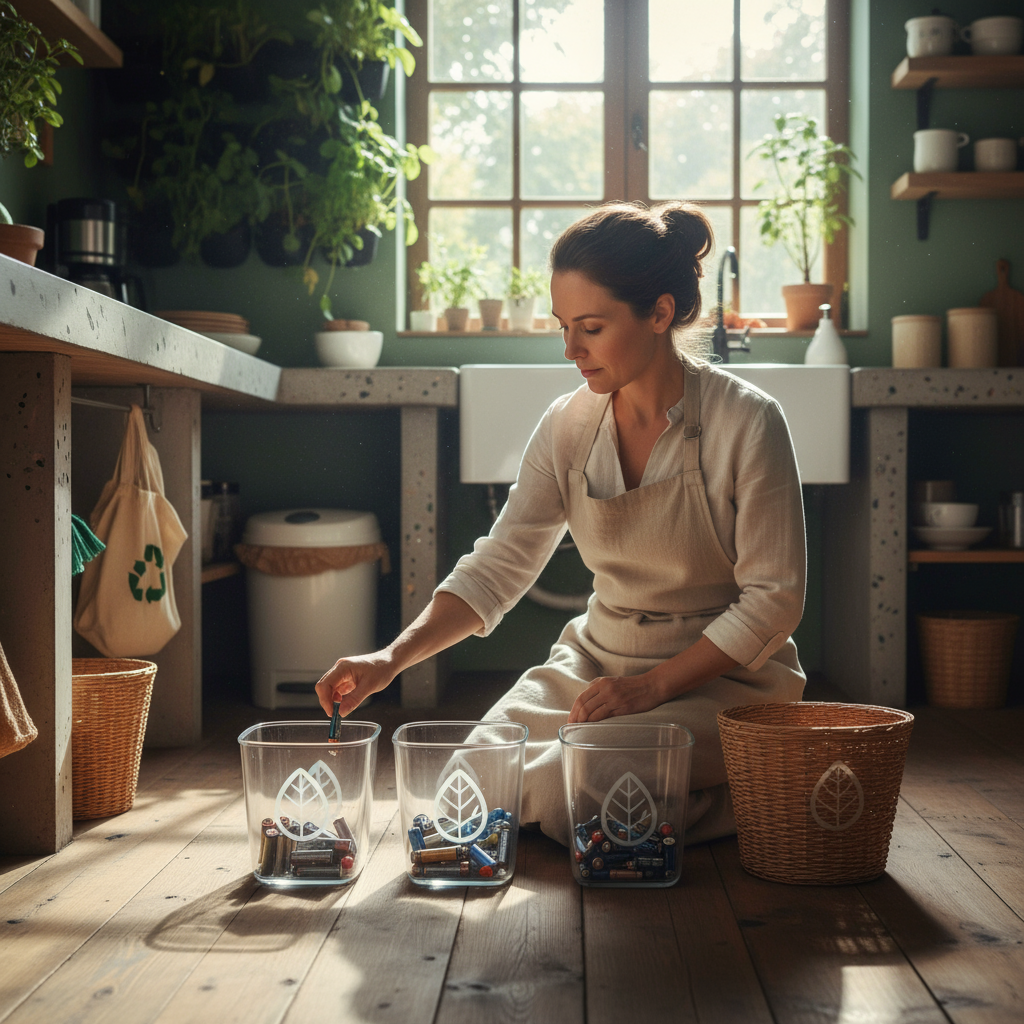
You might also want to explore other sustainable practices that work hand-in-hand with glass recycling, like how to recycle batteries properly. These eco-friendly habits tend to build on each other, creating a more complete approach to taking care of our environment. We’ll touch on how community involvement can really amplify these positive impacts too.
The best part? These responsible habits don’t just help the planet—they strengthen communities, create jobs, and build a culture of sustainability that future generations will actually thank us for. Your commitment to learning how to recycle glass bottles is part of something much bigger: a movement toward environmental awareness and conscious living.
So, are you ready to make a difference? Let’s jump in and tackle this step by step. You’ve got this.
Here’s something worth thinking about: every glass bottle you toss in the recycling bin actually makes a bigger difference than you might realize. We’re talking about real environmental impact here—the kind that adds up when everyone pitches in. And honestly? Once you understand how much good comes from recycling glass, you’ll never look at that empty pasta sauce jar the same way again. Let’s break down why this matters so much, and then I’ll walk you through the simple steps to do it right.
Why Recycle Glass Bottles?
Picture this: every glass bottle you recycle is one less item taking up space in an already overflowing landfill. And trust me, landfills are filling up fast. But that’s just the beginning of why glass recycling is such a game-changer.
When you recycle glass, you’re actually cutting down on carbon emissions in a pretty significant way. Here’s why: making new glass from recycled materials uses way less energy than starting from scratch with raw materials. Less energy means fewer greenhouse gases pumped into the atmosphere. It’s like getting a two-for-one deal for the planet.
Then there’s the resource conservation angle. Sand, soda ash, limestone—these aren’t infinite resources, and mining them can really mess with ecosystems. When we reuse glass instead of constantly extracting new materials, we’re giving the earth a much-needed break.
Want to dive deeper into this? Check out this guide on how to recycle glass bottles effectively for some practical tips that’ll help you make the most of your recycling efforts. Because here’s the thing—recycling doesn’t just help the environment. It makes economic sense too.
The money side of this is pretty compelling. Manufacturing with recycled glass costs less than using brand-new raw materials. That means lower production costs, which often translate to better prices for consumers. Plus, the recycling industry creates real jobs—we’re talking collection, processing, manufacturing. It’s an entire green economy that supports communities while protecting the planet.
Key Aspects of Recycling Benefits
Let’s get specific about what makes glass recycling so powerful:
- Reduction in Landfill Waste: Every bottle you recycle is space saved in landfills that are already bursting at the seams. This helps waste management systems work better and reduces the environmental headaches that come with expanding landfills.
- Lower Carbon Emissions: Recycled glass manufacturing uses less energy, which means fewer greenhouse gases. Want more ways to cut emissions? Here’s a helpful resource on how to reduce greenhouse gas emissions.
- Conservation of Raw Materials: We’re protecting natural resources like sand and minerals by giving them a break from constant mining and extraction. Mother Nature definitely appreciates this one.
- Cost Savings in Manufacturing: Recycled glass is cheaper and more energy-efficient to work with. That’s good news for both manufacturers and your wallet.
- Job Creation: Recycling programs employ people in collection, sorting, and processing. It’s sustainable economic growth that actually makes sense.
See how your individual actions create these ripple effects? Every bottle matters. But here’s where it gets practical—you need to prepare those bottles correctly to make sure all these benefits actually happen.
How to Prepare Glass Bottles for Recycling
Okay, so you’re ready to recycle. Great! But hold on—there’s a right way to do this, and it’s easier than you think. The key is proper preparation, and I promise it’s not complicated.
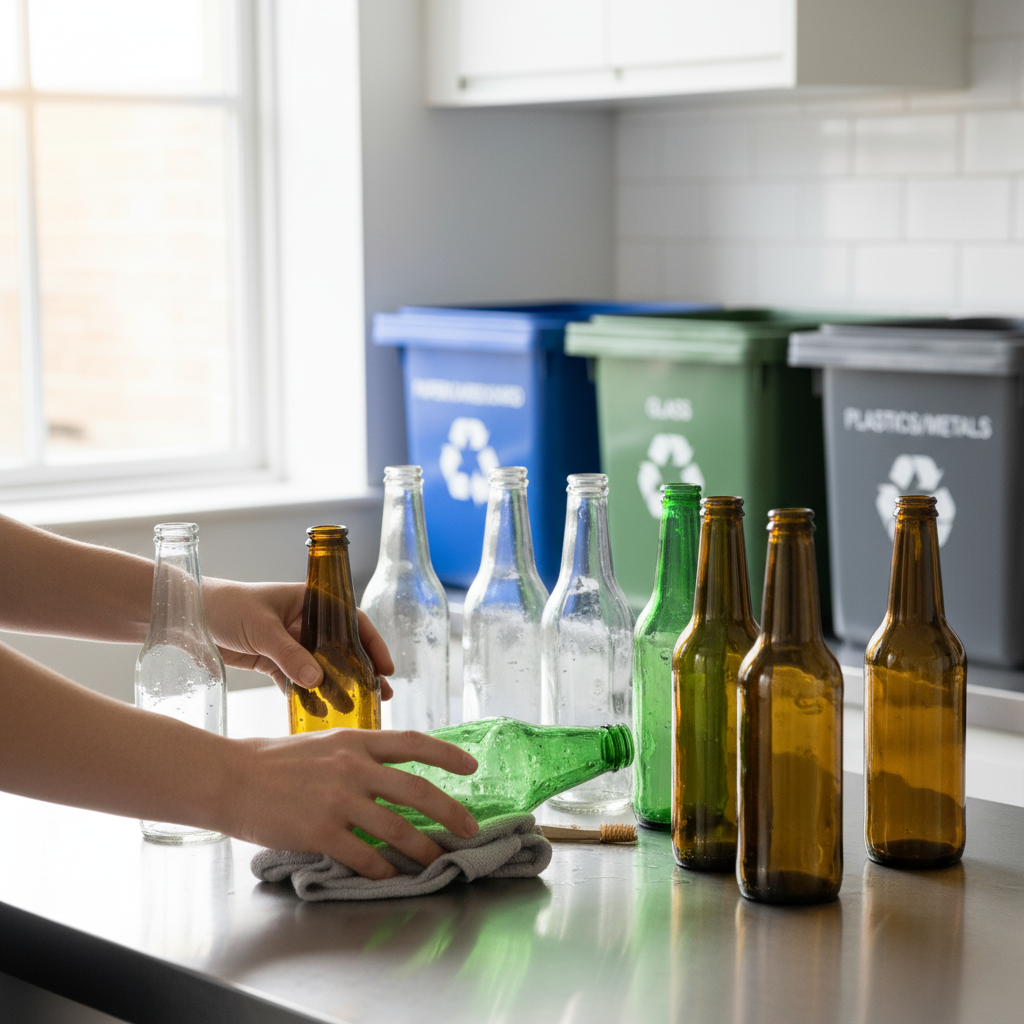
First things first: give those bottles a good rinse. You don’t need to scrub them spotless, but getting rid of leftover liquids and food bits prevents contamination in the recycling stream. Think of it as keeping the quality high for everyone.
Next up: labels, caps, and lids. This is where things get a little tricky because different recycling programs have different rules. Some want everything removed, others are more flexible. The best bet? Check your local guidelines. (I know, I know—another thing to look up. But it’s worth it.)
For the complete picture on all of this, including what happens after you drop off your bottles, take a look at this comprehensive glass bottle recycling guide. It’ll fill in all the gaps and give you the full story.
Here’s something many people don’t realize: color matters. Clear, green, and brown glass need to be separated because they melt at different temperatures and get used for different things. It might seem like extra work, but this sorting step is what makes high-quality recycled glass possible.
Key Aspects of Glass Bottle Preparation
Let’s make this simple with a quick checklist:
- Rinse Bottles Thoroughly: Get rid of any leftover liquids and debris. Clean glass means better recycled material and no contamination of other recyclables.
- Remove Labels When Possible: Some programs require this, others don’t. A little soaking usually does the trick if you need to peel them off. It helps reduce adhesives and paper that can complicate processing.
- Take Off Caps and Lids: Metal and plastic caps should come off and get recycled separately (if your program accepts them). This protects recycling equipment and keeps materials properly sorted.
- Sort by Color: Clear, green, and brown glass should be separated. It helps recycling facilities work more efficiently and produce better quality recycled glass.
When you follow these steps, you’re not just recycling—you’re recycling right. And that makes all the difference in turning your empty bottles into new products while maximizing those environmental and economic benefits we talked about. Small actions, big impact. That’s how real change happens, one bottle at a time.
Here’s the bottom line: recycling glass bottles isn’t just good for the planet—it’s one of the smartest environmental moves you can make. Think about it. Every bottle you toss in that recycling bin cuts carbon emissions, saves precious natural resources like sand and minerals, and keeps our landfills from overflowing. But the benefits don’t stop there. You’re also supporting local jobs and helping manufacturers save money, which creates a ripple effect throughout your community.
The key? Doing it right. Clean those bottles, sort by color, and know your local recycling rules. It might seem like extra work, but trust me—it matters. When you skip these steps, you risk contaminating entire batches of recyclables. And that defeats the whole purpose, doesn’t it?
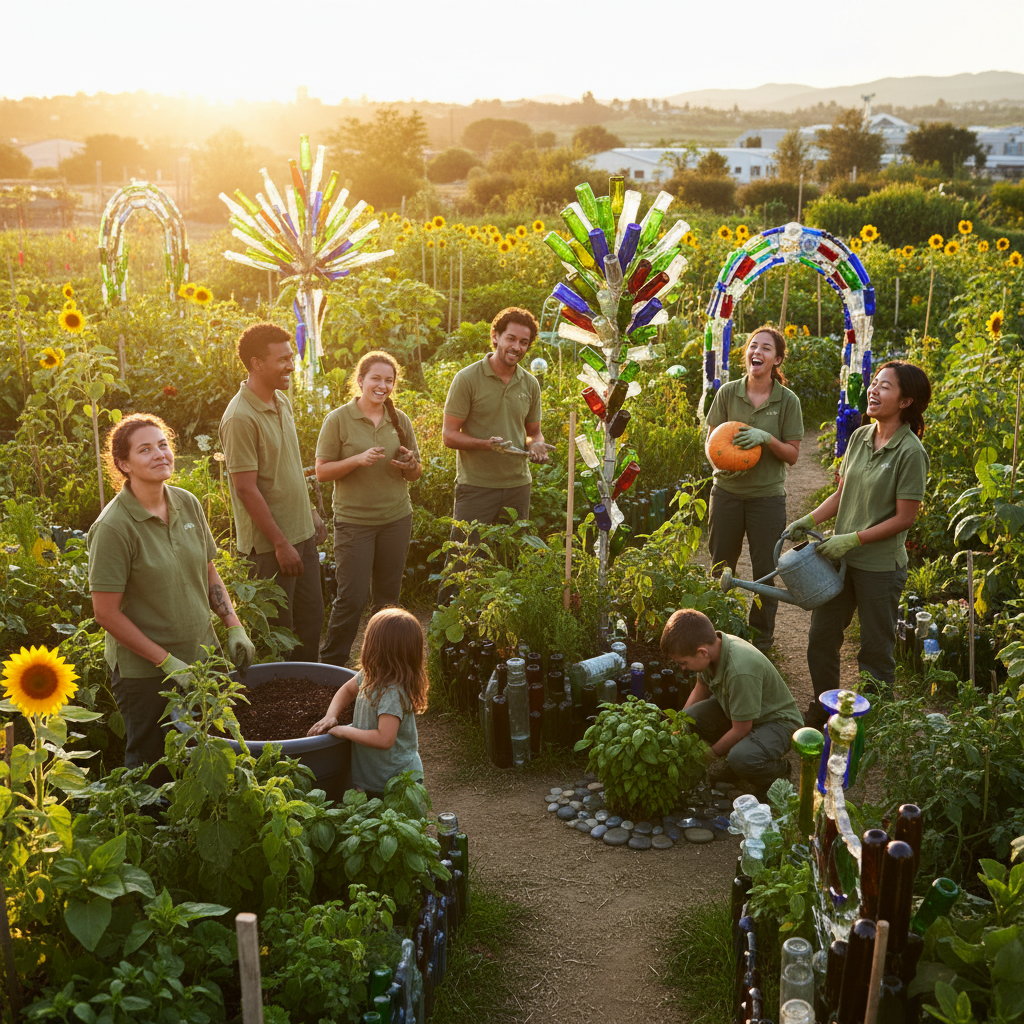
Now here’s where it gets exciting. Once you’ve mastered glass bottle recycling, why not expand your green game? Your backyard could become an eco-powerhouse with a project like how to build a rain garden—it’s gorgeous and tackles stormwater pollution at the same time. Don’t stop there, though. Learn how to recycle batteries properly (those things are toxic if mishandled), and dive into how to recycle old clothes to keep textiles out of landfills. Want to grow your own food? Check out these gardening tips for beginners—there’s nothing quite like eating tomatoes you grew yourself.
Look, every single bottle you recycle correctly adds up. You’re not just one person making a small difference—you’re part of a movement. A community of people who refuse to accept “that’s just how things are” when it comes to environmental destruction. Your daily choices create momentum. They inspire neighbors, influence businesses, and yes, they help build the sustainable future we desperately need. Today’s recycling habits become tomorrow’s cleaner planet. And honestly? That’s pretty powerful stuff.
Frequently Asked Questions
-
Can all types of glass bottles be recycled?
- Most glass bottles are recyclable, but some specialty glass like window or mirror glass may not be accepted.
-
Do I need to remove labels from glass bottles before recycling?
- Removing labels is often recommended but depends on local recycling guidelines.
-
Can glass broken into pieces still be recycled?
- Broken glass can be recycled but should be handled carefully to avoid injury and contamination.
-
How can I find a local glass recycling center?
- Use online directories or contact local waste management services to locate centers.
-
Why is it important to rinse glass bottles before recycling?
- Rinsing prevents contamination and helps in efficient processing at recycling facilities.