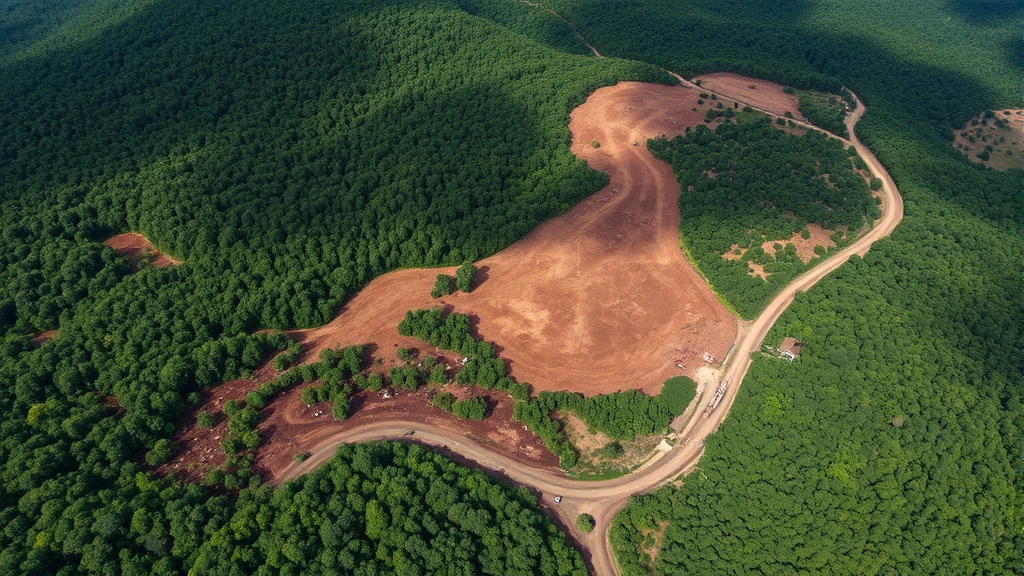
Deforestation Impact on Ecosystems: Expert Insight
Deforestation represents one of the most pressing environmental crises of our time, fundamentally altering the delicate balance of global ecosystems. Every year, approximately 10 million hectares of forest disappear—an area roughly equivalent to Iceland—driven by agricultural expansion, logging operations, and urban development. This systematic destruction triggers cascading ecological consequences that reverberate across biodiversity, climate regulation, and human economies worldwide.
The effects deforestation has on the environment extend far beyond the immediate loss of trees. Forest ecosystems function as interconnected networks where vegetation, wildlife, soil composition, and atmospheric processes maintain intricate relationships developed over millennia. When we remove forests, we dismantle these relationships, initiating a chain reaction of environmental degradation that affects everything from local water cycles to global carbon dynamics. Understanding these impacts requires examining both immediate ecological consequences and long-term systemic changes.
Biodiversity Loss and Species Extinction
Tropical rainforests, despite covering only 6% of Earth’s land surface, harbor approximately 50% of all terrestrial species. Deforestation directly threatens this extraordinary biological wealth. When forest habitat disappears, species face three primary threats: direct habitat loss, fragmentation that isolates populations, and edge effects that alter microclimates and resource availability. The Amazon rainforest alone contains an estimated 390 billion individual trees representing roughly 16,000 species—many undiscovered by science.
The biodiversity crisis manifests through measurable extinction rates. Current extinction rates exceed background rates by 100 to 1,000 times, primarily driven by habitat destruction from deforestation. Large-bodied species with extensive territorial requirements—jaguars, orangutans, forest elephants—face the most severe pressure. However, the loss extends to countless insects, fungi, and microorganisms that maintain ecosystem function. These organisms, often invisible to human observation, play critical roles in nutrient cycling, pollination, and disease regulation.
Forest fragmentation creates isolated habitat patches that function as ecological islands. Small populations within fragments experience reduced genetic diversity, increased inbreeding depression, and heightened vulnerability to environmental stochasticity. A study published in the journal Science documented that forest fragments smaller than 100 hectares lose 50% of their bird species within 15 years. This demonstrates how deforestation doesn’t merely reduce species numbers—it fundamentally alters community composition and ecosystem resilience.
The economic value of biodiversity loss extends beyond conservation ethics. Many pharmaceutical compounds derive from rainforest species; approximately 25% of modern drugs contain ingredients from tropical plants. Indigenous communities have developed sophisticated knowledge systems for utilizing forest biodiversity, representing irreplaceable intellectual and cultural heritage. When deforestation eliminates species before scientific documentation, we lose potential medical discoveries and cultural wisdom simultaneously.

Climate Change Acceleration
Forests function as planetary carbon sinks, sequestering atmospheric carbon dioxide through photosynthesis and storing it in biomass and soil. The world’s forests contain approximately 296 gigatons of carbon—nearly 40 times annual global carbon emissions. Deforestation releases this stored carbon through several mechanisms: immediate combustion during clearing operations, decomposition of remaining biomass, and soil carbon oxidation as exposed earth experiences increased temperature and moisture fluctuations.
The climate impact of deforestation represents roughly 10-15% of global greenhouse gas emissions, comparable to the entire transportation sector. When tropical forests are cleared for cattle ranching or agriculture, the combined effect of carbon release and lost carbon sequestration capacity creates a double climate penalty. The Amazon, often called “the lungs of the planet,” generates its own precipitation through evapotranspiration—the process where trees release water vapor that forms clouds. Extensive deforestation reduces this regional moisture recycling, potentially triggering a tipping point where the Amazon transitions from rainforest to savanna.
Research from the Intergovernmental Panel on Climate Change demonstrates that forest loss creates positive feedback loops amplifying climate warming. As forests diminish, less carbon is absorbed, atmospheric CO2 concentrations increase, temperatures rise further, and remaining forests experience greater heat and drought stress. This vicious cycle accelerates forest dieback in regions like the Amazon and Southeast Asian rainforests, potentially triggering irreversible transitions. The relationship between how humans affect the environment through deforestation particularly impacts climate stability.
The temporal dimension of climate impact deserves emphasis. While fossil fuel emissions produce gradual atmospheric accumulation, deforestation releases stored carbon immediately. A mature tropical forest cleared for pasture releases centuries of accumulated carbon within years. This instantaneous carbon pulse has more severe climate consequences than equivalent emissions distributed over longer timeframes, as ecosystems and human infrastructure have limited adaptive capacity for rapid change.
Soil Degradation and Erosion
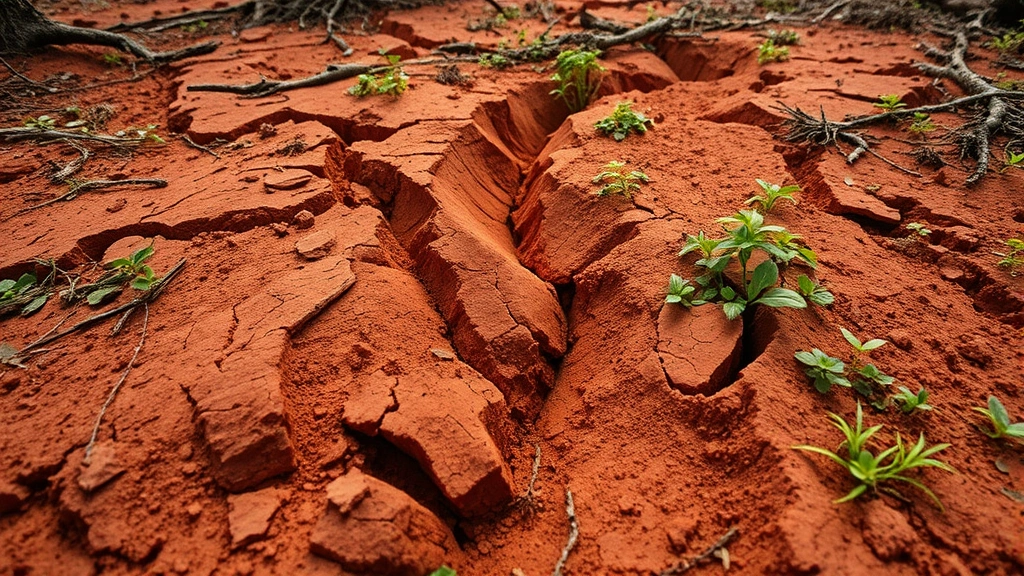
Forest soils represent one of Earth’s most complex ecosystems, containing more organisms than all above-ground fauna combined. Healthy forest soils develop over centuries, accumulating organic matter, establishing fungal networks, and creating stable aggregates that resist erosion. Deforestation removes this protective vegetation layer and disrupts soil structure through heavy machinery, exposing mineral soil to direct rainfall impact.
Without forest canopy protection, rainwater impacts soil surface with significant kinetic energy, displacing soil particles and initiating erosion processes. Studies document that deforested hillsides can lose 40 tons of soil per hectare annually, compared to less than 1 ton per hectare in intact forests. This erosion removes nutrient-rich topsoil, reduces water infiltration capacity, and increases surface runoff. The eroded sediment travels downslope, clogging waterways and degrading aquatic ecosystems through sedimentation and turbidity.
Soil organic matter—the carbon-rich component that provides fertility and water-holding capacity—depletes rapidly after forest clearing. Exposed soil experiences temperature fluctuations and increased microbial decomposition, releasing stored carbon as CO2. Within 5-10 years of deforestation, many tropical soils lose 50% of their organic matter content. This degradation reduces agricultural productivity, necessitating increased fertilizer applications that create downstream water pollution and eutrophication problems.
The relationship between soil health and ecosystem versus environment distinctions becomes apparent when examining soil restoration. While environmental parameters might technically support vegetation growth after deforestation, ecosystem function—the complex interactions between soil organisms, nutrient cycling, and plant communities—requires decades to centuries to reestablish. Secondary forests developing on degraded soils demonstrate reduced productivity and altered species composition compared to primary forests.
Water Cycle Disruption
Forests profoundly influence hydrological cycles through multiple mechanisms. Trees intercept rainfall, reducing surface runoff and promoting infiltration. Root systems create soil macropores facilitating water percolation to groundwater aquifers. Evapotranspiration—the combined process of soil evaporation and plant water release—returns water to the atmosphere, generating precipitation downwind. Deforestation disrupts each of these processes, fundamentally altering regional and global water dynamics.
The Amazon rainforest, through evapotranspiration, releases approximately 20 billion tons of water daily into the atmosphere. This moisture generates precipitation across South America and influences weather patterns as far north as North America. Deforestation reduces evapotranspiration by 20-30%, decreasing atmospheric moisture availability and altering precipitation patterns across continental scales. Agricultural regions downwind experience reduced rainfall reliability, threatening food security for millions of people.
Deforestation increases surface runoff, causing water to move rapidly downslope rather than infiltrating slowly through soil. This intensifies flooding during heavy rainfall events and reduces dry-season streamflow as groundwater recharge diminishes. Downstream communities experience more extreme hydrological variability—destructive floods alternating with severe droughts. Dams and water infrastructure designed for historical flow regimes become inadequate, threatening hydroelectric power generation and water supply reliability.
Water quality degradation follows deforestation through multiple pathways. Erosion increases sediment loads, reducing light penetration and smothering benthic habitats. Soil exposure allows nutrient leaching, particularly nitrogen and phosphorus, which create downstream eutrophication. Without riparian forest buffers, stream temperatures increase, reducing oxygen solubility and stressing cold-water species. The comprehensive disruption of types of environment includes aquatic ecosystem damage from deforestation-induced hydrological changes.
Economic Consequences
While deforestation generates short-term economic gains through timber sales and agricultural land conversion, comprehensive economic analysis reveals substantial long-term costs. The World Bank estimates that forest ecosystem services—including carbon sequestration, water purification, pollination, and climate regulation—provide annual global value exceeding $125 trillion. Deforestation destroys these services, imposing hidden costs on society that far exceed timber revenues.
Economic analysis frameworks increasingly employ natural capital accounting, valuing ecosystem services in monetary terms. When these values are incorporated into cost-benefit analyses, deforestation appears economically irrational. For example, converting Amazon rainforest to cattle pasture generates approximately $2,000 per hectare in immediate revenue but destroys ecosystem services valued at $10,000-15,000 per hectare annually. This represents a catastrophic economic loss when analyzed across appropriate timescales.
The agricultural sector, paradoxically, suffers significant economic damage from deforestation. Forest clearing for agricultural expansion reduces long-term soil productivity, increases pest and disease pressure, and destabilizes climate patterns affecting crop yields. Pollinator populations decline with forest loss, reducing crop productivity for 75% of global food crops that depend partially on animal pollination. A World Bank analysis quantified global pollination service losses at $15 billion annually from habitat destruction.
Indigenous and local communities, who depend directly on forest resources for subsistence and income, experience immediate economic hardship from deforestation. These communities possess sophisticated knowledge of sustainable forest management but rarely benefit from deforestation economics. When land rights and resource access are controlled by external actors, local populations experience impoverishment despite extraction occurring on their territories. Recognizing and supporting human environment interaction through community-based forest management offers both conservation and economic development benefits.
Climate-related economic damages from deforestation-induced warming compound initial conversion losses. Agricultural productivity losses, increased disaster recovery costs, infrastructure damage from extreme weather, and public health expenditures from climate-sensitive diseases create cascading economic consequences. Economic modeling suggests that climate damages from deforestation-driven warming may exceed $1 trillion annually by 2050, dwarfing any short-term economic benefits from forest conversion.
Restoration and Recovery
Understanding deforestation impacts motivates restoration efforts aimed at recovering ecosystem function and services. Forest restoration encompasses diverse approaches: natural regeneration where forest regrows without active management, active reforestation through tree planting, and agroforestry integrating trees with agricultural production. Each approach offers distinct advantages and limitations depending on local conditions and objectives.
Natural regeneration proves most cost-effective where seed sources remain available and land protection prevents re-disturbance. Secondary forests developing through natural regeneration often recover biodiversity surprisingly rapidly, though species composition may differ from primary forests. However, natural regeneration requires decades to centuries for full structural and functional recovery, and many deforested regions lack adequate seed sources due to fragmentation of remaining forests.
Active reforestation accelerates recovery but requires substantial investment—typically $1,000-5,000 per hectare depending on species selection and site preparation. Monoculture plantations using non-native species provide some ecosystem services but support limited biodiversity. Mixed-species plantations including native species recover ecosystem function more completely and support greater biodiversity. Agroforestry systems, combining trees with crops or livestock, provide economic returns while restoring some forest functions, offering viable pathways for smallholder farmers.
Restoration effectiveness depends critically on addressing underlying deforestation drivers. Without resolving land use pressures, restored forests face re-clearing. Successful restoration requires integrated approaches combining land protection, sustainable livelihood alternatives, and community engagement. The United Nations Environment Programme emphasizes that restoration must involve local communities as partners, recognizing their rights and incorporating traditional ecological knowledge.
Economic instruments increasingly support restoration through payment for ecosystem services schemes, where landowners receive compensation for maintaining or restoring forest cover. Carbon markets, watershed protection programs, and biodiversity conservation payments create financial incentives for forest protection. While imperfect, these mechanisms acknowledge that ecosystem services possess genuine economic value deserving compensation. Integrating restoration with sustainable development objectives—particularly for climate mitigation and food security—strengthens political support for large-scale forest recovery initiatives.
FAQ
What percentage of global deforestation occurs in tropical regions?
Approximately 80% of global deforestation occurs in tropical regions, particularly in the Amazon, Congo Basin, and Southeast Asian rainforests. Tropical forests contain disproportionate biodiversity and carbon stores, making their loss particularly consequential for global environmental stability.
How long does forest recovery take after deforestation?
Recovery timelines vary dramatically. Structural recovery—where forest height and canopy closure return to pre-disturbance conditions—typically requires 30-50 years. Functional recovery, where ecosystem processes like nutrient cycling and carbon sequestration match primary forests, requires 100+ years. Full biodiversity recovery often requires several centuries, particularly for old-growth forest species.
Can deforestation be reversed through reforestation?
Reforestation can restore many ecosystem functions, but complete reversal of all impacts proves extremely difficult. While carbon sequestration and water cycling recover relatively quickly, soil development and biodiversity recovery require much longer timeframes. Reforestation cannot fully compensate for primary forest loss, emphasizing prevention as preferable to restoration.
What role do indigenous communities play in forest conservation?
Indigenous territories contain approximately 80% of remaining biodiversity despite covering only 22% of global land area. Indigenous communities have successfully maintained forests for millennia through sustainable management practices. Recognizing indigenous land rights and supporting community-based conservation proves both ethically justified and ecologically effective.
How does deforestation affect global food security?
Deforestation threatens food security through multiple pathways: reduced pollinator populations affecting crop yields, destabilized precipitation patterns affecting agricultural productivity, and soil degradation reducing land productivity. Paradoxically, much deforestation occurs for agricultural expansion, yet reduces long-term agricultural viability through ecosystem service loss.
What international policies address deforestation?
International frameworks including the Paris Climate Agreement, Convention on Biological Diversity, and UN Sustainable Development Goals include deforestation reduction targets. The Reducing Emissions from Deforestation and Degradation (REDD+) mechanism provides financial incentives for forest protection. However, implementation remains inconsistent, and deforestation rates continue increasing in many regions.
Deforestation represents a complex environmental crisis requiring integrated solutions addressing underlying economic drivers while restoring degraded ecosystems. Understanding the comprehensive impacts—from biodiversity loss to climate change to economic consequences—demonstrates that forest conservation constitutes not merely environmental necessity but economic rationality and social justice imperative.


