
The terms ecosystem and environment are frequently used interchangeably in casual conversation, yet they represent fundamentally distinct concepts within ecological and environmental science. While an ecosystem refers to a specific community of living organisms interacting with their physical surroundings in a defined area, the environment encompasses the broader totality of all external conditions, factors, and influences affecting an organism or group of organisms. Understanding these differences is crucial for environmental management, conservation planning, and addressing contemporary ecological challenges.
From an economic perspective, distinguishing between ecosystems and environments becomes even more critical. Ecosystem services—the tangible benefits humans derive from natural systems—form the foundation of ecological economics. These services, including pollination, water purification, climate regulation, and nutrient cycling, have measurable economic value. The environment, by contrast, represents the complete matrix within which all economic activity occurs, encompassing both biotic and abiotic components that influence production, consumption, and resource allocation patterns.
This comprehensive analysis explores the nuanced differences between these two interconnected concepts, examining their definitions, characteristics, relationships, and implications for sustainable development and economic policy.

Core Definitions and Conceptual Boundaries
An ecosystem is a biological unit comprising a community of interdependent living organisms—plants, animals, fungi, microorganisms—together with the non-living physical elements (soil, water, atmosphere, light) with which they interact. This definition emphasizes functional relationships and energy flow through food webs, nutrient cycling, and species interactions. Ecosystems are fundamentally organized around biotic-abiotic interactions that sustain life processes and maintain ecological balance.
The environment, conversely, represents the aggregate of all external conditions, circumstances, and influences surrounding an organism or system. It includes living components (biotic factors), non-living components (abiotic factors), and human-made elements (anthropogenic factors). The environment is less about relationships and more about conditions—temperature, pH, atmospheric composition, radiation, chemical concentrations, and social-economic structures that affect life.
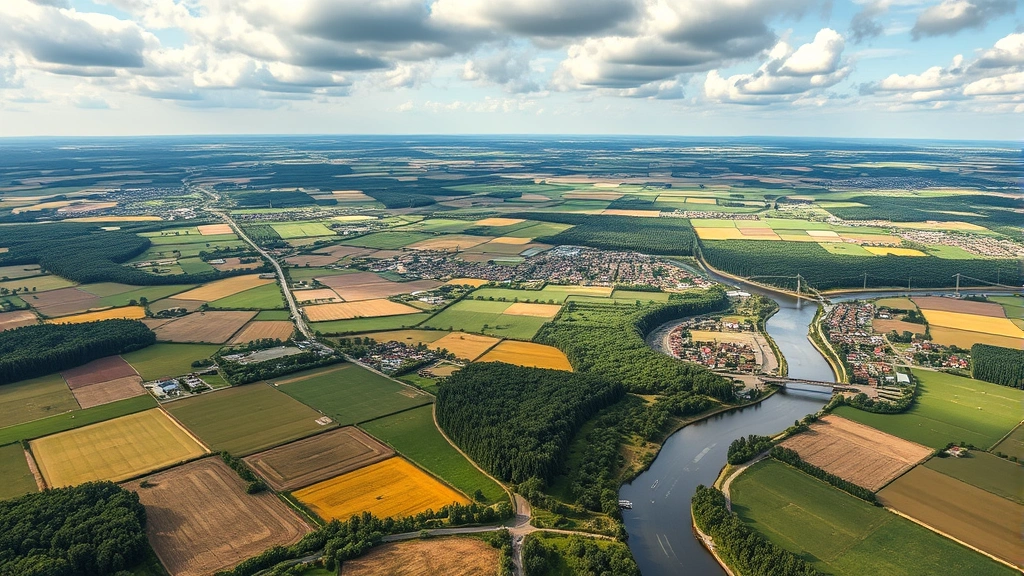
Consider a forest as an illustrative example. The forest ecosystem comprises specific tree species, understory vegetation, fauna (deer, birds, insects), soil microorganisms, and their functional interactions—predator-prey relationships, photosynthesis, decomposition, and nutrient exchange. The forest environment includes these same elements plus the broader climatic patterns, regional geology, human settlements nearby, air quality, water availability, and socioeconomic factors affecting forest use and management.
According to research from ecological economics institutions, this distinction matters significantly for understanding environmental science foundations. The ecosystem concept focuses attention on internal dynamics and self-regulation, while the environment concept emphasizes external influences and boundary conditions affecting system performance.
Structural Components and Organization
Ecosystems possess clearly defined structural hierarchies. They contain biotic communities organized into trophic levels: primary producers (plants), primary consumers (herbivores), secondary consumers (carnivores), and decomposers. This organization reflects energy flow and material cycling patterns. Ecosystems also include specific abiotic components—soil horizons, water bodies, atmospheric layers—that interact with biological components through nutrient cycles (carbon, nitrogen, phosphorus) and energy transformations.
The environment lacks such rigid structural organization. Instead, it presents multiple overlapping systems—physical environment (geology, climate, hydrology), biological environment (flora, fauna, microorganisms), and social environment (human institutions, economies, cultures). These layers interact complexly without clear hierarchical arrangement. The environment is essentially open-ended in its boundaries and components, while ecosystems are relatively bounded systems with definable inputs and outputs.
This structural difference has profound implications. Ecosystems can be modeled, monitored, and managed with relative precision because their components and relationships are identifiable. Environments resist such reductionist approaches due to their systemic complexity and the difficulty in establishing clear boundaries. When assessing types of environment across regions, scientists must account for this conceptual flexibility, whereas ecosystem classification follows more standardized ecological principles.
Scale and Spatial Dimensions
Ecosystems operate across specific, identifiable scales. A pond ecosystem, coral reef ecosystem, or grassland ecosystem occupies defined spatial boundaries. Scientists can measure ecosystem area, map ecosystem boundaries, and track changes within ecosystem limits. This scalability enables researchers to study microecosystems (a rotting log) or macroecosystems (tropical rainforests) using comparable methodologies.
Environmental scales are far more fluid and context-dependent. The environment of a single organism might be measured in millimeters, while the human environment extends globally through interconnected economic, social, and political systems. Environmental boundaries rarely coincide with ecological boundaries. A watershed ecosystem might span multiple political jurisdictions with different environmental regulations, or an urban environment might encompass multiple distinct ecosystems—parks, wetlands, degraded industrial zones—with varying ecological characteristics.
The scale distinction becomes critical in conservation planning. Protecting an ecosystem requires understanding its internal dynamics and establishing boundaries that preserve functional integrity. Managing an environment requires addressing multiple scales simultaneously—local pollution, regional climate patterns, and global trade flows all influence local environmental conditions. This complexity explains why human-environment interaction creates such multifaceted challenges requiring interdisciplinary solutions.
Functional Dynamics and Interactions
Ecosystems are defined fundamentally by their functional dynamics—the processes through which energy flows and materials cycle. Primary productivity (rate of photosynthetic energy capture), decomposition rates, nutrient cycling speeds, and trophic efficiency determine ecosystem health and carrying capacity. These functions operate according to thermodynamic principles and ecological laws that apply universally across ecosystem types.
Environmental functions are broader and less mechanistically determined. They include ecological functions (those same energy flows and nutrient cycles) plus environmental services (water purification, air quality maintenance, climate regulation), social functions (cultural heritage, recreation, spiritual value), and economic functions (resource provision, waste absorption). Environmental functions also include human-mediated processes—industrial production, transportation, waste management—that operate according to economic logic alongside ecological constraints.
When examining how humans affect the environment, we must recognize that human activities modify both ecosystem functions and environmental conditions. Clearing forest ecosystems reduces primary productivity and alters nutrient cycling, affecting ecosystem functions directly. Simultaneously, it changes the environmental conditions for remaining organisms by altering microclimate, soil properties, and water availability—environmental modifications that may persist even if ecosystems eventually recover.
Research from the United Nations Environment Programme emphasizes that understanding these functional differences enables more effective environmental management strategies that account for both ecological resilience and socioeconomic sustainability.
Economic Valuation and Services
Ecosystem services represent the economic bridge between ecological and economic systems. The Millennium Ecosystem Assessment identified four ecosystem service categories: provisioning services (food, water, materials), regulating services (climate, disease, water quality), cultural services (recreation, spiritual value, education), and supporting services (nutrient cycling, soil formation, primary production).
These services have measurable economic value. A hectare of wetland ecosystem might provide $10,000-15,000 annually in water purification services, flood regulation, and fish production. Pollinator ecosystems provide services worth billions globally through crop pollination. Forests sequester carbon with economic value under climate mitigation frameworks. This quantification enables cost-benefit analysis comparing conservation versus conversion to alternative land uses.
The environmental perspective broadens this valuation framework. Beyond ecosystem services, environmental economics considers environmental goods (natural resources with direct market value), environmental quality (air and water quality affecting health and productivity), and environmental externalities (costs imposed on society through pollution and resource depletion). Environmental valuation addresses market failures—situations where ecosystem service values don’t get reflected in market prices, leading to overexploitation and degradation.
According to World Bank environmental economics research, incorporating ecosystem service values into national accounting systems reveals that many countries are actually depleting natural capital while recording economic growth. This accounting revolution requires understanding both ecosystem service provision mechanisms and environmental valuation methodologies.
When conducting environmental impact assessment reports, practitioners must evaluate how proposed activities affect ecosystem service provision and broader environmental quality, recognizing that economic benefits must be weighed against both ecological and environmental costs.
Management and Conservation Approaches
Ecosystem management focuses on maintaining ecological integrity, resilience, and functionality. Management strategies emphasize protecting biodiversity, preserving food web structure, maintaining nutrient cycling, and ensuring ecosystem services provision. Approaches include habitat protection, invasive species management, restoration of degraded ecosystems, and sustainable harvesting practices that maintain ecosystem productivity. Management success is measured through ecological indicators: species diversity, primary productivity, nutrient cycling rates, and food web complexity.
Environmental management addresses broader sustainability objectives encompassing ecological, social, and economic dimensions. It incorporates ecosystem management within larger frameworks addressing pollution control, resource efficiency, waste management, environmental justice, and sustainable development. Environmental management recognizes that human communities depend on environmental services while also contributing to environmental degradation, requiring integrated approaches balancing conservation with livelihood security.
These approaches differ significantly in implementation. Ecosystem restoration projects might focus intensively on specific areas, reestablishing native vegetation, controlling predators, and monitoring population recovery. Environmental management of the same region would simultaneously address water quality in downstream areas, air pollution from surrounding industries, local community needs for resources and employment, and regional climate change impacts. The broader environmental perspective requires stakeholder engagement, economic incentive alignment, and policy coordination across jurisdictions.
The latest ecosystem and environment research increasingly emphasizes integrating these approaches—using ecosystem science to inform environmental policy while recognizing that environmental management must address human dimensions alongside ecological requirements.
Integration in Environmental Policy
Effective environmental policy requires sophisticated integration of ecosystem and environmental perspectives. Policy frameworks must account for ecosystem-level dynamics while addressing broader environmental and socioeconomic concerns. This integration manifests across multiple policy domains.
Conservation policy increasingly recognizes that protecting ecosystems requires managing surrounding environments. Marine protected areas must consider fishing pressure from distant fleets, pollution from upstream activities, and climate-driven changes in ocean conditions. Forest conservation requires addressing surrounding land use pressures, local community needs, and regional economic structures incentivizing deforestation.
Climate policy illustrates the ecosystem-environment integration challenge. Reducing greenhouse gas emissions requires understanding how different ecosystems respond to climate change (ecosystem perspective) while simultaneously addressing energy systems, transportation networks, industrial production, and consumption patterns (environmental perspective). Carbon sequestration through ecosystem restoration provides mitigation benefits only if broader environmental conditions—policy stability, economic incentives, land tenure security—support long-term forest maintenance.
Agricultural policy must balance ecosystem health (soil biota, pollinator populations, natural pest control) with environmental sustainability (reducing chemical runoff, minimizing greenhouse gas emissions) and socioeconomic objectives (farmer income, food security, rural employment). Sustainable agriculture protects specific agricultural ecosystems while improving broader environmental quality and economic resilience.
Leading environmental economics research from institutions studying nature-based solutions to climate change demonstrates that integrated approaches recognizing ecosystem-environment distinctions achieve superior outcomes compared to narrow ecosystem-focused or environment-focused strategies.
Policy integration also requires addressing the temporal dimensions of ecosystem-environment relationships. Ecosystems can recover relatively quickly from disturbances if environmental conditions remain favorable—a disturbed forest can regenerate if climate, soil, and surrounding conditions support regrowth. But environmental degradation—soil contamination, climate change, water depletion—may prevent ecosystem recovery even after direct disturbances cease. This distinction explains why addressing root environmental causes matters as much as protecting specific ecosystems.
The role of economic instruments in bridging ecosystem and environmental management deserves particular attention. Payment for ecosystem services programs compensate landowners for maintaining ecosystem functions providing environmental benefits. Carbon markets price climate regulation services. Water quality trading allows regulated parties to achieve environmental standards through ecosystem restoration. These instruments work when they accurately reflect ecosystem service values and when environmental conditions support service provision—requiring integration of both perspectives.
FAQ
What is the main difference between an ecosystem and an environment?
The primary difference lies in focus and scope. An ecosystem emphasizes the community of living organisms and their interactions with non-living components within a defined spatial area. The environment encompasses all external conditions and factors—biotic, abiotic, and anthropogenic—affecting organisms or systems. Ecosystems are bounded systems focused on internal dynamics; environments are broader, less-bounded systems including external influences and human factors.
Can an ecosystem exist without an environment?
No. Every ecosystem exists within an environment and is shaped by environmental conditions. The ecosystem represents the functional biological unit, while the environment represents the broader context within which that unit operates. An ecosystem depends on environmental conditions—climate, geology, atmospheric composition—for its existence and characteristics. However, an environment can exist without specific ecosystems, as demonstrated by barren deserts or early Earth before life emerged.
How do ecosystem services relate to environmental services?
Ecosystem services are the specific benefits humans derive from ecosystem functions—pollination, water purification, climate regulation, nutrient cycling. Environmental services are broader, including ecosystem services plus environmental quality maintenance (air quality, water availability), resource provision, waste absorption, and cultural/social functions. All ecosystem services are environmental services, but not all environmental services originate from specific ecosystems; some derive from environmental conditions shaped by human activity and non-biological processes.
Why does distinguishing between ecosystems and environments matter for conservation?
The distinction reveals that protecting specific ecosystems may fail if surrounding environmental conditions deteriorate. A protected forest ecosystem cannot thrive if regional climate changes, soil contamination spreads, or water availability declines. Effective conservation requires both ecosystem-level management (maintaining internal ecological integrity) and environmental-level management (ensuring supportive surrounding conditions). This integrated approach addresses root causes of degradation rather than treating symptoms.
How do economic factors influence ecosystem versus environment management?
Ecosystem management typically focuses on biological productivity and ecological resilience, which have economic value but aren’t always reflected in markets. Environmental management incorporates economic factors directly—market incentives, production costs, livelihood needs—requiring economic instruments (payments for ecosystem services, carbon markets, resource pricing) to align conservation with economic interests. Economic integration matters more for environmental management because it addresses human systems alongside natural systems.
Can human-modified areas have ecosystems?
Yes. Anthropogenic ecosystems—agricultural fields, urban parks, managed forests—contain living communities interacting with their physical surroundings and can be analyzed as ecosystems. However, these ecosystems often depend heavily on human management and energy inputs. The environment surrounding these human-modified ecosystems typically includes significant human influence—pollution, resource extraction, climate modification—making environmental management as important as ecosystem management for their persistence and productivity.


