
Boosting GDP Through Biodiversity: Study Insights
Emerging economic research reveals a compelling paradox: the world’s most biodiverse ecosystems generate disproportionate economic value far beyond traditional market measurements. Recent studies demonstrate that biodiversity conservation directly correlates with increased GDP, job creation, and long-term economic resilience. This paradigm shift challenges decades of extractive economic models that treated natural capital as an infinite resource.
The intersection of ecological economics and macroeconomic policy has never been more critical. As nations grapple with climate change, resource depletion, and economic instability, biodiversity emerges not as a luxury concern but as foundational economic infrastructure. Understanding how to quantify and leverage biodiversity’s economic contributions could reshape global development strategies, corporate investment priorities, and government fiscal policies.
The Economic Value of Biodiversity
Biodiversity represents one of Earth’s most undervalued economic assets. Traditional GDP measurements exclude the value of ecosystem services—pollination, water purification, carbon sequestration, and soil formation—despite their enormous economic contributions. A landmark UNEP assessment estimated that ecosystem services globally provide approximately $125 trillion in annual economic benefits, with biodiversity underpinning nearly every sector of the global economy.
The concept of natural capital has gained traction among economists and policymakers. Unlike manufactured capital, natural capital regenerates when managed sustainably, offering perpetual economic returns. When biodiversity declines, natural capital depreciates rapidly, creating hidden economic losses that dwarf the short-term gains from resource extraction. Research from ecological economics institutions demonstrates that every dollar invested in biodiversity conservation generates $4-15 in economic returns through maintained ecosystem services.
Consider agricultural productivity: approximately 75% of global food crops depend partly on animal pollination, predominantly by wild insects and birds. The economic value of pollination services exceeds $500 billion annually. Yet biodiversity loss through habitat destruction, pesticide use, and monoculture farming threatens these essential services. By protecting types of environment that support pollinator populations, nations can maintain agricultural productivity while reducing input costs and environmental damage.
Water security presents another critical nexus between biodiversity and economic output. Healthy forests, wetlands, and grasslands regulate water cycles, reducing flooding, improving water quality, and maintaining groundwater reserves. The World Bank estimates that water-related ecosystem services contribute over $2 trillion annually to global GDP. Degraded ecosystems with reduced biodiversity cannot perform these functions, forcing expensive technological replacements like water treatment infrastructure.
Ecosystem Services and GDP Growth
Ecosystem services—the benefits humans derive from nature—operate as the foundation for economic activity. These services fall into four categories: provisioning (food, water, timber), regulating (climate, flood control, disease regulation), supporting (nutrient cycling, soil formation), and cultural (recreation, spiritual value). Each category directly influences GDP components through employment, resource availability, and quality of life factors that enable productive economies.
Carbon sequestration exemplifies biodiversity’s macroeconomic significance. Forests, mangroves, and marine ecosystems store vast carbon quantities, mitigating climate change impacts that would otherwise devastate agricultural output, infrastructure, and human health. The economic cost of unmitigated climate change—estimated at 5-20% of global GDP loss—dwarfs investment costs for biodiversity protection. By maintaining biodiverse carbon sinks, economies avoid catastrophic climate damages while potentially monetizing carbon credits in emerging climate finance markets.
Fisheries dependent on biodiversity-rich marine ecosystems employ over 250 million people and provide protein for 3 billion people. Yet overfishing and habitat destruction have decimated fish populations, reducing both food security and economic output in fishing-dependent regions. Restoring marine biodiversity through marine protected areas and sustainable fishing practices generates immediate employment gains through ecosystem restoration while rebuilding fish stocks for long-term economic sustainability.
Tourism represents a direct GDP contribution from biodiversity. Ecotourism generates $29 billion annually while supporting 21.8 million jobs globally. Destinations with exceptional biodiversity—rainforests, coral reefs, wildlife sanctuaries—attract premium-paying visitors, creating multiplier effects throughout local economies. A single charismatic species like mountain gorillas contributes hundreds of millions in tourism revenue while incentivizing habitat protection and community engagement.
Disease regulation through biodiversity offers underappreciated economic benefits. Biodiverse ecosystems support complex predator-prey relationships and pathogen-host dynamics that limit pandemic emergence. The COVID-19 pandemic’s economic cost exceeded $28 trillion, demonstrating that investing in biodiversity to reduce zoonotic disease spillover represents extraordinary economic insurance. Protecting human environment interaction patterns that respect ecosystem integrity reduces pandemic risk while maintaining ecosystem services.
Natural Capital Accounting Methods
Traditional GDP accounting treats biodiversity loss as economically neutral or positive (through resource extraction revenues) while ignoring the depreciation of natural capital. Natural capital accounting reforms this fundamental flaw by incorporating ecosystem assets and their changes into national accounts, similar to how manufactured capital is tracked.
The System of Environmental-Economic Accounting (SEEA) provides standardized methodology for integrating environmental data into national accounts. Countries adopting SEEA methodologies—including Botswana, Costa Rica, and Philippines—have documented that true economic growth (adjusted for natural capital depreciation) significantly underperforms headline GDP figures. This revelation reshapes policy priorities toward biodiversity conservation and sustainable resource management.
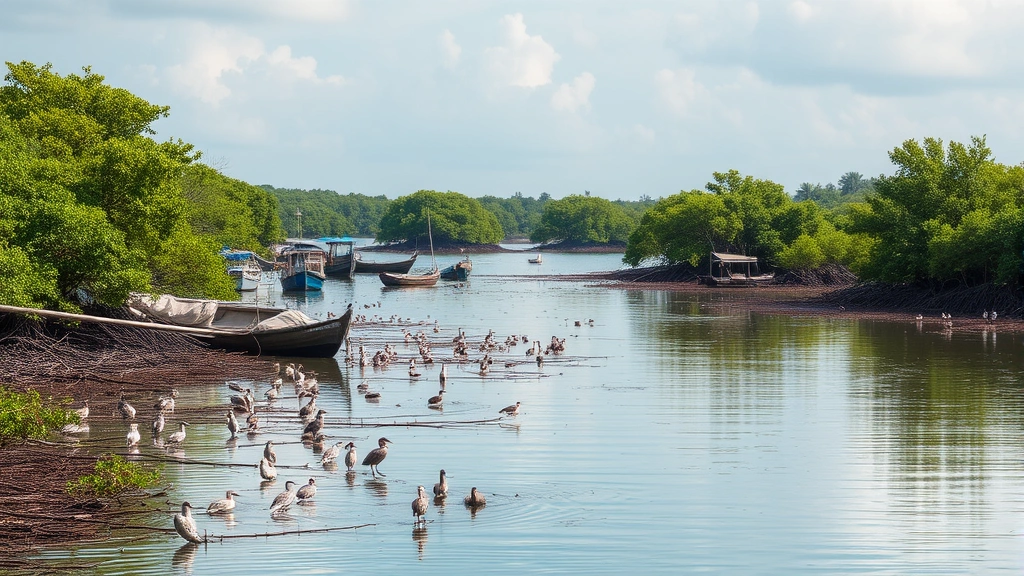
Ecosystem service valuation employs multiple methodologies: market pricing (for marketed services), replacement cost (cost of technological substitutes), contingent valuation (willingness-to-pay surveys), and hedonic pricing (value reflected in property prices). These methods capture previously invisible economic values, enabling cost-benefit analyses that favor biodiversity protection. When mangrove wetlands are valued at $10,000+ per hectare annually (through fisheries support, storm protection, and carbon sequestration), their conversion to shrimp farms at $200/hectare becomes economically irrational.
The Genuine Progress Indicator (GPI) adjusts GDP by accounting for environmental damage, resource depletion, and social factors. Nations measuring GPI alongside GDP consistently show that environmental degradation and biodiversity loss reduce true economic progress despite GDP growth. This accounting framework enables governments to identify policies that simultaneously enhance both GDP and environmental sustainability.
Case Studies in Biodiversity Economics
Costa Rica demonstrates biodiversity’s economic viability. Through payments for ecosystem services programs and ecotourism development, Costa Rica increased forest cover from 21% (1980s) to 52% (2020s) while maintaining economic growth. Ecotourism revenue reached $4.3 billion annually, supporting 180,000 jobs. By recognizing forests as economic assets rather than obstacles to development, Costa Rica achieved conservation and prosperity simultaneously.
Madagascar’s spice production depends entirely on endemic biodiversity. Vanilla cultivation, Madagascar’s primary export, requires specific native bee species for pollination. Protecting biodiverse forests maintains pollinator populations, ensuring vanilla productivity worth $200+ million annually. This direct economic linkage between definition of environment science principles and export revenue demonstrates biodiversity’s concrete economic value.
The Pantanal wetland in Brazil supports cattle ranching, fisheries, and hydroelectric generation totaling $2.4 billion annually. All three sectors depend on wetland biodiversity maintaining water cycles and nutrient flows. Conversely, wetland degradation through drainage and pollution reduces water availability and quality, threatening all economic activities. Investing in biodiversity protection preserves multiple economic sectors simultaneously.
Indonesia’s palm oil expansion illustrates biodiversity’s hidden economic costs. While palm oil generates $20 billion in exports, biodiversity loss from rainforest conversion costs the economy $30+ billion annually through forest fire damages, ecosystem service losses, and climate impacts. Accounting for these hidden costs reveals that sustainable forest management—maintaining biodiversity while harvesting sustainably—generates superior long-term economic returns.
Policy Frameworks and Implementation
Successful biodiversity-GDP integration requires policy frameworks addressing market failures that undervalue ecosystem services. Carbon pricing mechanisms, biodiversity offset requirements, and payments for ecosystem services programs create economic incentives for conservation rather than degradation.
Payment for Ecosystem Services (PES) programs compensate landowners for maintaining biodiverse habitats rather than converting them to agricultural or urban uses. Costa Rica’s pioneering PES program paid farmers to protect forests, generating measurable environmental and economic benefits. Similar programs in Mexico, Ecuador, and Kenya demonstrate scalability across diverse economic contexts. World Bank research documents that PES programs consistently achieve conservation targets at 1/10th the cost of traditional protected areas while generating rural income.
Biodiversity offsetting requirements mandate that development projects maintain or increase biodiversity elsewhere when unavoidable habitat loss occurs. This framework internalizes biodiversity costs into development project economics, reducing unnecessary habitat destruction while creating conservation investment opportunities. Companies profit from restoration activities while governments achieve conservation targets cost-effectively.
Protected area networks represent foundational biodiversity policy. Evidence demonstrates that protected areas generate economic returns through tourism, watershed protection, and climate resilience that exceed opportunity costs from foregone resource extraction. Expanding protected areas to cover 30% of land and ocean (aligned with CBD targets) requires $100 billion annually but generates $10+ trillion in ecosystem service benefits over 50 years.
Corporate biodiversity commitments increasingly influence investment flows. Asset managers controlling $130+ trillion demand that portfolio companies reduce biodiversity impacts. This investor pressure drives corporate adoption of biodiversity accounting, habitat restoration investments, and supply chain reforms. Financial markets increasingly price biodiversity risk into equity valuations, creating capital allocation pressure toward sustainable practices.
Investment Opportunities in Conservation
Biodiversity conservation increasingly attracts private investment as financial returns become quantifiable. Green bonds, impact investing, and conservation finance mechanisms mobilize capital for ecosystem restoration, sustainable agriculture, and protected area management.
Regenerative agriculture—farming practices that restore soil health and biodiversity while maintaining productivity—attracts institutional investment. Companies like Patagonia and Unilever commit billions to regenerative supply chains, recognizing that soil biodiversity and health reduce input costs, improve yields, and provide marketing premiums. The regenerative agriculture market exceeds $5 billion annually with 30%+ annual growth rates.
Mangrove restoration projects in Southeast Asia offer 8-12% annual returns through carbon credits, fisheries enhancement, and storm protection services. Private equity firms increasingly fund mangrove restoration, recognizing that ecosystem restoration generates measurable financial returns while providing environmental benefits. Similar investment vehicles exist for rainforest protection, wetland restoration, and seagrass meadow recovery.
Biodiversity data and monitoring technologies represent emerging investment sectors. Satellite imagery, environmental DNA analysis, and acoustic monitoring enable companies to quantify biodiversity changes and ecosystem service flows. These technologies support natural capital accounting, ecosystem service valuation, and impact measurement for conservation investments. Companies like Planet Labs and Impossible Foods leverage biodiversity data for commercial applications while supporting conservation.
The emerging biodiversity credit market parallels carbon credit markets. Companies purchase biodiversity credits representing verified improvements in ecosystem health and species populations. The UNEP Biodiversity Finance Initiative estimates that biodiversity credit markets could reach $50+ billion annually by 2030, creating substantial investment opportunities while financing conservation globally.
Climate adaptation investments increasingly recognize biodiversity’s role in resilience. Nature-based solutions—mangrove forests for storm protection, biodiverse agricultural systems for drought resilience, intact forests for water security—provide adaptation benefits at lower cost than gray infrastructure. The World Bank identifies nature-based climate adaptation as delivering 2-3x better returns than conventional infrastructure while providing biodiversity benefits.
FAQ
How does biodiversity directly increase GDP?
Biodiversity increases GDP through multiple mechanisms: ecosystem services valuation in national accounts, employment in conservation and ecotourism sectors, agricultural productivity through pollination and soil health, water security reducing infrastructure costs, disease prevention reducing healthcare expenditures, and climate resilience reducing disaster losses. When natural capital accounting incorporates these values, biodiversity emerges as a primary GDP driver.
What ecosystem services generate the most economic value?
Carbon sequestration, pollination, water purification, and pest control generate the highest economic values—collectively exceeding $100 trillion annually. However, cultural services like recreation and spiritual value contribute substantial economic benefits through tourism and property values. All ecosystem services depend on biodiversity; simplifying ecosystems reduces service provision and economic returns.
Can biodiversity protection compete economically with resource extraction?
Yes, long-term economic analysis consistently demonstrates that biodiversity protection generates superior returns to resource extraction. When natural capital depreciation is accounted for, extractive activities typically generate negative net economic returns. Sustainable biodiversity-based economies (ecotourism, regenerative agriculture, ecosystem services payments) provide permanent income streams whereas resource extraction provides temporary revenues followed by ecosystem collapse.
How do governments measure biodiversity’s economic contribution?
Governments employ ecosystem service valuation methodologies, natural capital accounting frameworks (SEEA), and Genuine Progress Indicator calculations to measure biodiversity’s economic contributions. These methods quantify previously invisible ecosystem service values, enabling cost-benefit analyses that demonstrate biodiversity’s economic significance. Progressive nations integrate these measurements into policy and investment decisions.
What policy changes most effectively link biodiversity and GDP growth?
Payment for ecosystem services programs, biodiversity offsetting requirements, carbon pricing mechanisms, and protected area expansion provide proven policy frameworks. These policies create economic incentives for biodiversity protection by either compensating conservation or charging for degradation. When combined with natural capital accounting reforms that measure true economic progress, these policies redirect investment toward sustainable biodiversity-based economies.
How can businesses profit from biodiversity conservation?
Businesses profit through ecosystem restoration investments (carbon and biodiversity credits), sustainable supply chain development (regenerative agriculture premium markets), ecotourism operations, conservation technology development, and reduced operational costs from ecosystem service provision. Increasingly, investor pressure and consumer demand reward companies that demonstrate measurable biodiversity impact alongside financial returns.
The evidence converges: biodiversity and economic prosperity are not competing objectives but fundamentally aligned. By recognizing biodiversity as economic infrastructure and implementing policies that value ecosystem services, nations can achieve simultaneous environmental and economic gains. The transition from extractive to regenerative economies represents not sacrifice but the most economically rational development pathway.
Visit the Ecorise Daily Blog for ongoing analysis of biodiversity economics and environmental policy developments.


