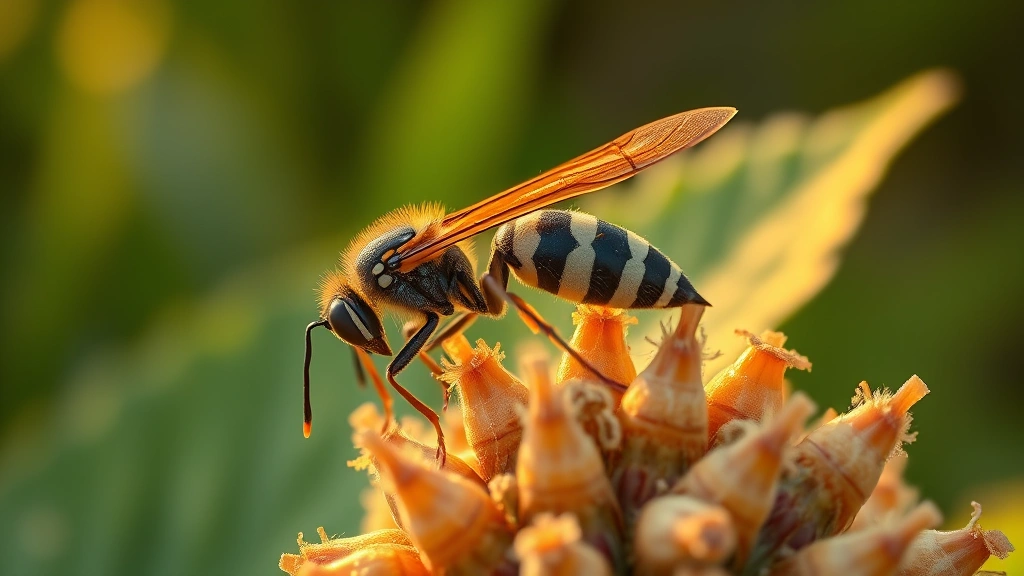
Are Wasps Beneficial? Environmental Impact Study
Wasps occupy a paradoxical position in human consciousness—simultaneously feared as aggressive stingers and underappreciated as ecological engineers. While most people instinctively recoil at the sight of a wasp nest, scientific research increasingly demonstrates that these insects provide substantial environmental and economic benefits that far outweigh their negative reputation. Understanding are wasps beneficial to the environment requires examining their complex ecological roles across multiple dimensions: pest control, pollination, nutrient cycling, and food web dynamics. This comprehensive analysis synthesizes current ecological research to reveal why protecting wasp populations represents a critical conservation priority in our increasingly fragile ecosystems.
The distinction between beneficial and harmful species often depends on perspective and context. Wasps, particularly solitary and parasitoid species, deliver ecosystem services worth billions of dollars annually through natural pest control alone. Yet their aggressive behavior during certain seasons and their occasional role as scavengers at human gatherings create negative associations that overshadow their ecological contributions. By examining the empirical evidence, we can move beyond cultural bias to appreciate wasps as essential components of functional ecosystems and agricultural sustainability.
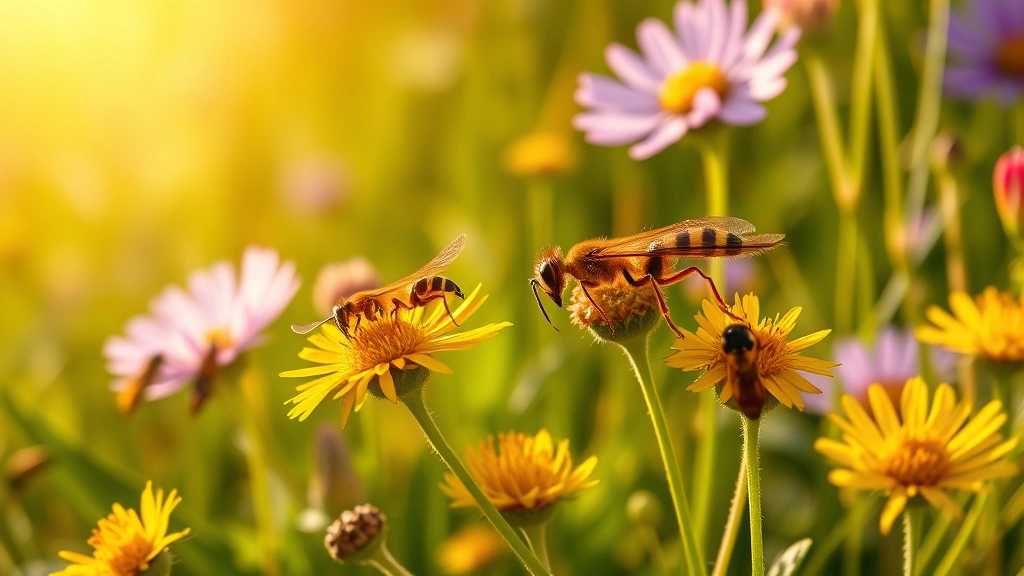
Ecological Roles and Ecosystem Services
Wasps represent one of the most functionally diverse insect groups on Earth, with over 100,000 described species occupying virtually every terrestrial and aquatic ecosystem. Unlike the charismatic megafauna that dominate conservation discussions, wasps provide what economists call regulating services—the invisible but invaluable processes that maintain ecosystem stability. These insects regulate populations of arthropod pests, facilitate nutrient transfer between trophic levels, and support biodiversity through complex predator-prey relationships.
The majority of wasp species are solitary rather than social, meaning they do not form colonies with queens and workers. Solitary wasps exhibit remarkable behavioral specialization, with many species targeting specific host insects or arthropods. This specialization makes them extraordinarily effective biocontrol agents. Research from the World Bank on ecosystem services valuation indicates that arthropod pest control—a service largely provided by wasps and parasitoids—generates economic value exceeding $57 billion annually in global agriculture. This figure represents the cost that would be incurred if synthetic pesticides replaced natural biological control.
Understanding how humans affect the environment requires recognizing that our agricultural practices have fundamentally altered pest dynamics. Monoculture farming, pesticide application, and habitat fragmentation have created conditions where pest outbreaks would be catastrophic without natural predators. Wasps fill this critical regulatory role, preventing herbivorous insect populations from exploding and devastating crops. This represents a form of natural insurance against agricultural collapse.
Natural Pest Control and Agricultural Value
The pest control services provided by wasps operate through two primary mechanisms: predation and parasitism. Predatory wasps actively hunt arthropods to provision their nests, consuming substantial quantities of insects throughout the growing season. Parasitoid wasps, conversely, lay eggs inside or on host insects, with developing wasp larvae consuming the host from within. Both strategies effectively suppress pest populations without environmental contamination.
Consider the economic implications: a single female parasitoid wasp can parasitize dozens to hundreds of pest insects during her lifetime. In apple orchards, codling moths cause millions of dollars in damage annually. Parasitoid wasps like Ascogaster quadridentata attack codling moth pupae, reducing pest populations naturally. Similarly, braconid and ichneumonid wasps parasitize aphids, scale insects, and lepidopteran larvae—the most economically damaging agricultural pests globally.
Research published in leading ecological economics journals demonstrates that regions supporting healthy wasp populations experience 15-30% reductions in synthetic pesticide applications while maintaining equivalent crop yields. This has profound implications for types of environment we maintain. Reduced pesticide use means lower environmental contamination, reduced pesticide residues in groundwater, and decreased harm to non-target organisms. The cascade effects extend throughout ecosystems, protecting soil microorganisms, aquatic invertebrates, and vertebrate predators that depend on contamination-free food chains.
Integrated Pest Management (IPM) systems explicitly incorporate wasp conservation as a cornerstone strategy. Farmers implementing IPM maintain hedgerows, install nesting structures, and reduce broad-spectrum pesticide applications to preserve wasp populations. These farms demonstrate that ecological approaches to agriculture are economically viable while generating superior environmental outcomes compared to conventional industrial farming.
Pollination and Plant Reproduction
While bees dominate popular discourse about pollination, wasps contribute substantially to plant reproductive success. Many wasp species consume nectar and pollen as adult food sources, transferring pollen between flowers while foraging. This is particularly important in ecosystems with low bee diversity or in geographic regions where bee populations have declined. Research indicates that wasps pollinate approximately 5-10% of flowering plants in temperate regions, with considerably higher proportions in tropical ecosystems.
Fig wasps represent the most specialized and ecologically critical example of wasp-plant mutualism. Each fig species is pollinated exclusively by a specific fig wasp species, representing one of nature’s most tightly coevolved relationships. Without these wasps, fig reproduction would be impossible, eliminating a crucial food source for hundreds of vertebrate species that depend on figs. This relationship demonstrates how seemingly insignificant insects underpin entire food webs and ecosystem functions.
Beyond fig pollination, wasps visit diverse flowering plants while hunting for nectar energy. Research on wasp foraging behavior reveals that they visit flowers of mint, goldenrod, sweet fennel, and numerous other plant species. Each visit represents a potential pollen transfer event. In agricultural systems where environmental degradation from human activities has reduced bee populations, wasps provide backup pollination services that maintain crop productivity. This functional redundancy in pollination services represents an important resilience mechanism in food production systems.
Nutrient Cycling and Food Web Dynamics
Wasps participate in nutrient cycling through multiple pathways. As predators, they regulate arthropod populations, preventing herbivorous insects from overexploiting vegetation. This indirect effect maintains plant community structure and productivity. As prey, wasps support diverse vertebrate predators including birds, reptiles, and small mammals. The biomass transfer from wasps to higher trophic levels represents a critical energy pathway in food webs.
Dead wasps and wasp-killed prey contribute organic matter to soil, supporting decomposer communities and nutrient mineralization. This process transfers nutrients from living organisms into forms accessible to plants, completing nutrient cycles. In ecosystems with high wasp abundance, this nutrient input is substantial. Research measuring nutrient cycling rates in forests with varying arthropod predator abundance demonstrates that high predator densities accelerate nutrient cycling by 20-40% compared to predator-depleted systems.
The role of wasps in human-environment interaction often involves inadvertent disruption of these nutrient cycling processes. Pesticide applications eliminate wasp populations along with target pests, disrupting predator-prey dynamics and nutrient flow. This creates secondary ecological consequences including altered plant community composition, reduced soil fertility, and diminished ecosystem productivity. Understanding these cascading effects reveals why wasp conservation deserves integration into broader environmental management strategies.
Food web complexity depends on species diversity at multiple trophic levels. Wasps occupy intermediate positions in food webs, simultaneously consuming arthropods and serving as prey for birds and other predators. This functional position makes them keystone species—species whose ecological impact disproportionately exceeds their biomass. Removing wasps from ecosystems causes cascading changes throughout food webs, often resulting in unexpected ecological consequences.
Economic Impact Assessment
Quantifying the economic value of wasp ecosystem services requires sophisticated ecological economics methodologies. Researchers employ several approaches including replacement cost analysis (calculating the cost of synthetic alternatives), avoided damage assessment (estimating crop losses prevented by natural pest control), and contingent valuation (determining willingness to pay for pest control services).
A comprehensive meta-analysis examining ecosystem services across agricultural regions worldwide estimates that parasitoid wasps and predatory wasps collectively prevent pest damage valued at $4.5-5.2 billion annually in North America alone. Global estimates, accounting for tropical agriculture where pest pressure is highest, suggest wasp-mediated pest control services exceed $15 billion annually. These figures dwarf the costs of wasp-related negative impacts, which primarily involve minor property damage, medical treatment for stings, and nuisance complaints—collectively valued at less than $200 million annually.
The United Nations Environment Programme has incorporated wasp conservation into biodiversity strategies, recognizing that maintaining pollinator and predator diversity represents cost-effective insurance against agricultural and ecosystem collapse. Investing in wasp habitat preservation costs substantially less than managing ecosystem collapse through intensive agricultural inputs or ecosystem restoration following degradation.
Agricultural economists increasingly recognize that conventional cost-benefit analyses of pesticide use fail to account for external costs—environmental damage and ecosystem service loss imposed on society rather than pesticide purchasers. When external costs are internalized, organic and integrated pest management approaches utilizing wasp biocontrol demonstrate superior economic performance compared to conventional chemical-intensive agriculture. This economic reality is driving policy shifts toward agricultural practices that maintain wasp populations.
Wasp Biodiversity and Conservation
Wasp biodiversity faces mounting threats from habitat loss, pesticide application, and climate change. Over 100,000 wasp species exist, yet fewer than 20,000 have been formally described. This massive knowledge gap means we remain largely ignorant of the functional roles many wasp species play in ecosystems. Conservative estimates suggest that 15-30% of wasp species face extinction risk due to anthropogenic environmental change. This represents an incalculable loss of ecological function and evolutionary diversity.
Habitat fragmentation represents the primary threat to wasp populations. Many wasp species require diverse vegetation structures providing nesting sites, prey availability, and nectar resources. Agricultural intensification, urban development, and forest conversion eliminate these heterogeneous habitats, creating wasp-depleted landscapes. Research examining environmental impacts of landscape modification demonstrates that even ostensibly green spaces like golf courses often support depauperate wasp communities due to monoculture grass, pesticide application, and limited flowering plant diversity.
Conservation strategies for wasps include habitat restoration (establishing native flowering plants, maintaining dead wood for nesting), reducing pesticide applications (particularly broad-spectrum insecticides that eliminate both target and non-target species), and protecting natural areas from development. Research from ecological research institutes indicates that protecting 15-20% of agricultural land as high-quality habitat corridors maintains sufficient wasp diversity to provide full pest control services across remaining agricultural areas. This represents an economically optimal conservation strategy balancing agricultural productivity with ecological sustainability.
Climate change threatens wasp populations through phenological mismatches (temporal desynchronization between wasp emergence and prey availability), range shifts that fragment populations, and altered precipitation patterns affecting nesting and foraging habitats. Maintaining diverse wasp populations across geographic regions represents an adaptation strategy, ensuring that some populations persist under changing climatic conditions and continue providing critical ecosystem services.
Human-Wasp Coexistence Strategies
Despite their ecological benefits, managing human-wasp interactions remains essential for public health and social acceptance of wasp conservation. Coexistence strategies balance wasp protection with reducing sting incidents and property damage. These approaches include architectural design modifications (sealing building gaps where wasps nest), landscape management (removing flowering plants near human activity areas during peak wasp season), and behavioral education (recognizing that most wasps are non-aggressive and only defend nests when directly threatened).
Distinguishing between wasp species is critical for appropriate management responses. Social wasps like yellow jackets and hornets are more aggressive than solitary wasps, and their behavior varies seasonally. Late summer and fall, when carbohydrate availability declines, social wasps become more attracted to human food and beverages, increasing sting incidents. Understanding these temporal patterns allows targeted management during high-risk periods while maintaining wasp populations during seasons when they provide maximum pest control benefit.
Urban and suburban environments can support diverse wasp communities through deliberate habitat management. Creating native plant gardens with continuous flowering throughout growing seasons provides nectar resources while supporting wasp prey species. Installing artificial nesting structures for solitary wasps (bee hotels modified for wasp species) creates nesting habitat without proximity to human activity areas. These strategies demonstrate that human settlements need not be wasp-free zones but rather can be designed to accommodate wasp populations while minimizing conflict.
Public health considerations regarding wasp stings must be contextualized within broader risk assessment frameworks. Annual wasp sting deaths in developed nations number fewer than 50-100, comparable to deaths from lightning strikes and considerably lower than deaths from vehicle accidents or other common hazards. Anaphylactic reactions occur in fewer than 1% of sting victims. While individual incidents warrant medical attention, population-level risk from wasps remains minimal, particularly when compared to ecosystem risks from wasp population collapse.
Education initiatives promoting wasp appreciation represent underutilized conservation tools. Communicating the economic value of wasp pest control, the ecological roles wasps play, and the minimal actual danger they pose can shift public perception from universal hostility to differentiated responses based on context and species. Research in conservation psychology demonstrates that people who understand species’ ecological roles express greater willingness to tolerate their presence and support protective policies.
FAQ
What makes wasps beneficial to ecosystems?
Wasps provide critical ecosystem services through natural pest control (parasitizing and predating arthropod pests), pollination of flowering plants, nutrient cycling, and food web support. These services are valued at billions of dollars annually in agricultural and natural ecosystems. Most wasp species are solitary and non-aggressive, playing essential ecological roles invisible to casual observation.
How much economic value do wasps provide through pest control?
Research estimates wasp-mediated pest control services exceed $15 billion annually globally, with North American agricultural value alone estimated at $4.5-5.2 billion yearly. This represents the cost that would be incurred through synthetic pesticide replacement if wasp populations were eliminated. These figures demonstrate that wasp conservation represents economically rational environmental management.
Do wasps pollinate plants effectively?
Yes, wasps pollinate approximately 5-10% of flowering plants in temperate regions and higher proportions in tropical ecosystems. Fig wasps represent the most specialized example, with each fig species depending exclusively on a specific wasp pollinator. As bee populations decline globally, wasp pollination services become increasingly important for plant reproduction and food production.
Are all wasps aggressive and dangerous?
No. The vast majority of wasp species are solitary and non-aggressive, only defending nests when directly threatened. Social wasps like yellow jackets and hornets exhibit greater aggression, particularly during late summer when carbohydrate availability declines. Annual wasp-related deaths remain minimal compared to other common hazards, and anaphylactic reactions occur in fewer than 1% of sting victims.
How can I support wasp conservation?
Reduce or eliminate pesticide applications, particularly broad-spectrum insecticides that harm non-target species. Establish native flowering plant gardens providing continuous nectar availability. Create nesting habitat through dead wood retention and artificial nesting structures. Support agricultural practices like integrated pest management that maintain wasp populations. Educate others about wasp ecological roles and benefits.
What threatens wasp populations currently?
Primary threats include habitat loss and fragmentation, broad-spectrum pesticide applications, climate change causing phenological mismatches between wasps and prey, and public hostility resulting in unnecessary nest destruction. Agricultural intensification and urbanization eliminate diverse vegetation structures that wasps require. Protecting 15-20% of agricultural land as high-quality habitat corridors can maintain sufficient wasp diversity for ecosystem function.


