Golf Courses’ Environmental Impact: A Deep Dive
Golf courses occupy approximately 40 million hectares globally, representing a significant land-use footprint comparable to entire nations’ agricultural sectors. The environmental implications of this expansive recreational infrastructure extend far beyond manicured fairways, encompassing water consumption, chemical pollution, habitat destruction, and carbon emissions. Understanding whether golf courses are genuinely detrimental to environmental health requires examining empirical data, ecological mechanisms, and the economic trade-offs inherent in landscape management.
The question of whether golf courses are bad for the environment has become increasingly relevant as climate change and biodiversity loss accelerate globally. This analysis integrates ecological economics, environmental science, and land-use policy to provide a comprehensive assessment of golf’s environmental footprint and emerging sustainability solutions.

Water Consumption and Hydrological Impacts
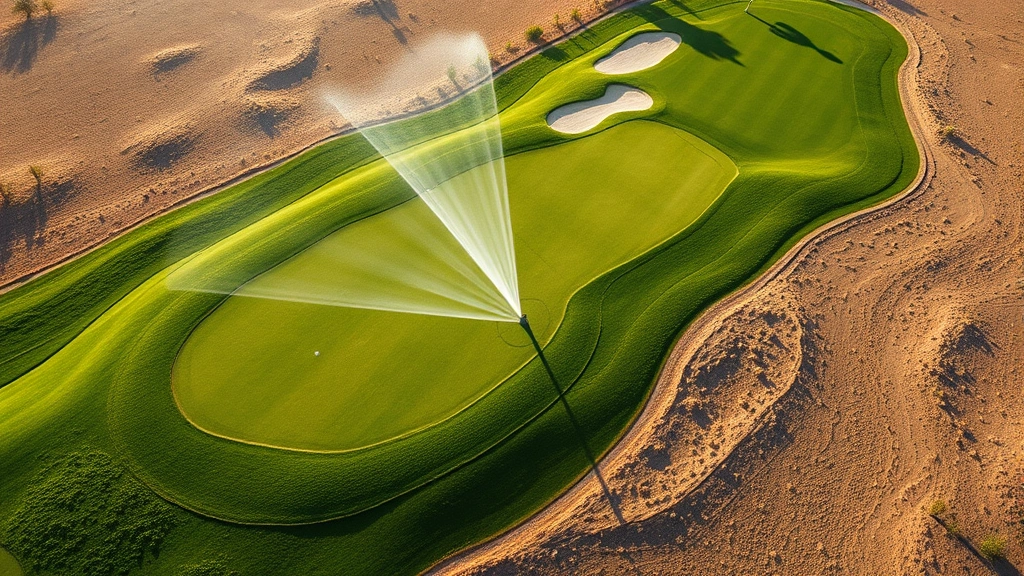
Golf courses represent one of the most water-intensive land uses globally, second only to agriculture in terms of irrigation demands. A typical 18-hole championship course requires between 312,000 to 1.2 million gallons of water weekly during growing seasons, equivalent to the annual consumption of 4 to 18 average American households. This extraction occurs regardless of local hydrological conditions, creating severe stress in water-scarce regions.
The hydrological impact manifests through multiple pathways. Groundwater depletion in arid regions fundamentally alters aquifer systems that communities depend upon for drinking water. Surface water extraction from rivers and lakes reduces flows necessary for ecosystem function, affecting fish migration patterns and riparian vegetation. In California, Arizona, and Middle Eastern golf courses, groundwater depletion rates exceed natural recharge by 5-10 times, creating an unsustainable trajectory that impacts how humans affect the environment at watershed scales.
Irrigation runoff creates secondary hydrological problems. Nutrient-enriched water flowing from golf courses contributes to eutrophication in downstream ecosystems, triggering harmful algal blooms that destroy aquatic biodiversity. The Economic and Social Commission for Western Asia (ESCWA) estimates that golf course irrigation accounts for 25% of water stress in Mediterranean regions, competing directly with agricultural and domestic water security.
Chemical Inputs and Soil Degradation
Maintaining aesthetic golf course standards requires intensive chemical applications. Annual pesticide applications average 4-6 kilograms per hectare, roughly 5-8 times higher than conventional agricultural rates. Herbicides targeting broadleaf weeds, fungicides preventing disease, and insecticides managing turf pests accumulate in soil profiles and leach into groundwater systems.
Atrazine and metolachlor, commonly applied herbicides, persist in groundwater for decades, contaminating drinking water supplies in agricultural and golf-intensive regions. The U.S. Environmental Protection Agency has documented atrazine in 94% of surface water samples from agricultural and turf management regions. Beyond water contamination, pesticide residues affect soil microbiota essential for nutrient cycling and carbon sequestration. Fungicide applications suppress beneficial mycorrhizal networks that enhance plant resilience and drought tolerance.
Nitrogen and phosphorus fertilizers create dual environmental problems. Excess nitrogen leaches into groundwater, elevating nitrate concentrations above safe drinking water standards (10 mg/L). Phosphorus runoff accelerates eutrophication in receiving waters. A single golf course applies 50-100 kilograms of nitrogen annually, equivalent to fertilizer inputs from 100+ hectares of intensive agriculture. This fertilization regime fundamentally alters soil chemistry, reducing microbial diversity and increasing vulnerability to erosion and compaction.
Understanding these chemical dynamics requires examining the definition of environment science through an integrated lens that considers bioaccumulation pathways and trophic transfer mechanisms.
Biodiversity Loss and Habitat Fragmentation
Golf course conversion of natural ecosystems represents a primary driver of habitat loss in temperate and tropical regions. The monoculture turf environment—typically composed of 1-3 grass species—replaces native plant communities supporting hundreds of species. Biodiversity assessments comparing golf courses to adjacent natural areas reveal 60-80% reductions in plant species richness and 70-90% declines in arthropod abundance.
The ecological homogenization extends beyond vegetation. Manicured landscapes eliminate dead wood, leaf litter, and soil structure heterogeneity essential for ground-nesting birds, small mammals, and soil invertebrate communities. Predatory arthropods decline 85% in golf course environments, disrupting natural pest control mechanisms. Amphibian populations, particularly sensitive to pesticide exposure and habitat fragmentation, show 50-70% lower occupancy rates on golf courses compared to adjacent wetlands.
Fragmentation effects compound local extinction risks. Golf courses create landscape discontinuities that isolate wildlife populations, reducing genetic flow and adaptive capacity. Studies in the United Kingdom and Japan document that golf courses function as ecological barriers, preventing species dispersal essential for climate adaptation and population resilience.
Carbon Emissions and Climate Contribution
The carbon footprint of golf course operations encompasses direct and indirect emissions. Maintenance equipment—mowers, aerators, irrigation pumps—consumes diesel and gasoline, generating approximately 0.5-1.2 metric tons of CO₂ equivalent annually per course. Fertilizer production is particularly carbon-intensive; nitrogen fertilizer manufacturing requires 1.5-2 kilograms of fossil fuel per kilogram of product, creating upstream emissions of 4-5 kilograms CO₂ equivalent per kilogram of nitrogen applied.
Scope 3 emissions from visitor transportation dwarf direct operational emissions. A golf course serving 40,000 annual rounds generates 400-600 metric tons of CO₂ equivalent from visitor commuting alone, assuming average vehicle distances of 15-25 kilometers. In regions with aging vehicle fleets and limited public transit, these emissions can exceed 1,000 metric tons annually per course.
Foregone carbon sequestration represents an often-overlooked climate cost. Converting forests or grasslands to golf courses eliminates ongoing carbon storage in biomass and soils. Temperate forests sequester 2-4 metric tons of carbon per hectare annually; tropical forests sequester 4-8 metric tons. A 60-hectare golf course replacing forest eliminates 120-480 metric tons of annual carbon sequestration capacity.
Economic Valuation of Environmental Costs
Quantifying golf’s environmental externalities through economic valuation reveals substantial unpriced costs. The World Bank’s natural capital accounting framework values water depletion at $0.10-$0.50 per cubic meter in water-stressed regions, translating golf’s annual water consumption into $312,000-$1.2 million in uncompensated environmental costs per course. Pesticide contamination imposes groundwater treatment costs of $500-$5,000 per contaminated well, with remediation timescales extending 20-50 years.
Biodiversity loss quantification employs ecosystem service valuation. Pollination services, pest control, and nutrient cycling provided by arthropod communities on converted land are valued at $2,000-$8,000 per hectare annually. Carbon storage and sequestration services are valued at $50-$200 per metric ton, translating foregone sequestration into $6,000-$96,000 annual costs per course.
The human environment interaction in golf course contexts demonstrates how economic activities generate negative externalities borne by society rather than golf course operators. Full-cost accounting that internalizes environmental externalities would increase golf course operational costs by 30-60%, fundamentally altering economic viability in water-stressed regions.
Research from the United Nations Environment Programme demonstrates that incorporating natural capital accounting into land-use decisions reveals golf courses as economically inefficient land uses when environmental costs are properly valued.
Sustainable Golf Management Practices
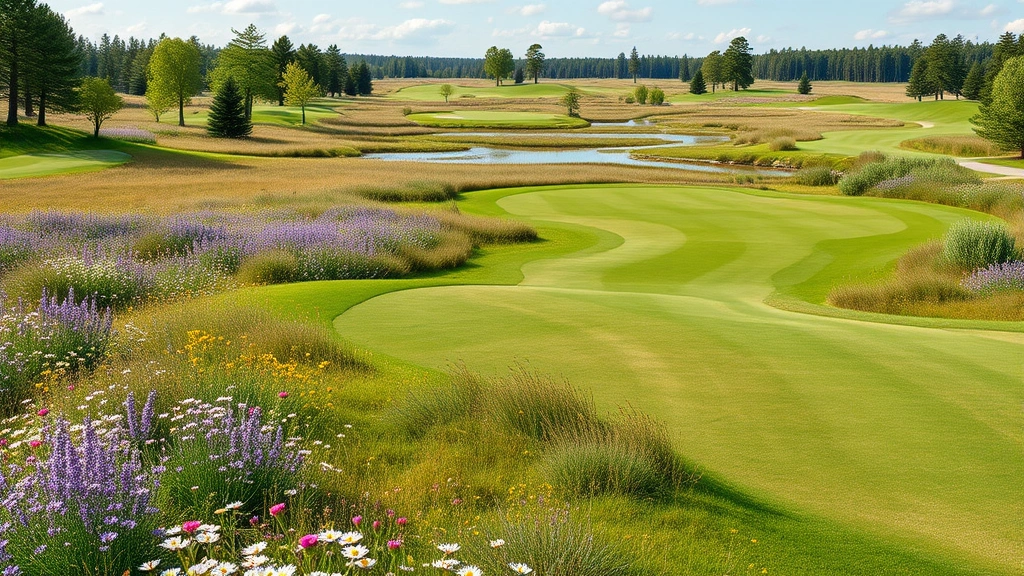
Progressive golf course operators are implementing ecological redesign strategies that substantially reduce environmental impacts. Native vegetation corridors replacing turf monocultures support arthropod communities while reducing pesticide and fertilizer inputs by 40-70%. Course redesigns incorporating rough grass areas, native plantings, and wetland restoration create habitat heterogeneity supporting 30-50 times greater bird abundance than conventional courses.
Water management innovations include soil moisture monitoring systems reducing irrigation by 20-40%, rainwater harvesting systems capturing 50-80% of annual precipitation, and constructed wetlands treating runoff before discharge. Courses in California and Australia implementing these technologies have reduced water consumption by 300,000-600,000 gallons annually while maintaining playability standards.
Integrated pest management (IPM) protocols minimize chemical inputs through biological control, cultural practices, and targeted applications. Courses adopting comprehensive IPM reduce pesticide applications by 50-80% while maintaining turf quality comparable to conventionally managed courses. Organic fertilization using compost and seaweed extracts provides nutrient inputs while building soil carbon and microbial diversity.
Renewable energy integration—solar panels powering maintenance equipment and irrigation pumps—offsets 40-70% of operational carbon emissions. Courses in Spain, Germany, and California have achieved carbon neutrality through combination of renewable energy, efficiency improvements, and carbon offset programs.
Regional Variations and Context-Dependent Impacts
Golf course environmental impacts vary significantly based on regional hydrology, climate, and ecological context. In humid regions with abundant precipitation and low water stress, golf courses create fewer hydrological problems than in arid and semi-arid zones. Northern European and North American courses in high-precipitation zones generate substantially lower environmental costs than courses in California, Arizona, Middle East, and South Asia.
Tropical golf courses impose distinct environmental challenges. Conversion of tropical forests and wetlands eliminates biodiversity hotspots; a single hectare of tropical rainforest contains 200+ tree species compared to 3-5 grass species on golf courses. Pesticide applications in tropical regions contaminate waters supporting subsistence fisheries and drinking water systems for millions. Conversely, golf courses in degraded agricultural lands or brownfield sites may generate lower environmental costs than alternative development scenarios.
The EcoRise Daily Blog explores how context-specific environmental assessments reveal that blanket conclusions about golf’s impacts mask important regional variations requiring site-specific evaluation.
Policy frameworks addressing golf’s environmental footprint differ across jurisdictions. The European Union’s Water Framework Directive and Natura 2000 habitat protections create stricter constraints on golf development in sensitive areas. Asian nations like Japan and South Korea have implemented golf course environmental impact assessments and restoration requirements. The United States relies primarily on state-level regulation, creating significant variation in environmental protections.
Research from ecological economics journals published through Elsevier’s Ecological Economics demonstrates that regulatory frameworks incorporating natural capital valuation effectively incentivize sustainable golf management.
Comparative Analysis with Alternative Land Uses
Evaluating whether golf courses are environmentally problematic requires comparison with alternative land-use scenarios. Converting golf courses to solar farms or wind installations generates renewable energy while reducing water consumption by 90% and eliminating chemical inputs. Urban agriculture on golf course land would produce food while restoring habitat connectivity and reducing transportation emissions.
However, some golf course contexts demonstrate environmental advantages over alternative developments. A golf course protecting remaining native grassland from residential subdivision creates habitat value exceeding agricultural intensification. Courses designed as ecological networks linking fragmented reserves contribute to landscape-scale conservation objectives. The environmental calculus depends fundamentally on counterfactual land-use scenarios and local ecological context.
Comparing golf to other recreational land uses reveals nuanced findings. Golf courses occupy 25 times more land per participant than urban parks, suggesting significant inefficiency in recreational land allocation. However, golf generates substantial economic activity—$84 billion annually in the United States—supporting employment and local economies. The economic-environmental trade-off requires explicit policy decisions about societal priorities.
The analysis of whether electric cars are bad for the environment demonstrates similar methodological challenges in environmental impact assessment, requiring lifecycle analysis and counterfactual comparisons rather than simple categorical judgments.
Policy and Investment Frameworks for Golf Sustainability
Addressing golf’s environmental impacts requires multi-level policy interventions. Water pricing that reflects scarcity values would reduce irrigation in arid regions and incentivize efficiency investments. Pesticide taxes internalizing human health and ecosystem costs would shift course management toward IPM and organic practices. Carbon pricing mechanisms would motivate renewable energy adoption and transportation emission reductions.
Green finance mechanisms increasingly support golf course sustainability transitions. Impact investment funds dedicated to environmental restoration finance course redesigns incorporating native habitat restoration. Payment for ecosystem services programs compensate courses maintaining wetlands, native vegetation corridors, and wildlife habitat. The World Bank’s environmental sustainability initiatives emphasize natural capital valuation in land-use decisions.
Certification systems including Audubon International and Golf Environment Organization standards establish environmental criteria for course operations. Courses achieving certification demonstrate 40-60% reductions in chemical inputs, 20-40% water savings, and measurable biodiversity gains. Market-based mechanisms rewarding sustainable management create economic incentives aligning golf operations with environmental objectives.
Professional golf organizations including the PGA Tour have established sustainability commitments targeting carbon neutrality and water conservation. Tournament venues implementing these standards demonstrate feasibility of high-quality golf maintained through ecological practices, challenging assumptions that environmental protection requires compromising aesthetic or competitive standards.
FAQ
What is the primary environmental concern with golf courses?
Water consumption represents the most significant environmental impact, particularly in water-stressed regions. A single 18-hole course uses 312,000-1.2 million gallons weekly, creating severe stress on groundwater and surface water systems. This consumption often exceeds agricultural water use per hectare and directly competes with drinking water and ecosystem needs.
Do all golf courses have the same environmental impact?
No. Environmental impacts vary substantially based on regional hydrology, climate, existing vegetation, and management practices. Courses in humid regions with abundant rainfall generate lower hydrological impacts than arid-zone courses. Courses designed with native habitat restoration and organic management practices reduce impacts by 50-80% compared to conventional courses.
Can golf courses be sustainable?
Yes. Progressive courses implementing native vegetation restoration, organic management, water-efficient irrigation, renewable energy, and habitat connectivity demonstrate substantial environmental improvements. However, achieving true sustainability requires fundamental redesign and typically reduces operational profitability, necessitating policy support or market-based incentives.
How do golf courses compare to other land uses environmentally?
Golf courses typically consume more water and generate more chemical inputs per hectare than agriculture or forestry. However, comparisons depend on counterfactual scenarios. Golf preserving native habitat from development may provide greater environmental value than alternative land uses. Solar farms or urban agriculture on golf course land would generally generate superior environmental outcomes.
What policies effectively reduce golf’s environmental impacts?
Water pricing reflecting scarcity, pesticide taxes, carbon pricing, habitat protection regulations, and sustainability certification requirements create economic incentives for environmental improvement. These policies are most effective when combined with investment in sustainable management technologies and support for course redesign incorporating ecological restoration.
Are golf courses bad for the environment?
The evidence indicates that conventional golf course operations impose substantial environmental costs—water depletion, chemical contamination, biodiversity loss, and carbon emissions—that exceed their economic and social benefits in many contexts. However, context-dependent assessment reveals that sustainably managed courses in appropriate locations can generate lower environmental impacts than alternative land-use scenarios. The environmental judgment depends on specific geographic, hydrological, and ecological contexts rather than categorical condemnation.


