Can Ecosystems Boost the Economy? Research Insights
The relationship between ecosystems and economic prosperity has evolved from a peripheral concern to a central question in development policy. Mounting evidence demonstrates that healthy ecosystems generate substantial economic returns through services that underpin human welfare and productive capacity. From carbon sequestration and water purification to pollination and climate regulation, natural systems provide measurable financial benefits that conventional economic accounting has historically overlooked.
This analytical exploration examines how ecosystem health translates into economic value, drawing on contemporary research, policy frameworks, and empirical case studies. Understanding this nexus requires integrating insights from ecological economics, environmental science, and development economics—disciplines increasingly converging on the recognition that nature is not a luxury amenity but foundational economic infrastructure.
The World Bank estimates that ecosystem services worth approximately $125 trillion annually support global economic activity, yet this value remains largely invisible in national accounting systems. This invisibility creates perverse incentives that prioritize short-term resource extraction over long-term ecosystem maintenance, ultimately undermining economic resilience and growth potential.

Ecosystem Services and Economic Valuation
Ecosystem services represent the direct and indirect benefits that human populations derive from functioning natural systems. These services operate across four primary categories: provisioning services (food, water, materials), regulating services (climate stability, disease control, flood prevention), supporting services (nutrient cycling, soil formation, photosynthesis), and cultural services (recreation, spiritual value, educational benefit).
The economic valuation of these services employs multiple methodologies, each with distinct applications and limitations. Replacement cost analysis estimates what it would cost to replace ecosystem functions with artificial infrastructure. For instance, constructed wetlands for water treatment cost significantly more than maintaining natural wetland systems, yet most governments continue subsidizing infrastructure development while allowing wetland degradation. Contingent valuation uses survey data to determine what people would pay for ecosystem preservation, while hedonic pricing reveals ecosystem value through real estate markets—properties adjacent to preserved forests and wetlands consistently command premium prices.
Research published in Ecological Economics demonstrates that wetland preservation generates economic returns of $4-$7 per dollar invested when accounting for water filtration, flood control, and nursery habitat for commercial fish species. Yet despite these favorable ratios, approximately 87% of global wetlands have disappeared since 1700, primarily through agricultural conversion and urban development. This pattern reflects a fundamental market failure: ecosystem benefits accrue broadly across society while conversion benefits concentrate among private developers.
The information environment surrounding ecosystem valuation comprises three critical dimensions. First, the scientific dimension encompasses peer-reviewed research quantifying ecosystem service flows and their economic equivalents. Second, the policy dimension includes government frameworks, accounting standards, and regulatory mechanisms that either incorporate or exclude ecosystem values from decision-making processes. Third, the public dimension reflects societal awareness, media coverage, and cultural narratives that shape political support for ecosystem protection.
Natural Capital as Infrastructure
Contemporary ecological economics reconceptualizes ecosystems as capital assets generating flows of economically valuable services. This framing parallels financial capital, human capital, and manufactured capital, positioning natural capital as essential infrastructure deserving equivalent investment and protection.
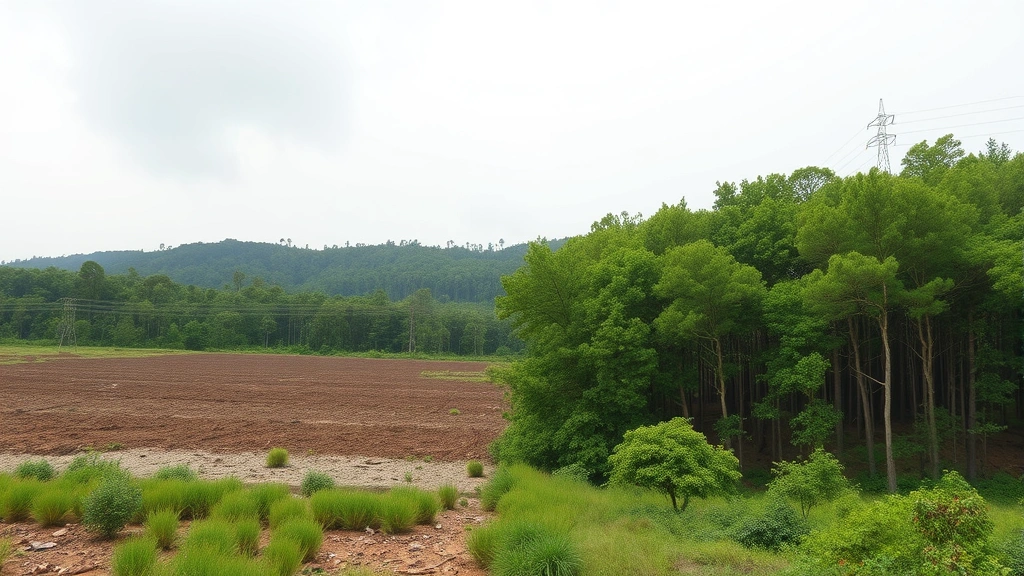
Forest ecosystems illustrate this principle compellingly. Beyond timber production, forests regulate water cycles, stabilize soils, sequester atmospheric carbon, and provide habitat for species with pharmaceutical potential. A mature forest in the Amazon basin generates approximately $2,000-$6,000 annually per hectare through ecosystem services (carbon sequestration, water regulation, genetic resources), yet standing forest typically generates zero market revenue for property owners. Conversely, clearing that same forest for cattle ranching yields approximately $200 annually per hectare. This inverted incentive structure explains deforestation rates exceeding 10 million hectares annually globally.
The concept of environmental science increasingly incorporates natural capital accounting frameworks. Costa Rica pioneered this approach through its Payment for Ecosystem Services (PES) program, which directly compensates landowners for forest conservation. By converting invisible ecosystem benefits into visible monetary transfers, the program reversed deforestation trends while maintaining rural livelihoods. Between 1987 and 2015, forest cover increased from 21% to 52% of national territory while the program distributed over $600 million to participating landowners.
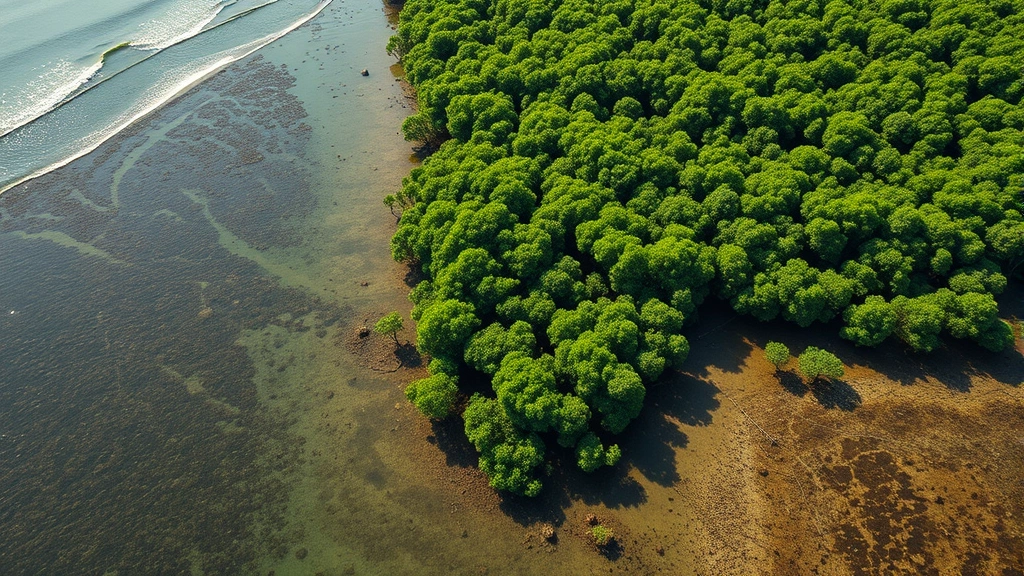
Understanding types of environment proves essential for targeted conservation economics. Tropical forests, coral reefs, and mangrove systems generate disproportionately high ecosystem service values relative to their land area, making them priority conservation targets from an economic efficiency perspective. Mangroves occupy less than 0.5% of coastal area yet support fisheries worth over $37 billion annually and provide storm surge protection valued at $65 billion globally.
Agricultural Productivity and Biodiversity
Biodiversity underpins agricultural productivity through pollination services, pest control, soil health maintenance, and genetic resources for crop improvement. Approximately 75% of global food crops depend partially or entirely on animal pollination, predominantly from wild bee populations. The economic value of pollination services reaches $15-$20 billion annually in the United States alone.
Industrial agriculture’s reliance on monocultures and synthetic inputs has degraded the ecological foundations supporting productivity. Soil organic matter has declined 50% on average in agricultural regions, reducing water retention capacity and increasing vulnerability to drought. Pesticide use has eliminated 75% of insect biomass in some regions, cascading through food webs to reduce bird populations and compromise pest control services. These trends create hidden economic costs exceeding $10,000 per hectare annually when accounting for soil remediation, water treatment, and pest management expenses that replace lost ecosystem functions.
Regenerative agriculture practices—cover cropping, reduced tillage, diverse rotations, integrated livestock—restore ecosystem services while maintaining or improving yields. Meta-analyses of 286 studies demonstrate that diversified systems average 20% higher productivity than monocultures when accounting for all outputs (primary crop, secondary crops, livestock, ecosystem services). The transition period typically requires 3-5 years and involves upfront costs, yet long-term returns exceed conventional agriculture by 30-50% when ecosystem service values are incorporated.
Positive impacts humans have on the environment increasingly demonstrate that economic prosperity and ecosystem health align when proper incentive structures exist. Organic farming premiums, carbon credits for soil sequestration, and biodiversity certification programs create market mechanisms rewarding ecosystem restoration.
Climate Regulation and Economic Risk
Ecosystem-based climate regulation represents one of the largest ecosystem service flows, yet remains largely unpriced in global markets. Forests, wetlands, grasslands, and marine ecosystems sequester atmospheric carbon while regulating local and regional climate patterns. The global carbon cycle generates climate stability worth trillions annually when measured through avoided climate damages.
Recent research from the United Nations Environment Programme quantifies that every dollar invested in ecosystem restoration generates $7-$30 in economic returns through climate risk reduction, improved water security, and enhanced agricultural productivity. Mangrove restoration in Southeast Asia costs approximately $3,000 per hectare yet prevents $32,000 in annual storm damage while sequestering 1.5 tons of carbon annually (valued at $45-$75 at social carbon pricing levels).
The economic case for climate-focused ecosystem protection strengthens as climate damages accelerate. Global warming already costs approximately 1.7% of GDP annually in damages, with projections reaching 5-20% of GDP by 2100 without mitigation. Ecosystem-based adaptation—restoring mangroves, reforesting watersheds, protecting coral reefs—provides cost-effective risk reduction. A study of 656 adaptation projects found ecosystem-based approaches cost 50% less than infrastructure-based alternatives while providing multiple co-benefits.
Understanding human environment interaction through a climate lens reveals that ecosystem degradation amplifies economic vulnerability. Deforestation reduces rainfall in downwind regions, exacerbating drought risk for agriculture. Wetland drainage increases flood severity and duration. Coral reef degradation eliminates storm surge protection, increasing hurricane damage. These interactions create feedback loops where ecosystem loss compounds economic losses across multiple sectors.
Water Systems and Economic Security
Freshwater ecosystems provide services worth an estimated $260 billion annually through water supply, water purification, flood control, and groundwater recharge. Yet freshwater systems face unprecedented pressure from pollution, extraction, and climate change, threatening economic security across agriculture, industry, and urban centers.
Natural water filtration through wetlands and riparian forests costs $1,000-$2,000 per hectare annually to replace with constructed treatment facilities. Yet wetland loss continues at 1-2% annually globally. The economic logic appears paradoxical: ecosystem preservation costs nothing (foregone development benefits), yet replacement infrastructure requires substantial capital and operating expenditure. This paradox reflects the absence of payment mechanisms for ecosystem services—the benefits are real but uncompensated.
Watershed protection provides measurable economic returns. New York City’s decision to invest $1.5 billion in Catskill watershed ecosystem restoration rather than $6-8 billion in constructed water treatment facilities represents a landmark case of ecosystem service valuation influencing major infrastructure investment. The ecosystem approach proved more cost-effective while providing co-benefits including carbon sequestration, habitat restoration, and recreational value.
Groundwater recharge through infiltration in natural landscapes generates economic value through agricultural productivity, drinking water supply, and baseflow maintenance supporting aquatic ecosystems. Paved and developed landscapes reduce infiltration by 80-90%, requiring expensive stormwater management infrastructure while degrading water quality and increasing flood risk. Green infrastructure approaches—preserving and restoring natural infiltration capacity—cost 25-50% less than conventional stormwater systems while providing recreational and aesthetic benefits.
Tourism and Recreation Economics
Ecosystem-based tourism generates over $600 billion annually globally, representing approximately 7% of international trade. Protected ecosystems in their natural state produce higher long-term economic returns than converted landscapes. Kenya’s wildlife tourism generates $2.2 billion annually, supporting 2 million jobs, yet occupies land that could support lower-productivity agriculture.
Coral reef tourism generates $36 billion annually globally while supporting 500 million people in developing nations dependent on reef-based fisheries and tourism. Yet coral cover has declined 50% since 1950, threatening $375 billion in annual economic value from reef-dependent tourism and fisheries. The economic case for reef protection proves overwhelming: preservation costs approximately $250 million annually in foregone development, while reef loss costs $375 billion in economic damages—a 150:1 benefit-to-cost ratio.
Recreation values in preserved ecosystems extend beyond international tourism to encompass domestic recreation, mental health benefits, and cultural services. Studies using travel cost methodology and contingent valuation consistently demonstrate that accessible natural areas generate $1,000-$5,000 annually per hectare in recreational value. Urban green space increases property values by 5-20%, improves mental health outcomes measurable in healthcare cost reductions, and enhances social cohesion.
Policy Frameworks and Implementation
Translating ecosystem service valuation into economic policy requires institutional mechanisms that incorporate natural capital into decision-making. Several policy frameworks demonstrate increasing effectiveness.
Payments for Ecosystem Services (PES): Direct compensation mechanisms reward landowners for ecosystem preservation or restoration. Over 550 PES programs operate globally, disbursing approximately $42 billion annually. Effectiveness varies with program design, with successful programs featuring accurate ecosystem service valuation, equitable benefit distribution, and long-term funding commitment.
Natural Capital Accounting: Integrating ecosystem assets into national accounting systems makes ecosystem values visible in GDP calculations. Botswana, Costa Rica, and Indonesia have pioneered natural capital accounting, revealing that conventional GDP growth masks underlying natural capital depletion. When ecosystem services are incorporated, measured growth rates decline 20-40% in resource-dependent economies, signaling unsustainable development patterns.
Payment for Watershed Services: Protecting upstream ecosystems that provide water supply, purification, and flood control generates quantifiable economic benefits for downstream users. Over 200 watershed payment schemes operate globally, typically costing $20-$100 per hectare annually while generating $500-$2,000 in downstream benefits.
Biodiversity Credits and Conservation Banking: Market-based mechanisms allow developers to offset environmental impacts through ecosystem restoration elsewhere. These systems remain nascent but demonstrate potential for aligning development incentives with conservation goals.
The blog home section provides additional resources exploring these policy mechanisms and their real-world applications across diverse contexts.
Measurement Challenges and Solutions
Quantifying ecosystem services involves substantial technical and methodological challenges. Ecosystem functions operate across scales from local to global, with multiple services flowing simultaneously from complex systems. Attribution proves difficult: determining how much of a region’s rainfall results from local forest cover versus distant ocean circulation patterns requires sophisticated modeling.
Recent advances in ecosystem service measurement employ integrated approaches combining field monitoring, remote sensing, and ecological modeling. Satellite-based monitoring now tracks vegetation health, water quality, and land cover change at 10-meter resolution globally, enabling systematic ecosystem service quantification. Machine learning algorithms analyze these data streams to predict ecosystem service flows under alternative management scenarios.
Economic valuation methodologies continue evolving to address known limitations. Transfer value approaches apply ecosystem service values from studied sites to similar unstudied sites, reducing research costs but introducing uncertainty. Benefit transfer functions predict values based on ecosystem characteristics, location, and socioeconomic context, enabling rapid assessment of large areas. Meta-analytical approaches synthesize findings across hundreds of studies to identify consistent value ranges and drivers.
The most significant advancement involves recognizing that ecosystem services cannot always be monetized. Cultural services including spiritual significance, existence value of species, and intrinsic ecosystem worth resist economic quantification. Pluralistic valuation frameworks increasingly acknowledge multiple value dimensions—ecological, cultural, economic, social—rather than reducing all values to monetary units.
A 2023 Nature Ecology & Evolution study analyzed ecosystem service valuation across 8,000 studies, concluding that monetized assessments capture perhaps 30-40% of actual ecosystem value when accounting for non-market services. This finding underscores that economic valuation, while useful for policy decisions, represents a partial accounting of ecosystem worth.
FAQ
How much economic value do ecosystems provide annually?
The World Bank estimates ecosystem services worth approximately $125 trillion annually, though estimates range from $50-$150 trillion depending on valuation methodologies and service inclusion. This dwarfs global GDP ($100 trillion), illustrating the foundational role of ecosystem services in economic activity.
Can ecosystem restoration generate positive economic returns?
Yes. Meta-analyses of ecosystem restoration projects demonstrate benefit-to-cost ratios averaging 7:1 to 30:1 when accounting for ecosystem service flows. Mangrove restoration, forest protection, and wetland rehabilitation consistently show returns exceeding costs within 10-20 years, with benefits continuing indefinitely.
Why don’t markets automatically protect valuable ecosystems?
Ecosystem services exhibit characteristics—externalities, public goods properties, long time horizons, diffuse benefits—that prevent efficient market pricing. Benefits accrue broadly across society while costs concentrate among ecosystem users, creating incentives favoring conversion over preservation absent policy intervention.
What policy mechanisms most effectively protect ecosystems while supporting economic development?
Integrated approaches combining PES programs, natural capital accounting, ecosystem-based adaptation investment, and biodiversity certification prove most effective. Successful policies align private incentives with conservation goals through payment mechanisms, regulate destructive practices, and invest public resources in ecosystem restoration.
How do ecosystem services contribute to climate change mitigation?
Forests, wetlands, grasslands, and marine ecosystems sequester atmospheric carbon while regulating climate patterns. Ecosystem-based climate solutions cost 50% less than infrastructure-based alternatives while providing co-benefits including improved water security, enhanced agriculture, and biodiversity conservation.
What role do ecosystems play in food security?
Ecosystems provide pollination, pest control, soil health, water supply, and genetic resources essential for agricultural productivity. Biodiversity-rich agricultural systems demonstrate 20-50% higher long-term productivity than monocultures while building resilience to climate variability and pest outbreaks.


