Is ‘The Environment Excuse’ Valid? Expert Insights on Corporate Claims and Ecological Accountability
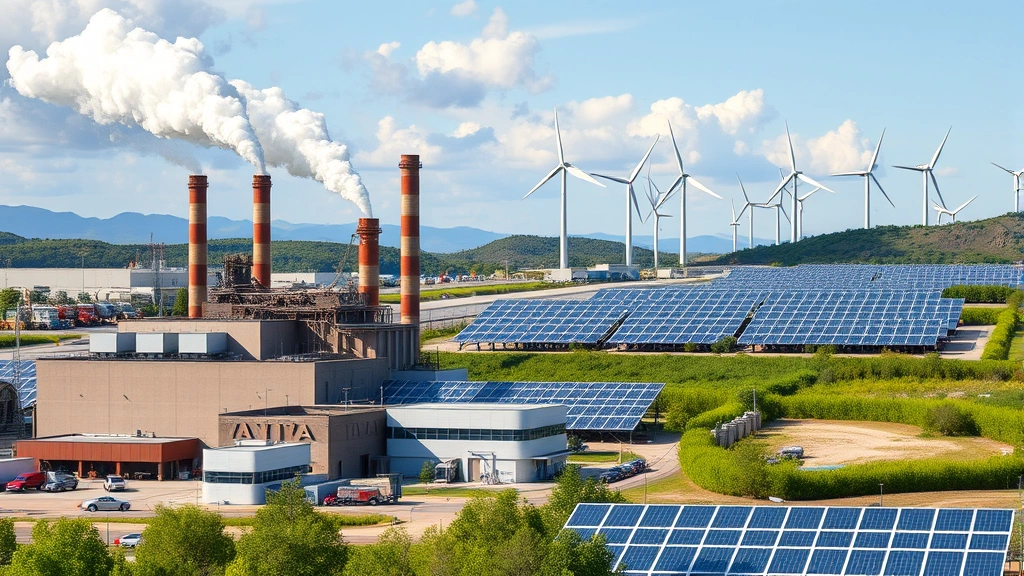
The phrase “environment excuse” has become increasingly prevalent in contemporary discourse, referring to instances where corporations, governments, or individuals invoke environmental concerns to justify decisions that may not fully align with genuine ecological responsibility. This phenomenon raises critical questions about the authenticity of environmental commitments and whether such claims represent legitimate sustainability efforts or merely performative gestures designed to deflect criticism and maintain public credibility.
Understanding whether the environment excuse holds merit requires examining the intersection of economic incentives, regulatory pressures, and authentic environmental science. As stakeholders worldwide demand greater transparency and accountability, the distinction between substantive environmental action and superficial green-washing has never been more important. This analysis explores expert perspectives on the validity of environmental justifications and what evidence-based decision-making looks like in a world grappling with climate change and biodiversity loss.
Understanding the Environment Excuse: Definition and Context
The environment excuse operates within a complex landscape where environmental protection intersects with economic interests, political agendas, and corporate profitability. At its core, this concept refers to situations where environmental considerations are cited as the primary reason for actions that may generate alternative benefits—such as cost reduction, market advantage, or regulatory compliance avoidance. For instance, a company might cite environmental concerns to justify relocating production facilities to regions with less stringent labor regulations, or governments might invoke climate action to implement policies that primarily benefit certain industries.
The validity of environmental excuses depends significantly on whether the stated environmental concerns represent genuine risks and whether proposed solutions are proportionate to identified problems. The relationship between environment and market dynamics reveals how environmental claims often become entangled with economic motivations. Research from the World Bank indicates that environmental policies frequently generate winners and losers in economic terms, creating incentives for stakeholders to frame their preferred outcomes as environmentally necessary.
Expert consensus suggests that determining validity requires examining three fundamental dimensions: scientific basis, proportionality of response, and transparency of additional benefits. When environmental excuses fail these tests, they typically represent attempts to legitimize decisions that serve narrow interests while appearing to serve broader ecological goals. Understanding the definition of environment science becomes essential for evaluating whether claims rest on solid scientific foundations or merely invoke environmental language without rigorous analysis.
The Economics of Environmental Claims
Economic analysis reveals that environmental excuses often emerge at the intersection of cost externalization and regulatory capture. When firms face pressure to reduce environmental impacts, they may choose between genuinely transforming their operations or strategically deploying environmental rhetoric to maintain status quo arrangements. The economic incentive structure frequently favors the latter approach, particularly when environmental regulations remain unevenly enforced or when competitive advantages accrue to early adopters of green-washing strategies.
Cost-benefit distortions: Environmental claims often obscure underlying cost-benefit calculations. A manufacturing firm might argue that eliminating a specific pollutant is environmentally essential, when the decision primarily reflects a cost calculation showing that regulatory fines exceed remediation expenses. This doesn’t necessarily invalidate the environmental benefit, but it reframes the motivation from moral imperative to economic optimization.
The United Nations Environment Programme has documented how environmental policies can generate substantial economic rents for well-positioned firms while imposing costs on competitors or vulnerable populations. This creates powerful incentives to invoke environmental necessity for decisions that serve narrow economic interests. Research in ecological economics journals demonstrates that environmental excuses gain credibility precisely when they align with pre-existing economic interests, suggesting that coincidental alignment between environmental and economic benefits warrants skepticism.
Market-based mechanisms and perverse incentives: Carbon trading systems, biodiversity offsets, and similar market mechanisms have created new opportunities for environmental excuses. Companies can cite participation in these systems as evidence of environmental commitment, even when the systems allow continued pollution through offset purchases. Environmental awareness among consumers has increased demand for these mechanisms, creating a profitable market for environmental claims that may lack substantive impact.
Green-washing vs. Genuine Commitment
The distinction between green-washing and authentic environmental commitment represents perhaps the most critical dimension of evaluating environmental excuses. Green-washing involves deploying environmental language, imagery, and claims to create perceptions of environmental responsibility while maintaining fundamentally unchanged practices. This ranges from obvious deception—such as labeling products as “natural” without meaningful differentiation—to sophisticated strategies involving selective disclosure of positive environmental metrics while concealing negative impacts.
Expert researchers have identified specific indicators that distinguish genuine environmental commitment from sophisticated green-washing. These include: third-party verification of claims, transparency about negative impacts alongside positive ones, willingness to accept binding commitments with measurable targets, investment in infrastructure that locks in environmental improvements, and consistency between stated values and operational practices across all business segments.
The validity of environmental excuses increases substantially when accompanied by these indicators. Conversely, environmental claims lacking such evidence warrant skepticism regardless of their surface plausibility. A corporation announcing a commitment to carbon neutrality by 2050 might cite environmental necessity, but the absence of interim targets, third-party verification, or detailed methodology suggests the commitment serves primarily as a public relations tool rather than representing genuine environmental responsibility.
Temporal dimensions: The timing of environmental claims provides additional diagnostic information. Environmental excuses often emerge when regulatory changes impose new compliance costs, when reputational crises demand rapid response, or when competitive pressures require differentiation. Genuine environmental commitment, by contrast, often precedes regulatory requirements and reflects proactive rather than reactive positioning.
Expert Analysis on Credibility Indicators
Environmental scientists, ecological economists, and policy analysts have developed increasingly sophisticated frameworks for evaluating environmental claims. These frameworks examine the relationship between stated goals and measurable outcomes, the quality of underlying science, and the alignment between environmental claims and operational decisions.
Scientific rigor: Credible environmental claims rest on peer-reviewed research, transparent methodology, and acknowledgment of uncertainty. Experts emphasize that environmental science necessarily involves complexity and incomplete information, but legitimate claims explicitly address these limitations rather than obscuring them. When corporations or governments cite environmental concerns without referencing underlying scientific literature or acknowledging competing interpretations, credibility diminishes substantially.
Measurability and transparency: The validity of environmental excuses correlates directly with the specificity and transparency of claimed impacts. Vague commitments to “sustainability” or “environmental responsibility” lack credibility precisely because they resist measurement and verification. Expert consensus strongly favors quantified targets with defined timelines, transparent methodology for calculation, and regular public reporting of progress.
Research from environmental economics institutions emphasizes that credible environmental claims typically involve accepting constraints on future flexibility. When corporations commit to environmental improvements, genuine commitment manifests through capital investment in infrastructure that locks in improvements, contractual arrangements that impose costs for non-compliance, and governance structures that prevent future reversals. Conversely, purely rhetorical commitments impose no such constraints.
Holistic impact assessment: Experts increasingly recognize that environmental excuses often rest on narrow impact assessment focusing on single issues while ignoring broader ecological consequences. A company might reduce carbon emissions while increasing water pollution, or preserve forest cover while degrading soil health. Comprehensive evaluation requires examining how humans affect the environment across multiple dimensions rather than accepting improvement in one metric as evidence of genuine environmental commitment.
Case Studies: When Environmental Arguments Hold Water
Examining specific cases where environmental excuses prove valid versus invalid illustrates the principles underlying credibility assessment. These cases demonstrate that environmental claims can rest on legitimate foundations when they meet specific criteria, but often fail scrutiny when examined rigorously.
Case 1 – Renewable Energy Transition: When energy companies cite climate change concerns to justify transitioning from coal to renewable sources, the environmental excuse contains substantial validity. These claims rest on peer-reviewed climate science, involve measurable emissions reductions, require significant capital investment that locks in environmental improvements, and typically proceed despite short-term economic headwinds. The alignment between environmental and economic benefits emerges gradually as renewable technologies mature and costs decline, rather than representing the initial motivation.
Case 2 – Industrial Relocation: When manufacturing firms cite environmental concerns to justify relocating production to countries with weaker environmental standards, the excuse typically lacks validity. While firms invoke environmental justifications—such as reducing transportation emissions or accessing cleaner energy sources—the primary motivation usually reflects labor cost reduction or regulatory arbitrage. The environmental excuse proves invalid because the claimed benefits often pale in comparison to increased environmental damage in destination countries with inadequate enforcement.
Case 3 – Agricultural Intensification: When agricultural companies cite environmental necessity to justify intensive farming practices, validity depends on specific circumstances. Concentrated animal feeding operations reduce land use pressure, potentially preserving wild habitats, but concentrate environmental impacts and create new problems. The environmental excuse holds partial validity because land preservation benefits exist, but lacks full validity because it ignores concentrated pollution impacts and ecosystem simplification.
Regulatory Frameworks and Accountability Measures
The effectiveness of environmental excuses depends significantly on regulatory frameworks that either enable or constrain their deployment. Strong regulatory systems with rigorous enforcement, transparent decision-making processes, and meaningful penalties for false claims reduce opportunities for environmental excuses to substitute for genuine environmental improvement. Conversely, weak regulatory systems create space for environmental rhetoric to substitute for substantive action.
Regulatory capture and strategic deployment: Sophisticated actors often deploy environmental excuses within regulatory processes themselves, using environmental arguments to justify policies that primarily serve narrow interests. Environmental impact assessment requirements, for example, can become mechanisms for legitimizing predetermined decisions rather than genuinely informing policy development. When regulatory processes lack transparency and fail to subject environmental claims to rigorous scrutiny, environmental excuses flourish.
The UNEP Sustainable Development resources emphasize that accountability mechanisms must include both regulatory oversight and stakeholder participation. Environmental excuses lose effectiveness when affected communities can demand transparent disclosure of underlying data, challenge claims through formal processes, and hold decision-makers accountable for promised outcomes.
Comparative regulatory approaches: Jurisdictions adopting more stringent regulatory frameworks experience fewer successful environmental excuses. The European Union’s environmental regulations, for instance, impose requirements for detailed impact assessment, transparent decision-making, and meaningful enforcement that constrain purely rhetorical environmental claims. Conversely, jurisdictions with minimal environmental regulation create space for environmental language to substitute for substantive protection.
The Role of Independent Verification
Third-party verification represents perhaps the most significant mechanism for distinguishing valid environmental claims from strategic excuses. Independent verification introduces external scrutiny that organizations cannot fully control, creating accountability that self-reporting systems lack. The credibility of environmental claims increases dramatically when accompanied by verification from organizations with genuine independence, rigorous methodology, and reputational incentives to maintain credibility.
Types of verification mechanisms: Environmental claims can be verified through multiple mechanisms, each with distinct advantages and limitations. Scientific research by independent academic institutions provides rigorous evaluation but often lacks real-time responsiveness. Third-party certification systems offer standardized evaluation but may suffer from conflicts of interest if certifiers depend on fees from certified organizations. Government environmental agencies provide regulatory authority but may lack technical capacity or face political pressure. Civil society organizations provide advocacy-based scrutiny but may lack technical expertise or comprehensive data access.
Expert analysis suggests that credible environmental claims typically involve multiple verification mechanisms rather than relying on single sources. A corporation genuinely committed to environmental improvement might pursue government regulatory compliance, seek third-party certification, commission independent scientific research, and provide transparent data access to civil society organizations. The multiplicity of verification mechanisms itself signals authentic commitment, since purely rhetorical environmental claims typically avoid subjecting themselves to such scrutiny.
Verification challenges and limitations: Independent verification systems themselves require scrutiny, as they can be compromised through financial incentives, methodological limitations, or inadequate transparency. The effectiveness of verification depends on whether verifying organizations maintain genuine independence, possess adequate technical capacity, and face strong reputational incentives to maintain credibility. When verification systems become dominated by organizations with financial interests in certifying environmental claims, the distinction between verification and green-washing collapses.
Understanding human-environment interaction requires recognizing that verification itself represents a human activity embedded in economic and political systems. Verification systems can themselves become mechanisms for legitimizing environmental excuses when they lack genuine independence or adequate technical rigor. Robust environmental accountability requires subjecting verification systems themselves to external scrutiny and maintaining multiple competing verification mechanisms.
FAQ
What distinguishes a valid environmental excuse from an invalid one?
Valid environmental excuses rest on peer-reviewed science, involve measurable and verifiable outcomes, require significant investment that locks in improvements, and maintain transparency about both positive and negative impacts. Invalid excuses typically involve vague commitments, lack third-party verification, align suspiciously with pre-existing economic interests, and resist measurement and accountability.
Can environmental and economic interests ever genuinely align?
Yes, environmental and economic interests can align, particularly when environmental improvements reduce operational costs or create new market opportunities. However, such alignment warrants skepticism precisely because it creates incentives to invoke environmental necessity for decisions primarily motivated by economic benefit. Genuine environmental commitment often involves accepting short-term economic costs for long-term ecological benefits.
How can consumers evaluate environmental claims?
Consumers can evaluate environmental claims by seeking third-party certification from independent organizations, examining whether claims include specific quantified targets with timelines, investigating whether organizations provide transparent data about negative impacts alongside positive ones, and assessing whether organizations accept binding commitments with meaningful penalties for non-compliance.
What role do governments play in preventing environmental excuses?
Governments establish regulatory frameworks that either constrain or enable environmental excuses. Strong regulatory systems with rigorous enforcement, transparent decision-making, and meaningful penalties for false claims reduce opportunities for environmental rhetoric to substitute for substantive action. Conversely, weak regulatory systems create space for environmental excuses to flourish.
Can environmental excuses ever serve positive purposes?
Environmental excuses can inadvertently generate positive environmental outcomes when the stated environmental concerns, though perhaps not the primary motivation, reflect genuine ecological problems. However, relying on environmental excuses to drive environmental improvement proves unreliable compared to regulatory frameworks that directly mandate substantive improvements.


