Can Terraform Impact Ecosystems? Expert Insights on Environmental Variables and Ecological Transformation
Terraforming—the theoretical process of deliberately modifying planetary or terrestrial environments to make them habitable or more productive—represents one of humanity’s most ambitious environmental interventions. While often discussed in science fiction contexts, the principles underlying terraforming share striking parallels with real-world ecosystem manipulation practices. Understanding whether and how terraform-type interventions impact ecosystems requires examining the intricate relationships between environmental variables, ecological systems, and human-induced transformations.
The concept of terraforming extends beyond extraterrestrial colonization to encompass large-scale terrestrial engineering projects: wetland restoration, desert reclamation, atmospheric carbon management, and geoengineering proposals. Each intervention manipulates fundamental environment variables—temperature, precipitation, soil composition, atmospheric chemistry, and biodiversity patterns—with cascading consequences for ecosystem health. This analysis explores whether intentional ecosystem redesign can achieve desired outcomes without triggering unintended ecological collapse.
Understanding Terraforming and Environmental Variables
Terraforming fundamentally operates through manipulation of environmental variables—measurable physical and chemical parameters that define ecosystem conditions. These variables include atmospheric composition, temperature regimes, humidity levels, soil pH and nutrient content, water availability, light intensity, and pressure systems. Understanding how these interact requires grounding in both definition of environment science and ecological mechanics.
In scientific literature, terraforming scenarios typically describe multi-century projects involving greenhouse gas injection, albedo modification, or biological inoculation to transform hostile planetary surfaces. However, the methodological framework applies equally to terrestrial contexts where humans deliberately redesign landscapes. Desert irrigation projects, for instance, represent localized terraforming—altering precipitation patterns, soil moisture, temperature microclimates, and vegetation structure simultaneously.
The critical distinction between terraforming theory and ecological reality emerges when examining system responsiveness. Computer models can predict individual variable changes with reasonable accuracy. Real ecosystems, however, exhibit non-linear responses where small environmental shifts trigger disproportionate biological consequences. A 2°C temperature increase might seem modest numerically, yet it can shift species ranges by hundreds of kilometers, alter precipitation timing, and disrupt pollinator-plant synchronization that evolved over millennia.
Environmental variables function as interconnected networks rather than isolated parameters. Soil moisture affects root respiration rates, which influence carbon cycling and nutrient availability. Temperature changes alter metabolic rates across trophic levels differently, potentially destabilizing predator-prey relationships. Atmospheric composition modifications affect photosynthetic efficiency while simultaneously changing radiation absorption. These cascading interdependencies mean that terraforming interventions rarely produce isolated outcomes.

Ecosystem Complexity and Intervention Paradoxes
The central paradox of ecosystem modification lies in the tension between human environment interaction objectives and ecological resilience patterns. Ecosystems evolved under specific environmental variable ranges and exhibit threshold behaviors—relatively stable states separated by critical tipping points. Once a threshold is crossed, ecosystem state shifts can become irreversible on human timescales.
Consider the Amazon rainforest as a terraforming case study. This ecosystem maintains precipitation through transpiration cycles—trees release water vapor that condenses into rainfall, sustaining the system. Deforestation reduces transpiration, lowering local rainfall and creating feedback loops toward savannization. While individual variables (tree cover, humidity, temperature) appear modifiable, the system exhibits tipping point behavior where loss of approximately 20-25% forest cover could trigger irreversible transition to grassland. This represents unintended terraforming with catastrophic economic consequences.
Ecological networks demonstrate similar complexity. Keystone species—organisms whose impact exceeds their biomass—often drive ecosystem function disproportionately. Sea otters in kelp forests, for example, control sea urchin populations whose grazing either maintains or destroys kelp. Removing otters through hunting unintentionally terraformed coastal ecosystems, transforming productive kelp forests into urchin barrens. Restoration required reintroducing otters, demonstrating that ecosystem engineering demands understanding species interactions, not merely environmental variables.
Genetic diversity within species populations also resists simplistic terraforming assumptions. Organisms possess genetically encoded responses to environmental variation accumulated across evolutionary time. Rapid environmental modification exceeds adaptation rates, causing population crashes despite seemingly suitable conditions. Climate-assisted migration—intentionally moving species to new ranges—attempts terraforming through biological relocation, yet often fails when source populations lack genetic diversity for novel environmental variable combinations encountered in destination ecosystems.
The stability-diversity relationship presents another intervention paradox. Ecologically diverse systems exhibit greater resilience to environmental perturbation, yet terraforming projects often reduce diversity through monoculture plantations or simplified restoration designs. A reforested area planted with single tree species provides less ecosystem service redundancy than naturally regenerating diverse forest, making it more vulnerable to pest outbreaks or climate fluctuations.
Real-World Terraforming Case Studies
Examining actual ecosystem modification projects reveals both successes and failures in applying terraforming principles. The Everglades restoration represents ambitious, ongoing terraforming attempting to reverse decades of drainage and agricultural modification. By reestablishing water flow patterns and environmental variables (water depth, hydroperiod duration, nutrient cycling), restoration aims to recover ecosystem services. Yet incomplete understanding of species interactions and hydrology meant that early restoration phases created unexpected ecological consequences—invasive species thriving in modified conditions, native species slow to recover despite suitable environmental variables.
The Aral Sea disaster demonstrates terraforming’s catastrophic potential. Soviet irrigation projects diverted rivers feeding this inland sea, fundamentally altering regional environmental variables: humidity, temperature, salt concentration, and water availability. The resulting ecosystem collapse created a dust bowl, eliminated fisheries, and caused public health crises. Despite possessing technology and resources, terraforming failed because planners underestimated ecological interconnectedness and feedback mechanisms.
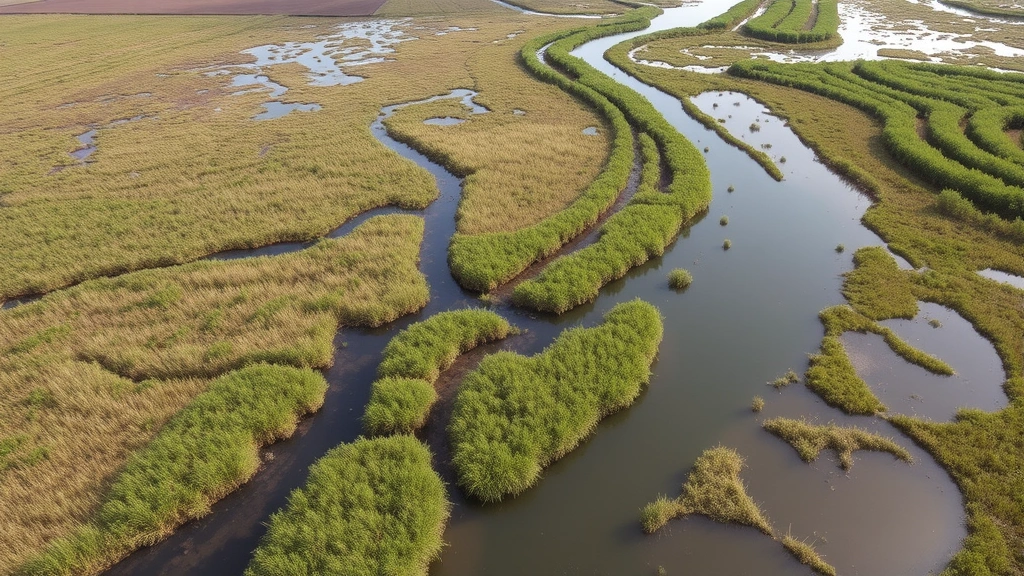
Wetland restoration projects in North America show more encouraging results, though with nuance. Restoring hydrology to drained wetlands typically recovers specific ecosystem functions within years—water filtration, carbon storage, biodiversity recovery. However, complete ecosystem restoration often requires decades or centuries as soil development, nutrient cycling, and species composition gradually normalize. Environmental variables can be modified relatively quickly; ecosystem function recovery requires temporal scales exceeding human project timelines.
Coral reef restoration attempts terraforming at smaller scales, manipulating temperature, pH, light, and nutrient conditions to support coral growth and reproduction. Artificial reef structures, larval seeding, and assisted evolution techniques modify local environmental variables. Yet success remains limited because ocean acidification, warming, and nutrient pollution create larger-scale environmental variable changes outpacing restoration capacity. This illustrates how how do humans affect the environment through multiple pathways simultaneously, making isolated terraforming interventions insufficient.
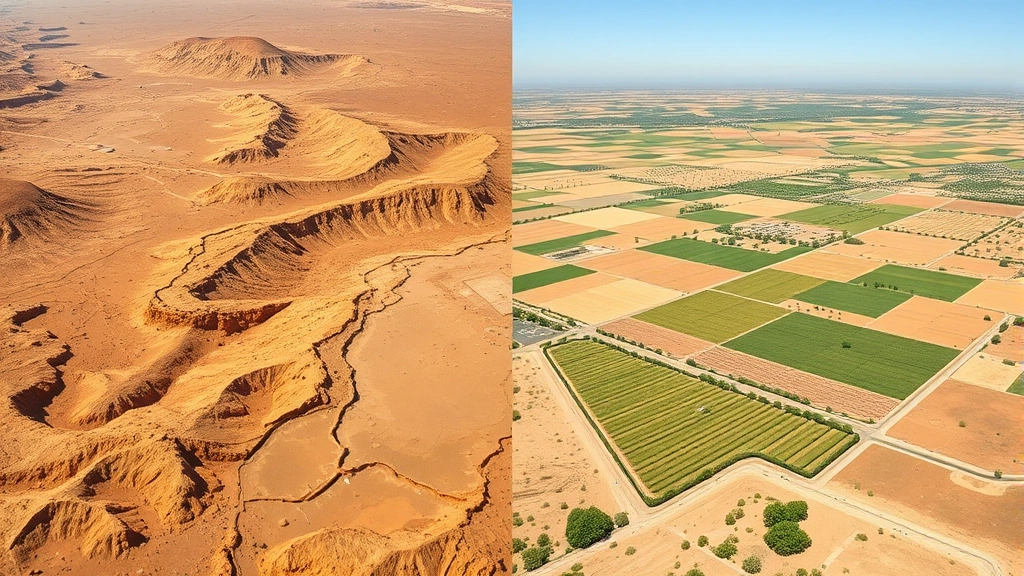
Desert greening projects in China, Middle East, and Africa exemplify terraforming at landscape scale. Massive irrigation infrastructure, windbreak plantations, and soil amendment modify environmental variables across millions of hectares. While these projects increase vegetation cover and food production, they often create new ecological problems: aquifer depletion, salinization, and habitat fragmentation for native species. The terraforming succeeds in changing variables but fails to establish sustainable, self-maintaining ecosystems.
Economic Frameworks for Ecosystem Modification
Understanding terraforming’s feasibility requires economic analysis beyond simple cost-benefit calculations. Ecological economics—the subdiscipline examining economy-ecosystem relationships—reveals that ecosystem modification costs frequently exceed conventional economic assessments because they ignore natural capital depletion.
The World Bank’s environmental economics framework conceptualizes ecosystem services—benefits humans derive from natural systems—in monetary terms. Wetlands provide water filtration, flood control, carbon sequestration, and habitat services valued at thousands of dollars per hectare annually. Draining wetlands for agriculture captures immediate agricultural revenue while destroying service flows worth more over decades. Terraforming calculations often ignore these opportunity costs, making environmentally destructive interventions appear economically rational.
Rebound effects complicate terraforming economics further. Increasing agricultural productivity through irrigation and fertilization typically increases food supply and reduces prices, stimulating consumption that offsets efficiency gains. Terraforming a desert region for agriculture may increase total food output yet simultaneously increase environmental pressure through expanded cultivation of marginal lands, pesticide use, and water extraction—creating new environmental variable changes requiring further terraforming.
The discount rate problem affects long-term terraforming feasibility. Standard economic models discount future environmental benefits at rates (3-5% annually) that make ecosystem recovery investments appear uneconomical when benefits accrue across centuries. Ecological systems, however, operate on geological timescales where traditional discounting fundamentally misrepresents value. A forest providing carbon sequestration for 500 years appears worthless under conventional economics yet provides immense climate regulation value.
Natural capital accounting frameworks proposed by UNEP and environmental economics institutions suggest terraforming requires accounting for ecosystem service flows rather than one-time environmental variable modifications. A restoration project’s success depends not on achieving target environmental variables but on establishing self-maintaining systems providing sustainable service flows indefinitely.
The concept of ecological limits to terraforming emerges from planetary boundaries research. Earth systems science identifies critical environmental variable thresholds beyond which cascading ecosystem collapse risks increase dramatically: climate change (2°C warming), biodiversity loss (species extinction rate), nutrient cycling disruption, ocean acidification, and land-use change. Terraforming projects must operate within these boundaries or risk triggering irreversible global ecosystem state shifts.
Technological Solutions and Limitations
Geoengineering proposals represent terraforming at planetary scale, attempting to modify atmospheric environmental variables to counteract climate change. Solar radiation management (injecting aerosols into stratosphere), carbon dioxide removal (direct air capture), and albedo modification (painting roofs white, cloud brightening) all manipulate environmental variables directly.
However, technological terraforming faces fundamental physical and ecological limitations. Stratospheric aerosol injection might reduce solar radiation reaching Earth’s surface, lowering temperatures, yet simultaneously disrupts precipitation patterns, reduces crop photosynthesis, and creates ozone depletion risks. The intervention modifies one environmental variable (radiation) while destabilizing others (precipitation, atmospheric chemistry), potentially trading one ecological crisis for another.
Carbon dioxide removal technologies capture atmospheric CO₂ through biochar production, direct air capture, or enhanced weathering. While technically feasible, scaling these solutions to climate-relevant levels requires terraforming energy and material inputs that themselves generate environmental variable changes. The energy required for direct air capture must come from renewable sources; otherwise, the intervention increases emissions. Material requirements for equipment manufacturing create mining, manufacturing, and waste disposal impacts.
Ecosystem-based terraforming solutions—restoring forests, wetlands, and grasslands to enhance carbon sequestration—offer lower-tech alternatives with co-benefits. Yet they operate at slower timescales and smaller magnitudes than technological approaches. A reforested region might sequester 5-10 tons carbon per hectare over 50 years; atmospheric CO₂ removal operates at gigatons annually for climate impact. Both approaches modify environmental variables; technological terraforming offers speed while ecological approaches offer resilience and ecosystem service co-benefits.
Precision agriculture and controlled-environment farming represent terraforming at micro-scales, modifying light, temperature, humidity, and nutrient variables within greenhouses or vertical farms. These systems achieve remarkable productivity per unit land area, potentially reducing pressure on natural ecosystems. However, they typically require substantial energy inputs and create technological lock-in—systems dependent on continuous energy supplies and technological maintenance. System failures create immediate crop losses, unlike diverse natural ecosystems with built-in redundancy.
Future Perspectives on Ecological Engineering
The future of terraforming likely involves hybrid approaches combining technological interventions with ecological restoration, operating within environment awareness frameworks acknowledging ecosystem complexity. Rather than imposing predetermined environmental variable targets, emerging ecological engineering emphasizes working with natural processes—ecological design rather than ecological replacement.
Regenerative agriculture terraforms agricultural landscapes toward greater ecosystem service provision by manipulating environmental variables (soil organic matter, microbial diversity, water retention) to enhance rather than replace natural processes. Cover cropping, reduced tillage, and polyculture systems modify soil variables while maintaining productivity, increasing resilience to climate variability and pest pressure.
Nature-based solutions for climate adaptation represent terraforming guided by ecological principles. Rather than building levees against sea-level rise, restoring mangrove forests and salt marshes provides flood protection while maintaining biodiversity and carbon storage. The approach modifies environmental variables (elevation, salinity, vegetation) through processes aligned with ecosystem function rather than opposed to it.
Recent ecological economics research emphasizes that successful terraforming requires understanding and working within planetary boundaries while maintaining ecosystem resilience. This means accepting limits on environmental variable modification—accepting that some ecosystems cannot be sustainably terraformed, some environmental variables should remain within natural ranges, and some ecological functions cannot be replaced technologically.
The concept of restoration ecology has evolved from attempting to recreate pre-disturbance ecosystems toward facilitating ecosystem development within novel environmental conditions. Climate change means many regions will experience environmental variable combinations unprecedented in their ecological history. Rather than terraforming toward historical targets, emerging approaches emphasize building diverse, resilient systems capable of persisting through future environmental variability.
Interdisciplinary collaboration between ecologists, economists, engineers, and indigenous knowledge holders increasingly guides terraforming projects. Indigenous land management practices—controlled burning, rotational harvesting, water management—represent centuries of accumulated knowledge about modifying environmental variables sustainably. Integrating this knowledge with modern ecological science and technology offers pathways toward terraforming that enhances rather than diminishes ecosystem function.
The ultimate insight from examining terraforming’s potential emerges clearly: positive impacts humans have on the environment require humility about our understanding, respect for ecosystem complexity, and commitment to operating within ecological limits. Terraforming can modify environmental variables; whether these modifications create sustainable, resilient ecosystems depends on ecological design principles, long-term commitment, and acceptance that some natural systems deserve preservation rather than transformation.
FAQ
What exactly is terraforming in an ecological context?
Terraforming in ecology refers to large-scale, intentional modification of environmental variables (temperature, precipitation, soil composition, atmospheric chemistry) to transform ecosystems toward desired states. Examples include wetland restoration, desert irrigation, and geoengineering proposals. Unlike science fiction terraforming of planets, terrestrial terraforming attempts to redesign existing ecosystems or create new ones.
Can we successfully terraform ecosystems without unintended consequences?
Complete avoidance of unintended consequences appears impossible given ecosystem complexity. However, ecological engineering that works with natural processes rather than against them, maintains biodiversity, and operates within planetary boundaries minimizes negative consequences. Success requires monitoring, adaptive management, and willingness to modify interventions as unexpected effects emerge.
How do environment variables affect terraforming success?
Environmental variables are the primary tools of terraforming—modifying temperature, moisture, nutrients, and atmospheric composition directly alters ecosystem conditions. However, success depends not merely on achieving target variables but on establishing self-maintaining systems where modified variables remain stable without continuous human intervention. Many terraforming projects fail because environmental variables revert to pre-intervention states when management ceases.
Which real-world terraforming projects have succeeded?
Partial successes include wetland restoration (providing ecosystem services within years), forest restoration (recovering biodiversity across decades), and agricultural land regeneration (improving soil health and productivity). However, complete ecosystem recovery typically requires centuries, and no project has achieved full restoration to pre-disturbance conditions. Success should be measured as ecosystem service provision improvement rather than perfect ecological recreation.
Is geoengineering a viable terraforming solution for climate change?
Geoengineering can modify environmental variables at planetary scale but carries substantial risks of unintended consequences given global ecosystem interconnectedness. Solar radiation management, for example, might reduce temperatures while disrupting precipitation patterns critical for agriculture. Geoengineering may prove necessary as climate adaptation tool, but should complement rather than replace emissions reduction and ecosystem restoration.
How do economic considerations affect terraforming decisions?
Traditional economics often undervalues ecosystem services, making destructive terraforming appear profitable when ecosystem service losses are ignored. Ecological economics frameworks that account for natural capital depletion and long-term ecosystem service flows provide more realistic cost-benefit analysis. Terraforming projects appear economically rational only when ecosystem service values are properly quantified.
What role does biodiversity play in terraforming outcomes?
Biodiversity increases ecosystem resilience to environmental variable fluctuations and provides functional redundancy—multiple species performing similar ecological functions. Terraforming projects that reduce biodiversity (monoculture plantations, simplified restoration) create fragile systems vulnerable to pest outbreaks and climate stress. Maintaining or increasing diversity improves terraforming success and ecosystem service provision.
Can indigenous knowledge improve terraforming approaches?
Indigenous land management practices represent centuries of accumulated knowledge about sustainable environmental variable modification. Controlled burning, rotational harvesting, and water management demonstrate how human activities can enhance ecosystem function when aligned with natural processes. Integrating indigenous knowledge with modern ecological science offers pathways toward more sustainable terraforming.


