
How Do Ecosystems Impact Economy? New Study Insights
The relationship between ecosystems and economic systems has long been treated as separate domains in policy and academic discourse. However, mounting evidence from recent research demonstrates that this artificial separation obscures fundamental economic realities. Ecosystems provide the foundational services upon which all economic activity depends, yet traditional economic models have systematically undervalued or ignored these contributions. A growing body of studies environment now reveals that ecosystem degradation represents a direct threat to economic stability, prosperity, and long-term growth.
New research initiatives across multiple disciplines are quantifying the economic value of natural capital, the costs of environmental externalities, and the mechanisms through which ecological decline cascades into economic consequences. From carbon sequestration services to pollination networks, from watershed protection to climate regulation, ecosystems perform critical functions that sustain economic productivity. Understanding these relationships requires integrating ecological science with economic analysis, creating a more comprehensive framework for decision-making in both public policy and corporate strategy.

Understanding Ecosystem Services and Economic Value
Ecosystem services represent the tangible and intangible benefits that human populations derive from natural systems. These services span four primary categories: provisioning services (food, water, raw materials), regulating services (climate regulation, water purification, disease control), supporting services (nutrient cycling, soil formation, photosynthesis), and cultural services (recreation, spiritual value, aesthetic appreciation). What distinguishes modern ecosystem service research from earlier environmental studies is the explicit economic valuation of these contributions.
The concept of natural capital extends the traditional economic framework by recognizing that ecosystems function as productive assets. Just as manufactured capital (factories, infrastructure) generates economic returns, natural capital generates flows of valuable services. A forest, for instance, simultaneously produces timber (provisioning service), absorbs carbon dioxide (regulating service), and provides recreational opportunities (cultural service). Yet conventional accounting systems capture only the timber harvest while ignoring the other economic contributions.
Research from the World Bank and similar institutions has begun incorporating natural capital accounting into national economic assessments. When ecosystems are properly valued, the economic case for conservation strengthens dramatically. Studies show that protecting forests generates greater economic returns through ecosystem service flows than converting them to alternative land uses, when calculated over appropriate time horizons and accounting for external costs.
Quantifying Natural Capital in Economic Models
One of the most significant developments in recent years involves methodological advances in quantifying ecosystem service values. Researchers employ multiple valuation approaches, including market-based methods (revealed preference), stated preference techniques (contingent valuation), and benefit transfer methods. The challenge lies in establishing defensible economic values for services without obvious market prices.
The Millennium Ecosystem Assessment, one of the most comprehensive global studies environment evaluations, estimated that ecosystem services provided approximately $125 trillion in annual value to the global economy. More recent analyses suggest this figure may be conservative, particularly when accounting for irreversibility and tipping points in natural systems. A single hectare of tropical rainforest can generate $2,000-6,000 annually in ecosystem service flows through carbon storage, water filtration, and pharmaceutical potential, yet may be cleared for agricultural land worth only $1,000-2,000 per year.
Advanced economic modeling now incorporates ecosystem dynamics into dynamic stochastic general equilibrium (DSGE) models and input-output analysis frameworks. These approaches reveal how ecosystem degradation in one region can generate economic shocks throughout supply chains and financial systems. The United Nations Environment Programme has developed comprehensive guidelines for incorporating environmental accounting into national income statistics, enabling countries to track genuine economic progress rather than GDP figures that ignore natural capital depletion.
Recent Research Findings on Ecosystem-Economy Linkages
Contemporary research examining strategic environment relationships has produced several notable findings that reshape our understanding of economic resilience. A 2023 study published in leading ecological economics journals found that economic growth without corresponding ecosystem regeneration follows a logistic rather than exponential trajectory, eventually plateauing as natural capital constraints become binding.
The COVID-19 pandemic provided unexpected empirical evidence of ecosystem-economy linkages. Reduced economic activity during lockdowns led to measurable improvements in air and water quality, which economists traced to health benefits worth $5-10 billion globally per week in avoided medical costs and lost productivity from pollution-related illness. Conversely, ecosystem disruption contributed to pandemic emergence, suggesting that ecosystem health represents preventive healthcare infrastructure with substantial economic value.
Research on human environment interaction demonstrates that communities with healthy, diverse ecosystems experience greater economic resilience during crises. Mangrove forests provide both storm surge protection and fish nursery habitat; when degraded, coastal communities face increased disaster recovery costs that often exceed the economic value generated by converting mangroves to aquaculture. Studies quantifying these trade-offs consistently show that ecosystem preservation generates superior long-term economic outcomes compared to conversion scenarios.
The Dasgupta Review, commissioned by the UK Treasury, presented comprehensive evidence that economic models treating nature as infinite or self-regenerating fundamentally misrepresent scarcity conditions. When properly accounting for planetary boundaries and biophysical constraints, optimal economic policies shift dramatically toward conservation and regeneration.
Biodiversity Loss and Economic Consequences
Biodiversity functions as both insurance and infrastructure for economic systems. Ecosystem resilience—the capacity to maintain function following disturbances—depends critically on species diversity. Monoculture agricultural systems, despite initial productivity gains, prove economically fragile when pest outbreaks occur. The 2012 corn crop failure in the US Midwest, driven by unprecedented drought conditions linked to ecosystem simplification, cost the agricultural economy $35 billion. Diverse agricultural systems with natural pest control mechanisms and improved water retention would have experienced substantially smaller losses.
Pollinator decline represents a particularly acute economic threat. Approximately $15-20 billion in global agricultural output depends on pollination services provided primarily by wild insects and managed bees. Ecosystem degradation and pesticide use have reduced pollinator populations by 75% in some regions over the past two decades. The economic consequences cascade through food supply chains: declining pollinator populations directly reduce crop yields, increase input costs (through manual pollination or purchased inputs), and increase food prices for consumers.
Genetic diversity within species provides another critical economic function. Wild crop relatives and non-domesticated species contain genetic variation that enables agricultural adaptation to changing climate conditions and emerging pests. The economic value of genetic resources in agriculture reaches into the hundreds of billions annually, yet these resources exist primarily in biodiverse ecosystems facing conversion pressure. The loss of a single wild species may eliminate genetic variation crucial for future food security.
Climate Systems and Economic Stability
Ecosystem functions regulate climate at multiple scales, from local microclimates to planetary energy balance. Tropical forests influence precipitation patterns across continents; when deforestation exceeds critical thresholds, rainfall patterns shift with profound economic consequences for agriculture and hydropower. The Amazon rainforest, which generates its own precipitation through transpiration, approaches a tipping point where further deforestation could trigger transition to savanna conditions. Such a transition would reduce global carbon storage by hundreds of billions of tons, accelerating climate change and generating economic damages estimated at trillions of dollars.
Ocean ecosystems regulate atmospheric carbon dioxide through biological and chemical processes. Phytoplankton productivity, which depends on nutrient cycling and light availability affected by ecosystem health, determines the ocean’s capacity to absorb anthropogenic carbon. Declining ocean ecosystem productivity reduces this crucial climate regulation service, requiring greater emissions reductions elsewhere to achieve climate targets. The economic cost of foregone ocean carbon sequestration, when translated into required emissions reduction investments, reaches hundreds of billions annually.
Forest ecosystems influence local and regional climate through evapotranspiration and albedo effects. Deforestation alters surface reflectivity and reduces moisture recycling, generating local warming that reduces productivity of remaining forests and agricultural land. Studies from the Cerrado region of Brazil demonstrate that deforestation-driven climate changes reduce productivity of neighboring agricultural areas, generating economic losses that offset gains from expanded cultivation on cleared land.
Agricultural Productivity and Soil Ecosystems
Soil represents one of the most economically valuable yet undervalued ecosystems. The microbial communities, fungal networks, and invertebrate fauna that comprise soil biodiversity perform functions essential to agricultural productivity. Soil microorganisms decompose organic matter and cycle nutrients; fungal networks enhance water and nutrient uptake; earthworms improve soil structure and water infiltration. The economic value of these services, when calculated as replacement costs for synthetic fertilizers and irrigation requirements, reaches $1,500-3,000 per hectare annually.
Industrial agriculture, through heavy tillage, monoculture cultivation, and synthetic input dependence, has degraded soil ecosystems across vast areas. Soil organic matter has declined by 25-50% in intensively cultivated regions, reducing water retention capacity and nutrient cycling efficiency. The economic consequences include increased irrigation requirements, higher fertilizer costs, reduced crop resilience to drought, and declining yields despite increased input intensity. The UN estimates that soil degradation costs the global economy $400 billion annually in lost productivity.
Regenerative agriculture approaches that restore soil ecosystem function demonstrate superior long-term economic performance. Farms transitioning to practices that enhance soil biodiversity initially face reduced yields but achieve improved yields and reduced input costs within 5-10 years. The economic transition costs are substantial, yet analyses incorporating soil ecosystem service values show returns on investment exceeding 300% over 20-year periods.
Water Resources and Economic Security
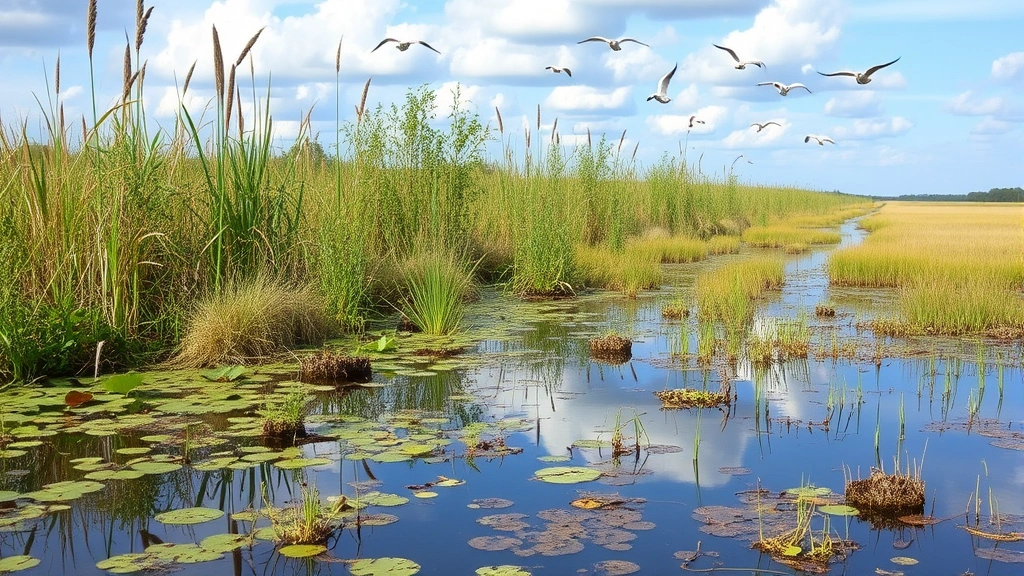
Freshwater ecosystems—rivers, wetlands, aquifers—provide essential services for human economies. Wetlands purify water through biological and chemical processes; forests regulate water flow and recharge aquifers; riparian ecosystems filter pollutants and provide fish habitat. The economic value of water purification services provided by natural ecosystems reaches $1-10 billion annually in developed economies, where water treatment infrastructure would otherwise be required.
Ecosystem degradation reduces water availability and quality, generating direct economic costs through increased treatment expenses and indirect costs through reduced agricultural productivity and industrial output. The Ganges River Basin, where ecosystem degradation has reduced dry-season flow, faces economic losses estimated at $5-10 billion annually through reduced irrigation availability and increased water treatment costs. Restoring wetland and forest ecosystems in the basin would generate economic returns through improved water security and reduced treatment costs exceeding restoration investments within 10-15 years.
Water scarcity increasingly constrains economic development in arid and semi-arid regions. Ecosystems that enhance water capture and reduce evaporative losses—such as forests, wetlands, and grasslands with deep-rooted vegetation—provide crucial services for water security. The economic value of these services becomes apparent during droughts, when water scarcity constrains agricultural output, industrial production, and municipal supply. Studies of drought impacts demonstrate that regions with healthy water-related ecosystems experience 30-50% smaller economic losses than regions where ecosystems have been degraded.
Policy Implications and Economic Transformation
Integrating ecosystem service values into economic decision-making requires fundamental policy reforms. Carbon pricing mechanisms, payment for ecosystem services programs, natural capital accounting, and ecosystem-based adaptation represent policy approaches that align economic incentives with ecological sustainability. The economic case for these policies strengthens as research quantifies ecosystem service values and documents the costs of degradation.
Research on how do humans affect the environment has revealed that current economic incentive structures actively encourage ecosystem degradation. Agricultural subsidies reward practices that degrade soil and water ecosystems; timber concessions undervalue forest ecosystem services; fishing subsidies enable overharvesting of marine ecosystems. Removing these perverse incentives and implementing positive incentives for conservation represents a significant economic opportunity.
The transition to positive impacts humans have on the environment requires investment in ecosystem restoration, sustainable agriculture, renewable energy, and circular economy infrastructure. Economic analyses of these investments consistently demonstrate positive returns when ecosystem service values are properly incorporated. A dollar invested in wetland restoration generates $2-5 in ecosystem service benefits; investments in forest protection generate $3-10 in carbon and other ecosystem service values per dollar invested.
International policy coordination has begun reflecting ecosystem-economy linkages. The UN’s natural capital accounting framework enables countries to incorporate ecosystem service values into national accounting systems. The CBD Post-2020 framework explicitly links biodiversity conservation to economic resilience and development objectives. These policy developments reflect growing recognition that ecosystem health and economic prosperity are interdependent rather than competing objectives.
Understanding definition of environment science through economic frameworks enables more sophisticated policy analysis. Environmental science provides the biophysical foundation; economic analysis reveals the economic implications; integrated assessment enables optimal policy design. This interdisciplinary approach has begun reshaping investment decisions, corporate strategy, and government policy at scales from municipal to global.
The economic transformation required to align economic activity with ecological limits represents both challenge and opportunity. Industries dependent on ecosystem degradation face disruption; industries based on ecosystem regeneration and sustainable resource use face expansion. The net economic impact depends on policy design, investment allocation, and transition management. Evidence increasingly suggests that well-designed transitions generate net economic gains through improved resource efficiency, reduced environmental liability risks, and enhanced long-term productivity.
FAQ
What is the economic value of global ecosystem services?
Recent estimates place global ecosystem service value at $125-145 trillion annually, though some analyses suggest higher figures when accounting for irreversibility and non-linear responses. This value encompasses provisioning services (food, water, materials), regulating services (climate, water purification, pest control), supporting services (nutrient cycling, soil formation), and cultural services (recreation, spiritual value). The wide range in estimates reflects methodological differences and uncertainty about appropriate valuation approaches for services without market prices.
How does ecosystem degradation impact economic growth?
Ecosystem degradation reduces economic growth through multiple mechanisms: declining productivity of natural resource-dependent sectors, increased environmental management costs, reduced resilience to climate variability, and lost option value for future economic activities. Studies demonstrate that economies ignoring ecosystem constraints experience faster initial growth but slower long-term growth as natural capital depletion becomes binding. Accounting for natural capital depreciation typically reduces measured economic growth by 2-8% annually in resource-intensive economies.
Which ecosystems provide the greatest economic value?
Tropical forests, wetlands, and coral reefs provide disproportionately high ecosystem service values relative to their area. Tropical forests generate $2,000-6,000 annually per hectare through carbon storage, water regulation, and genetic resources; wetlands generate $1,500-3,000 annually per hectare through water purification and flood regulation; coral reefs generate $1,000-2,000 annually per hectare through fisheries, tourism, and coastal protection. These ecosystems face the highest conversion pressure despite their economic value, reflecting market failures and discount rate misalignment between private and social perspectives.
Can economic growth and ecosystem conservation be compatible?
Yes, but only through fundamental economic restructuring. Decoupling economic growth from material throughput requires efficiency improvements, circular economy implementation, and transition to service-based and knowledge-intensive economic activities. Historical evidence shows that wealthy economies can maintain or increase economic output while reducing material consumption and environmental impact. However, this decoupling requires deliberate policy, investment, and innovation rather than occurring spontaneously through market mechanisms.
What policy approaches best integrate ecosystem values into economic decisions?
Effective policy approaches include natural capital accounting (incorporating ecosystem service values into national accounting systems), carbon pricing (internalizing climate regulation service values), payment for ecosystem services (compensating ecosystem stewardship), ecosystem-based adaptation (utilizing ecosystem functions for resilience), and removal of perverse subsidies (eliminating incentives for degradation). Integrated approaches combining multiple mechanisms prove more effective than single-instrument policies, as they address different market failures and stakeholder incentives.


