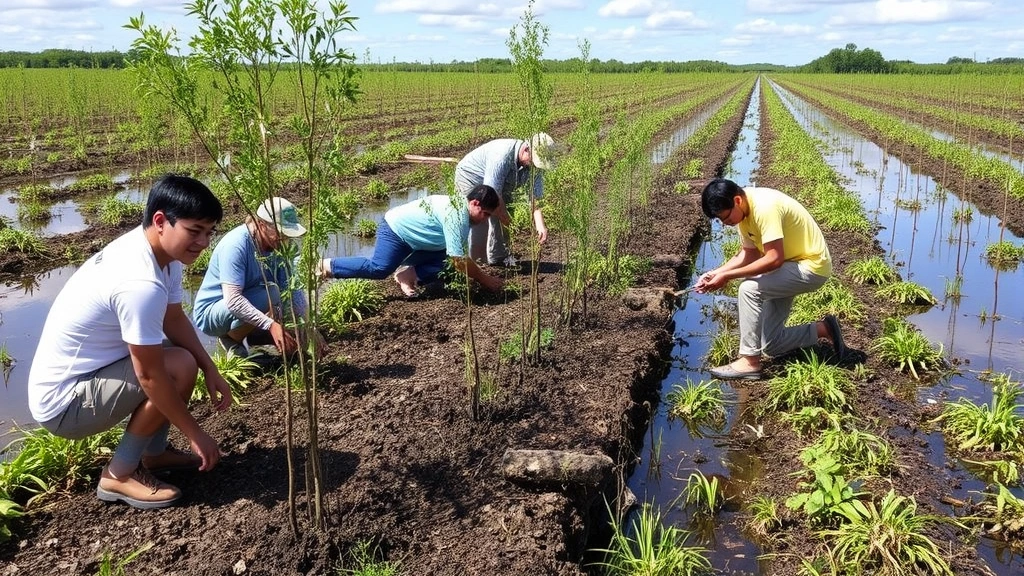
Humans Benefiting Ecosystems: A Research Review
The narrative surrounding human-environment interaction has long been dominated by discussions of degradation, pollution, and species loss. While these concerns remain scientifically valid and require urgent attention, a growing body of research reveals a more nuanced reality: humans possess considerable capacity to actively enhance and restore ecosystems. This research review examines evidence-based examples of positive human impacts on natural systems, demonstrating that strategic intervention, conservation investment, and sustainable practices can generate measurable ecological benefits.
Understanding how humans can benefit ecosystems represents a critical reframing in environmental science and ecological economics. Rather than viewing human activity as inherently destructive, contemporary research identifies specific mechanisms through which human agency drives ecosystem recovery, increases biodiversity, enhances ecosystem services, and builds resilience in degraded landscapes. This perspective does not diminish the urgency of addressing anthropogenic environmental damage; rather, it illuminates pathways toward genuine sustainability and regenerative outcomes.

Ecosystem Restoration and Human-Led Recovery
Large-scale ecosystem restoration projects demonstrate humanity’s capacity to reverse environmental degradation and restore ecological function. The restoration of the Everglades in Florida, one of the world’s most ambitious wetland recovery initiatives, illustrates this potential. Over three decades, human-directed efforts have removed invasive species, restored water flows, and reestablished native vegetation across thousands of hectares. These interventions have resulted in measurable increases in wading bird populations, fish species diversity, and water quality—outcomes directly attributable to deliberate human management.
Similarly, the restoration of Atlantic salmon populations in European rivers provides evidence that strategic human intervention can reverse population collapse. Through dam removal, habitat restoration, and fishing restrictions implemented by environmental agencies and conservation organizations, salmon populations have rebounded in rivers including the Rhine and the Tay. These recoveries represent economic value as well as ecological benefit, generating tourism revenue and supporting traditional fishing economies that depend on healthy fish stocks.
Research published by the World Bank’s environment division indicates that restoration initiatives generate substantial return on investment. For every dollar spent on ecosystem restoration, studies document between four and seven dollars in economic benefits through improved water quality, reduced flood risk, carbon sequestration, and recreational value. This economic dimension underscores that benefiting ecosystems aligns with human economic interests rather than contradicting them.
Mangrove restoration projects across Southeast Asia, Africa, and South America demonstrate how human effort can restore coastal ecosystems that provide critical services. Mangroves sequester carbon, protect shorelines from storms, provide nursery habitat for commercially important fish species, and support local communities. When governments and NGOs invest in mangrove replanting and protection, these ecosystems rapidly recover their ecological functions, delivering measurable benefits to both natural systems and human populations dependent on coastal resources.

Wildlife Conservation Success Stories
Global wildlife conservation efforts have achieved remarkable successes in preventing species extinction and restoring endangered populations. The Arabian oryx, hunted to near-extinction by the 1970s, now exists in wild populations exceeding 1,000 individuals through coordinated international breeding and reintroduction programs. This species recovery represents a direct result of human investment in conservation infrastructure, captive breeding expertise, and habitat protection.
The recovery of the California condor, one of the world’s most endangered birds, required intensive human management including captive breeding and careful reintroduction protocols. Despite requiring extraordinary conservation effort, the species persists in the wild today—an outcome impossible without dedicated human intervention. Similarly, the Arabian leopard, African wild dog, and Arabian tahr have all benefited from coordinated conservation programs that reduced poaching, protected habitat, and managed breeding populations.
Whale conservation provides perhaps the most dramatic example of ecosystem recovery driven by human policy change. Commercial whaling moratoriums implemented through international agreements have allowed multiple whale species to recover from near-extinction. Gray whale populations have increased from approximately 5,000 to over 25,000 individuals. Humpback whales, similarly protected, have rebounded from 5,000 to over 25,000 individuals. These recoveries represent not only species preservation but ecosystem rebalancing, as whale populations restore nutrient cycling and energy transfer in marine systems.
The United Nations Environment Programme documents that protected areas covering approximately 17 percent of terrestrial ecosystems have contributed to stabilizing biodiversity loss rates in regions with effective enforcement. These human-managed conservation zones preserve ecosystem integrity while allowing sustainable resource use by local communities, demonstrating that protection and human benefit need not be mutually exclusive.
Sustainable Agriculture and Soil Enhancement
Agricultural practices represent humanity’s most extensive ecosystem management, covering approximately 40 percent of terrestrial land. Increasingly, farmers and researchers are implementing practices that generate positive ecological outcomes while maintaining productivity. Regenerative agriculture—including cover cropping, reduced tillage, crop rotation, and agroforestry—actively enhances soil health, increases carbon sequestration, and improves biodiversity within agricultural systems.
Research on soil carbon sequestration demonstrates that agricultural management changes can convert farmland from carbon sources to carbon sinks. Practices including conservation tillage, perennial crop integration, and managed grazing increase soil organic matter, enhance water retention, and improve nutrient cycling. These improvements increase agricultural resilience to climate variability while providing ecosystem services including water filtration and habitat provision for beneficial insects and soil microorganisms.
Agroforestry systems—integrating trees with crop and livestock production—exemplify how agricultural management can enhance both productivity and ecological function. Studies from tropical and temperate regions document that agroforestry systems support greater biodiversity than monoculture agriculture, provide habitat for pollinators and natural pest controllers, sequester carbon, and generate diversified income for farming communities. These systems demonstrate that agricultural intensification need not reduce ecological value when guided by ecological principles.
The restoration of soil health through human-directed management addresses one of agriculture’s most significant environmental impacts. Conventional agriculture has degraded soils across hundreds of millions of hectares, reducing fertility and increasing erosion. Regenerative practices reverse this degradation, rebuilding soil structure, increasing microbial diversity, and enhancing ecosystem services. Research indicates that soil restoration projects can increase yields while reducing chemical input requirements, generating economic benefits alongside ecological recovery.
Urban Green Infrastructure and Biodiversity
Cities represent human ecosystem management at the largest scale, yet urban areas increasingly integrate green infrastructure that enhances ecological function and biodiversity. Green roofs, rain gardens, restored urban wetlands, and street tree initiatives transform cities from ecological deserts into habitat networks supporting diverse species.
Research on urban bird populations documents that cities with substantial tree canopy and green space support significantly greater avian diversity than cities lacking these features. Cities including Singapore, Copenhagen, and Melbourne have implemented comprehensive urban forestry programs that increase canopy coverage, creating habitat corridors for birds, insects, and small mammals. These urban ecosystems provide recreational value, reduce urban heat island effects, manage stormwater, and support human mental and physical health while enhancing biodiversity.
Green infrastructure projects address multiple ecosystem functions simultaneously. Restored urban wetlands and riparian corridors filter stormwater runoff, reducing pollution entering downstream ecosystems while creating habitat for amphibians, birds, and aquatic organisms. These systems reduce flooding risk while improving water quality—outcomes that benefit both human infrastructure and natural systems. The U.S. Environmental Protection Agency documents that green infrastructure investments generate substantial return through reduced stormwater treatment costs, flood prevention, and property value increases.
Pollinator-friendly urban gardens and native plant landscaping initiatives transform residential and commercial spaces into habitat networks. These efforts support bee populations, butterflies, and other pollinators essential for food production and ecosystem function. Cities implementing ordinances requiring native plant landscaping in public spaces have documented increases in pollinator populations and associated increases in crop productivity in urban and peri-urban agricultural areas.
Economic Incentives for Conservation
Economic mechanisms designed to align profit incentives with ecological outcomes have generated measurable conservation benefits. Payment for ecosystem services (PES) programs compensate landowners for maintaining or enhancing ecosystem functions including carbon sequestration, water quality improvement, and biodiversity provision. Research demonstrates that PES programs effectively incentivize conservation behavior, particularly when payment levels reflect genuine ecosystem service values.
Costa Rica’s pioneering PES program, established in 1997, has protected forest cover and generated rural income through payments for carbon sequestration, water provision, and biodiversity conservation. Forest coverage in Costa Rica increased from approximately 25 percent in 1987 to over 50 percent by 2015, directly attributable to economic incentives rewarding forest protection. This recovery has enhanced wildlife populations, improved water security, and supported ecotourism industries generating substantial economic value.
Ecotourism represents another economic mechanism linking conservation to human benefit. When wildlife and ecosystem protection generates income through tourism, local communities gain direct economic incentives for conservation. Research from African countries implementing community-based wildlife management documents that ecotourism revenue has reduced poaching pressure, supported habitat protection, and improved rural livelihoods. These outcomes demonstrate that conservation economics need not involve trade-offs between human welfare and ecological outcomes.
Debt-for-nature swaps and conservation trust funds represent innovative financing mechanisms enabling developing nations to invest in ecosystem protection while managing external debt. These programs have protected millions of hectares of biodiverse forest, wetland, and marine ecosystems while freeing government resources for conservation investment. The mechanisms demonstrate that ecosystem protection aligns with economic development when properly structured.
Technology and Ecosystem Monitoring
Advanced monitoring technologies enable humans to understand ecosystem processes with unprecedented precision and intervene effectively to enhance ecological outcomes. Remote sensing satellites, drone-based monitoring, camera traps, and environmental DNA analysis provide real-time data on ecosystem conditions, species populations, and environmental change.
Satellite monitoring has revolutionized forest management and conservation, enabling detection of illegal logging, forest disease, and habitat degradation with minimal human presence. Conservation agencies use this data to target protection efforts and enforce regulations, preventing ecosystem degradation before it becomes irreversible. Research documents that monitoring combined with enforcement reduces deforestation rates by 30-50 percent compared to areas lacking intensive monitoring infrastructure.
Environmental DNA technology allows scientists to assess species diversity and population trends through water or soil sampling, enabling non-invasive ecosystem monitoring. This technology facilitates early detection of invasive species, assessment of endangered species populations, and evaluation of conservation interventions. The data generated guides adaptive management, allowing conservation efforts to be refined based on ecological outcomes.
Artificial intelligence and machine learning applications increasingly enhance ecosystem management. Algorithms analyzing satellite imagery detect forest fires, illegal settlements, and habitat degradation with speed and accuracy exceeding human capability. Predictive models forecast ecosystem responses to climate change and management interventions, enabling proactive rather than reactive conservation. These technologies represent human innovation deployed explicitly to enhance ecological outcomes.
The integration of traditional ecological knowledge with modern technology creates particularly effective conservation approaches. Indigenous land management practices refined over centuries, combined with contemporary monitoring and analysis capabilities, generate superior conservation outcomes compared to either approach alone. Research from Amazon, African savanna, and Southeast Asian forest regions documents that indigenous-managed lands maintain greater biodiversity and carbon storage than protected areas excluding human management.
FAQ
Can humans truly benefit ecosystems, or is this wishful thinking?
Evidence from large-scale restoration projects, wildlife population recovery, and ecosystem service enhancement demonstrates that humans can generate measurable positive ecological outcomes. However, these benefits require intentional investment, scientific understanding, and sustained commitment. The capacity for positive impact exists but does not occur automatically—it demands deliberate effort aligned with ecological principles.
How does ecosystem restoration differ from ecosystem protection?
Protection maintains existing ecosystem function through preventing degradation and enforcing regulations. Restoration actively repairs damaged ecosystems, rebuilding structure and function through human intervention. Both approaches contribute to ecosystem health; restoration addresses historical degradation while protection prevents future damage. Effective conservation typically combines both strategies.
What role should indigenous communities play in ecosystem management?
Research demonstrates that indigenous-managed landscapes maintain exceptional biodiversity and ecosystem function, often surpassing protected areas excluding human use. Indigenous communities possess centuries of ecological knowledge and sustainable management practices. Effective conservation increasingly prioritizes indigenous land rights, decision-making authority, and knowledge integration, recognizing indigenous stewardship as essential to ecosystem health.
How can economic incentives align with ecological outcomes?
Payment for ecosystem services, ecotourism revenue, and conservation finance mechanisms can align profit incentives with ecosystem protection. When ecosystem services are economically valued and payment structures reflect genuine ecological benefits, landowners gain incentives to maintain or enhance ecosystem function. However, payment levels must be sufficient and reliable to influence behavior, requiring sustained government or institutional commitment.
What is the role of technology in ecosystem benefit?
Monitoring technology enables precise understanding of ecosystem conditions and conservation intervention effectiveness. Predictive models forecast ecosystem responses to management, guiding adaptive strategies. However, technology serves as a tool supporting human decision-making rather than replacing ecological knowledge or community engagement. The most effective conservation integrates technological capability with ecological expertise and local knowledge.


