
NM Environment Department’s Role in Economy: A Deep Dive
New Mexico’s environment department operates at the critical intersection of ecological stewardship and economic development, managing one of the most complex regulatory landscapes in the American Southwest. The state’s unique position as both an energy producer and a region with extraordinary biodiversity creates unprecedented challenges for environmental governance. Understanding how the New Mexico Environment Department balances these competing interests reveals broader patterns about sustainable economic development and natural resource management across the United States.
The department’s influence extends far beyond traditional environmental protection. Through permitting, enforcement, and strategic policy initiatives, it shapes investment decisions worth billions of dollars while simultaneously protecting ecosystems that support agriculture, tourism, and indigenous livelihoods. This deep dive examines the economic dimensions of environmental regulation, the department’s structural role in state development, and the measurable impacts of environmental policy on New Mexico’s diverse economic sectors.
Institutional Structure and Economic Authority
The New Mexico Environment Department operates as a cabinet-level agency with direct authority over multiple revenue streams and economic sectors. Established to consolidate environmental regulatory functions, the department maintains divisions addressing air quality, water quality, waste management, and remediation. This centralized structure grants the department significant economic leverage, as its permitting decisions can accelerate or delay projects representing substantial capital investment.
The department’s budget reflects its economic importance. Annual appropriations exceed $150 million, with additional revenue generated through permit fees, penalties, and federal grants. These resources support approximately 800 full-time employees who directly influence industrial operations, municipal infrastructure decisions, and land-use patterns across the state. The economic multiplier effects of departmental spending extend throughout New Mexico’s regional economies, supporting contractors, consultants, and service providers.
Understanding environmental science definitions proves essential for grasping the department’s technical authority. The agency must translate scientific evidence into regulatory frameworks that balance ecological integrity with economic viability. This translation function represents perhaps the department’s most economically significant role, as regulatory decisions based on environmental science directly determine which projects proceed and which face restrictions.
The department’s authority extends to federal lands, which comprise approximately 35% of New Mexico’s territory. This jurisdiction creates complex economic dynamics, as federal mineral leases, grazing permits, and recreational development all require departmental coordination. The economic implications prove substantial: federal land management decisions influence tourism patterns, energy development trajectories, and agricultural operations across millions of acres.

Energy Sector Regulation and Revenue Generation
New Mexico ranks among the nation’s leading energy producers, with oil, natural gas, and coal generation generating approximately $3.8 billion in direct revenue annually. The NM environment department serves as a primary regulator of this sector, managing air emissions permits, wastewater discharge permits, and remediation requirements. This regulatory role creates direct economic consequences for energy companies and indirect effects throughout supply chains.
Oil and gas operations represent the state’s largest revenue source outside federal spending. Environmental permitting processes determine development timelines and operational costs. Companies investing in New Mexico energy projects must navigate air quality regulations, groundwater protection requirements, and compliance monitoring. The department’s permitting efficiency directly affects investment decisions, as regulatory delays increase project costs and reduce return-on-investment timelines.
The relationship between human environment interaction and energy development illustrates the complexity of departmental decision-making. Energy extraction inherently involves environmental modification. The department must quantify acceptable environmental impacts while ensuring long-term ecosystem functionality. This balance determines whether projects proceed as proposed, require modifications, or face rejection.
Coal production, historically New Mexico’s dominant energy sector, demonstrates how environmental regulation reshapes economic structures. As the department implemented stricter air quality standards aligned with federal Clean Air Act requirements, coal generation became less economically competitive. Multiple coal plants closed, eliminating thousands of jobs but reducing respiratory disease burden in surrounding communities. The department’s regulatory role in this transition illustrates how environmental policy functions as an economic restructuring mechanism.
Renewable energy development now represents the department’s fastest-growing regulatory domain. Wind and solar projects require air quality analysis, water impact assessment, and wildlife protection planning. The department’s efficiency in permitting renewable projects influences New Mexico’s ability to compete for clean energy investment. Streamlined renewable permitting processes directly translate to job creation in manufacturing, installation, and maintenance sectors.
Water Management and Agricultural Economics
Water scarcity defines New Mexico’s economic constraints. The state receives less than 15 inches of annual precipitation across most regions, making water rights and management among the most economically consequential policy domains. The environment department’s water quality division influences agricultural productivity, municipal development capacity, and industrial operations throughout the state.
Agricultural operations depend entirely on managed water systems. New Mexico’s farming economy, generating approximately $2.1 billion in annual output, relies on department-managed groundwater permits and surface water quality standards. The department’s decisions regarding aquifer sustainability, irrigation efficiency, and water contamination prevention directly determine agricultural viability across regions.
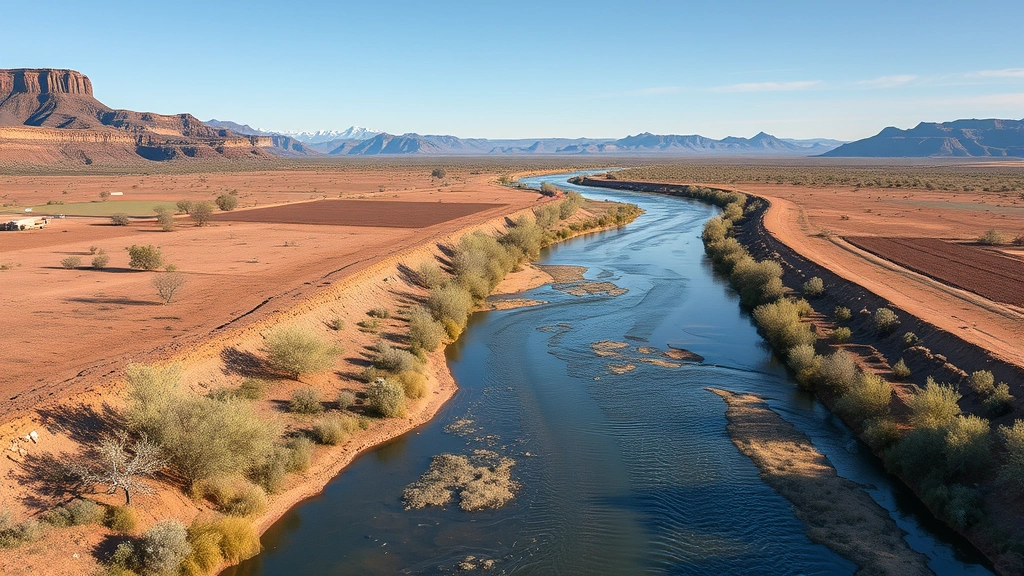
The Rio Grande Basin presents particular complexity. The river supplies water to agricultural producers, municipalities, and ecosystems across New Mexico, Texas, and Mexico. The environment department coordinates with federal agencies, tribal governments, and international entities to maintain water quality standards while allocating scarce resources. These decisions involve competing economic claims from farmers, urban residents, industrial users, and environmental advocates.
Groundwater contamination represents a significant economic liability. Mining operations, petroleum production, and industrial facilities create contamination requiring remediation. The department’s environmental cleanup program addresses hundreds of contaminated sites, requiring tens of millions in remediation investment. These cleanup costs represent economic losses that reduce available capital for productive investment, illustrating how environmental degradation imposes substantial economic burdens.
Municipal water systems depend on departmental oversight. Cities like Albuquerque, Santa Fe, and Las Cruces face water supply constraints requiring infrastructure investment and demand management. The environment department’s water quality standards influence treatment costs and supply reliability, affecting municipal budgets and development capacity. Communities exceeding treatment capacity face restrictions on growth and development.
Air Quality Standards and Public Health Economics
Air quality regulation generates measurable economic effects through multiple mechanisms. The department’s Air Quality Bureau sets and enforces standards affecting industrial operations, transportation infrastructure, and land-use patterns. These standards impose costs on regulated entities while generating health benefits through reduced pollution exposure.
New Mexico experiences air quality challenges from multiple sources: petroleum operations, coal combustion, vehicle emissions, and dust from agricultural and mining activities. The department’s monitoring networks identify nonattainment areas where pollution exceeds federal standards. Nonattainment designation triggers regulatory requirements that increase compliance costs for businesses while potentially restricting economic development.
The economic benefits of air quality improvement prove substantial when quantified. Research from the Environmental Protection Agency documents that improved air quality generates health benefits worth $30-$300 per ton of pollution reduction. Applying these values to New Mexico’s air quality improvements over the past two decades suggests health benefits exceeding $400 million annually.
Respiratory disease burden represents a significant economic cost. Chronic obstructive pulmonary disease, asthma, and other air-quality-related conditions reduce workforce productivity, increase healthcare expenditures, and reduce quality of life. The environment department’s air quality standards reduce disease burden, generating economic benefits through improved labor productivity and reduced medical costs.
Industrial competitiveness depends partly on air quality regulation stringency. Companies compare regulatory costs across states when making location decisions. New Mexico’s air quality standards must remain competitive with neighboring states while meeting federal requirements. The department’s regulatory approach influences whether energy-intensive industries expand or relocate operations.
Tourism and Ecosystem Services Valuation
New Mexico’s tourism economy depends fundamentally on environmental quality. The state attracted approximately 36 million visitors annually (pre-pandemic), generating $20.8 billion in direct spending. Natural attractions—national parks, wilderness areas, scenic landscapes—represent the primary tourism draw. The environment department’s role in protecting these assets directly influences tourism revenue.
Carlsbad Caverns, White Sands National Park, and Gila Wilderness exemplify ecosystem assets generating substantial economic value. Tourism to these locations supports hotels, restaurants, guide services, and equipment rental businesses throughout surrounding communities. Environmental degradation threatening these resources reduces tourism appeal and associated economic activity.
Ecosystem services valuation represents an emerging economic framework for understanding environmental protection value. Research from ecological economics institutions quantifies services including pollination, water filtration, climate regulation, and recreation provision. Applying these valuation methods to New Mexico ecosystems suggests annual ecosystem services value exceeding $40 billion.
How humans affect the environment directly determines ecosystem services availability. Pollution, habitat destruction, and resource depletion reduce service provision. The environment department’s regulatory role preserves ecosystem function, maintaining the natural capital base supporting tourism and other economic activities.
Outdoor recreation generates substantial economic activity beyond traditional tourism. Hunting, fishing, hiking, and camping support rural economies throughout New Mexico. These activities depend on healthy wildlife populations and accessible public lands. The department’s wildlife protection programs and habitat management requirements support these economic activities.
Environmental Justice and Economic Equity
Environmental regulation intersects with economic justice in profound ways. Low-income communities and communities of color disproportionately experience pollution exposure and environmental hazards. The environment department’s decisions regarding facility siting, permit issuance, and enforcement reflect broader patterns of environmental inequality.
Industrial facilities concentrate in communities with lower property values and less political influence. Oil refineries, chemical plants, and waste facilities cluster near low-income neighborhoods, generating pollution exposure disparities. The environment department faces ongoing challenges balancing economic development in disadvantaged communities with protection from pollution.
Environmental remediation investment patterns reveal equity concerns. Contaminated sites in affluent communities receive cleanup investment more quickly than sites in low-income areas. This disparity perpetuates economic inequality, as remediated land becomes available for valuable development while contaminated sites in poor communities remain unusable.
The environment and natural resources building where departmental decisions originate operates within political and economic systems shaped by historical inequities. The department’s role in addressing environmental justice requires explicitly incorporating equity considerations into permitting and enforcement decisions.
Community engagement in environmental decision-making directly influences economic outcomes. Communities with strong participation in permitting processes and enforcement actions experience better environmental outcomes and more equitable benefit distribution. The department’s commitment to meaningful community participation affects whether development generates shared prosperity or concentrated benefits with externalized costs.
Future Economic Models and Transition Planning
New Mexico faces an economic transition as energy markets shift away from fossil fuels. The environment department plays a central role in managing this transition, as renewable energy development requires environmental permitting and infrastructure siting decisions. The department’s effectiveness in enabling clean energy development influences whether New Mexico captures economic benefits from energy transformation or experiences economic decline.
Workforce transition represents a critical economic challenge. Coal and oil workers cannot easily transition to renewable energy employment. The environment department coordinates with workforce development agencies to facilitate just transition, ensuring displaced workers access retraining and new opportunities. This coordination role extends the department’s economic influence beyond traditional environmental regulation.
Climate change adaptation requires environmental department involvement in long-term planning. Water scarcity will intensify as climate change affects precipitation patterns and snowpack. The department must lead adaptation planning ensuring agricultural and municipal systems remain viable under changing conditions. These adaptation investments represent significant economic commitments shaping long-term state prosperity.
The sustainable fashion brands comprehensive guide illustrates how environmental standards influence business models across industries. New Mexico businesses increasingly face market demands for sustainable practices. The environment department’s standards shape whether local businesses can compete in sustainability-conscious markets.
Research institutions throughout New Mexico increasingly focus on environmental and ecological economics, generating knowledge supporting sustainable development models. The environment department partners with universities developing economic frameworks aligning environmental protection with prosperity. These intellectual partnerships influence long-term economic strategy development.
International climate commitments affect New Mexico’s economic trajectory. As national and global climate policies tighten, the environment department’s role in reducing emissions becomes increasingly economically significant. The department’s policies influence whether New Mexico leads clean energy transition or faces economic penalties for carbon-intensive development patterns.
FAQ
What is the primary economic role of the New Mexico Environment Department?
The department serves as a primary economic regulator, influencing investment decisions across energy, agriculture, tourism, and industrial sectors through permitting authority, standard-setting, and enforcement actions. Its decisions determine which projects proceed, what compliance costs companies face, and how natural resources are allocated among competing economic uses.
How does environmental regulation affect New Mexico’s energy sector competitiveness?
Environmental standards increase operational costs for energy companies but influence long-term project viability and market positioning. Stringent air quality standards reduce competitiveness of coal generation while potentially attracting clean energy investment. The department’s permitting efficiency affects whether projects proceed on schedule or experience delays increasing costs.
What economic value does New Mexico’s tourism depend on?
Tourism generates $20.8 billion annually in direct spending, dependent fundamentally on environmental quality and natural attractions. The environment department’s protection of parks, wilderness areas, and scenic landscapes preserves the natural capital base supporting this economic sector.
How does the environment department address environmental justice concerns?
The department implements environmental justice policies incorporating equity considerations into permitting and enforcement decisions. Community engagement in decision-making, equitable investment in remediation, and attention to pollution exposure disparities represent mechanisms for addressing environmental justice.
What role does the environment department play in New Mexico’s energy transition?
The department facilitates renewable energy development through permitting processes, coordinates workforce transition support, and leads climate adaptation planning. Its effectiveness in enabling clean energy development influences whether New Mexico captures economic benefits from energy transformation.


