Can Ecosystem Services Boost Economy? Study Insights
The relationship between natural ecosystems and economic prosperity has long been underestimated in traditional financial models. Recent research demonstrates that ecosystem services—the benefits humans derive from natural systems—generate measurable economic value that rivals conventional industries. This paradigm shift challenges policymakers to recognize environmental conservation not as a cost, but as a fundamental investment in economic resilience and growth.
Understanding this connection is particularly relevant for students preparing for Living Environment Regents exams, as the New York State curriculum increasingly emphasizes the interconnections between ecological systems and human welfare. The evidence is compelling: forests, wetlands, coral reefs, and grasslands provide services worth trillions of dollars annually, from carbon sequestration to water purification to pollination. When we examine the definition of environment science, we find that it fundamentally addresses these relationships between organisms and their surroundings—relationships that have profound economic implications.
Ecosystem Services Defined
Ecosystem services represent the direct and indirect contributions that natural systems provide to human well-being. The Millennium Ecosystem Assessment, a comprehensive global evaluation conducted in the early 2000s, categorized these services into four distinct types: provisioning services (food, water, timber), regulating services (climate regulation, water purification, disease control), supporting services (nutrient cycling, soil formation), and cultural services (recreation, spiritual value, aesthetic appreciation).
When examining human environment interaction, we recognize that every economic activity depends on these foundational ecological processes. A farmer’s productivity depends on pollinator services provided by insects and birds. A city’s water supply depends on watershed protection and natural filtration. A nation’s climate stability depends on forests and oceans absorbing carbon dioxide. These dependencies were largely invisible in traditional GDP calculations, creating a massive accounting gap in how we measure true economic value.
The concept extends beyond obvious resources. Mangrove forests, for instance, provide nursery habitats for commercially important fish species, protect coastal communities from storms, filter pollutants, and sequester carbon—yet their economic contribution was historically recorded only when converted to shrimp farms or development. This fundamental misvaluation of natural capital has distorted economic decision-making for decades.

Economic Valuation Methods
Assigning monetary value to ecosystem services requires sophisticated methodologies that economists have refined significantly over the past two decades. The primary approaches include market-based valuation, replacement cost methods, hedonic pricing, and contingent valuation.
Market-based valuation uses actual market prices for ecosystem services that are already traded. For example, the value of fisheries depends directly on fish populations maintained by marine ecosystem health. Carbon credit markets increasingly price the value of carbon sequestration. Ecotourism revenue directly reflects the economic value people assign to pristine natural areas.
Replacement cost methods estimate what it would cost to replace a service through human-engineered alternatives. Water purification provides an excellent example: natural wetland filtration systems cost far less than constructed treatment plants. Studies have calculated that wetlands worldwide provide water purification services worth hundreds of billions annually—a value that becomes apparent only when considering the alternative cost of building and maintaining mechanical filtration infrastructure.
Hedonic pricing analyzes how proximity to natural amenities affects property values. Research consistently shows that homes near parks, forests, or water features command price premiums of 5-20%, reflecting the economic value people assign to environmental quality and access to natural services.
Contingent valuation surveys individuals about their willingness to pay for environmental protection, revealing preferences for conservation that market prices don’t capture. While controversial due to hypothetical bias, this method captures existence value—the worth people assign to nature’s continued existence even if they never directly use it.
A landmark 1997 study published in Nature estimated global ecosystem services at approximately $125 trillion annually—nearly double the global GDP at that time. While subsequent refinements have adjusted these figures, the magnitude remains staggering and underscores the economic significance of natural systems.
Major Research Findings
Recent comprehensive studies have produced several critical insights about ecosystem service economics. The United Nations Environment Programme has documented that natural capital depletion costs developing nations an average of 7-10% of their annual GDP—a hidden economic burden that deepens poverty and inequality.
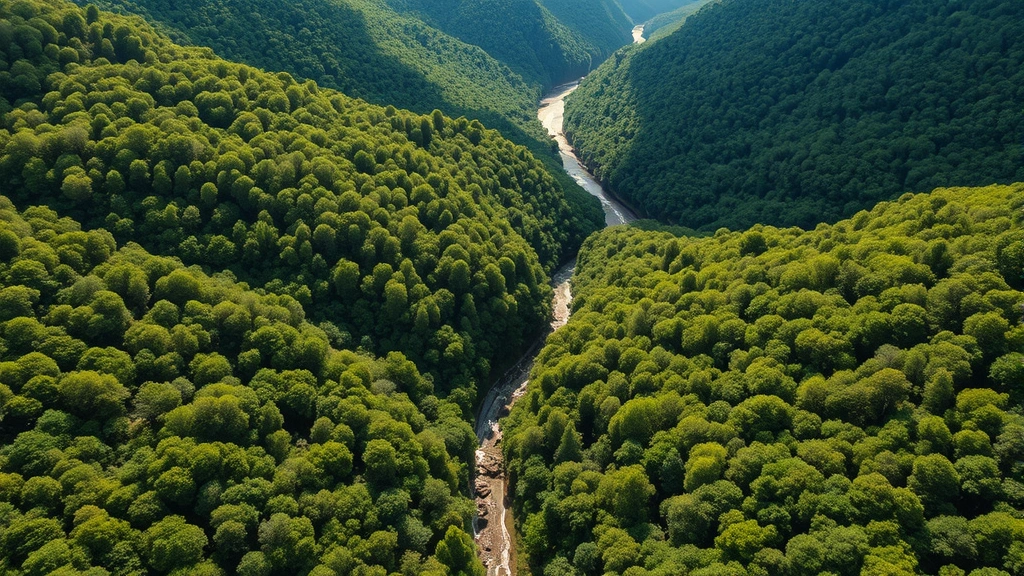
Research on forest ecosystems reveals particularly compelling economic data. Tropical forests provide global carbon sequestration services valued at $2-5 trillion, climate regulation worth $6 trillion, and watershed protection services exceeding $5 trillion. Yet deforestation rates suggest these services are valued at a fraction of their replacement cost when land conversion occurs. This paradox—where economically rational decisions at the individual level produce economically irrational outcomes at the societal level—represents a fundamental market failure.
Agricultural ecosystem services demonstrate direct economic relationships. Pollination services alone are valued at $200-600 billion annually. Soil formation and maintenance through biological processes provides services worth trillions. Pest control through natural predators saves agriculture billions in pesticide costs. Yet agricultural policies often incentivize practices that degrade these services, creating hidden economic costs that appear as externalities rather than balance sheet items.
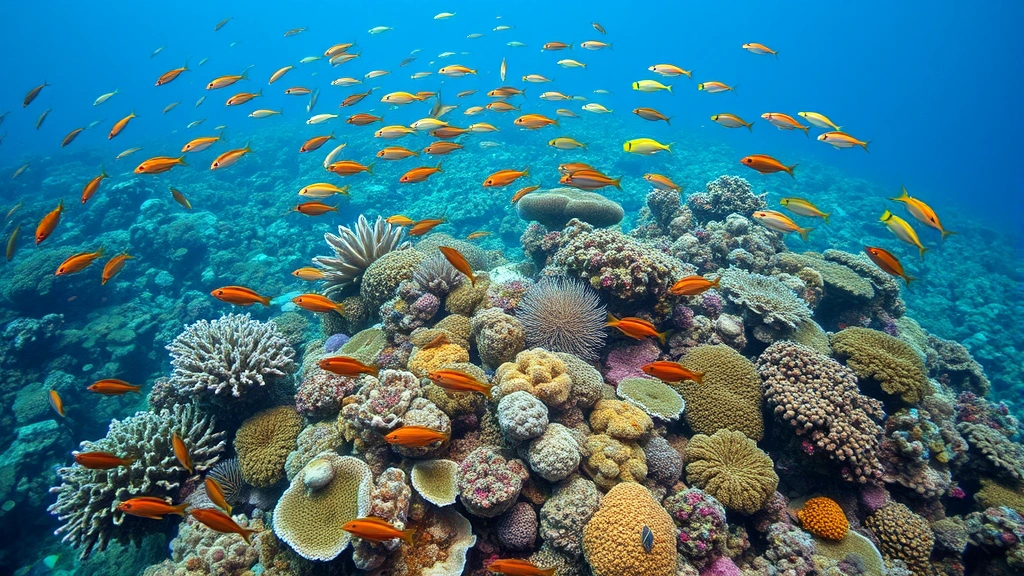
Coastal ecosystem services generate enormous economic value. Coral reefs support fisheries worth $375 billion annually and provide tourism revenue exceeding $36 billion yearly. Mangrove forests protect $80 billion in coastal property and infrastructure while supporting fisheries worth $37 billion. Seagrass meadows support commercial fisheries valued at $16 billion. The economic case for marine protection becomes overwhelming when these figures are aggregated.
Climate regulation services have received increasing attention as carbon pricing mechanisms develop. Forests, wetlands, and marine ecosystems sequester approximately 10 gigatons of carbon annually. At emerging carbon prices of $50-100 per ton, this represents a $500 billion to $1 trillion annual service that was previously uncompensated in market transactions.
Policy Implications and Implementation
The economic evidence for ecosystem services has begun reshaping policy frameworks globally. World Bank analyses increasingly incorporate natural capital accounting alongside financial accounting, revealing that many countries are depleting their most valuable assets while reporting economic growth.
Payment for ecosystem services (PES) programs represent the most direct policy application. Costa Rica pioneered this approach by paying landowners to maintain forests for carbon sequestration and watershed protection. The program’s success—achieving reforestation while compensating rural communities—demonstrates how ecosystem service valuation enables win-win economic solutions. Similar programs now operate across Central America, Southeast Asia, and Africa.
Natural capital accounting integrates ecosystem services into national accounting systems, revealing true economic performance. When Ecuador accounts for oil extraction as resource depletion rather than pure income, national wealth calculations shift dramatically. This accounting approach, adopted by several countries and recommended by international organizations, forces recognition that depleting natural capital is not genuine economic growth.
Environmental impact assessment requirements increasingly mandate ecosystem service evaluation before major development projects. Infrastructure projects, agricultural expansions, and industrial facilities must now quantify impacts on water purification, pollination, carbon sequestration, and other services. This requirement has fundamentally altered project feasibility analyses and has blocked numerous developments where ecosystem service losses exceeded economic gains.
Biodiversity offsets and mitigation banking create markets for ecosystem service restoration. When development must impact wetlands, compensation requires restoration of equivalent wetland area elsewhere, with payment based on ecosystem service valuation. While controversial regarding ecological equivalence, these mechanisms inject economic logic into conservation decisions.
Real-World Case Studies
New York State itself provides instructive examples relevant to Living Environment Regents study materials. The Catskill Mountains watershed provides drinking water to New York City serving 9 million people. Rather than constructing a $6-8 billion water filtration facility, the city invested $1-2 billion in watershed protection and ecosystem restoration. This decision, driven by ecosystem service valuation showing that natural filtration was economically superior to engineered alternatives, saved taxpayers billions while preserving ecological integrity.
The Everglades restoration in Florida demonstrates ecosystem service economics at massive scale. Historically drained for agricultural development, the Everglades provide water purification, flood control, fisheries support, and wildlife habitat. Economic analyses quantifying these services justified a $20+ billion restoration project by showing that ecosystem service benefits exceeded costs within 30-40 years while providing permanent environmental security.
Costa Rica’s payment for ecosystem services program has protected 25% of the nation’s territory while creating rural income. Economic analysis shows that the program’s investment in forest conservation generates returns through carbon credit sales, ecotourism, and water security that exceed opportunity costs of foregone timber harvesting and agricultural conversion.
Indonesia’s mangrove conservation efforts reveal ecosystem service economics in developing contexts. Protecting mangrove forests costs approximately $200-300 per hectare annually but generates fisheries support, coastal protection, and carbon sequestration services valued at $1,000-2,000 per hectare annually. This 3-7x return on investment justifies conservation as sound economic policy rather than environmental charity.
Challenges in Monetization
Despite compelling evidence, translating ecosystem services into economic policy faces substantial obstacles. The journal Ecological Economics regularly publishes critiques of valuation methodologies, highlighting legitimate concerns about reducing nature’s value to monetary terms.
Incommensurability challenges arise from the difficulty of assigning prices to services like cultural heritage, spiritual significance, and existence value. Indigenous communities often reject monetization of sacred ecosystems, viewing the practice as fundamentally inappropriate. Philosophical objections to commodifying nature remain powerful even when economic arguments are compelling.
Uncertainty in valuation creates policy difficulties. Ecosystem service values depend on complex ecological relationships, climate variability, and future technological development. Confidence intervals around estimates are often enormous, potentially ranging from 50% to 200% of central values. This uncertainty complicates cost-benefit analyses and policy decisions.
Scale and aggregation problems emerge when combining diverse services. How should we compare a wetland’s water purification service with its carbon sequestration service? Should we add them together, or does doing so double-count value? Different aggregation methods produce dramatically different total valuations.
Temporal mismatches between costs and benefits create economic challenges. Ecosystem service investment often requires immediate expenditures while benefits accrue over decades. Discount rates applied to future benefits dramatically affect present value calculations, and disagreement over appropriate discount rates remains contentious.
Distributional equity issues arise when ecosystem service benefits accrue to wealthy nations while costs are borne by developing countries. Paying poor nations to preserve forests benefits rich nations through climate regulation and carbon sequestration, yet compensation often proves insufficient to offset opportunity costs of foregone development.
Future Economic Integration
The trajectory of ecosystem service economics points toward fundamental transformation of how we measure and manage economic activity. Emerging developments suggest several likely directions.
Natural capital accounting will increasingly become standard practice. The United Nations System of Environmental-Economic Accounting provides frameworks that countries are adopting to track natural capital alongside financial capital. As more nations implement these systems, economic policy decisions will incorporate ecosystem service impacts automatically.
Carbon pricing mechanisms will expand dramatically, creating large-scale markets for one of the most significant ecosystem services. Whether through carbon taxes or cap-and-trade systems, pricing carbon will eventually reflect the economic value of forest, wetland, and ocean carbon sequestration, fundamentally altering land use economics.
Biodiversity valuation will move from research curiosity to policy standard. Similar to carbon pricing evolution, mechanisms to price biodiversity services are emerging. These will eventually make conservation economically competitive with conversion for many land uses.
Impact investing increasingly incorporates ecosystem service metrics alongside financial returns. Investors recognizing that ecosystem service degradation creates financial risk are redirecting capital toward conservation and sustainable practices. This shift in investment flows will accelerate ecosystem service integration into economic decision-making.
Technology integration will improve valuation precision. Satellite monitoring, artificial intelligence, and advanced modeling will reduce uncertainty in ecosystem service quantification, making valuations more credible for policy purposes.
Understanding ecosystem service economics is increasingly essential for informed citizenship and professional competence. As the evidence accumulates that environmental conservation generates measurable economic benefits, the question shifts from whether we can afford to protect ecosystems to whether we can afford not to. This reframing—from environmental protection as economic burden to environmental protection as economic investment—represents one of the most significant shifts in economic thinking this century.
FAQ
What are the main types of ecosystem services?
Ecosystem services fall into four categories: provisioning services (food, water, materials), regulating services (climate regulation, water purification, pollination), supporting services (nutrient cycling, soil formation, habitat), and cultural services (recreation, spiritual value, aesthetic appreciation). Each category provides distinct economic value to human societies.
How are ecosystem services economically valued?
Valuation methods include market-based pricing, replacement cost analysis, hedonic pricing (property value analysis), contingent valuation (willingness to pay surveys), and benefit transfer methods. Different approaches suit different services, and most comprehensive assessments employ multiple methods.
Why were ecosystem services historically overlooked in economic calculations?
Ecosystem services were treated as free goods because they existed outside market transactions. Traditional GDP accounting captures only monetized exchanges, not non-market values. This accounting gap created perverse incentives to convert natural capital to financial capital, even when ecosystem service losses exceeded economic gains.
How do payment for ecosystem services programs work?
PES programs directly compensate landowners for maintaining or restoring ecosystem services. Costa Rica pioneered this by paying forest owners for carbon sequestration and watershed protection. Payments are typically based on ecosystem service valuations, creating economic incentives aligned with conservation.
What challenges exist in implementing ecosystem service economics?
Challenges include valuation uncertainty, philosophical objections to monetizing nature, temporal mismatches between costs and benefits, distributional equity concerns, and scale aggregation problems. Despite these obstacles, the economic evidence for ecosystem service consideration remains compelling.
How does ecosystem service valuation relate to environmental studies?
Understanding how humans affect the environment requires recognizing the economic dimensions of environmental change. Ecosystem service valuation quantifies these impacts in economic terms, making environmental protection relevant to policymakers focused on economic metrics.
What role does ecosystem service economics play in climate change policy?
Carbon sequestration by forests, wetlands, and oceans represents a massive ecosystem service valued at hundreds of billions annually. Recognizing this economic value justifies climate-focused conservation investments and supports carbon pricing mechanisms that compensate ecosystem service providers.
How are ecosystem services relevant to New York State education standards?
The Living Environment Regents curriculum emphasizes human environment interaction and ecosystem function. Ecosystem service economics demonstrates how these ecological concepts translate into real-world economic impacts and policy decisions affecting students’ communities.


