
Understanding Least Restrictive Environment: Legal Insights and Applications
The least restrictive environment (LRE) principle represents a cornerstone of special education law and disability rights policy across multiple jurisdictions. This legal framework mandates that students with disabilities receive education in settings that maximize their interaction with non-disabled peers while providing necessary support services. The concept extends beyond educational contexts into broader discussions of environmental regulation, economic policy, and the balance between individual freedoms and collective welfare.
Understanding LRE requires examining its historical development, legal foundations, implementation challenges, and evolving interpretations in contemporary society. The principle reflects a fundamental tension in modern governance: how to protect vulnerable populations and ecosystems while maintaining economic vitality and personal liberty. This analysis explores the intricate relationship between legal requirements, practical implementation, and the broader implications for educational equity and environmental stewardship.
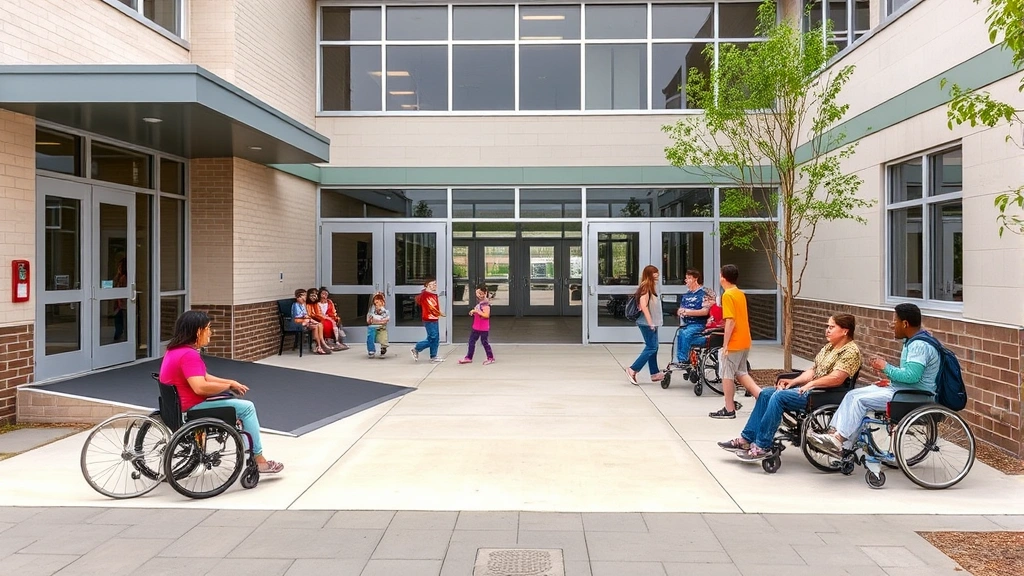
Historical Development and Legal Foundations
The least restrictive environment principle emerged from broader civil rights movements of the 1960s and 1970s, when advocacy organizations and legal scholars began challenging the pervasive practice of segregating individuals with disabilities. Prior to this period, students with disabilities were routinely excluded from mainstream educational institutions, relegated to separate facilities that frequently provided inferior educational experiences and limited social integration opportunities.
The philosophical foundation of LRE rests on principles of normalization and social inclusion, concepts developed by disability rights theorists who argued that individuals with disabilities should participate in community life to the maximum extent possible. This perspective fundamentally challenged institutional models that had dominated disability services for decades. Legal scholars recognized that segregation, regardless of intent, perpetuated stigma, limited educational outcomes, and violated fundamental principles of equal protection under law.
Early court decisions established important precedents. Cases like Pennsylvania Association for Retarded Children v. Commonwealth (1971) demonstrated that exclusion from education violated constitutional rights. These decisions created momentum for legislative action, establishing that confinement to restrictive environments constituted a form of institutional discrimination. The legal reasoning emphasized that less restrictive alternatives could provide appropriate services while enabling greater community participation.
Understanding how human environment interaction shapes policy development proves essential when analyzing LRE’s evolution. The principle reflects broader recognition that environmental contexts—whether educational, institutional, or natural—profoundly influence individual outcomes and societal functioning.

Federal Legislation and Regulatory Framework
The Education for All Handicapped Children Act of 1975, now known as the Individuals with Disabilities Education Act (IDEA), formally enshrined the least restrictive environment principle into federal law. Section 612(a)(5) of IDEA explicitly requires that states ensure students with disabilities are educated with non-disabled students to the maximum extent appropriate. This mandate represents a fundamental shift from segregation toward inclusion, though implementation has proven considerably more complex than legislative language suggests.
The IDEA framework establishes that placement decisions must follow a continuum of services model. Schools must first consider mainstream educational settings with appropriate supports and services before considering more restrictive alternatives. The law requires individualized education programs (IEPs) that specify the least restrictive setting capable of providing appropriate services. This approach recognizes that “least restrictive” does not mean identical placement for all students, but rather placement that maximizes integration while meeting each student’s unique needs.
Section 504 of the Rehabilitation Act of 1973 provides additional protections, prohibiting discrimination based on disability in programs receiving federal funding. The Americans with Disabilities Act (ADA) extends these protections across all public and private entities. Together, these statutes create a comprehensive legal framework requiring consideration of LRE principles in educational, employment, housing, and healthcare contexts.
The definition of environment in science encompasses the physical, social, and institutional contexts where individuals function. Legal frameworks must account for how environmental factors—including architectural design, peer relationships, staff expertise, and resource availability—influence whether settings genuinely provide appropriate services with minimal restrictions.
Regulatory guidance from the Department of Education clarifies that schools cannot use disability as justification for exclusion or segregation. The Office for Civil Rights has consistently held that schools must make accommodations and modifications enabling students with disabilities to participate in mainstream settings. This interpretation reflects recognition that restrictiveness stems not from disability characteristics alone, but from the interaction between individual needs and environmental responsiveness.
Implementation in Educational Settings
Translating LRE principles into practice requires navigating substantial complexity. Schools must balance inclusive placement with provision of specialized services, often facing resource constraints that complicate this balance. The continuum of services approach theoretically supports both inclusion and provision of specialized instruction, yet implementation frequently pits these goals against each other.
Successful LRE implementation depends on several factors. First, schools require adequate funding to provide necessary supports within mainstream settings. Research demonstrates that effective inclusion requires professional development for general education teachers, specialized instructional materials, and collaborative service delivery models. Without sufficient resources, schools may default to segregated placements claiming that appropriate services cannot be provided in mainstream settings.
Second, schools must employ sophisticated assessment practices that identify students’ genuine educational needs rather than applying categorical labels that predetermine placement. Overreliance on standardized testing and IQ assessments has historically led to disproportionate identification and segregation of students from marginalized racial and ethnic groups. Contemporary approaches emphasize comprehensive, culturally responsive assessment examining how students perform across varied environments and contexts.
Third, effective implementation requires reconceptualizing special education as a service delivery model rather than a place. Rather than assuming students with disabilities must attend separate classrooms, schools should deliver specialized services within mainstream settings when appropriate. This distinction proves crucial for genuine inclusion. Students may receive intensive instruction in specific skill areas while maintaining membership in general education classrooms and participating in school community activities.
Fourth, schools must actively cultivate inclusive school cultures where diversity is valued and students with disabilities participate as full community members. This requires addressing attitudes and biases among staff and students, establishing peer support systems, and ensuring that students with disabilities have meaningful opportunities for social interaction and friendship development. Research demonstrates that mere physical proximity without intentional relationship-building does not constitute genuine inclusion.
The Ecorise Daily Blog explores how environmental contexts shape educational and social outcomes, providing insights applicable to understanding LRE implementation challenges and opportunities.
Economic and Environmental Dimensions
Cost-Benefit Analysis and Resource Allocation
Least restrictive environment principles extend beyond special education into broader discussions of environmental regulation and economic policy. The concept reflects fundamental questions about balancing competing interests: individual liberty versus collective welfare, economic efficiency versus environmental protection, and institutional convenience versus service user rights.
From an economic perspective, LRE implementation involves substantial costs. Inclusive education requires investments in teacher training, assistive technology, curriculum modifications, and support personnel. Some argue these costs outweigh benefits, particularly in resource-constrained contexts. However, economic analysis must consider long-term outcomes. Research demonstrates that students educated in mainstream settings with appropriate supports achieve better educational outcomes, higher employment rates, and greater community integration than peers in segregated settings. These outcomes translate into reduced lifetime dependence on public services and increased economic productivity.
Environmental economics provides useful frameworks for analyzing LRE principles. The concept of externalities—costs or benefits imposed on third parties—applies to both environmental and social contexts. When students with disabilities are segregated, society bears costs through reduced economic participation and increased institutional dependence. Conversely, successful inclusion generates positive externalities through enhanced social cohesion, reduced stigma, and expanded economic participation.
The principle of environmental justice, which emphasizes equitable distribution of environmental benefits and burdens, parallels disability rights concerns about equitable access to mainstream educational environments. Both frameworks challenge systems that concentrate disadvantage among particular populations and demand environmental contexts (whether natural or institutional) that support human flourishing across diverse groups.
Understanding how humans affect the environment proves relevant to LRE analysis, as both special education placement decisions and environmental policies involve choices about what environmental modifications are reasonable and necessary to accommodate diverse needs.
Regulatory Approaches and Ecological Considerations
Environmental regulation employs LRE-adjacent principles requiring that restrictions on economic activity be no more stringent than necessary to achieve protective goals. The Clean Air Act, Clean Water Act, and other environmental statutes incorporate cost-benefit analysis and require that regulations employ the least restrictive means of achieving environmental objectives. This approach parallels special education law’s mandate for least restrictive educational settings.
However, environmental regulations also recognize that some restrictions prove necessary despite economic costs, reflecting understanding that certain environmental conditions are non-negotiable for human and ecological health. Similarly, LRE principles do not permit harm to other students or failure to provide appropriate services; restrictions must be justified by genuine educational needs and inability to meet those needs in less restrictive settings.
The relationship between environment and natural resources building demonstrates how environmental contexts support or constrain human functioning. Just as inclusive schools require intentional design modifications, sustainable environments require deliberate infrastructure investments and policy frameworks supporting equitable access to natural resources and ecosystem services.
Challenges and Contemporary Issues
Implementation Gaps and Disproportionate Outcomes
Despite four decades of LRE requirements, significant gaps persist between legal mandates and educational practice. Students with disabilities, particularly those from racial and ethnic minority backgrounds, remain disproportionately segregated in separate classrooms and schools. Data from the Office for Civil Rights consistently demonstrates that students with disabilities spend substantially less time in mainstream academic settings than federal law requires.
Several factors contribute to these implementation failures. First, limited funding frequently constrains schools’ ability to provide inclusive services. Federal IDEA funding covers approximately 14 percent of special education costs, requiring states and districts to fund the remainder. This inadequate federal commitment creates perverse incentives toward segregated, institutional models that may appear more cost-efficient in the short term.
Second, persistent negative attitudes toward students with disabilities among educators and peers impede genuine inclusion. Research documents that many general education teachers feel unprepared to accommodate students with disabilities and hold low expectations for their academic performance. Without active efforts to change school culture, inclusion initiatives may result in students with disabilities being physically present in mainstream classrooms while remaining socially isolated and academically marginalized.
Third, inadequate training and professional development limit teachers’ capacity to implement effective inclusive practices. Many teacher preparation programs provide minimal instruction regarding disability accommodation and inclusive pedagogy. Ongoing professional development remains inconsistent, leaving teachers without necessary skills and knowledge.
Fourth, disproportionate identification of students from racial minorities as having disabilities reflects systemic biases in assessment and referral processes. Students from African American, Latino, and Native American backgrounds are overidentified as having intellectual disabilities and emotional disturbances, while underidentified as having specific learning disabilities. These patterns suggest that factors beyond actual disability prevalence influence placement decisions, with concerning implications for both segregation and educational equity.
Legal Disputes and Judicial Interpretation
Courts have grappled with defining what constitutes “appropriate” education in “least restrictive” settings. Landmark cases like Board of Education v. Rowley (1982) established that appropriate education requires meaningful access to educational benefits, not identical education to non-disabled peers. However, this standard has proven difficult to apply consistently, with courts and schools sometimes interpreting it as permitting segregated placement if specialized services cannot be provided in mainstream settings.
More recent cases emphasize that schools bear the burden of justifying segregated placements. The Third Circuit’s decision in Oberti v. Board of Education (1993) held that schools cannot unilaterally determine that inclusion is impossible; they must make genuine efforts to accommodate students in mainstream settings before considering more restrictive alternatives. This interpretation strengthens LRE protections but remains inconsistently applied across jurisdictions.
Contemporary disputes often involve disputes between school districts seeking to place students in separate settings and families advocating for inclusion. Courts must balance concerns about educational appropriateness against concerns that segregated settings violate civil rights. This tension reflects broader disagreements about whether LRE represents a civil rights principle that should be pursued regardless of cost, or a flexible guideline permitting segregation when justified by educational needs.
Best Practices and Future Directions
Evidence-Based Inclusive Practices
Research identifies several practices associated with successful inclusive education. Universal Design for Learning (UDL) principles guide curriculum development and instructional delivery to accommodate diverse learners from the outset, rather than retrofitting accommodations for individual students. UDL emphasizes providing multiple means of representation, action/expression, and engagement, enabling all students to access content through varied modalities.
Collaborative teaching models, where general education and special education teachers co-plan and co-teach within mainstream classrooms, prove more effective than pull-out services. These models enable specialized instruction while maintaining students’ participation in general education curriculum and peer relationships. Effective collaboration requires adequate planning time, mutual respect, and clear role definition.
Positive Behavioral Interventions and Supports (PBIS) establish school-wide systems promoting positive behavior for all students, reducing reliance on exclusionary discipline that disproportionately affects students with disabilities. PBIS employs data-driven decision-making, evidence-based practices, and tiered intervention levels addressing diverse student needs.
Peer support and mentoring programs facilitate social integration and relationship development. When structured intentionally, peer support programs enhance both academic and social outcomes for students with disabilities while fostering inclusive attitudes among non-disabled peers.
Family engagement and partnership prove essential for successful inclusion. Schools must actively involve families in placement decisions, provide transparent information about educational options and services, and genuinely respect family perspectives regarding their children’s educational needs and goals.
Policy Recommendations and Systemic Change
Advancing LRE implementation requires systemic changes addressing funding, professional development, assessment practices, and accountability. First, federal funding for special education should increase to cover actual costs of providing appropriate services, reducing financial pressure on schools to segregate students to manage costs.
Second, teacher preparation programs must integrate disability inclusion throughout curricula, ensuring all teachers develop competencies in accommodating diverse learners. Ongoing professional development should provide teachers with evidence-based strategies and opportunities to collaborate with special educators.
Third, assessment practices must be reformed to reduce reliance on standardized testing that disproportionately identifies minority students as having disabilities. Comprehensive, culturally responsive assessment examining student performance across contexts provides more accurate understanding of students’ strengths and needs.
Fourth, accountability systems should measure schools’ progress toward genuine inclusion, examining not just placement data but also academic achievement, social integration, and post-school outcomes. Schools should be held accountable for ensuring students with disabilities achieve meaningful educational benefits in mainstream settings.
Fifth, resources should support research examining effective inclusive practices and implementation strategies. Investment in evidence-based practice development and dissemination would advance the field’s capacity to support successful inclusion.
Sixth, legal clarity regarding LRE standards would reduce disputes and inconsistent application. Courts and policymakers should establish clear expectations that segregated placement requires compelling justification and that schools must demonstrate genuine efforts to accommodate students in mainstream settings before considering more restrictive alternatives.
Looking forward, the disability rights movement increasingly emphasizes not merely inclusion in mainstream settings, but genuine belonging and community participation. This evolution reflects understanding that physical presence in mainstream settings does not ensure social acceptance, meaningful participation, or equitable educational outcomes. Future LRE implementation must address these deeper dimensions of inclusion while maintaining commitment to the legal principle that restrictive environments require robust justification.
FAQ
What does “least restrictive environment” legally mean?
Least restrictive environment (LRE) is a federal legal requirement mandating that students with disabilities receive education in settings enabling maximum interaction with non-disabled peers, with appropriate supports and services. It does not require identical placement for all students but demands that placement decisions maximize inclusion while meeting each student’s individualized educational needs. Schools must consider mainstream settings with supports before considering more restrictive alternatives.
How does LRE differ from full inclusion?
LRE and full inclusion are related but distinct concepts. LRE is a legal mandate requiring consideration of mainstream placement as the default starting point, recognizing that some students may require services best provided in more specialized settings. Full inclusion is a philosophical position advocating that all students should attend mainstream schools and classrooms regardless of disability. While LRE supports inclusion as a strong presumption, it permits more restrictive placements when schools can justify that appropriate services cannot be provided in mainstream settings. Full inclusion advocates argue this justification is rarely legitimate and that schools should always find ways to accommodate students in mainstream settings.
What happens if schools don’t follow LRE requirements?
Schools violating LRE requirements may face legal action through due process hearings, Office for Civil Rights complaints, or civil litigation. Families can request compensatory education services for their children and may recover attorney’s fees if they prevail. Schools may also face federal funding consequences if systematic violations occur. However, enforcement remains inconsistent, and many segregated placements occur without legal challenge, suggesting that compliance monitoring and enforcement require strengthening.
How does LRE apply to students with severe disabilities?
LRE applies to all students with disabilities, including those with significant intellectual, physical, or behavioral support needs. While students with severe disabilities may require intensive specialized services, LRE mandates that these services be provided in settings enabling interaction with non-disabled peers to the maximum extent appropriate. This might involve attending mainstream schools with specialized classroom settings, participating in mainstream classes for particular subjects, or engaging in school community activities alongside non-disabled peers, while receiving specialized instruction addressing individual goals.
Can schools legally place students in segregated settings?
Yes, but only when schools can demonstrate that appropriate education cannot be provided in less restrictive settings despite good faith efforts to accommodate the student. The burden of proof rests with schools to justify segregated placement. Courts have increasingly held that schools cannot simply claim inclusion is impossible; they must document specific efforts to accommodate students in mainstream settings and explain why those efforts proved insufficient. Segregated placement requires individualized justification based on student needs, not categorical assumptions about disability categories.


