
Human Impact on Ecosystems: Economist Insights
The relationship between human economic activity and ecosystem health represents one of the most pressing challenges of our time. As economists increasingly recognize, the traditional models of growth that ignore environmental costs have created a fundamental disconnect between financial prosperity and ecological stability. This article examines how we interact with environment through an economic lens, exploring the mechanisms by which human activity degrades ecosystems and the frameworks economists propose to internalize these costs.
Understanding the economic dimensions of ecosystem degradation requires moving beyond simple cause-and-effect narratives. Instead, we must recognize that human-environment relationships operate through complex feedback loops involving market failures, externalities, and the undervaluation of natural capital. When corporations extract resources or generate pollution, they typically do not bear the full cost of their actions—these costs are externalized onto society and future generations. This fundamental market failure explains why environmental degradation accelerates even as awareness increases.
Modern ecological economics challenges the premise that infinite growth is possible on a finite planet. Pioneering economists in this field argue that the economy is actually a subsystem of Earth’s ecosystem, not the reverse. This paradigm shift has profound implications for how we measure progress, allocate resources, and design policies to govern how humans interact with their environment.
The Economics of Ecosystem Degradation
Ecosystem degradation operates as a gradual erosion of natural capital that underpins all economic activity. When we examine how do humans affect the environment, we find that economic incentives often drive destructive behaviors. A fishing company maximizes short-term profits by overharvesting fish stocks, depleting a renewable resource. A manufacturing facility cuts costs by releasing pollutants into waterways rather than investing in treatment systems. A developer converts forest to agricultural land, capturing immediate returns while destroying carbon sequestration capacity.
These decisions are economically rational from an individual firm’s perspective but collectively irrational from a societal standpoint. The economist’s concept of the tragedy of the commons perfectly captures this dynamic: when resources lack clear ownership and pricing mechanisms, rational individual actors pursuing self-interest produce collectively irrational outcomes that harm everyone.
The scale of ecosystem degradation has reached unprecedented levels. According to research from the World Bank, ecosystem services worth trillions of dollars annually face degradation. Forests disappear at rates exceeding regeneration. Fisheries collapse from overharvesting. Soil loses fertility from intensive agriculture. Aquifers deplete faster than recharge rates. These phenomena reflect a fundamental economic problem: the market price of natural resources fails to reflect their true scarcity value.
Economists measure ecosystem degradation through various frameworks. Net Primary Productivity (NPP) measures the energy available for human use after ecosystems maintain themselves. Many regions now appropriate more than 50% of local NPP, leaving insufficient resources for non-human species and ecosystem functions. Ecological Footprint analysis calculates how many Earths would be required if everyone consumed at wealthy nations’ rates—current estimates suggest 1.7 planets would be needed.

Market Failures and Externalities
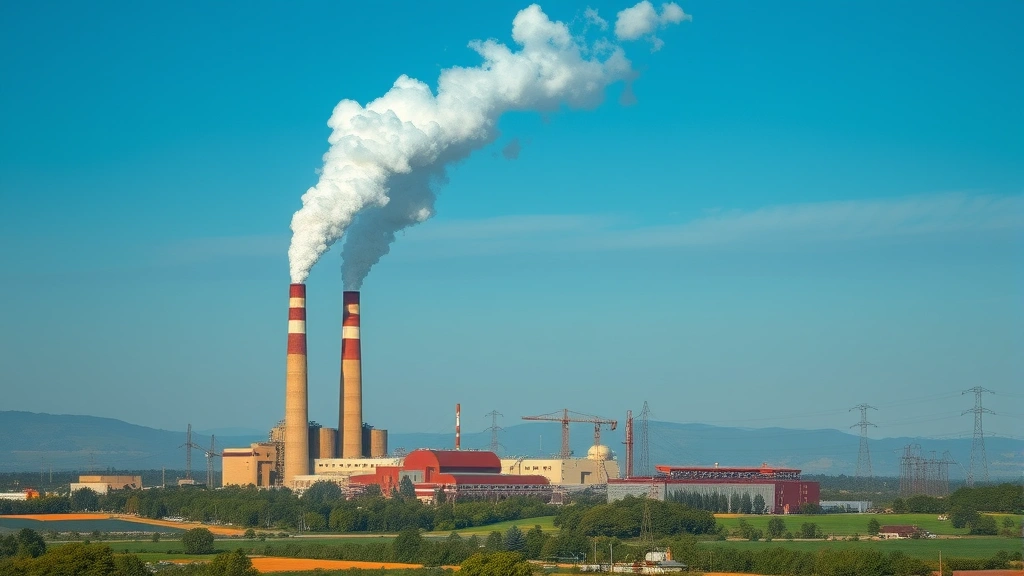
The core economic problem driving ecosystem destruction is the externality: costs imposed on third parties who did not choose to incur them. When a coal power plant burns fuel to generate electricity, it creates air pollution that damages public health. The power company’s financial statements do not reflect these health costs, making coal appear artificially cheap compared to renewables that must internalize their costs.
Environmental externalities distort market prices fundamentally. Fossil fuels appear inexpensive because the price reflects only extraction and processing costs, not the climate damages from carbon emissions. Pesticides seem cost-effective for agriculture because the price omits the damage to pollinator populations and groundwater contamination. Tropical timber harvesting generates profits while externalizing the loss of carbon storage capacity and biodiversity habitat.
Economists identify several categories of externalities affecting ecosystem interactions. Negative externalities impose costs: pollution, resource depletion, and habitat destruction. Positive externalities provide uncompensated benefits: forests that filter water, wetlands that reduce flood risk, and mangrove forests that protect coastal communities. The market systematically underproduces positive externalities and overproduces negative ones.
The concept of the “true cost” of products incorporates these externalities. A study by ecological economists calculated that if beef production prices included water depletion, land use change, and greenhouse gas emissions, the true cost would be three to five times the market price. This pricing failure explains why destructive products dominate markets despite their ecological costs.
Transaction costs further compound these market failures. Even if society recognizes that pollution causes harm, establishing property rights to clean air and water proves difficult. Who owns the atmosphere? How do we assign responsibility for transboundary pollution? These questions lack clear answers in current economic systems, making externalities persistent.
Natural Capital and Economic Valuation
Ecological economists propose reconceptualizing nature as natural capital—stocks of environmental assets that provide flows of services. Forests represent capital that yields timber, carbon sequestration, water filtration, and biodiversity habitat. Fisheries represent capital that yields food protein. Wetlands represent capital that yields flood regulation and nutrient cycling.
The challenge of definition of environment science includes recognizing that environmental assets differ fundamentally from manufactured capital. Most natural capital cannot be substituted by human-made alternatives, at least not at reasonable cost. No technology can replace the pollination services of bees or the climate regulation provided by forests. Natural capital often exhibits non-linear responses to stress—ecosystems function normally until a critical threshold, then collapse suddenly.
Valuing natural capital requires multiple methodologies. Market-based approaches use prices where they exist: timber prices reveal forest values, fish market prices reveal fishery values. Hedonic pricing extracts environmental values from real estate prices—properties near clean water command premiums. Contingent valuation asks people directly what they would pay for environmental improvements. Benefit transfer applies values from studied locations to similar unstudied areas.
These valuation efforts consistently reveal that nature’s economic value far exceeds conventional accounting. A landmark study estimated that global ecosystem services—pollination, water purification, climate regulation, nutrient cycling—provide approximately $125 trillion in annual value, exceeding global GDP. Protecting these services through ecosystem conservation proves economically rational even before considering intrinsic ecological values.
However, valuation presents philosophical challenges. Reducing nature to monetary values risks reinforcing the commodification logic that created ecological crises. Indigenous perspectives emphasize that ecosystems possess values beyond human utility. Yet economic valuation remains powerful for policy because it translates environmental protection into language decision-makers understand: cost-benefit analysis.
Biodiversity Loss Through Economic Lens
Biodiversity loss represents perhaps the clearest manifestation of how humans interact with ecosystems destructively. Current extinction rates exceed background rates by 100 to 1,000 times, driven almost entirely by human economic activity. Habitat destruction for agriculture, logging, and development accounts for the largest share of extinctions. Climate change, pollution, and invasive species introduced through trade contribute significantly.
From an economic perspective, biodiversity loss reflects market failures in valuing genetic resources and ecosystem resilience. A pharmaceutical company developing a drug from rainforest plant compounds captures enormous profits while the country harboring that biodiversity receives minimal compensation. Monoculture agriculture increases productivity in the short term while reducing biodiversity that provides insurance against crop failures and pests.
The economic value of biodiversity operates through multiple mechanisms. Direct use values include food, medicine, and materials harvested from nature. Indirect use values encompass ecosystem services like pollination and pest control. Option values reflect the worth of preserving species for potential future uses. Existence values capture people’s willingness to pay simply knowing that species survive.
Economic modeling reveals that protecting biodiversity often yields positive net present value when all values are included. The United Nations Environment Programme estimates that investing in biodiversity conservation generates returns of 4 to 1 through ecosystem service preservation. Yet these benefits accrue to society broadly while costs concentrate on individuals and corporations, creating political economy barriers to protection.
Payment for Ecosystem Services (PES) schemes represent one economic approach to biodiversity conservation. Costa Rica pioneered PES by paying landowners to maintain forests rather than converting them to pasture. This approach aligns individual economic incentives with collective conservation goals. However, PES requires initial capital and struggles with ensuring additionality—guaranteeing that payments actually prevent destruction rather than rewarding conservation that would occur anyway.
Carbon Economics and Climate
Climate change represents the ultimate externality: carbon dioxide emissions impose costs on the global population and future generations without the emitter bearing these costs. The economic case for climate action rests on internalizing this massive externality through carbon pricing or regulations that constrain emissions.
Economists debate the appropriate carbon price. The social cost of carbon (SCC)—the economic damage from each ton of CO2 emitted—determines the economically optimal price. Current estimates range from $50 to $200 per ton, yet most carbon markets price carbon at $5 to $25 per ton, far below the true cost. This underpricing explains why decarbonization progresses too slowly despite its economic rationality.
Carbon pricing mechanisms take multiple forms. Carbon taxes directly tax emissions at a set price. Emissions trading systems (cap-and-trade) limit total emissions then allow trading of permits. Border carbon adjustments tax imports from countries with weak climate policies. Each approach has strengths and weaknesses in terms of efficiency, distributional impacts, and political feasibility.
The transition to clean energy demonstrates how correcting carbon externalities reshapes economics. When fossil fuels must bear their true costs, renewable energy becomes cost-competitive or cheaper. Solar and wind already achieve lower costs than fossil fuels in many markets, yet fossil fuels continue dominating because they don’t bear climate costs. How to reduce carbon footprint becomes an economic opportunity rather than a burden when prices reflect true costs.
However, climate economics involves deep uncertainty about future damages. How much will sea level rise? How much will agricultural productivity decline? How much will ecosystem collapse accelerate? These uncertainties complicate cost-benefit analysis, yet they argue for precautionary approaches given the potentially catastrophic risks.
Policy Mechanisms for Environmental Protection
Economists propose diverse policy approaches to address market failures in how humans interact with ecosystems. Command-and-control regulations establish environmental standards and mandate compliance. Pollution limits, species protection laws, and habitat preservation requirements directly constrain destructive activities. These approaches prove effective but often impose costs inefficiently by requiring identical compliance regardless of cost differences.
Market-based mechanisms harness economic incentives for environmental protection. Carbon pricing, tradable permits, and payments for ecosystem services align profit motives with conservation goals. These approaches typically achieve environmental goals at lower cost than command-and-control by allowing flexibility in how actors reduce impacts.
Subsidy reform addresses another critical policy area. Governments worldwide spend hundreds of billions annually subsidizing activities that damage ecosystems: fossil fuel extraction, industrial agriculture, and fishing. Redirecting these subsidies toward conservation and sustainable practices would dramatically shift economic incentives. However, subsidy reform faces fierce political opposition from beneficiaries.
Green tax reform proposes shifting taxation from income and employment toward resource extraction and pollution. This approach maintains overall tax revenue while making destructive activities more expensive and productive activities cheaper. It addresses both environmental externalities and economic inefficiencies in current tax systems.
International agreements attempt to address transboundary environmental problems. The Paris Climate Agreement commits countries to emissions reductions. The Convention on Biological Diversity establishes conservation targets. Trade agreements increasingly incorporate environmental provisions. Yet enforcement remains weak, and countries struggle to balance environmental protection with economic competitiveness concerns.
Sustainable Business Models
Forward-thinking businesses increasingly recognize that sustainable fashion brands and other environmentally conscious enterprises create competitive advantages. Consumers increasingly prefer sustainable products, and regulations increasingly constrain environmental impacts, making sustainability economically rational.
Circular economy models represent a fundamental reimagining of production and consumption. Rather than linear take-make-waste systems, circular approaches keep materials in use through reuse, repair, and recycling. This approach reduces resource extraction, minimizes waste, and often reduces costs through efficiency gains. Renewable energy for homes exemplifies this shift toward circular, sustainable systems.
Life cycle assessment (LCA) quantifies environmental impacts across a product’s entire life: extraction, manufacturing, transportation, use, and disposal. LCA reveals that some products’ largest impacts occur during use (vehicles, appliances) while others impact most during production (electronics). This analysis guides more effective sustainability efforts than focusing only on manufacturing.
Corporate sustainability reporting increasingly incorporates environmental and social metrics alongside financial performance. The Sustainability Accounting Standards Board and Global Reporting Initiative establish frameworks for consistent reporting. This transparency enables investors to assess environmental risks and opportunities, directing capital toward sustainable businesses.
However, critics argue that corporate sustainability often remains superficial—greenwashing that provides appearance of responsibility without fundamental change. True sustainability requires reducing overall resource consumption, not merely improving efficiency of continued expansion. Some economists argue that degrowth in wealthy nations represents the only ecologically viable path, though this remains deeply controversial.
The emergence of benefit corporations and social enterprises demonstrates institutional innovation toward sustainability. These legal structures allow companies to pursue environmental and social missions alongside profitability. Patagonia, Warby Parker, and Ben & Jerry’s exemplify how businesses can prioritize sustainability without sacrificing success.
FAQ
What is the most significant externality affecting ecosystems?
Climate change from unpriced carbon emissions represents the largest externality, affecting all ecosystems globally. However, habitat loss from land use change affects biodiversity most directly. The answer depends on geographic scope and the ecosystem in question.
Can we put a price on nature?
Economists can estimate monetary values for ecosystem services using multiple methodologies, but these valuations remain approximate and controversial. Pricing nature helps incorporate environmental protection into economic decisions, yet it risks reducing nature to mere commodities. The most useful approach combines economic valuation with ecological science and ethical considerations.
Do sustainable businesses actually perform better economically?
Evidence increasingly shows that sustainability and profitability align over medium and long terms. Sustainable practices reduce resource costs, appeal to conscious consumers, and avoid future regulatory costs. However, short-term financial pressures often incentivize unsustainable behavior, and some sectors face genuine trade-offs between sustainability and competitiveness.
How much would it cost to transition to sustainability?
Transition costs vary enormously by sector and timeline. Renewable energy transition costs less than fossil fuel externalities cause annually. Sustainable agriculture requires initial investment but reduces long-term costs. Most economic analyses conclude that acting on environmental protection costs far less than inaction, though distribution of costs and benefits remains politically contentious.
What role should government play in environmental protection?
Economists debate whether markets or regulation better achieve environmental goals. Most argue for mixed approaches: government establishes environmental constraints and prices externalities, while markets determine how actors achieve those goals most efficiently. The specific policy mix depends on context, institutional capacity, and political feasibility.
Can technology solve environmental problems?
Technology enables more efficient resource use and can reduce some impacts, but cannot fully decouple economic growth from environmental degradation without absolute reductions in resource consumption. Technology is necessary but insufficient; it must combine with consumption changes and systemic economic restructuring.


