Soil Erosion’s Impact: A Study on Ecosystems
Soil erosion represents one of the most pressing environmental challenges of our time, yet it often operates silently beneath our awareness. Each year, approximately 24 billion tons of fertile topsoil are lost globally due to erosion, a rate that far exceeds natural soil formation processes. This degradation fundamentally undermines ecosystem stability, agricultural productivity, and economic resilience across regions dependent on land-based resources.
The interconnection between soil health and environmental sustainability cannot be overstated. When we examine how humans affect the environment, soil erosion emerges as both a symptom of unsustainable practices and a catalyst for cascading ecological damage. Understanding the mechanisms through which soil loss degrades ecosystems requires an interdisciplinary approach that integrates hydrology, ecology, economics, and soil science.
The Mechanisms of Soil Erosion
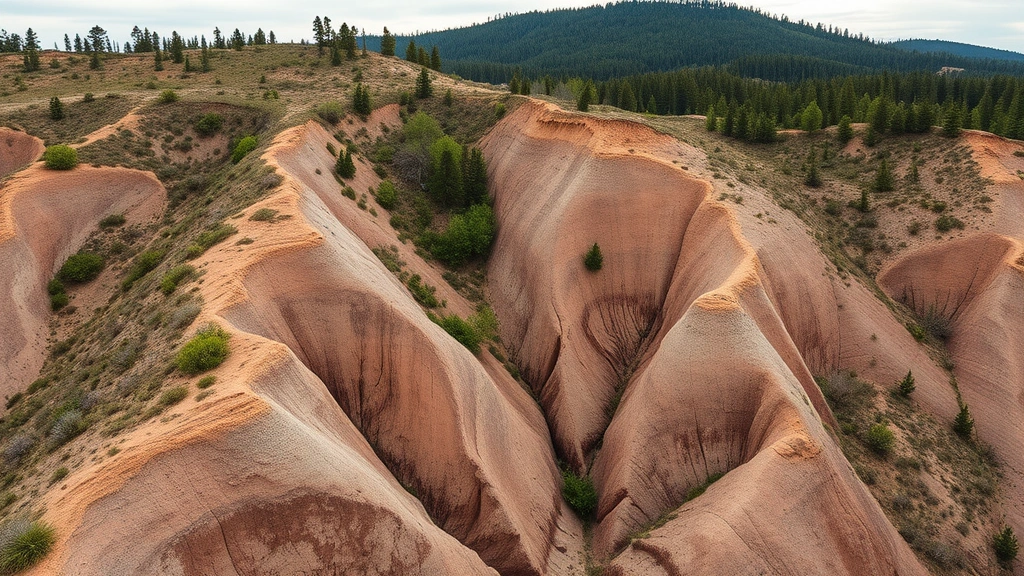
Soil erosion occurs through multiple pathways, with water and wind serving as primary agents of transport. Water erosion manifests in three distinct forms: splash erosion, sheet erosion, and gully erosion. Splash erosion occurs when rainfall impacts bare soil, dislodging particles that become vulnerable to transport. Sheet erosion follows, where thin layers of soil move across slopes without forming defined channels. Gully erosion represents the most severe stage, creating permanent landscape scars that can reach depths exceeding several meters.
The vulnerability of soils to erosion depends critically on structural integrity, which deteriorates through several mechanisms. Loss of vegetation cover—whether through deforestation, overgrazing, or agricultural monoculture—eliminates the protective barrier that roots and leaf litter provide. Soil compaction from heavy machinery or livestock reduces porosity and infiltration rates, forcing water to flow across surfaces rather than percolating downward. Chemical degradation through salinization or acidification weakens soil aggregates, the binding structures that hold particles together.
Wind erosion presents particular challenges in arid and semi-arid regions, where vegetation scarcity and low soil moisture create ideal conditions for particle mobilization. The Dust Bowl of the 1930s American Great Plains exemplified catastrophic wind erosion, demonstrating how agricultural mismanagement combined with climatic drought can trigger wholesale soil removal. Contemporary dust storms in Central Asia and the Sahel region continue this destructive pattern, transporting soil particles across continental distances.
Hydrological and Water Quality Impacts
Soil erosion fundamentally disrupts hydrological cycles by altering infiltration rates, runoff patterns, and sediment transport dynamics. When topsoil erodes, the exposed subsoil beneath possesses lower permeability, reducing water infiltration capacity. This transformation converts landscapes from water-absorbing to water-shedding systems, intensifying flood risks during precipitation events. Increased surface runoff accelerates streamflow, generating higher peak discharge rates that overwhelm river channels and inundate downstream areas.
The sediment transported by eroded soil creates cascading water quality problems. Fine particles suspended in water reduce light penetration, inhibiting photosynthesis in aquatic plants and disrupting primary productivity. These sediments carry absorbed contaminants—pesticides, heavy metals, and phosphorus from fertilizers—that bioaccumulate in aquatic food webs. The United Nations Environment Programme estimates that agricultural runoff from eroded soils represents a leading cause of freshwater eutrophication, where excess nutrients trigger algal blooms that deplete oxygen and create dead zones.
Sediment deposition in reservoirs and waterways reduces storage capacity and navigation channels, requiring costly dredging operations. The Yangtze River in China, for example, receives approximately 500 million tons of sediment annually from upstream erosion, necessitating massive Three Gorges Dam maintenance investments. Coastal erosion driven by upstream soil loss compounds these challenges, as sediment starvation causes shorelines to retreat, threatening infrastructure and eliminating crucial estuarine habitats.
Understanding these hydrological consequences requires examining human-environment interaction patterns that destabilize watershed integrity. Deforestation, urban expansion, and agricultural intensification alter runoff coefficients—the proportion of precipitation that becomes surface flow rather than infiltration—with profound downstream consequences.
Biodiversity Loss and Ecosystem Collapse
Soil erosion triggers biodiversity loss through multiple mechanisms operating across spatial and temporal scales. The soil itself constitutes one of Earth’s most biodiverse ecosystems, harboring billions of microorganisms, fungi, arthropods, and nematodes per gram of healthy soil. Erosion removes this living matrix, eliminating habitat for organisms fundamental to nutrient cycling, pathogen suppression, and organic matter decomposition.
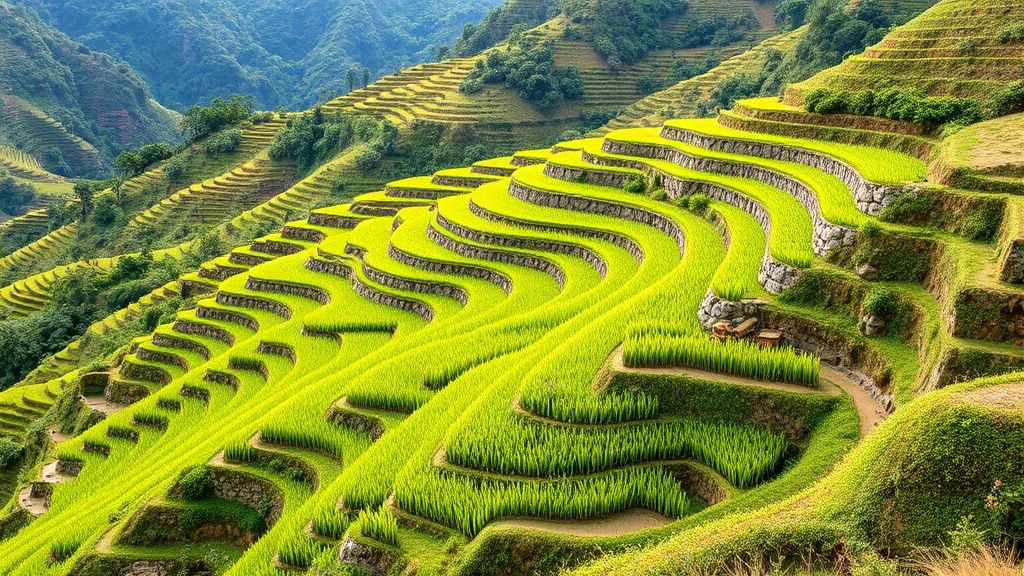
Aboveground vegetation communities collapse when soil erosion removes the substrate supporting plant growth. Eroded landscapes exhibit reduced species richness, simplified age structure, and decreased ecosystem resilience. In tropical regions, soil erosion from deforestation prevents forest regeneration, creating persistent grassland or shrubland states. These alternative stable states resist restoration even after erosion control measures are implemented, reflecting ecosystem hysteresis—the tendency of complex systems to remain in degraded conditions once thresholds are crossed.
Aquatic ecosystems experience profound biodiversity impacts from erosion-derived sedimentation. Macroinvertebrate communities—the foundation of aquatic food webs—decline in sediment-choked streams where fine particles clog interstitial spaces in gravel beds, suffocating eggs and larvae. Fish populations decrease as suspended sediment reduces visibility, impairing predator-prey interactions and spawning habitat quality. Coral reef ecosystems downstream of eroding watersheds experience smothering from silt, with studies documenting coral mortality rates exceeding 80% in regions receiving heavy sediment loads.
The loss of soil carbon represents an underappreciated dimension of erosion-driven biodiversity collapse. Soil organic matter supports the microbial communities that drive nutrient cycling. Erosion preferentially removes carbon-rich topsoil, creating a double loss: immediate carbon release and long-term reduction in microbial habitat. Research from the World Bank indicates that soil carbon losses from erosion contribute significantly to atmospheric CO₂ accumulation while simultaneously reducing ecosystem productivity.
” alt=”Eroded hillside revealing exposed subsoil with sparse vegetation and gully formations, contrasting with intact vegetated slopes in background”/>
Agricultural Productivity and Food Security
The economic dimensions of soil erosion center on agricultural productivity loss and food security implications. Global agricultural systems depend on soil depth, structure, and nutrient content—all parameters degraded by erosion. The Food and Agriculture Organization estimates that soil erosion reduces global crop productivity by approximately 0.3% annually, translating to food production losses equivalent to feeding 30 million people per year.
Nutrient depletion accompanies erosion, as topsoil—the nutrient-rich layer accumulated over centuries—is preferentially removed. Phosphorus and potassium losses in eroded sediment represent irreplaceable nutrient exports from agricultural systems. Farmers respond by increasing fertilizer applications, escalating production costs and environmental externalities including eutrophication and greenhouse gas emissions from fertilizer manufacturing. This creates a perverse feedback loop where erosion-induced productivity loss drives intensified chemical inputs, further degrading soil structure and accelerating subsequent erosion.
Regional food security vulnerabilities concentrate in areas experiencing severe erosion. Sub-Saharan Africa, where erosion rates exceed 30 tons per hectare annually in some regions, faces mounting challenges meeting nutritional demands for expanding populations. The World Bank estimates that soil degradation costs African economies approximately $3.7 billion annually in lost agricultural productivity. South Asian agricultural systems, similarly threatened by Himalayan erosion and monsoon-driven runoff, face increasing pressure to maintain yields on shrinking productive land bases.
Sustainable soil management practices offer pathways toward erosion mitigation and productivity restoration. Examining approaches to reduce carbon footprint reveals that conservation agriculture—incorporating reduced tillage, crop rotation, and cover cropping—simultaneously decreases erosion, preserves soil carbon, and reduces agricultural emissions. These multifunctional benefits demonstrate the economic efficiency of preventive soil conservation compared to reactive remediation.
Carbon Cycling and Climate Implications
Soil represents Earth’s second-largest terrestrial carbon reservoir after forests, containing approximately 2,500 gigatons of carbon in the top meter alone. Erosion disrupts soil carbon cycling through multiple pathways: direct removal of carbon-rich topsoil, exposure of subsoil carbon to oxidation, and reduced carbon sequestration capacity of degraded ecosystems. These processes transform soils from carbon sinks to carbon sources, accelerating atmospheric CO₂ accumulation.
The mechanisms linking erosion to carbon release operate across timescales from immediate to decadal. Exposed organic matter oxidizes rapidly when subsoil is exposed, releasing stored carbon as CO₂ and methane. Eroded sediment transported to aquatic environments undergoes partial mineralization, releasing additional greenhouse gases. Over longer timeframes, reduced soil productivity limits vegetation growth and carbon fixation, perpetuating the transition toward carbon-deficit states.
Climate change intensifies erosion risks through multiple pathways, creating feedback loops that accelerate degradation. Increased precipitation intensity in many regions generates more powerful erosive events, while prolonged droughts eliminate vegetation cover that provides erosion protection. Rising temperatures accelerate soil organic matter decomposition, reducing aggregate stability and erosion resistance. These climate-erosion interactions generate nonlinear responses where incremental climate changes trigger disproportionate erosion acceleration.
The carbon sequestration potential of eroded lands offers opportunities for climate change mitigation. Restoring vegetation on degraded slopes increases carbon uptake while simultaneously reducing erosion. Wetland restoration in floodplain areas creates conditions for carbon accumulation in anaerobic soils. These nature-based climate solutions provide co-benefits including biodiversity enhancement, hydrological regulation, and livelihood support for rural communities.
Economic Consequences and Policy Responses
The economic costs of soil erosion extend far beyond agricultural productivity losses, encompassing infrastructure damage, water treatment expenses, and ecosystem service diminishment. Global estimates place annual erosion costs at $400-600 billion, representing approximately 1% of global GDP. These costs concentrate disproportionately in developing nations where adaptive capacity remains limited and erosion rates exceed developed country levels.
Infrastructure vulnerability to erosion-induced hazards generates substantial indirect costs. Sediment accumulation in reservoirs reduces storage capacity and hydroelectric generation potential. Bridge scour from accelerated streamflow threatens transportation networks. Landslides triggered by slope destabilization from erosion destroy housing and agricultural land. Insurance costs for erosion-related damages escalate as frequency and severity increase.
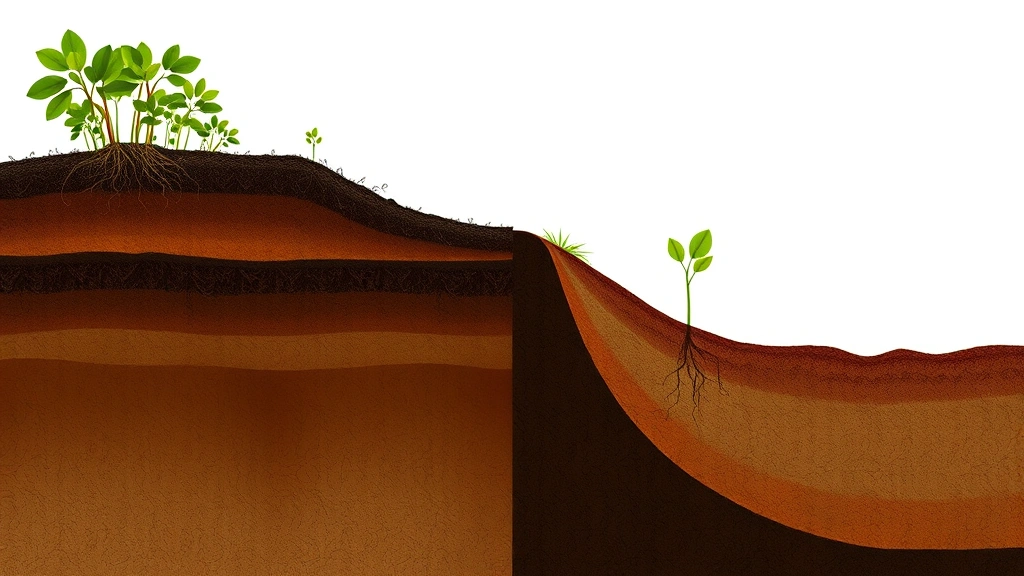
Policy responses to erosion challenge traditional sectoral approaches, requiring integrated landscape management strategies. Understanding the definition of environment science reveals that effective erosion control demands multidisciplinary coordination across agriculture, water resources, forestry, and environmental sectors. Successful programs in Rwanda, China, and Ethiopia demonstrate that combining physical conservation structures (terraces, check dams) with biological approaches (reforestation, grass strips) yields superior outcomes compared to single-intervention strategies.
Economic instruments including payments for ecosystem services (PES) create incentives for erosion control by compensating landowners for conservation practices. Schemes in Costa Rica, Mexico, and Vietnam have enrolled millions of hectares in programs that reduce erosion while generating income for rural communities. Carbon pricing mechanisms increasingly recognize erosion control as a climate mitigation strategy, creating additional revenue streams for soil conservation.
Regulatory frameworks establishing erosion thresholds and mandating mitigation measures show mixed effectiveness. Enforcement challenges in developing nations limit impact, while economic burdens on small-scale farmers raise equity concerns. Successful policies balance regulatory requirements with financial support, technical assistance, and market mechanisms that align private incentives with public environmental objectives.
International cooperation through frameworks including the UN Convention to Combat Desertification establishes normative commitments to erosion control, though implementation gaps persist. The International Union for Conservation of Nature advocates for land degradation neutrality targets, where erosion prevention equals restoration efforts. Achieving these targets requires scaling successful local initiatives to landscape and national levels, necessitating substantial investment in research, infrastructure, and institutional capacity.
” alt=”Lush terraced agricultural landscape with healthy green crops, stone terraces reducing water runoff, and intact vegetation on surrounding hillsides”/>
FAQ
What is the primary cause of soil erosion globally?
Water erosion from precipitation dominates globally, exacerbated by deforestation, agricultural practices, and reduced vegetation cover. Wind erosion concentrates in arid regions. Human activities intensify both mechanisms through land-use changes that eliminate protective vegetation.
How does soil erosion affect food production?
Erosion removes nutrient-rich topsoil, reduces soil depth available for root penetration, and decreases water-holding capacity. These changes reduce crop yields, increase input costs through higher fertilizer requirements, and threaten regional food security, particularly in Africa and South Asia.
Can eroded soil be restored?
Soil restoration occurs slowly, typically requiring 100-200 years to rebuild eroded topsoil naturally. Active restoration through reforestation, cover cropping, and structural conservation measures accelerates recovery but demands sustained investment and management commitment.
What role does climate change play in soil erosion?
Climate change intensifies erosion through increased precipitation intensity, prolonged droughts reducing vegetation cover, and accelerated organic matter decomposition. These interactions create feedback loops where climate impacts trigger greater erosion, which further degrades carbon storage and ecosystem resilience.
Which regions face the most severe erosion challenges?
Sub-Saharan Africa, South Asia, and Southeast Asia experience the highest erosion rates and greatest vulnerability to food security impacts. Mountainous regions including the Himalayas and Andes face severe erosion from steep slopes combined with deforestation and agricultural intensification.


