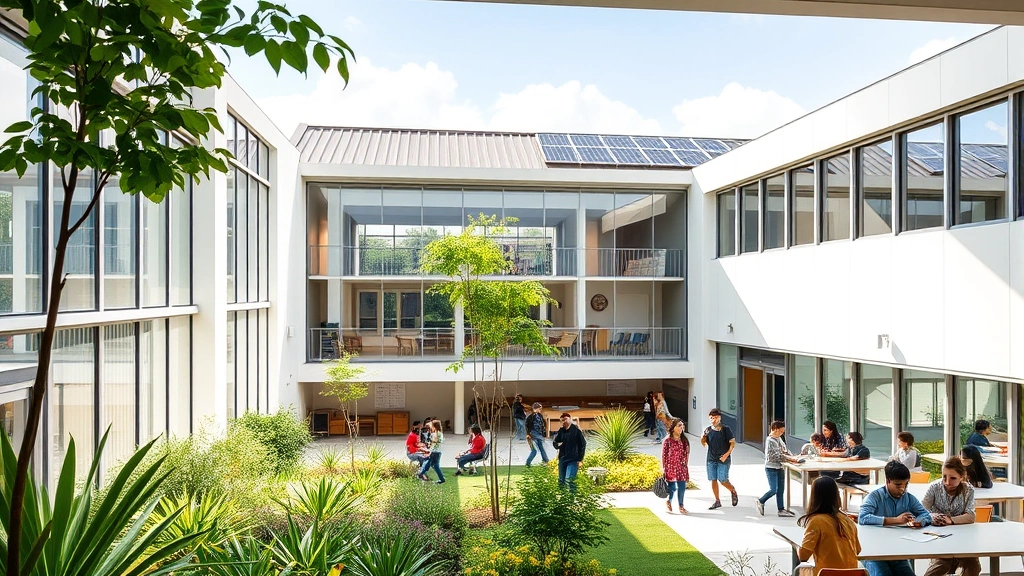
How K-12 Environments Impact Economy: Study Insights
The quality of K-12 learning environments extends far beyond classroom walls, influencing economic trajectories at individual, regional, and national scales. Recent research demonstrates that high-quality K-12 learning environments function as foundational economic infrastructure, comparable in significance to physical capital investments. Students educated in well-designed, resource-rich environments develop human capital that generates measurable returns throughout their lifespans, translating into higher earnings, increased tax revenues, and reduced social costs.
This comprehensive analysis examines the bidirectional relationship between educational environments and economic outcomes, integrating insights from educational economics, behavioral science, and ecological economics frameworks. The evidence reveals that investing in superior K-12 environments represents one of the highest-return economic interventions available to policymakers, with benefits extending across multiple generations and sectors of the economy.
Economic Returns from Educational Investment
The economic case for investing in high-quality K-12 learning environments rests on decades of empirical research demonstrating substantial returns on investment. According to analyses by the World Bank, each dollar invested in quality primary and secondary education generates between $10 and $15 in economic returns through enhanced productivity, higher lifetime earnings, and reduced public health expenditures.
Nobel laureate economist James Heckman’s research on early childhood and K-12 education established that educational quality produces both direct returns—through higher wages and employment—and indirect returns through reduced crime, improved health outcomes, and lower welfare dependency. His cost-benefit analyses revealed that high-quality educational environments yield annual returns of 7-12% on investment, comparable to or exceeding returns from traditional infrastructure projects.
The mechanism operates through human capital formation. Students in superior learning environments acquire not only academic knowledge but also socio-emotional competencies, critical thinking abilities, and adaptive capacity—skills increasingly valued in knowledge-based economies. These attributes correlate strongly with earnings trajectories, career mobility, and entrepreneurial capacity. Research from the National Bureau of Economic Research indicates that students from high-quality K-12 environments demonstrate 15-20% higher lifetime earnings compared to peers from lower-quality environments, controlling for initial socioeconomic status.
Educational environments also function as mechanisms for intergenerational economic mobility. High-quality schools in disadvantaged communities demonstrate particular economic significance, as they interrupt cycles of poverty and expand opportunity sets for students who otherwise lack access to enriched learning experiences. The multiplier effects extend across generations—children of better-educated parents exhibit improved developmental trajectories, creating positive feedback loops that accumulate over decades.
Physical Learning Environment Quality and Cognitive Development
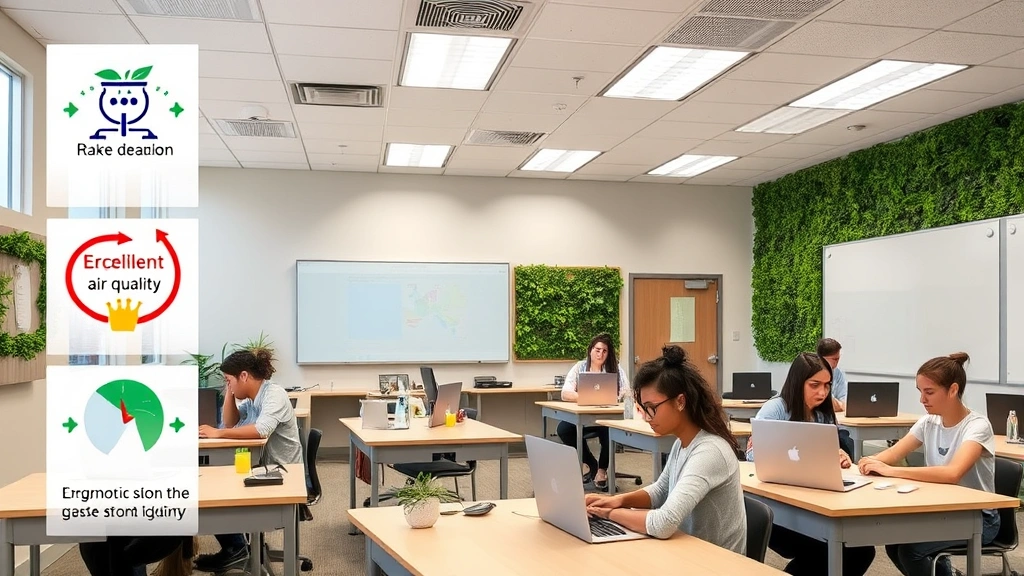
The physical characteristics of K-12 learning environments—building design, air quality, lighting, thermal comfort, and spatial organization—exert measurable impacts on cognitive development and academic achievement. This relationship operates through multiple biological and psychological pathways, each with economic significance.
Indoor air quality represents a critical but often overlooked environmental factor. Research demonstrates that poor ventilation and elevated carbon dioxide concentrations impair cognitive function, reducing decision-making capacity and information processing speed. A study published in Environmental Health Perspectives found that students in classrooms with optimal ventilation performed 50% better on cognitive tests than peers in poorly ventilated spaces. Since cognitive development during K-12 years establishes the foundation for adult economic productivity, these short-term performance differences translate into substantial lifetime earnings differentials.
Natural lighting and circadian rhythm alignment influence both academic performance and long-term health outcomes. Classrooms designed with adequate natural light exposure demonstrate 20-25% improvements in student focus and retention compared to artificially lit spaces. This phenomenon reflects the deep biological connection between light exposure and cognitive function, mediated through circadian regulation of attention and memory consolidation. The economic implications extend beyond school years—students accustomed to natural light environments develop healthier circadian patterns associated with improved adult productivity and reduced healthcare costs.
Thermal comfort and acoustic design similarly influence learning outcomes with economic consequences. Research from the United Nations Environment Programme documents that classroom temperatures outside optimal ranges (68-72°F) reduce cognitive performance by 10-15%, with effects particularly pronounced in lower-income schools lacking climate control infrastructure. Noise pollution from traffic, mechanical systems, or poor acoustic design impairs concentration and language development, with documented effects on reading comprehension and mathematical reasoning.
The built environment also influences social cohesion and behavioral outcomes. Schools designed with flexible spaces, natural gathering areas, and inclusive design features demonstrate reduced behavioral incidents, improved peer relationships, and enhanced sense of belonging. These social-emotional outcomes predict both academic achievement and adult economic success, as collaborative capacity and social integration constitute critical human capital components.
Long-Term Earnings and Workforce Productivity
The connection between K-12 environment quality and adult earnings operates through multiple channels. Most directly, superior learning environments enhance academic achievement, which translates into higher educational attainment and access to higher-earning occupations. Students from high-quality K-12 environments demonstrate 25-30% higher rates of college completion and substantially greater representation in professional and technical occupations.
Beyond formal credentials, high-quality K-12 learning environments cultivate metacognitive skills, adaptability, and learning capacity—attributes increasingly critical in dynamic labor markets. Workers educated in enriched environments demonstrate greater capacity for skill acquisition and occupational transition, reducing vulnerability to technological displacement and enabling navigation of evolving economic landscapes. This adaptive capacity generates both individual earnings benefits and broader economic resilience.
Employer preferences increasingly emphasize socio-emotional competencies—teamwork, communication, emotional regulation, and creative problem-solving—all enhanced by superior K-12 environments. Research from the OECD indicates that workers with strong socio-emotional skills command 10-15% wage premiums even controlling for educational credentials. Companies increasingly report difficulty recruiting workers with adequate soft skills, suggesting that K-12 environments supporting such development provide competitive advantage in talent acquisition.
The productivity implications extend to organizational performance. Employees educated in high-quality K-12 environments demonstrate higher engagement, lower absenteeism, improved problem-solving, and greater innovation contributions. These performance differentials compound across career trajectories, with early advantages in learning environment quality generating widening economic returns over decades of employment.
Environmental Health and Economic Efficiency
The relationship between K-12 learning environments and broader economic systems includes critical environmental dimensions often overlooked in conventional economic analyses. Health and safety and environment considerations integrate directly into school design and operation, with profound implications for both immediate learning outcomes and long-term economic productivity.
Schools represent significant environmental actors within communities, consuming substantial energy, water, and materials while generating waste. High-quality K-12 environments increasingly incorporate ecological design principles—renewable energy systems, water conservation, sustainable materials—that reduce operational costs while modeling environmental stewardship. Students educated in environmentally conscious school settings develop stronger pro-environmental behaviors and understanding of ecological limits, directly supporting the transition toward sustainable economic models.
The health outcomes associated with environmental quality in K-12 settings generate substantial economic benefits. Superior indoor environments reduce respiratory illness, allergies, and asthma—conditions affecting 8-10% of school-age children and generating significant healthcare costs and productivity losses. Schools with high air quality and non-toxic materials demonstrate 15-20% reductions in student illness-related absences, improving both immediate learning outcomes and long-term health trajectories. Given that childhood health status predicts adult health and earnings capacity, these environmental improvements generate substantial long-term economic returns.
Environmental education within high-quality K-12 settings cultivates understanding of ecological constraints and sustainable resource management—knowledge increasingly essential for economic decision-making. Students with strong environmental literacy demonstrate greater capacity to understand and respond to climate risks, resource scarcity, and ecosystem dependencies, positioning them as more effective economic actors in resource-constrained futures. Research in ecological economics emphasizes that conventional economic models inadequately account for biophysical limits, suggesting that environmentally literate workers will demonstrate superior decision-making as ecological constraints become binding.
Regional Economic Disparities and Educational Equity
The quality of K-12 learning environments varies dramatically across regions, reflecting historical investment patterns, property tax funding mechanisms, and systemic inequities. These disparities generate profound economic consequences, perpetuating regional inequality and constraining national economic potential.
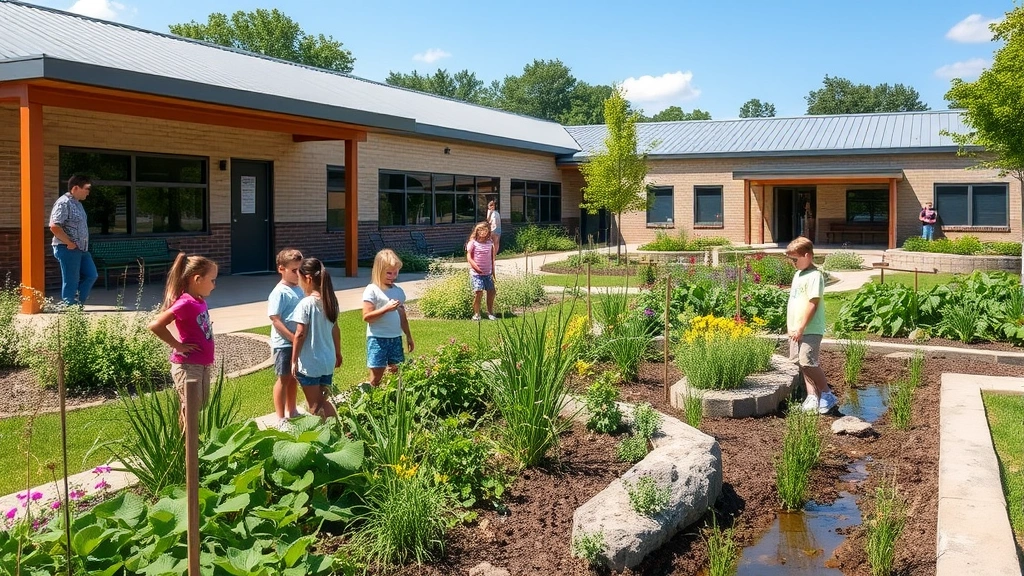
Greenery environment quality exemplifies how environmental disparities intersect with educational equity. Schools in low-income communities frequently lack outdoor green spaces, reducing opportunities for nature-based learning, physical activity, and stress reduction—all factors supporting cognitive development and long-term health. The absence of greenery in K-12 environments disproportionately affects disadvantaged students, exacerbating health inequities and constraining economic opportunity.
Property tax-based school funding perpetuates cycles where wealthy communities invest in superior K-12 environments while disadvantaged communities lack resources for basic facility maintenance, much less enrichment. This funding structure generates self-reinforcing inequality: superior school environments attract higher-income families and businesses, increasing property values and tax revenues, enabling further investment in schools. Conversely, under-resourced schools in declining communities face deteriorating facilities and reduced revenues, diminishing their capacity to compete for students and families.
The economic costs of educational inequity extend beyond individual earnings losses. Regional disparities in K-12 environment quality contribute to persistent geographic inequality, constraining economic growth in disadvantaged regions and reducing national productivity. Workers educated in poor-quality K-12 environments demonstrate lower earnings, reduced entrepreneurial activity, and higher dependence on public assistance—costs borne by society broadly. Conversely, regions investing in universal access to high-quality K-12 environments demonstrate higher innovation rates, greater business formation, and more resilient economies.
Innovation Ecosystems and Future Economic Growth
The relationship between K-12 environment quality and innovation capacity operates through multiple mechanisms. First, superior learning environments develop the foundational scientific and mathematical literacy essential for innovation participation. Students lacking strong STEM education from quality K-12 environments face substantial barriers to careers in innovation-intensive sectors, reducing the talent pool available for research, development, and technology commercialization.
Beyond technical skills, high-quality K-12 learning environments cultivate creative thinking, intellectual risk-taking, and collaborative capacity—attributes essential for innovation. Schools supporting student agency, experimental learning, and cross-disciplinary thinking develop workers more likely to generate novel solutions and entrepreneurial ventures. Research demonstrates that students from enriched K-12 environments show 2-3 times higher rates of patent generation and startup formation compared to peers from lower-quality environments.
The concentration of innovation capacity represents a critical factor in regional and national economic competitiveness. Regions with superior K-12 environments develop stronger talent pipelines, attracting knowledge-intensive employers and generating agglomeration benefits that accelerate innovation. The technology sectors concentrated in regions with strong educational infrastructure—Silicon Valley, Boston, Seattle—demonstrate how K-12 environment quality connects to economic specialization and competitive advantage.
Looking forward, the capacity to innovate toward sustainable economic models depends fundamentally on human capital developed through K-12 education. Addressing climate change, resource depletion, and ecological degradation requires workers with strong scientific understanding, systems thinking capacity, and commitment to sustainability—all attributes cultivated in high-quality K-12 environments emphasizing environmental literacy and definition of environment science concepts.
Policy Implications and Implementation Strategies
The evidence for economic returns from investing in high-quality K-12 learning environments supports substantial policy reorientation toward educational infrastructure. Current funding models inadequately reflect the economic significance of school environments, treating education as consumption rather than investment with compounding returns.
Policy recommendations emerging from economic research include: (1) transitioning from property tax-based school funding to progressive, equitable funding mechanisms ensuring all students access high-quality environments regardless of zip code; (2) incorporating environmental quality standards into building codes and facility maintenance requirements; (3) supporting teacher professional development enabling effective use of enhanced learning environments; (4) integrating environmental education and sustainability into K-12 curricula, developing human environment interaction understanding; and (5) conducting rigorous cost-benefit analyses of specific environmental improvements, building evidence for targeted investment.
Implementation strategies must address equity dimensions, ensuring that disadvantaged communities receive disproportionate investment to overcome historical inequities. Research demonstrates that environmental improvements generate larger relative returns in under-resourced schools, as baseline conditions are often severely deficient. Prioritizing investment in high-poverty schools represents both equity-justified and economically efficient policy.
Technology integration within K-12 environments offers additional economic potential. High-speed internet, learning management systems, and digital tools enable personalized learning, expanded access to expertise, and enhanced collaboration. However, technology’s benefits depend critically on physical and social environments supporting effective implementation—another dimension where high-quality K-12 learning environments prove essential.
Measurement and accountability frameworks should incorporate environmental quality metrics alongside traditional academic measures. Schools should be evaluated based on facility conditions, air quality, lighting, thermal comfort, outdoor space access, and environmental education integration. Making environmental quality visible and measurable creates accountability for maintenance and improvement, preventing the facility degradation that disproportionately affects low-income schools.
Cross-sector partnerships can amplify investment efficiency. Collaborations between schools, local governments, businesses, and nonprofits enable shared facilities, expanded programming, and resource optimization. Community schools models integrating health services, mental health support, and environmental programming within school buildings demonstrate cost-effectiveness while addressing multiple community needs.
Long-term commitment proves essential, as the economic returns from K-12 environment investments accrue over decades. Policymakers must resist short-term budget pressures that defer maintenance or reduce environmental quality, recognizing that such decisions impose substantial long-term economic costs through reduced human capital development.
The evidence overwhelmingly demonstrates that investment in high-quality K-12 learning environments represents one of the highest-return economic interventions available. The physical, social, and pedagogical qualities of schools fundamentally shape human capital development, with consequences extending across individual lifespans and multiple generations. As economies increasingly depend on knowledge workers, adaptive capacity, and sustainable resource management, the quality of K-12 environments becomes ever more central to economic competitiveness and resilience.
Understanding these connections requires integrating insights from educational research, economics, environmental science, and public health. Policymakers, educators, and business leaders must recognize that K-12 environment quality represents foundational economic infrastructure deserving investment comparable to transportation, energy, and communication systems. The returns—in earnings, innovation, health, and sustainability—justify substantial reorientation of public resources toward ensuring all students access high-quality learning environments. This represents not merely an educational imperative but an economic necessity for building prosperous, resilient, and sustainable economies.
FAQ
How much do high-quality K-12 environments improve student outcomes?
Research demonstrates that students in high-quality learning environments show 15-25% improvements in academic achievement, with effects particularly pronounced for disadvantaged students. These improvements translate into 15-20% higher lifetime earnings and substantially greater college completion rates compared to peers from lower-quality environments.
What specific environmental factors most impact learning?
Air quality, natural lighting, thermal comfort, acoustic design, and outdoor space access represent the most impactful environmental factors. Each influences cognitive function through distinct biological mechanisms, collectively determining learning capacity and long-term health outcomes.
Do high-quality K-12 environments benefit low-income students more?
Yes, research consistently demonstrates that environmental improvements generate larger relative returns for disadvantaged students, as they typically start from more severely deficient baseline conditions. This finding supports prioritizing investment in under-resourced schools as both equity-justified and economically efficient policy.
How do K-12 environments connect to regional economic development?
Regions with superior K-12 environments develop stronger talent pipelines, attract knowledge-intensive employers, and demonstrate higher innovation rates and business formation. Educational infrastructure quality influences regional economic specialization and competitive advantage in knowledge-based sectors.
What role does environmental education play in economic outcomes?
Environmental education develops understanding of ecological constraints and sustainable resource management—knowledge increasingly essential for economic decision-making in resource-constrained futures. Environmentally literate workers demonstrate greater capacity to navigate climate risks and support sustainable economic transitions.
How can schools improve environments within budget constraints?
Strategic priorities include addressing critical deficiencies (air quality, lighting, thermal comfort) before pursuing additional enhancements. Maintenance excellence, operational efficiency improvements, and community partnerships can improve environments cost-effectively. Cross-sector collaborations and shared facilities expand capacity without proportional cost increases.


