Can Engineers Save Ecosystems? Expert Insights
Environmental engineers stand at the intersection of human innovation and ecological preservation, wielding technical expertise to address some of our planet’s most pressing environmental challenges. As biodiversity loss accelerates and climate impacts intensify, the role of engineering disciplines in ecosystem restoration has become increasingly critical. From wetland reconstruction to renewable energy infrastructure, engineers are designing solutions that bridge the gap between industrial development and ecological integrity.
The question of whether engineers can truly save ecosystems is not merely academic—it carries profound implications for conservation strategy, policy development, and resource allocation. This exploration examines the capabilities, limitations, and emerging approaches that define the engineer’s role in ecosystem stewardship, drawing on expert perspectives and real-world case studies.
The Role of Environmental Engineers in Ecosystem Restoration
Environmental engineers represent a diverse field encompassing water resources management, air quality control, waste treatment, and ecological design. Their fundamental approach differs from traditional conservation biology in methodology but shares the same ultimate objective: preserving and restoring functional ecosystems. The discipline emerged formally in the mid-20th century, evolving from sanitary engineering to encompass holistic ecosystem thinking.
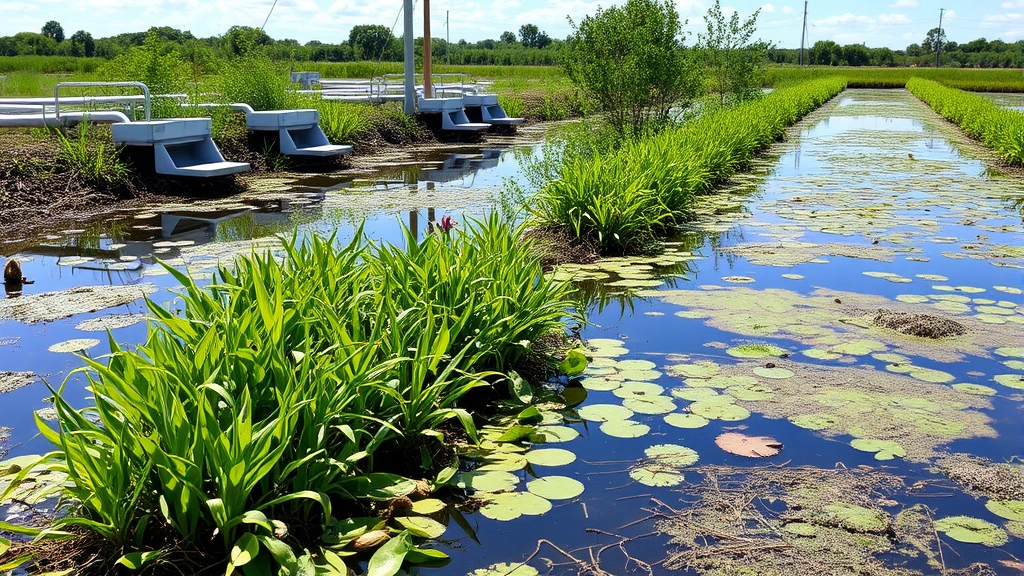
The expertise of environ engineers extends across multiple domains. Water engineers design constructed wetlands that simultaneously treat wastewater and create habitat. Structural engineers develop green infrastructure that manages stormwater while reducing urban heat islands. Environmental impact specialists assess how projects affect ecological communities before implementation. This multidisciplinary capacity enables engineers to address ecosystem challenges at scales and complexities that single-discipline approaches cannot achieve.
Understanding the definition of environment in science provides essential context for engineering applications. Engineers must grasp ecosystems not as static entities but as dynamic systems with interconnected physical, chemical, and biological processes. This systems thinking allows them to design interventions that work with natural processes rather than against them.
A critical distinction exists between mitigation and restoration. Environmental engineers frequently engage in mitigation—reducing negative impacts—through pollution control and emission reduction. However, genuine ecosystem salvation requires restoration: actively rebuilding degraded systems to functional capacity. This distinction shapes which engineering approaches prove most effective for different conservation contexts.

Technological Innovations Transforming Conservation
Recent decades have witnessed remarkable technological advances that expand engineering’s conservation toolkit. Remote sensing and GIS technologies enable engineers to monitor ecosystem health across vast areas, identifying degradation patterns and tracking restoration success with unprecedented precision. Satellite imagery combined with ground-truth data allows for adaptive management—adjusting interventions based on real-time ecological responses.
Artificial intelligence and machine learning are revolutionizing predictive capability. Engineers now model ecosystem dynamics under various climate scenarios, optimizing restoration designs before implementation. Neural networks analyze complex ecological datasets to identify optimal species compositions, hydrological conditions, and structural configurations for specific restoration goals.
Biotechnology offers novel restoration pathways. Genetic analysis helps engineers select native species best adapted to future climate conditions. Microbial engineering enhances soil recovery and nutrient cycling in degraded lands. Biofiltration systems harness engineered microbial communities to purify water while supporting aquatic biodiversity. These innovations represent engineering’s capacity to amplify natural processes.
Environmental energy solutions exemplify how engineering innovation addresses ecosystem pressures. Renewable energy infrastructure—when properly sited and designed—reduces the carbon emissions driving climate change while displacing fossil fuel extraction that degrades ecosystems. Engineers increasingly incorporate ecological considerations into renewable energy development, designing solar and wind facilities that support rather than eliminate habitat.
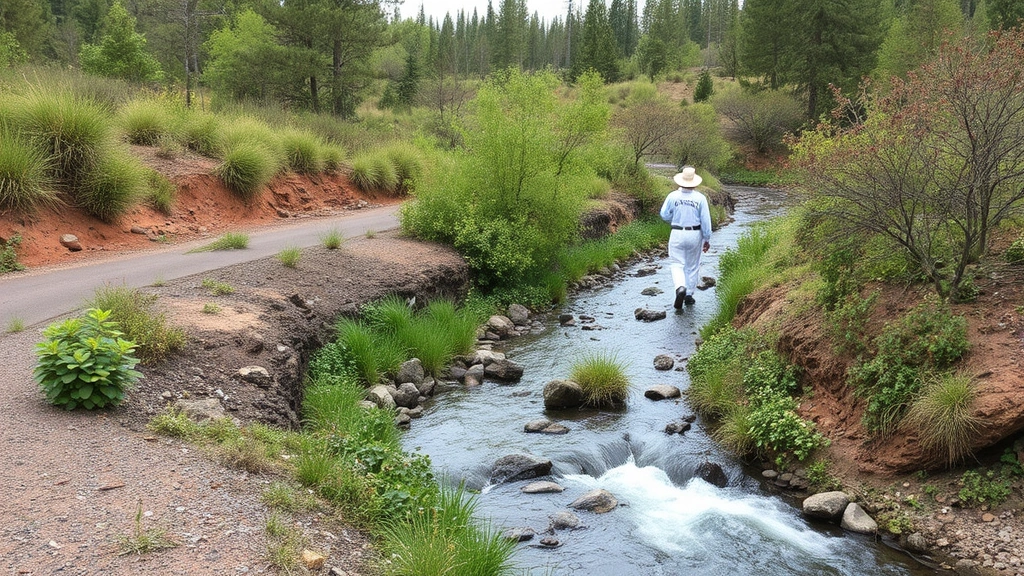
Nature-based solutions represent perhaps the most promising innovation convergence. These approaches combine ecological principles with engineering precision. Mangrove restoration projects employ hydrological engineering to restore tidal flow patterns while planting native species. Urban wetland construction integrates stormwater management with habitat creation. Riparian buffer design uses vegetation engineering to filter pollutants while stabilizing stream banks and creating wildlife corridors.
Case Studies: Engineering Solutions in Practice
The Kissimmee River restoration in Florida demonstrates engineering’s transformative potential. Originally channelized in the 1960s for flood control, the river lost ecological function and became ecologically degraded. Engineers designed a massive de-channelization project, removing canal structures and restoring historic flow patterns across 40 miles. This engineering intervention—costing $2 billion—has revived fish populations, restored wetland vegetation, and recreated ecological connectivity. The project illustrates how engineering can reverse historical damage when properly directed toward restoration.
California’s Sacramento-San Joaquin Delta presents a more complex challenge. Decades of water extraction and levee construction fragmented aquatic ecosystems and degraded water quality. Environmental engineers are implementing multiple interventions: tidal marsh restoration projects that recreate natural hydrology, fish passage structures enabling migration, and managed aquifer recharge systems that maintain ecological flows while supporting agriculture. These interconnected engineering solutions address ecosystem degradation across scales.
Urban ecosystem engineering offers compelling examples of engineering saving ecosystems within human-dominated landscapes. Green roof systems in cities like Copenhagen and Stuttgart reduce stormwater runoff while creating habitat corridors. Constructed wetlands in treatment plants simultaneously process wastewater and support bird populations. Urban stream daylighting projects—where engineers expose buried creeks—restore aquatic habitat while improving water quality and human wellbeing. These projects demonstrate engineering’s capacity to integrate ecosystem function into human infrastructure.
The Thames Estuary restoration in London exemplifies ecosystem engineering at landscape scale. Decades of industrial pollution and habitat loss prompted engineers to design comprehensive interventions: pollution control infrastructure, habitat creation in abandoned industrial sites, and tidal management systems. Fish populations have rebounded, and the estuary now supports populations absent for centuries. This recovery demonstrates engineering’s role in ecosystem restoration within heavily urbanized contexts.
Challenges and Limitations of Engineering Approaches
Despite remarkable successes, engineering approaches face inherent limitations in ecosystem restoration. Ecological complexity exceeds predictive capacity. Ecosystems contain millions of interacting species and environmental variables. Engineers can optimize for measured parameters—water quality, species richness, carbon sequestration—but cannot fully anticipate emergent properties or long-term dynamics. Restoration projects frequently succeed by conventional metrics while failing to achieve full functional recovery.
The challenge of replicating evolutionary processes constrains engineering solutions. Natural ecosystems develop over millennia, with species assemblages shaped by historical contingency and coevolution. Engineers designing restoration projects operate on decadal timescales, selecting species and conditions based on current knowledge. This temporal mismatch means engineered ecosystems often remain dependent on active management rather than achieving self-sustaining stability.
Economic constraints limit restoration ambition. Comprehensive ecosystem restoration costs billions of dollars. Most degraded ecosystems receive minimal restoration investment, with engineering solutions applied only to systems offering economic benefits—drinking water sources, recreation areas, or carbon offset opportunities. This economic prioritization means the vast majority of degraded ecosystems remain unrestored, regardless of engineering capability.
Scale mismatches present persistent challenges. Individual engineering projects address localized degradation, but many ecosystem crises operate at landscape or continental scales. Fragmentation, for instance, cannot be solved through site-level engineering; it requires regional connectivity planning. Climate change alters conditions faster than engineered systems can adapt. Engineers working on decadal restoration timescales confront a climate regime shifting on similar timescales, creating fundamental uncertainty about restoration targets.
The social dimensions of ecosystem engineering are frequently underestimated. Restoration projects affect human communities—farmers whose land is converted to wetlands, fishers whose traditional grounds are protected, communities whose water sources are redirected. Engineering solutions succeed or fail partly based on social acceptance and stakeholder engagement, factors engineers traditionally underemphasize. Indigenous knowledge systems often contain ecological information exceeding engineered designs, yet are frequently marginalized in technical planning.
Interdisciplinary Frameworks and Future Directions
The most promising approaches integrate engineering expertise with ecological science, social science, and policy frameworks. Ecological engineering—distinct from traditional environmental engineering—explicitly designs systems that function like natural ecosystems while providing human benefits. This discipline positions engineers not as problem-solvers imposing solutions but as facilitators enabling natural processes.
Adaptive management frameworks institutionalize learning from restoration projects. Rather than implementing fixed designs, adaptive approaches establish monitoring protocols, define decision triggers, and adjust interventions based on ecological responses. This approach acknowledges uncertainty while building knowledge progressively. Engineers increasingly embrace adaptive management, recognizing that ecosystem complexity demands iterative learning.
Transdisciplinary collaboration represents the emerging standard. Leading restoration projects integrate engineers, ecologists, economists, social scientists, and indigenous knowledge holders. This integration recognizes that ecosystem challenges are fundamentally complex, requiring diverse expertise and perspectives. Engineers contribute technical capability while remaining open to alternative knowledge systems and values.
The concept of ecosystem services—valuing nature’s contributions to human wellbeing—provides economic frameworks for engineering justification. How to reduce carbon footprint through nature-based solutions exemplifies this approach: wetland restoration simultaneously sequesters carbon, treats water, and creates habitat. This multifunctionality justifies investment while aligning conservation with economic interests.
Regenerative design represents an evolution beyond sustainability. Rather than minimizing negative impacts, regenerative approaches aim to restore and enhance ecosystem function through human activity. Engineers designing regenerative projects seek to increase biodiversity, improve water cycles, and enhance soil health through their interventions. This philosophy positions human engineering as a restoration force rather than merely a mitigation mechanism.
Economic Considerations in Ecological Engineering
The economics of ecosystem engineering fundamentally shape conservation outcomes. Cost-benefit analyses frequently undervalue ecosystem services, making restoration appear uneconomical despite profound benefits. Engineers must work with economists to develop valuation frameworks capturing true ecological value. Research from institutions like the World Bank increasingly quantifies ecosystem service values, providing economic justification for engineering investments.
The economics of renewable energy for homes and large-scale systems illustrate how engineering costs decline with scale and innovation. Similar cost trajectories characterize ecological engineering. As technologies mature and implementation scales, restoration costs decrease while effectiveness increases. This economic dynamic suggests expanding engineering investment could achieve significant ecosystem recovery.
Payment for ecosystem services (PES) mechanisms increasingly fund restoration engineering. These schemes compensate landowners for maintaining or restoring ecosystems, creating economic incentives aligned with conservation. Engineers design restoration systems optimized for ecosystem service provision—carbon sequestration, water purification, pollination support. This economic integration expands restoration scale beyond public funding alone.
The insurance value of ecosystem resilience provides economic justification for engineering investment. Healthy ecosystems provide natural disaster mitigation—mangrove forests reduce hurricane impacts, wetlands attenuate flooding, coral reefs dissipate wave energy. Engineers quantifying these risk-reduction benefits find that restoration investment yields positive economic returns through avoided disaster costs. This perspective aligns business interests with ecosystem conservation.
However, economic frameworks risk reducing ecosystems to instrumental value. Intrinsic ecosystem value—nature’s worth independent of human benefit—remains difficult to capture economically. Engineers working within market-based conservation frameworks may inadvertently reinforce anthropocentric perspectives limiting ecosystem protection. Integrating diverse value systems—including indigenous perspectives emphasizing reciprocal relationships—enriches engineering approaches beyond pure economic optimization.
Research institutions focused on environmental policy and economics continue developing frameworks integrating ecological and economic considerations. Ecological economics journals publish cutting-edge research on valuation methodologies and policy instruments supporting ecosystem engineering. These intellectual developments provide engineers with increasingly sophisticated tools for economic justification of restoration investments.
The political economy of ecosystem engineering shapes implementation capacity. Powerful interests—fossil fuel industries, agricultural corporations, real estate developers—benefit from ecosystem degradation. Engineering solutions threatening these interests face opposition regardless of ecological merit. Engineers increasingly recognize that technical solutions require political support, necessitating engagement in advocacy and policy development alongside technical design.
Expert Perspectives on Engineering’s Conservation Role
Leading environmental engineers emphasize both optimism and humility regarding conservation potential. They note that engineering cannot replace ecosystem preservation—protecting intact systems remains far more effective than restoring degraded ones. However, given extensive historical degradation, restoration engineering provides essential tools for recovering some ecosystem function. The optimal approach combines preservation of remaining intact ecosystems with engineering-enabled restoration of degraded areas.
Experts stress the importance of working at appropriate scales. Site-level engineering projects address localized degradation but cannot solve landscape-scale challenges like fragmentation or regional climate shifts. Meaningful ecosystem recovery requires engineering integrated with land-use planning, policy reform, and international cooperation. Engineers must transcend site-specific thinking to engage with systemic drivers of degradation.
The role of environmental science and sustainability insights in guiding engineering practice receives consistent emphasis. Engineers must ground technical designs in solid ecological science, understanding how species interact, how ecosystems self-organize, and what conditions support resilience. This scientific foundation prevents well-intentioned engineering from inadvertently creating systems that appear restored but lack genuine ecological function.
Experts also highlight the necessity of long-term commitment. Ecosystem restoration requires decades or centuries of management and monitoring. Short-term project funding cycles frequently undermine restoration success. Engineers advocate for funding mechanisms supporting multi-decadal restoration efforts, recognizing that genuine ecosystem recovery cannot be accomplished through typical grant cycles.
Emerging Technologies and Future Possibilities
Advanced monitoring technologies promise to enhance restoration effectiveness. Real-time sensor networks track ecosystem variables—water quality, soil moisture, species presence—enabling rapid adaptive management responses. Drone-based monitoring surveys large restoration areas efficiently, identifying problems before they become severe. This technological capability allows engineers to manage restoration projects with precision previously impossible.
Synthetic biology offers intriguing possibilities for ecosystem engineering. Genetically modified organisms designed to enhance ecosystem function—nitrogen-fixing plants adapted to degraded soils, invasive species-suppressing microbes—remain largely experimental but could expand restoration possibilities. However, synthetic biology raises ecological and ethical concerns requiring careful evaluation before widespread implementation.
Climate adaptation engineering represents an emerging frontier. As climate change alters conditions, engineers design restoration systems resilient to projected future climates rather than historical conditions. This forward-looking approach requires integrating climate projections into restoration design, selecting species and structures suited to anticipated rather than current conditions. This paradigm shift reflects recognition that static restoration targets become obsolete in rapidly changing climates.
Nature-based solutions increasingly combine multiple ecosystem services. Riparian restoration projects now integrate carbon sequestration, water purification, habitat creation, and flood mitigation in single designs. This multifunctionality makes restoration economically viable while maximizing ecological benefits. Engineers are becoming sophisticated at designing systems providing cascading ecosystem services.
The Path Forward: Integration and Humility
Can engineers save ecosystems? The evidence suggests a nuanced answer: engineering provides essential tools for ecosystem restoration and can achieve remarkable recovery in degraded systems. However, engineering alone cannot address ecosystem crises. Technical solutions require complementary efforts: ecosystem preservation, policy reform reducing degradation drivers, economic systems valuing nature, and social movements supporting conservation.
The most effective path forward integrates engineering expertise with ecological science, indigenous knowledge, economic innovation, and political will. Engineers must work as collaborators rather than sole authorities, contributing technical capability while respecting alternative expertise and perspectives. This integration acknowledges that ecosystem challenges are fundamentally complex, requiring diverse ways of knowing and acting.
The future of ecosystem engineering lies in regenerative approaches that enhance rather than merely restore. Rather than returning ecosystems to historical conditions, engineers increasingly design systems optimized for resilience in changing climates while providing expanded ecosystem services. This forward-looking perspective positions engineering as a tool for creating more vibrant, productive ecosystems than existed before degradation.
Ultimately, whether engineers save ecosystems depends less on technical capability than on societal commitment to ecosystem protection. Engineers can design sophisticated restoration systems, but implementation requires political support, adequate funding, and long-term patience. The question becomes not “Can engineers save ecosystems?” but rather “Will society support engineers in ecosystem restoration?” The technical capacity exists; the limiting factor is collective will.


