Do Viruses Impact Economies? Scientist Insights on Viral Adaptation and Economic Systems
The relationship between viral biology and economic systems represents one of the most critical intersections of modern science and policy. When we ask whether viruses impact economies, we must first understand how viruses respond to their environment—a fundamental question that bridges epidemiology, environmental science, and economic theory. Recent evidence demonstrates that viral adaptation directly influences pandemic severity, healthcare costs, labor productivity, and supply chain resilience, making this inquiry essential for policymakers and economists alike.
Scientists have long recognized that viruses exhibit sophisticated environmental responsiveness mechanisms. RNA viruses, in particular, demonstrate mutation rates that allow rapid adaptation to host defenses, temperature variations, and ecological pressures. This adaptive capacity transforms what might seem like a purely biological phenomenon into an economic multiplier effect. When viruses adapt successfully to new environments—whether human populations, agricultural systems, or wildlife reservoirs—the economic consequences ripple across multiple sectors simultaneously. Understanding these dynamics requires integration of environmental science fundamentals with epidemiological modeling and economic impact assessment.
Viral Adaptation and Environmental Response Mechanisms
Viruses respond to environmental pressures through mechanisms that scientists are only beginning to fully comprehend. The concept of environmental responsiveness in virology refers to how viral populations modify their genetic composition and phenotypic expression based on host immunity, temperature, humidity, and population density. This isn’t merely biological adaptation—it’s an economic predictor with measurable consequences.
Research from the World Health Organization indicates that viral mutation rates correlate directly with pandemic duration and severity. When a virus successfully adapts to human transmission, reproduction numbers increase exponentially. The SARS-CoV-2 variants provide compelling evidence: the Delta variant’s increased transmissibility extended lockdown periods by 4-6 weeks in multiple economies, costing an estimated $1.2 trillion in global GDP reduction. The Omicron variant’s immune escape properties created different economic impacts—less severe illness but broader population infection, straining healthcare worker availability and increasing absenteeism across essential services.
Viruses demonstrate remarkable sensitivity to environmental conditions. Temperature affects viral stability; humidity influences aerosol transmission; population density determines contact rates. These physical environmental factors directly translate into epidemiological parameters that economists model as variables in pandemic impact assessments. When we understand how viruses respond to environmental conditions, we gain predictive power over economic outcomes. This represents a crucial intersection between human environment interaction and systemic economic risk.
The economic significance becomes apparent when considering zoonotic spillover events. Approximately 75% of emerging infectious diseases originate in wildlife, representing environmental reservoirs where viruses adapt before jumping to human populations. Ecological disruption—habitat loss, agricultural intensification, climate change—increases contact rates between species, accelerating viral adaptation and spillover probability. Research from ecological economics journals demonstrates that environmental degradation increases pandemic risk with a quantifiable economic cost. Each additional zoonotic spillover event carries an expected economic impact exceeding $100 billion in direct costs plus incalculable indirect expenses.

Direct Economic Impacts of Viral Pandemics
The COVID-19 pandemic provided unprecedented data on viral economic impacts. Global GDP contracted 3.1% in 2020, representing approximately $2.3 trillion in lost economic output. This wasn’t random economic disruption—it resulted directly from viral characteristics and how populations responded to viral threat. The pandemic demonstrated that viruses impact economies through multiple simultaneous channels: mortality and morbidity effects, behavioral changes, policy interventions, and supply chain disruptions.
Mortality and morbidity create direct economic losses through lost working years, healthcare expenditures, and productivity decline. The World Bank estimates that COVID-19 generated $16 trillion in cumulative economic losses through 2025 when accounting for long-term productivity effects. But these figures underestimate true costs because they exclude ecosystem services disruption and environmental health externalities. Pandemic-related environmental impacts—increased plastic waste from PPE, disrupted conservation efforts, deforestation acceleration in response to economic pressure—create cascading economic losses extending decades into the future.
Viral pandemics also generate demand shocks with multiplier effects throughout economies. When populations reduce consumption due to illness or fear, businesses experience revenue collapse. Small businesses particularly suffer because they lack financial reserves to weather demand disruptions. The World Bank documented that 40% of small businesses in low-income countries failed during COVID-19, creating unemployment waves with persistent economic scars. These employment losses reduce consumer spending, further depressing economic activity—a classic Keynesian multiplier effect triggered by viral adaptation and spread.
Supply Chain Disruptions and Market Volatility
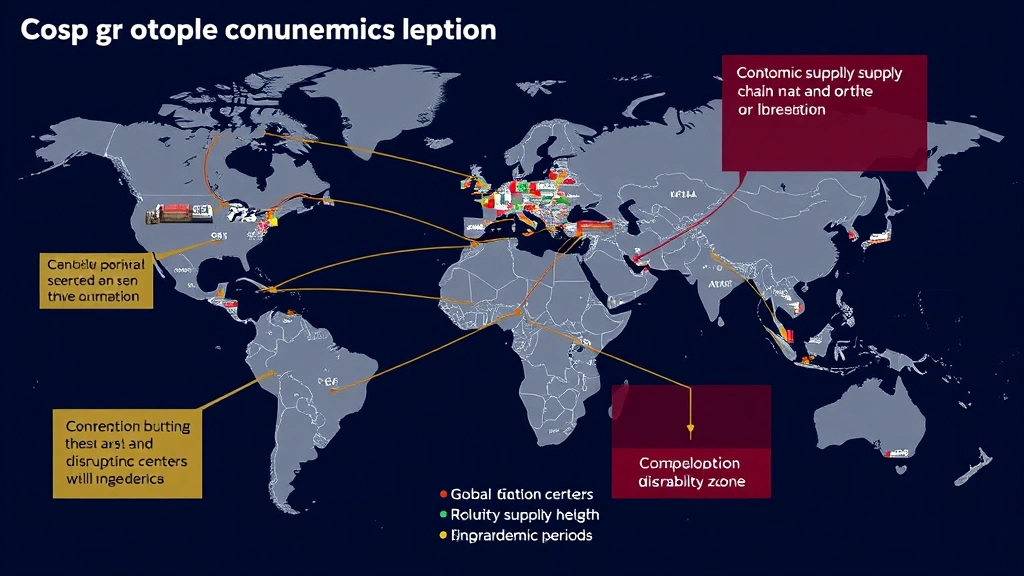
Viruses impact economies most dramatically through supply chain mechanisms that modern economies depend upon absolutely. When production facilities close due to viral outbreaks, global supply chains experience cascading failures. The semiconductor shortage of 2021-2023, partially attributable to COVID-19 factory closures in Taiwan and Southeast Asia, exemplifies this mechanism. Limited chip availability increased prices across automotive, consumer electronics, and industrial sectors, costing the global economy an estimated $220 billion in output losses.
Supply chain disruptions create market volatility that amplifies economic damage. Commodity prices surge when supply contracts suddenly; financial markets experience panic selling as investors reassess risk; currency volatility increases as monetary authorities implement emergency responses. These secondary effects often exceed primary pandemic impacts. The 2020 oil price collapse—driven by demand destruction from lockdowns—created financial instability in petrostates while generating unexpected benefits for importing nations. This heterogeneous impact distribution illustrates how viral economic effects depend on structural economic positions, not uniform pandemic exposure.
Modern economies exhibit extreme supply chain concentration, creating systemic fragility. When a virus spreads through a region containing critical manufacturing capacity, entire global industries face disruption. The UNCTAD research on supply chain resilience demonstrates that pandemic-related disruptions increase with economic globalization. Decentralized production networks would reduce viral economic impact, but achieving this restructuring requires significant capital investment and coordination—costs that compete with other economic priorities. This represents a fundamental tension: globalization creates efficiency gains but increases pandemic vulnerability.
Labor Markets and Productivity Loss
Viruses impact labor markets through multiple mechanisms beyond direct illness effects. When viral transmission risk increases, workers reduce labor supply through voluntary absence, employer-mandated quarantines, or childcare disruptions from school closures. The pandemic reduced labor force participation by 2-3 percentage points in developed economies, representing millions of workers withdrawing from production. Even workers remaining employed experienced productivity decline from illness, caregiving responsibilities, and psychological stress.
Remote work emergence represented an adaptive response to viral transmission risk, but created economic heterogeneity. Knowledge workers adapted readily to remote arrangements, while service, manufacturing, and construction workers faced occupational exposure they couldn’t escape. This divergence increased wage inequality and created persistent labor market stratification. Workers in high-exposure occupations demanded wage premiums; employers competed for limited healthy workers; productivity suffered from elevated absenteeism. The IMF analysis of pandemic labor market effects documented that wage inequality increased 8-12% in most developed economies, with effects persisting through 2024.
Long-COVID phenomena create persistent productivity loss extending far beyond acute infection periods. Approximately 10-30% of COVID-19 survivors experience ongoing symptoms affecting work capacity. This generates permanent productivity loss equivalent to removing 2-4% of the workforce from full productive capacity. Economists project long-COVID economic costs exceeding $2.6 trillion through 2030, primarily from productivity loss rather than healthcare expenditures. This illustrates how viral adaptation—particularly the ability of pathogens to cause chronic disease—generates economic impacts extending years beyond initial infection.
Educational disruptions from school closures create human capital losses affecting future economic productivity. Extended school closures reduced student learning by 0.3-0.5 years on average, with larger impacts in low-income countries. These learning deficits translate into lifetime earnings reductions estimated at 3-5% for affected cohorts. When aggregated across global student populations, this represents trillions in lost lifetime productivity—an economic cost that won’t fully manifest for decades but will depress economic growth throughout the 21st century.
Healthcare System Economics
Viral pandemics create extraordinary healthcare expenditure spikes that strain government budgets and displace other health investments. COVID-19 generated approximately $1.2 trillion in direct healthcare costs globally, with significant variation across countries. Developed nations spent 2-5% of GDP on pandemic response; developing nations faced impossible fiscal choices between pandemic response and essential services. This fiscal crowding-out creates long-term health consequences: cancer screening delays, vaccination program interruptions, routine surgical deferrals. These consequences generate health costs extending far beyond pandemic periods.
The economic burden falls disproportionately on lower-income populations and nations with limited healthcare capacity. When viral pandemics overwhelm healthcare systems, mortality increases not just from the virus but from inability to treat other conditions. The UNEP research on health-environment-economy linkages demonstrates that viral pandemic impacts concentrate in regions with pre-existing environmental health burdens. Air pollution, water contamination, and ecosystem degradation all increase baseline mortality and reduce healthcare system resilience. This creates feedback loops where environmental degradation increases pandemic vulnerability, which further strains resources available for environmental protection.
Healthcare system adaptation to pandemic conditions creates permanent economic restructuring. Telehealth expansion, point-of-care testing development, and vaccine manufacturing capacity represent investments that persist beyond pandemics. These adaptations generate positive economic spillovers in some sectors while creating disruption in others. Traditional healthcare real estate becomes underutilized; pharmaceutical manufacturing capacity shifts toward vaccine production; workforce training focuses on pandemic-relevant skills. The Ecorise Daily blog has explored how these structural changes interact with environmental health factors, particularly regarding antibiotic resistance development accelerated by pandemic-period antimicrobial overuse.
Long-term Economic Restructuring
Viral pandemic impacts extend far beyond immediate crisis periods through mechanisms of economic restructuring. Businesses that survived pandemic disruption often emerge transformed: reduced physical footprints, expanded digital capabilities, restructured supply chains. These adaptations represent rational responses to perceived increased pandemic risk, but collectively they reshape economic geography and industrial structure. Manufacturing decentralization, nearshoring of critical inputs, and increased inventory holding all increase production costs permanently.
Consumer behavior shifts triggered by viral pandemic experiences persist long-term. Increased demand for home delivery services, online shopping, and remote work arrangements remain elevated even as pandemic risks diminish. This represents a permanent shift in consumption patterns that benefits some sectors while devastating others. Urban commercial real estate suffers as office usage declines; suburban residential demand increases; logistics and delivery infrastructure experiences sustained growth. These sectoral shifts generate winners and losers, creating political economy tensions that influence policy responses to future viral threats.
Trust in institutions and public health authorities demonstrates pandemic-related damage affecting economic efficiency. Vaccine hesitancy emerging from pandemic-period misinformation creates persistent public health vulnerabilities. Future viral outbreaks will encounter populations with reduced trust in official guidance, complicating containment efforts and extending pandemic duration. This trust erosion represents an economic cost difficult to quantify but substantial in magnitude—it reduces the effectiveness of non-pharmaceutical interventions and slows vaccine uptake, prolonging economic disruption.
Climate change and environmental degradation create conditions accelerating viral adaptation and spillover. Warming temperatures expand geographic ranges of viral vectors; habitat destruction increases contact between species; agricultural intensification creates conditions favoring zoonotic spillover. Ecological economics research demonstrates that pandemic risk increases exponentially with environmental degradation. Preventing future pandemics requires environmental protection investments now—a cost that must be incorporated into climate change and biodiversity loss economic analyses. The environment and natural resources trust fund renewal mechanisms represent policy tools for making these essential environmental investments.
Policy Responses and Economic Recovery
Government policy responses to viral pandemics generate their own economic impacts, sometimes exceeding primary pandemic effects. Lockdown policies reduced viral transmission but created economic costs through business closures, employment loss, and reduced consumption. The economic cost of lockdowns in developed economies exceeded $3 trillion globally, with developing nations bearing disproportionate burdens despite lower direct pandemic costs. This raises critical questions about optimal policy responses—how much economic disruption justifies mortality reduction?
Monetary and fiscal stimulus responses to pandemic-induced recessions created inflation consequences persisting through 2024. Central banks expanded money supplies by 20-40% in major economies; governments implemented stimulus spending exceeding 10-15% of GDP. These expansionary policies prevented depression-level economic contraction but generated inflation rates not seen since the 1980s. This inflation created real income losses, particularly affecting low-income populations, and forced painful monetary contraction generating new recessions. The economic policy tradeoffs reveal how viral pandemics force societies to choose between competing economic objectives.
Vaccination programs represent critical policy tools for pandemic mitigation, but their economic impacts depend heavily on distribution equity. Wealthy nations vaccinated populations rapidly while developing nations faced severe vaccine access constraints, extending pandemic duration and allowing continued viral adaptation. This inequitable distribution ultimately increased pandemic duration for all nations, demonstrating that pandemic economics requires global cooperation. The economic cost of vaccine inequity—estimated at $8-9 trillion in lost global output—exceeds the cost of ensuring universal vaccine access, illustrating how short-term cost savings create larger long-term economic losses.
Environmental protection policies and pandemic preparedness investments represent complementary economic strategies. Reducing deforestation and habitat destruction decreases zoonotic spillover probability; investing in pandemic surveillance systems enables early detection; supporting healthcare system capacity in developing nations reduces pandemic severity. These investments cost 0.1-0.3% of global GDP annually but reduce expected pandemic losses by an estimated 50-70%. Ecological economics research demonstrates that pandemic prevention represents exceptional return-on-investment compared to pandemic response costs. The sustainable economic practices emerging from pandemic response experiences suggest that environmental protection and economic resilience reinforce rather than contradict each other.
FAQ
How do viruses respond to environmental changes?
Viruses respond to environmental changes through mutation, recombination, and phenotypic plasticity. Temperature, humidity, host population density, and immune pressure all influence viral evolution. RNA viruses particularly demonstrate rapid adaptation rates, with mutation frequencies enabling significant evolutionary change within weeks. This environmental responsiveness allows viruses to exploit new ecological niches, infect new host species, and evade immune defenses—mechanisms with direct economic consequences.
What percentage of pandemics originate from animal reservoirs?
Approximately 75% of emerging infectious diseases originate in wildlife, according to epidemiological data. This reflects viral adaptation to animal hosts and subsequent spillover to human populations. Environmental factors—habitat loss, agricultural intensification, climate change—increase spillover probability by increasing contact between species. Understanding these mechanisms is essential for pandemic prevention and economic planning.
How much did COVID-19 cost the global economy?
Direct costs exceeded $16 trillion when accounting for healthcare expenditures, productivity loss, and business disruption through 2025. Indirect costs—from supply chain disruption, learning loss, healthcare system damage, and environmental degradation—likely exceed direct costs substantially. These estimates exclude psychological and social costs from isolation, grief, and trust erosion.
Can pandemic preparedness investments reduce economic losses?
Yes, significantly. Research indicates that pandemic preparedness spending of 0.1-0.3% of global GDP annually could reduce expected pandemic economic losses by 50-70%. This represents exceptional return-on-investment compared to pandemic response costs. However, preparedness investments require sustained political commitment and international cooperation—challenges that have historically limited preparedness funding.
How does environmental degradation increase pandemic risk?
Environmental degradation increases pandemic risk through multiple mechanisms: habitat destruction increases species contact, climate change expands vector ranges, agricultural intensification creates conditions favoring zoonotic spillover, and pollution reduces immune function. These factors combine to increase both pandemic probability and severity, creating economic vulnerabilities that compound over time.
What role does inequality play in pandemic economics?
Inequality dramatically amplifies pandemic economic impacts. Wealthy populations can reduce exposure through remote work and quality healthcare; low-income populations face occupational exposure and limited healthcare access. This creates divergent pandemic impacts and increases inequality—effects that persist through economic recovery periods. Pandemic prevention and response equity represents essential economic policy, not merely humanitarian concern.


