
Why Sustainable Economies Thrive: Study Insights
Environmental consciousness has evolved from a niche concern to a fundamental driver of economic resilience and growth. Recent research demonstrates that organizations and nations integrating ecological considerations into their economic models consistently outperform those operating under extractive paradigms. This shift represents not merely an ethical evolution but a pragmatic recognition that environmental degradation imposes substantial hidden costs—costs that sustainable economies successfully internalize and mitigate.
The relationship between environmental stewardship and economic performance has long been mischaracterized as oppositional. However, contemporary economic analysis reveals a compelling paradox: the most profitable enterprises often demonstrate the strongest commitment to ecological preservation. This article explores the empirical foundations of sustainable economic models, examining how conscious environmental practices generate competitive advantages, reduce systemic risks, and create long-term shareholder value.
The Economic Case for Environmental Consciousness
Traditional economic models have historically externalized environmental costs, treating natural resources as infinite and pollution as a costless byproduct of production. This accounting fiction has created perverse incentives, allowing corporations and governments to accumulate enormous liabilities while appearing profitable on conventional balance sheets. Environmental consciousness fundamentally challenges this framework by recognizing that natural capital—water systems, soil fertility, atmospheric composition, biodiversity—represents genuine economic assets requiring stewardship and investment.
Research from the World Bank estimates that environmental degradation costs the global economy approximately 10-15% of annual GDP when accounting for resource depletion, pollution damage, and ecosystem service losses. Companies and economies that internalize these costs proactively experience dramatically lower total economic losses than those ignoring environmental externalities. This represents a fundamental insight: environmental consciousness is economically rational, not economically costly.
The concept of environmental definition has expanded considerably. Rather than viewing the environment as a separate domain, modern economic thinking integrates it as a foundational system upon which all economic activity depends. This integrated perspective reveals that human environment interaction fundamentally shapes economic outcomes. Nations and corporations conscious of this interconnection consistently achieve superior financial performance.
Evidence from the United Nations Environment Programme demonstrates that environmental investments generate positive returns across multiple timeframes. Short-term investments in renewable energy, waste reduction, and resource efficiency yield immediate cost savings. Medium-term investments in ecosystem restoration and sustainable supply chains reduce operational risks and enhance brand value. Long-term investments in biodiversity protection and climate adaptation build economic resilience against future shocks.
Mechanisms of Sustainable Economic Performance
Sustainable economies achieve superior performance through multiple interconnected mechanisms. First, operational efficiency improvements reduce costs while minimizing environmental impact. Companies implementing comprehensive environmental management systems typically achieve 15-30% reductions in resource consumption, translating directly to profit margin expansion. These improvements stem not from sacrifice but from eliminating waste and optimizing processes.
Second, sustainable practices enhance human capital development and retention. Research consistently demonstrates that employees at environmentally conscious organizations report higher job satisfaction, lower turnover, and greater productivity. This creates virtuous cycles where environmental stewardship becomes embedded in organizational culture, generating compounding benefits over years and decades.
Third, sustainable economies capture emerging market opportunities unavailable to conventionally-oriented competitors. The global market for sustainable products and services now exceeds $10 trillion annually and grows at roughly double the rate of conventional markets. Companies conscious of environmental imperatives position themselves to capture this expanding demand, while competitors clinging to outdated models face gradual market obsolescence.
Fourth, sustainable economic models reduce exposure to regulatory risk and sudden policy shifts. As environmental regulations tighten globally—as they inevitably must—companies already operating sustainably face minimal compliance costs while competitors require expensive retrofitting. This forward-looking positioning provides enormous strategic advantages.
Supply chain resilience represents another critical mechanism. Sustainable economies develop diversified, locally-embedded supply chains less vulnerable to disruption. Conventional just-in-time systems optimized purely for cost efficiency proved catastrophically fragile during recent global disruptions, while companies with conscious environmental practices had implemented redundancy and local sourcing that provided crucial resilience.
Regarding practical implementation, organizations can reduce carbon footprint through systematic approaches that simultaneously improve financial performance. Energy efficiency retrofits, renewable energy adoption, and circular economy principles all generate measurable returns while advancing environmental goals.
Risk Mitigation and Resilience Building
Environmental consciousness fundamentally transforms how organizations and economies approach risk management. Climate change, resource scarcity, and ecosystem degradation represent existential threats to conventional business models. Yet these same threats create extraordinary opportunities for enterprises and nations that proactively adapt.
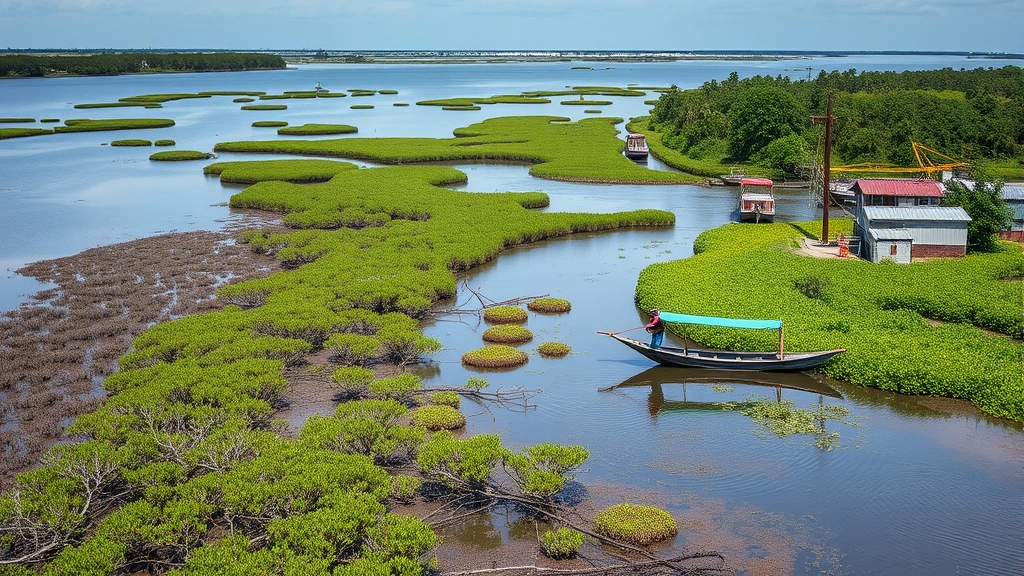
Physical climate risks—flooding, drought, extreme weather, sea-level rise—impose escalating costs on unprepared economies. Conversely, nations investing in climate adaptation infrastructure, regenerative agriculture, and ecosystem restoration build resilience that protects productive capacity. Bangladesh’s mangrove restoration program simultaneously protects coastal communities from cyclones while supporting fisheries that provide food security and income for millions.
Transition risks emerge as global economies decarbonize and shift toward circular models. Fossil fuel-dependent regions and companies face potential stranded assets and market disruption. Yet regions and enterprises conscious of this transition and proactively developing alternative economic foundations thrive during the transition period and beyond. Germany’s renewable energy transition, despite near-term challenges, positions the nation to capture enormous value in clean technology markets.
Financial stability improves substantially under sustainable economic models. The International Monetary Fund increasingly recognizes that environmental risks represent systemic financial risks. Banks and investors conscious of these connections reduce exposure to environmentally destructive sectors, reallocating capital toward sustainable enterprises. This creates powerful incentives for economic actors to internalize environmental considerations.
Resource security emerges as a critical risk factor. Economies dependent on imported resources vulnerable to supply disruption face existential threats. Sustainable economies prioritizing circular resource use, renewable energy, and local production develop genuine independence and security. This transition requires investment but generates enormous long-term benefits in stability and self-determination.

Innovation and Competitive Advantage
Environmental consciousness drives extraordinary innovation that generates competitive advantages extending far beyond environmental domains. Constraints imposed by environmental sustainability requirements force organizations to think creatively about problems, often discovering solutions that prove superior to conventional approaches across multiple dimensions.
Renewable energy innovation exemplifies this dynamic. Solar and wind technologies, developed under pressure to reduce carbon emissions, have achieved cost reductions exceeding 90% over two decades—far surpassing conventional energy technology improvements. These technologies now represent the cheapest electricity sources in most markets, demonstrating how environmental consciousness drives economically superior innovation.
Circular economy principles generate similar innovation advantages. Companies designing products for disassembly, remanufacturing, and material recovery often discover that these designs improve product durability, reduce manufacturing complexity, and create new revenue streams through remanufactured product markets. Interface Corporation’s carpet tile business model, redesigned around circular principles, generates higher margins than conventional carpet manufacturing while eliminating waste.
Biomimicry—applying natural system principles to economic problems—has generated innovations across industries. Construction materials inspired by mollusk shells exhibit superior strength-to-weight ratios. Agricultural practices mimicking natural ecosystem dynamics enhance yields while improving soil health. Medical innovations derived from studying natural compounds have generated breakthrough treatments for previously intractable conditions.
The relationship between environmental consciousness and innovation operates bidirectionally. Innovation drives environmental improvement, while environmental improvement requirements drive innovation. Organizations and economies conscious of this relationship systematically invest in research and development, capturing enormous competitive advantages as markets shift toward sustainability.
Global Case Studies of Thriving Sustainable Economies
Costa Rica demonstrates how national-level environmental consciousness generates economic resilience and prosperity. Despite being a middle-income country, Costa Rica has protected 25% of its territory as national parks and reserves while achieving 99% renewable electricity generation. This environmental commitment attracts international tourism, supports high-value agricultural exports (particularly sustainable coffee and cacao), and builds climate resilience that protects productive capacity.
Denmark exemplifies how environmental consciousness drives industrial competitiveness. The nation’s commitment to wind energy generated a global wind turbine industry now exporting $7+ billion annually. Strict environmental regulations forced manufacturers to innovate, creating products that dominate global markets. Environmental consciousness and industrial success proved mutually reinforcing rather than oppositional.
New Zealand’s regenerative agriculture movement, driven by environmental consciousness, creates products commanding premium prices in global markets. Consumers conscious of environmental impact willingly pay substantially more for products from nations and enterprises demonstrating genuine environmental stewardship. This premium pricing creates superior returns for environmentally conscious producers.
Rwanda’s commitment to environmental restoration and sustainable development has generated rapid economic growth despite limited natural resources. The nation’s ban on single-use plastics, protection of mountain gorilla habitat, and promotion of sustainable tourism create competitive advantages in emerging conscious consumer markets.
Within this context, examining sustainable fashion brands reveals how environmental consciousness drives business success in competitive industries. Premium valuations and rapid growth characterize enterprises that authentically integrate environmental considerations into core business strategy.
Measuring Economic Sustainability
Quantifying sustainable economic performance requires expanding beyond conventional GDP metrics that obscure environmental costs. Genuine Progress Indicator (GPI), Adjusted Net Savings (ANS), and Natural Capital Accounting provide frameworks capturing environmental dimensions of economic performance.
Ecological economics, explored through research published in journals like Ecological Economics and Journal of Cleaner Production, provides methodologies for integrating natural capital into economic analysis. These approaches reveal that many economies appearing prosperous under conventional metrics are actually experiencing genuine wealth decline when environmental asset depletion is properly accounted for.
Corporate environmental accounting increasingly recognizes natural capital dependencies and impacts. Science-based targets aligned with planetary boundaries provide frameworks for enterprises to assess whether operations remain within ecological limits. Companies achieving science-based sustainability targets consistently demonstrate superior financial performance, higher employee retention, and stronger brand value.
The United Nations Sustainable Development Goals provide integrated frameworks linking environmental protection, economic development, and social wellbeing. Nations and enterprises organizing around these goals demonstrate superior long-term performance across multiple dimensions.
Stakeholder capitalism—evaluating enterprise success based on value creation for employees, communities, suppliers, and the environment alongside shareholders—provides measurement frameworks increasingly adopted by institutional investors managing trillions in assets. This represents a fundamental shift in how economic success is defined and measured.
The transition toward sustainable measurement systems creates powerful incentives for economic actors to internalize environmental considerations. As financial markets increasingly price environmental risks and opportunities accurately, capital allocation shifts decisively toward sustainable enterprises and away from environmentally destructive competitors. This market-driven transition accelerates as measurement sophistication improves.
For further exploration of economic-environmental integration, visit the Ecorise Daily blog for comprehensive analysis of contemporary sustainability challenges and opportunities. Understanding how human environment interaction shapes economic outcomes remains essential for navigating the transition toward sustainable prosperity.
FAQ
Why do sustainable economies outperform conventional models financially?
Sustainable economies internalize environmental costs rather than externalizing them, reducing hidden liabilities. They simultaneously capture emerging market opportunities, reduce regulatory risks, improve operational efficiency, and build resilience against future shocks. This multifaceted advantage compounds over time, generating superior long-term returns.
How does environmental consciousness drive innovation?
Environmental sustainability constraints force creative problem-solving that often generates solutions superior across multiple dimensions. Renewable energy, circular economy products, and biomimetic innovations demonstrate how environmental requirements drive economically superior innovations.
What measurement frameworks capture sustainable economic performance?
Genuine Progress Indicator, Adjusted Net Savings, Natural Capital Accounting, and science-based sustainability targets provide frameworks capturing environmental dimensions of economic performance. These expand beyond conventional GDP metrics that obscure environmental costs.
Can developing economies achieve sustainability while developing?
Yes, and increasingly must. Environmental constraints are tightening globally, making conventional development paths increasingly costly and risky. Developing economies leapfrogging to sustainable technologies often achieve superior outcomes compared to nations locked into outdated infrastructure.
How do investors identify sustainable economic opportunities?
Institutional investors increasingly employ environmental risk assessment, natural capital analysis, and science-based sustainability evaluation. Companies demonstrating genuine integration of environmental considerations into strategy typically receive favorable valuation multiples reflecting lower risk and higher long-term growth prospects.


