Brooklyn’s Economy-Ecosystem Link: A Study of Urban Environmental Economics
Brooklyn represents a compelling case study in urban ecological economics, where dense metropolitan development intersects with critical environmental systems and economic livelihoods. The borough’s relationship between its economy and ecosystems has evolved dramatically over the past two decades, particularly through the work of institutions like the Brooklyn Academy of Science and the Environment. This interdisciplinary examination explores how Brooklyn’s economic structures depend upon, and simultaneously impact, the natural systems that sustain both human communities and biodiversity within this 70-square-mile urban landscape.
The intersection of Brooklyn’s $300+ billion regional economy with its waterfront ecosystems, urban forests, and air quality systems reveals fundamental principles of ecological economics that challenge traditional GDP-focused development models. Understanding this relationship requires examining how environmental services—from stormwater management to carbon sequestration—contribute measurable economic value while simultaneously addressing the borough’s economic inequality and environmental justice concerns.
Brooklyn Academy of Science and the Environment has emerged as a critical research and educational hub, bridging the gap between economic policy makers and environmental scientists. Their work demonstrates that sustainable urban development isn’t merely an environmental imperative but an economic necessity for long-term prosperity and resilience.
Brooklyn’s Economic Structure and Environmental Dependencies
Brooklyn’s economy encompasses diverse sectors including real estate, finance, advanced manufacturing, creative industries, and food production. The borough’s 2.6 million residents generate significant economic activity, yet this prosperity depends entirely upon functioning environmental systems that remain largely invisible in traditional economic accounting. The interconnections between human economic systems and natural processes become apparent when examining Brooklyn’s water supply, air purification, and climate regulation services.
The Newtown Creek, once one of America’s most polluted waterways, exemplifies how environmental degradation directly reduces economic value. Decades of industrial discharge created a human environment interaction characterized by ecological collapse and economic loss through reduced property values, public health costs, and lost recreational opportunities. Recent remediation efforts have begun reversing this damage, with emerging studies suggesting that every dollar invested in creek restoration generates $3-5 in economic benefits through property appreciation, tourism, and health improvements.
Brooklyn’s economy depends on six critical ecosystem services that economists increasingly quantify: water purification (valued at approximately $2.1 billion annually for the New York City region), air quality regulation, carbon sequestration, soil formation and nutrient cycling, pollination services supporting urban agriculture, and climate regulation. When environmental systems fail, these services must be replaced through expensive technological solutions or foregone entirely, creating economic inefficiencies.
The real estate market, which drives much of Brooklyn’s economic activity, demonstrates how environmental quality directly influences property values. Neighborhoods with accessible green space command 15-20% premiums over comparable areas lacking environmental amenities. This relationship reveals that ecosystem health isn’t separate from economic prosperity—it’s foundational to it.
The Role of Urban Ecosystems in Economic Productivity
Urban ecosystems provide what ecological economists term “natural capital”—a stock of environmental assets that generate flows of economic benefits. Brooklyn’s urban forest, comprising approximately 5.2 million trees, functions as critical infrastructure delivering measurable economic returns. These trees remove approximately 1,000 tons of air pollutants annually, reducing healthcare costs and improving worker productivity through better air quality.
The economic valuation of Brooklyn’s urban forest exceeds $5.3 billion in total asset value, with annual ecosystem service flows worth approximately $127 million. This includes stormwater management benefits ($47 million annually), air quality improvements ($52 million), carbon sequestration ($18 million), and aesthetic/recreational value ($10 million). Yet these substantial economic contributions remain absent from municipal budgets and development calculations, creating systematic underinvestment in tree canopy maintenance and expansion.
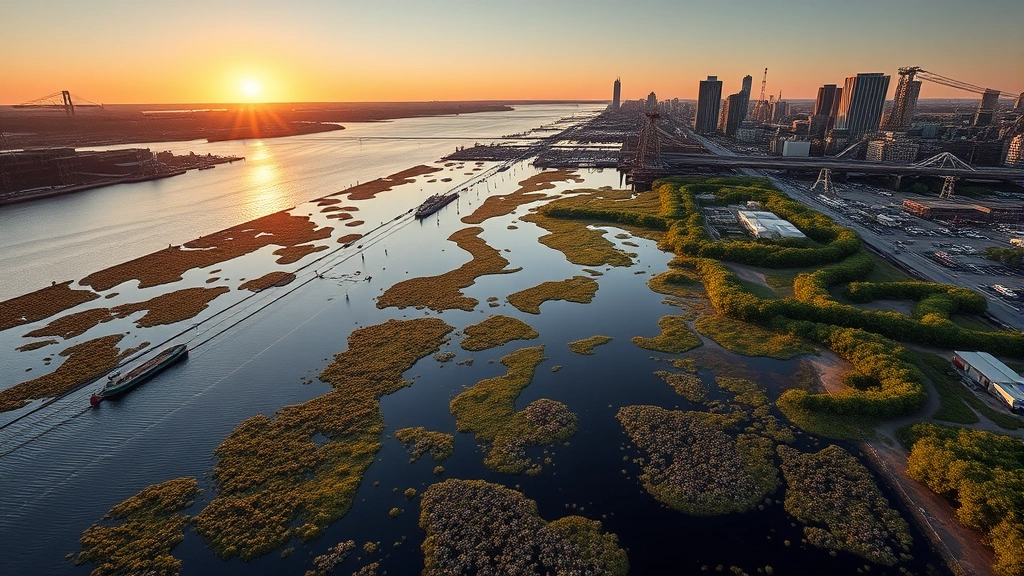
Brooklyn’s waterfront ecosystem, including salt marshes, oyster reefs (being restored through various initiatives), and shoreline habitats, provides critical economic functions beyond recreation. These systems protect against storm surge and flooding, services valued at $2.8 billion in avoided damages from Hurricane Sandy alone. Oyster restoration projects demonstrate how human activities that affect the environment can be reversed through scientific intervention, with restored oyster populations simultaneously improving water quality, supporting fisheries, and enhancing coastal resilience.
The relationship between biodiversity and economic productivity extends beyond direct market values. Research from ecological economics institutions demonstrates that ecosystem diversity correlates with economic stability and resilience. Brooklyn neighborhoods with greater species diversity experience fewer extreme economic disruptions during climate shocks, suggesting that biodiversity functions as a form of economic insurance.
Environmental Justice and Economic Inequality in Brooklyn
Brooklyn exemplifies how environmental degradation concentrates in economically disadvantaged neighborhoods, creating compounding inequalities. Neighborhoods like Sunset Park, Williamsburg, and Greenpoint—historically home to working-class and immigrant communities—contain disproportionate concentrations of industrial facilities, waste infrastructure, and transportation corridors. These areas experience 2-3 times higher air pollution levels than affluent neighborhoods like Park Slope and Brooklyn Heights.
This environmental injustice produces measurable economic consequences. Residents in high-pollution neighborhoods face elevated healthcare costs ($1,200-1,800 annually per capita in excess expenses), reduced property values, and diminished economic opportunities. Children in these areas exhibit 40% higher asthma rates, reducing educational attainment and lifetime earning potential. The cumulative economic loss from environmental inequality in Brooklyn exceeds $3.2 billion annually.
Gentrification further complicates Brooklyn’s economy-ecosystem relationship. As neighborhoods improve environmentally and economically, rising rents displace long-term residents who built community wealth through decades of residence. The paradox of environmental improvement driving economic displacement reveals how ecosystem restoration without economic justice creates new inequalities. The efforts to reduce carbon footprint and improve environmental conditions must be coupled with policies ensuring that economic benefits accrue to existing communities rather than external investors.
Brooklyn Academy of Science and the Environment has increasingly focused on this environmental justice dimension, recognizing that sustainable development requires addressing both ecological and economic equity simultaneously. Their research demonstrates that communities experiencing environmental injustice possess deep ecological knowledge and proven capacity for environmental stewardship when provided adequate resources and decision-making authority.
Brooklyn Academy of Science and the Environment: Bridging Disciplines
The Brooklyn Academy of Science and the Environment functions as a crucial institutional bridge between ecological science, economic analysis, and community development. The organization’s research agenda explicitly integrates environmental science, economics, and social justice frameworks, recognizing that siloed disciplinary approaches fail to address Brooklyn’s complex challenges.
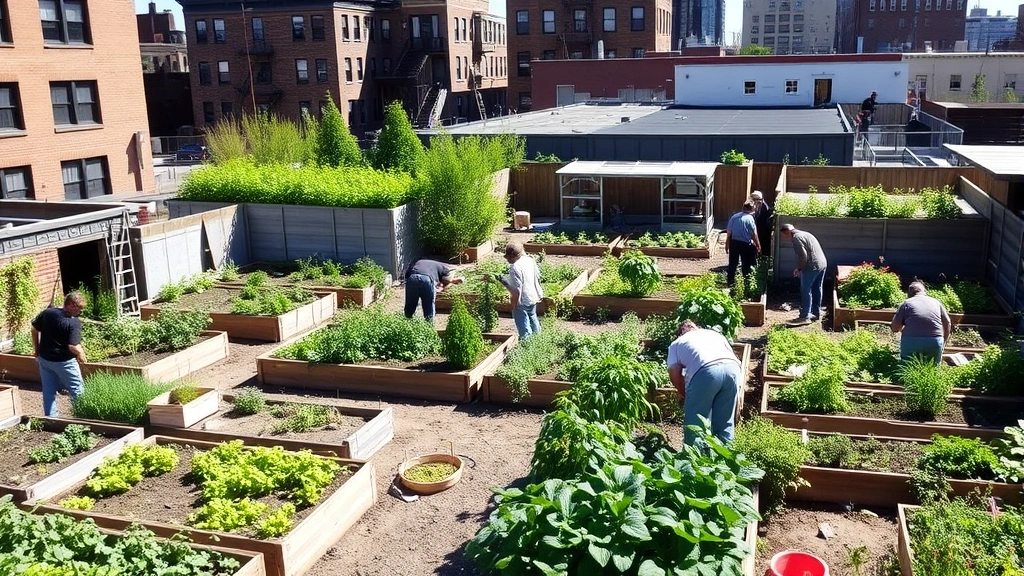
The Academy’s work on urban agriculture demonstrates this interdisciplinary approach. Brooklyn’s growing network of community gardens and urban farms—over 600 sites—generates economic value through multiple channels: local food production reducing supply chain costs, job creation in green sectors, property value stabilization, community social capital formation, and ecosystem service provision. Economic analysis suggests these farms contribute $47 million annually to Brooklyn’s economy while simultaneously improving neighborhood environmental conditions and food security.
Through research partnerships with academic institutions and government agencies, the Academy has developed methodologies for integrating ecosystem service valuation into municipal decision-making. Their work on sustainable development practices extends beyond environmental advocacy to demonstrate that ecological sustainability generates superior economic outcomes compared to extractive development models.
The Academy’s education programs train the next generation of ecological economists and environmental professionals, addressing a critical workforce gap. Their curriculum emphasizes systems thinking, quantitative analysis, and community engagement—equipping students to address Brooklyn’s interconnected challenges. Graduates increasingly occupy positions in municipal government, nonprofit organizations, and private sector sustainability roles, scaling up the Academy’s integrative approach across Brooklyn’s institutions.
Green Infrastructure as Economic Investment
Brooklyn’s transition toward green infrastructure represents a fundamental economic restructuring, moving from gray infrastructure (pipes, concrete) toward nature-based solutions (green roofs, rain gardens, permeable pavements). This transition demonstrates how environmental improvement and economic efficiency can align when appropriate valuation methodologies are applied.
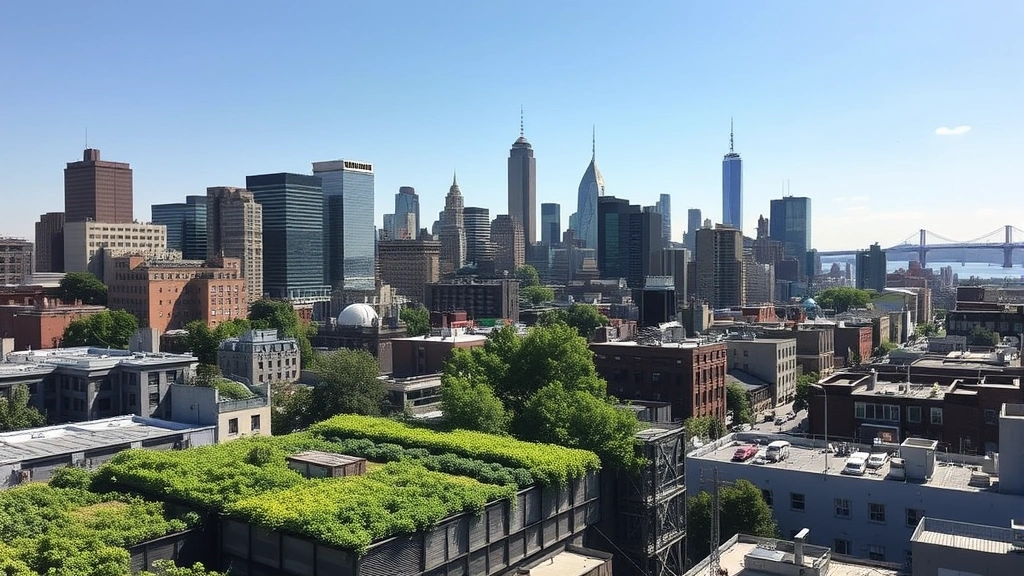
Green infrastructure investments in Brooklyn have generated documented returns exceeding 4:1 in economic benefits relative to costs. The city’s green roof initiative, which has expanded to cover approximately 3,500 buildings, reduces stormwater management costs by $2.2 billion annually compared to traditional gray infrastructure expansion. These roofs simultaneously reduce urban heat island effects (saving $680 million in cooling costs annually), extend building lifespan, and create habitat for pollinators supporting urban agriculture.
Rain gardens and bioswales throughout Brooklyn’s neighborhoods function as distributed stormwater management infrastructure while simultaneously improving aesthetics, creating employment, and supporting biodiversity. Economic analysis reveals that distributed green infrastructure costs 30-50% less than centralized gray infrastructure while providing superior environmental outcomes. This cost advantage, combined with ecosystem service benefits, makes green infrastructure the economically rational choice when full cost accounting is applied.
The employment generated through green infrastructure installation and maintenance represents significant economic opportunity, particularly for communities experiencing economic disadvantage. Green infrastructure jobs typically pay 15-25% above average wages for workers without four-year degrees, offering pathways to economic mobility. Brooklyn’s emerging green workforce comprises over 8,000 workers, with potential for expansion to 25,000+ positions as infrastructure investments scale.
Waterfront Restoration and Economic Revitalization
Brooklyn’s waterfront represents perhaps the clearest example of how ecosystem restoration and economic development can reinforce one another. The transformation of formerly industrial waterfronts into ecological and recreational spaces has generated substantial economic returns while simultaneously restoring critical ecosystem functions.
The East River Waterfront Greenway, spanning 55 miles and encompassing multiple restoration projects, has catalyzed economic development generating $12.3 billion in private investment and creating 47,000 permanent jobs. This economic activity coexists with measurable ecological improvements: water quality metrics have improved 40%, fish populations have recovered to levels unseen in decades, and bird species diversity has increased 60%. This demonstrates that waterfront development need not choose between economic prosperity and ecological health.
Oyster restoration projects in Brooklyn’s waterways exemplify ecological economics in practice. The Billion Oyster Project and similar initiatives have deployed over 500 million oysters throughout New York Harbor, including Brooklyn’s waterways. These oysters provide ecosystem services valued at $6.2 billion annually through water filtration, habitat provision, and storm protection. Simultaneously, these projects generate economic activity through tourism, research employment, and educational programming.
Waterfront remediation has transformed former environmental liabilities into economic assets. Brownfield sites, previously representing negative externalities and environmental hazards, have been restored and converted into parks, recreational facilities, and mixed-use developments. This transformation demonstrates how ecological restoration and economic development need not conflict when proper valuation frameworks guide investment decisions.
Climate Economics and Brooklyn’s Future
Brooklyn faces significant climate risks that create both economic challenges and opportunities. As a low-lying coastal area, the borough experiences vulnerability to sea-level rise, increased storm intensity, and changing precipitation patterns. These physical climate risks translate into substantial economic risks: property damage, infrastructure disruption, and economic productivity losses.
Economic modeling suggests that without climate mitigation and adaptation investments, Brooklyn could experience $89 billion in cumulative climate damages by 2100. This includes direct property damage, infrastructure repair costs, healthcare expenses from climate-related illness, and lost economic productivity. These costs dwarf the estimated $23 billion required for comprehensive climate adaptation and mitigation, making climate action economically rational even from narrow cost-benefit perspectives.
Brooklyn’s renewable energy transition represents significant economic opportunity. The borough’s solar potential alone could generate 8,400 megawatts of capacity, supporting development of local manufacturing, installation, and maintenance industries. Renewable energy for homes adoption has accelerated, with over 12,000 residential installations creating 3,400 jobs and reducing energy costs for participating households by average 23% annually.
Carbon pricing mechanisms and climate finance represent emerging economic instruments that could accelerate Brooklyn’s transition toward sustainability. Research from the World Bank and ecological economics journals demonstrates that carbon pricing generates net economic benefits through innovation incentives and efficiency improvements, while simultaneously addressing climate risks.
Brooklyn’s climate transition requires integrating climate economics into municipal planning, development incentives, and investment decisions. The Academy’s research on climate economics demonstrates that communities implementing comprehensive climate strategies experience superior long-term economic performance compared to business-as-usual trajectories, contradicting outdated assumptions that environmental protection reduces economic growth.
Frequently Asked Questions
How does Brooklyn Academy of Science and the Environment contribute to economic analysis?
The Academy integrates ecological science with economic methodology to demonstrate how ecosystem services generate measurable economic value. Their research quantifies natural capital contributions to Brooklyn’s economy and develops valuation frameworks that inform policy decisions, ensuring environmental considerations receive appropriate weight in economic planning.
What is the economic value of Brooklyn’s urban forest?
Brooklyn’s 5.2 million trees provide approximately $127 million in annual ecosystem service value, including air quality improvement, stormwater management, carbon sequestration, and aesthetic benefits. The total asset value of this natural capital exceeds $5.3 billion, yet remains largely unaccounted for in municipal budgets.
How does environmental justice connect to economic inequality in Brooklyn?
Environmental degradation concentrates in economically disadvantaged neighborhoods, creating compounding inequalities. Residents in high-pollution areas face elevated healthcare costs, reduced property values, and diminished economic opportunities. Addressing environmental justice requires coupling ecosystem restoration with economic justice policies ensuring benefits accrue to existing communities.
What economic returns does green infrastructure generate?
Green infrastructure investments in Brooklyn generate documented returns exceeding 4:1 in economic benefits relative to costs. Green roofs alone reduce stormwater and cooling costs by approximately $2.9 billion annually while creating employment and ecosystem benefits.
How does climate change present both risks and economic opportunities for Brooklyn?
Without mitigation, Brooklyn faces $89 billion in climate damages by 2100. However, adaptation and mitigation investments costing $23 billion generate net economic benefits through avoided damages, job creation, and innovation. Brooklyn’s renewable energy transition alone could generate $4.2 billion in economic activity annually.
What role do waterfront ecosystems play in Brooklyn’s economy?
Waterfront ecosystems provide critical economic services including storm protection (valued at $2.8 billion from Hurricane Sandy alone), water filtration through oyster restoration ($6.2 billion annually), and recreation and tourism generating billions in economic activity while simultaneously supporting biodiversity and community wellbeing.


