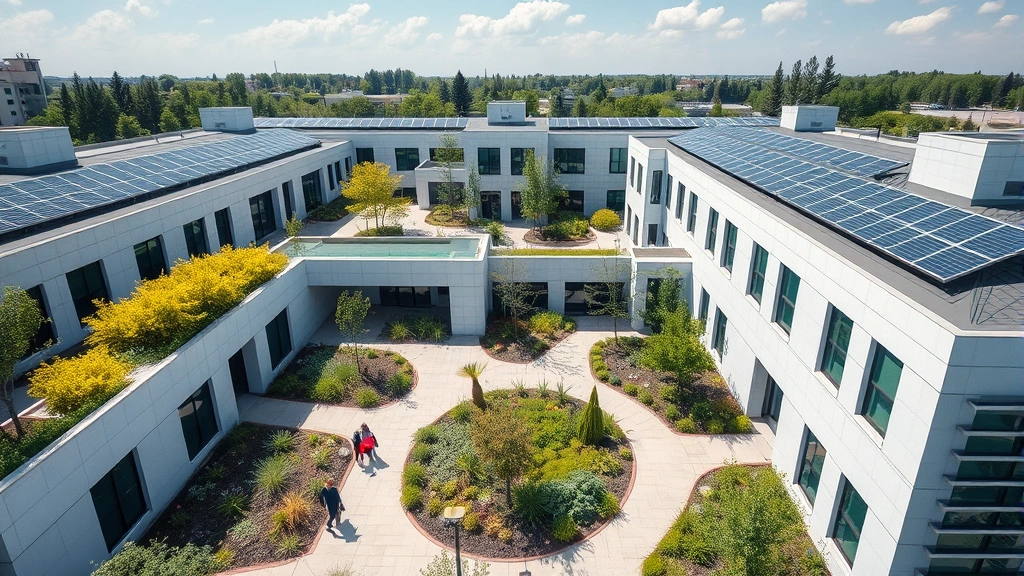
What Is the Work Environment? Expert Insight into Economic-Ecological Integration
The work environment extends far beyond office walls and factory floors. In contemporary discourse spanning economics, environmental science, and organizational behavior, the work environment encompasses the complex interplay between human productive activity, natural capital, and systemic sustainability. Understanding this multidimensional concept requires examining how economic systems interact with ecological constraints, labor conditions, and the broader socioeconomic frameworks that shape where and how people work.
As global economies transition toward sustainability imperatives, the definition of work environment has evolved from a purely ergonomic or managerial concern to a holistic assessment of environmental externalities, resource consumption, and long-term ecological viability. This shift reflects growing recognition that sustainable economic development cannot be divorced from environmental stewardship and that workplace practices directly influence planetary health outcomes.
Defining the Work Environment: Traditional and Contemporary Perspectives
The work environment traditionally referred to the physical, social, and organizational conditions in which employees perform their duties. This included factors such as workplace safety, air quality, lighting, temperature control, and interpersonal dynamics. However, this narrow definition increasingly proves inadequate for addressing 21st-century economic challenges.
Contemporary understanding recognizes that the work environment encompasses several interconnected dimensions. First, the immediate physical workspace includes ergonomic design, occupational health hazards, and workplace safety standards. Second, the organizational culture affects employee well-being, productivity, and retention. Third, and critically, the environmental footprint of productive activities—including resource extraction, energy consumption, waste generation, and emissions—constitutes an essential component of comprehensive work environment analysis.
This expanded definition aligns with ecological economics frameworks, which emphasize that all economic activity occurs within biophysical boundaries. The human environment interaction inherent in work processes directly shapes both immediate workplace conditions and planetary systems. Manufacturing facilities, agricultural operations, service sector offices, and extraction industries all generate environmental externalities that extend far beyond their physical locations.
Expert consensus increasingly defines the work environment as the integrated system of physical, social, organizational, and environmental conditions that directly and indirectly affect worker health, productivity, equity, and ecological sustainability. This definition acknowledges that workplace decisions generate ripple effects throughout economic and natural systems.
Economic Systems and Environmental Context
Understanding work environments requires examining how economic structures shape labor practices and environmental outcomes. The dominant paradigm of industrial capitalism, characterized by continuous growth imperatives and externality-driven cost reduction, has historically prioritized productivity metrics while externalizing environmental and social costs.
The World Bank and international development institutions have increasingly recognized that what does human environment interaction mean in economic contexts relates directly to development sustainability. Work environments in extractive industries—mining, petroleum production, timber harvesting—exemplify how production systems can generate severe environmental degradation while providing employment. Workers in these sectors often face dual vulnerabilities: occupational hazards combined with ecosystem destruction that undermines long-term community viability.
Economic theory increasingly incorporates natural capital accounting, recognizing that ecosystem services upon which all productive activity depends have measurable economic value. Clean water, pollination, climate regulation, soil formation, and nutrient cycling represent essential inputs to economic production. Work environments that degrade these natural systems impose hidden costs on future generations and create economic fragility.
The transition toward circular economy models reflects growing recognition that linear extraction-production-disposal systems are ecologically unsustainable. Forward-thinking organizations are redesigning work environments to minimize resource throughput, eliminate waste, and maintain material value across multiple production cycles. This systemic shift requires fundamental changes in how work is organized, where it occurs, and what metrics determine success.
Research from ecological economics journals demonstrates that sustainable work environments require internalizing previously externalized costs. This means incorporating environmental impact assessments into workplace design, supply chain management, and performance evaluation. Organizations implementing comprehensive sustainability practices often discover that improved work environments correlate with enhanced employee engagement, reduced operational costs, and increased long-term competitiveness.
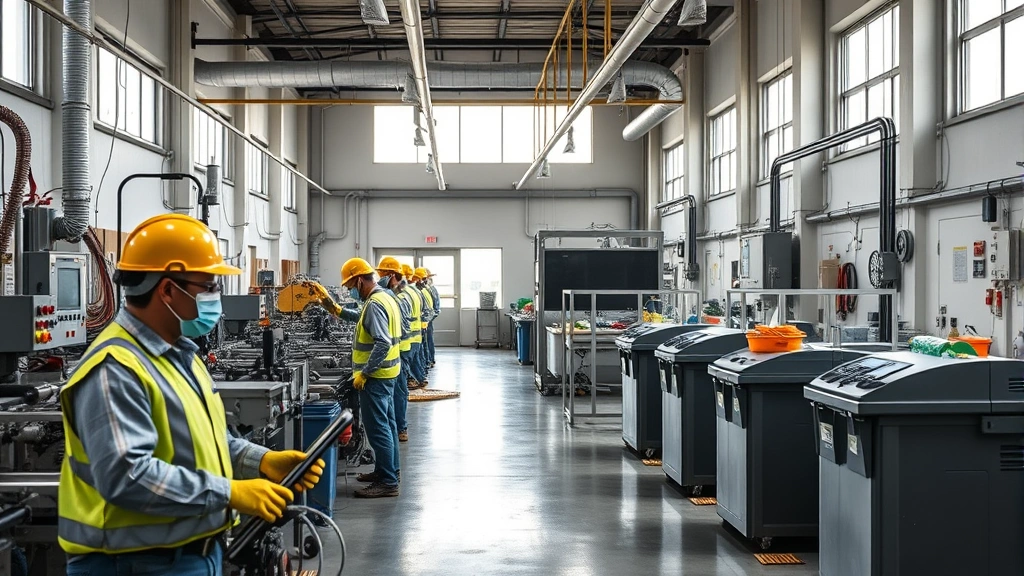
Ecological Constraints on Productive Activity
All work occurs within finite planetary boundaries. The concept of planetary boundaries—critical thresholds for climate change, biodiversity loss, land system change, freshwater use, and other biophysical systems—provides essential context for understanding sustainable work environments.
Current global economic activity exceeds Earth’s regenerative capacity. Humanity now uses approximately 1.7 Earths’ worth of resources annually, with wealthy nations consuming substantially more per capita. This overshoot creates ecological debts that manifest in work environments through resource scarcity, supply chain disruptions, and environmental regulations.
Climate change represents perhaps the most consequential ecological constraint affecting work environments. Rising temperatures, extreme weather events, changing precipitation patterns, and sea-level rise directly impact where productive activity can occur and under what conditions. Agricultural work environments face unprecedented stress from drought, flooding, and pest migration. Infrastructure-dependent sectors confront increased disruption risks. These changes disproportionately affect workers in vulnerable regions and industries.
Biodiversity loss—driven substantially by land-use changes required for economic production—undermines ecosystem resilience and productivity. Pollinator decline threatens agricultural work environments. Fisheries collapse from overharvesting creates unemployment in coastal communities. Forest degradation affects both timber workers and climate regulation services. Work environments cannot be sustainably designed without addressing the broader ecological systems upon which they depend.
Water scarcity increasingly constrains productive activity in many regions. Manufacturing, agriculture, and energy production are water-intensive. As freshwater becomes scarcer, competition intensifies, and work environments must adapt through efficiency improvements, alternative technologies, or relocation. This creates both economic and humanitarian challenges.
Labor Conditions and Environmental Justice
The relationship between work environments and environmental justice reveals how ecological degradation and labor exploitation often interconnect. Environmental justice frameworks recognize that pollution, resource depletion, and ecosystem destruction disproportionately affect marginalized communities and workers with minimal political power.
Global supply chains often concentrate hazardous production in low-income countries with weak environmental regulations and limited worker protections. Garment workers in Bangladesh, electronics manufacturers in China, agricultural laborers in Central America, and mining workers in Africa frequently work in environments combining severe occupational hazards with catastrophic ecosystem damage. These conditions reflect economic systems that externalize costs onto vulnerable populations.
The concept of just transition addresses how to shift toward sustainable economies while protecting workers dependent on unsustainable industries. Coal miners, petroleum workers, and others in carbon-intensive sectors face unemployment if economic systems decarbonize without providing alternative livelihoods. Equitable work environment transformation requires ensuring that environmental improvements don’t sacrifice worker welfare.
Research demonstrates that communities hosting polluting industries suffer elevated disease rates, reduced life expectancy, and compromised child development outcomes. These health impacts reflect work environment conditions that extend into surrounding residential areas. Workers carry occupational exposures home, affecting families. Industrial facilities contaminate air, water, and soil affecting broader populations.
Addressing environmental justice in work environments requires stakeholder engagement, community-centered decision-making, and regulatory frameworks that prevent cost externalization. Organizations genuinely committed to sustainable work environments must ensure that environmental improvements benefit affected communities rather than displacing problems elsewhere.
Measuring Environmental Impact in Workplaces
Comprehensive work environment assessment requires quantifying environmental impacts across multiple dimensions. Traditional workplace metrics—productivity, safety incidents, employee satisfaction—must expand to include environmental performance indicators.
Carbon footprint analysis measures greenhouse gas emissions from workplace operations. This includes direct emissions from on-site energy use and transportation, plus indirect emissions from supply chains and employee commuting. Organizations implementing how to reduce carbon footprint strategies often discover substantial efficiency opportunities while improving work environment quality.
Resource consumption metrics track water usage, material throughput, and waste generation. Facilities implementing water-efficient technologies and waste reduction programs typically reduce operational costs while decreasing environmental impact. These improvements often enhance worker comfort and health outcomes.
Life cycle assessment (LCA) methodologies evaluate environmental impacts across entire product lifecycles, from raw material extraction through manufacturing, distribution, use, and end-of-life disposition. LCA reveals hidden environmental costs in work processes, identifying opportunities for improvement.
Supply chain environmental auditing examines upstream impacts in supplier operations. Organizations purchasing materials or components produced in environmentally damaging conditions bear responsibility for those impacts. Comprehensive work environment assessment must include supply chain transparency and accountability.
Biodiversity impact assessment evaluates how workplace operations affect species and ecosystems. Land-intensive industries—agriculture, forestry, mining—must assess impacts on habitat, species populations, and ecological function. Increasingly, organizations are implementing biodiversity offset programs and habitat restoration initiatives.
Regulatory frameworks increasingly mandate environmental impact disclosure. The United Nations Environment Programme and regional environmental agencies establish standards for workplace environmental reporting. Organizations that exceed minimum compliance often gain competitive advantages in talent recruitment and market positioning.
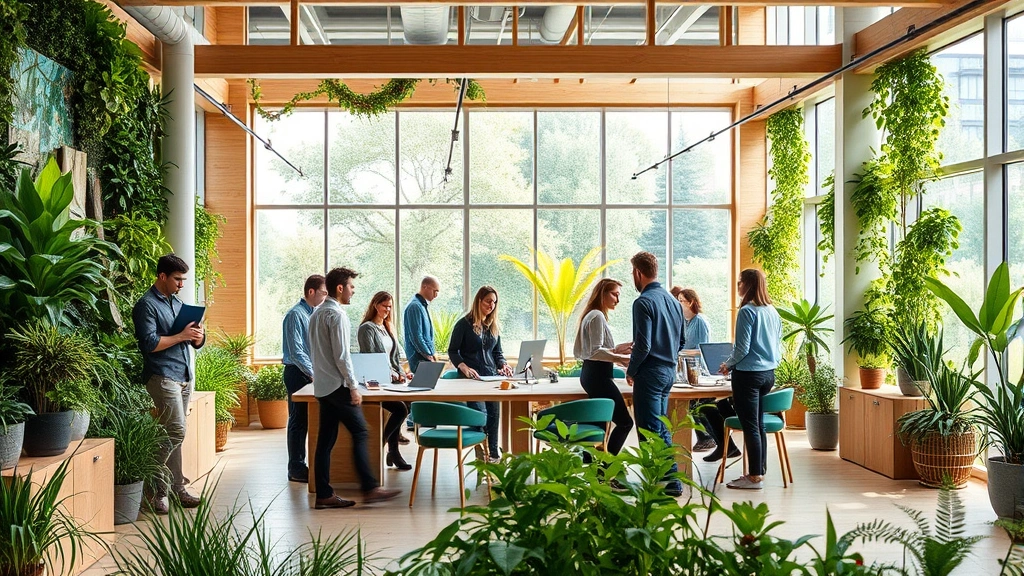
Sustainable Work Environment Practices
Leading organizations are fundamentally redesigning work environments to integrate ecological sustainability with economic productivity. These practices demonstrate that environmental responsibility and business success are complementary rather than contradictory.
Green building design incorporates renewable energy systems, efficient HVAC and lighting, water conservation technologies, non-toxic materials, and natural ventilation. LEED and similar certification systems provide frameworks for environmental workplace design. Studies consistently show that employees in green buildings report better health, higher productivity, and greater satisfaction.
Renewable energy adoption eliminates emissions from workplace operations while reducing long-term energy costs. Solar, wind, and geothermal systems increasingly provide cost-competitive power. Organizations using renewable energy demonstrate commitment to sustainable work environments while insulating themselves from fossil fuel price volatility.
Circular economy practices redesign production processes to eliminate waste and maintain material value. This includes designing products for durability and repairability, using recycled and recyclable materials, and establishing take-back programs. These practices reduce resource consumption while creating new employment opportunities in remanufacturing and materials recovery.
Remote work and flexible arrangements reduce transportation emissions while improving work-life balance. Distributed work models decrease commuting-related pollution and traffic congestion. However, organizations must ensure remote work doesn’t simply displace impacts to home energy consumption or increase overall resource use.
Supply chain transparency and ethical sourcing ensure that workplace sustainability extends throughout production networks. Organizations engaging suppliers in environmental improvement programs often discover mutual benefits through efficiency gains and cost reduction. Collaborative approaches prove more effective than punitive auditing.
Employee engagement in sustainability initiatives builds organizational culture around environmental responsibility. When workers participate in identifying environmental improvements, they develop ownership of solutions and often generate innovative ideas. This engagement simultaneously improves work environment quality and environmental performance.
For further insights on related topics, explore sustainable fashion brands, which demonstrate how entire industries can transition toward environmental responsibility while maintaining economic viability.
Future Trajectories and Policy Implications
The future of work environments will be substantially shaped by climate change, resource constraints, technological innovation, and policy evolution. Organizations preparing for these transitions today will maintain competitive advantage as conditions shift.
Climate adaptation will increasingly require work environment redesign. Industries will relocate away from climate-vulnerable regions. Agricultural work will shift northward. Water-intensive industries will concentrate in areas with reliable freshwater supplies. Organizations must develop climate resilience strategies for workplace operations and supply chains.
Technological innovation offers substantial opportunities for sustainable work environment transformation. Artificial intelligence can optimize energy use and resource consumption. Biotechnology can develop materials with lower environmental impact. Renewable energy technologies continue declining in cost while improving efficiency. Organizations leveraging these innovations can achieve environmental improvements while enhancing competitiveness.
Policy frameworks increasingly mandate environmental responsibility in work environments. Carbon pricing, extended producer responsibility, environmental impact assessments, and worker protection standards create regulatory contexts favoring sustainable practices. Organizations anticipating policy evolution can position themselves advantageously rather than scrambling to comply with unexpected regulations.
The World Bank and other development institutions increasingly condition financing on environmental and social governance standards. This capital reallocation toward sustainable enterprises will accelerate business model transformation across sectors.
Research in ecological economics journals continues developing frameworks for integrating environmental considerations into economic decision-making. These scholarly advances inform policy development and corporate strategy.
The transition toward regenerative work environments represents an emerging frontier. Rather than simply minimizing harm, regenerative approaches aim to actively improve environmental conditions through productive activity. Regenerative agriculture, restored ecosystems, and circular manufacturing exemplify this paradigm shift.
For additional perspective on how broader economic and environmental issues intersect with workplace sustainability, organizations should engage with comprehensive resources addressing systemic change.
FAQ
What is the primary definition of work environment?
The work environment encompasses the integrated system of physical, social, organizational, and environmental conditions affecting worker health, productivity, equity, and ecological sustainability. This includes immediate workplace conditions, organizational culture, and the broader environmental impacts of productive activity.
How do environmental factors influence work environment quality?
Environmental factors directly impact work environment quality through resource availability, climate conditions, pollution exposure, and ecosystem services. Degraded environments create workplace hazards, supply chain vulnerabilities, and health impacts affecting worker productivity and well-being.
What role does environmental justice play in work environment assessment?
Environmental justice ensures that environmental improvements and workplace sustainability don’t disproportionately burden marginalized communities. Equitable work environment transformation requires addressing how pollution and resource depletion affect vulnerable workers and communities.
How can organizations measure their work environment’s environmental impact?
Organizations can measure environmental impact through carbon footprint analysis, resource consumption tracking, life cycle assessment, supply chain auditing, and biodiversity impact evaluation. These metrics inform improvement strategies and demonstrate progress toward sustainability goals.
What are practical examples of sustainable work environment practices?
Sustainable practices include green building design, renewable energy adoption, circular economy implementation, remote work options, supply chain transparency, and employee engagement in sustainability initiatives. These approaches simultaneously improve work conditions and reduce environmental impact.
How will climate change affect future work environments?
Climate change will necessitate workplace relocation, adaptation of work processes to changing conditions, increased focus on supply chain resilience, and development of climate adaptation strategies. Organizations preparing today will maintain competitive advantage as climate impacts intensify.


