
Electric Cars’ Impact on Ecosystems: A Deep Dive
The transition to electric vehicles represents one of the most significant shifts in transportation policy over the past decade. Governments worldwide have invested billions in EV infrastructure, and consumers increasingly view electric cars as an environmental panacea. However, beneath this narrative lies a complex ecological reality that demands scrutiny. While electric vehicles do eliminate tailpipe emissions, their lifecycle environmental impact—from mining rare minerals to electricity generation—reveals a more nuanced picture of ecological trade-offs that warrant deeper investigation.
The question “why are electric cars bad for the environment?” is not a simple one with a straightforward answer. Rather, it invites us to examine the full supply chain, energy systems, and ecosystem consequences of mass electrification. This analysis reveals that electric vehicles are neither universally harmful nor entirely benign; instead, their environmental profile depends heavily on manufacturing practices, electricity grid composition, mining regulations, and end-of-life recycling infrastructure. Understanding these interconnections is essential for policymakers, economists, and consumers seeking to make truly sustainable transportation choices.

Mining and Mineral Extraction: The Hidden Ecological Cost
Lithium-ion batteries power the vast majority of electric vehicles, requiring substantial quantities of lithium, cobalt, nickel, and rare earth elements. The extraction of these minerals represents one of the most environmentally destructive aspects of EV production. World Bank research indicates that global lithium production has more than doubled since 2010, with projections suggesting another tripling by 2040. This explosive growth creates severe ecological consequences in mining regions, particularly in South America’s “Lithium Triangle” (Chile, Argentina, Bolivia) and cobalt-rich Democratic Republic of Congo.
Lithium extraction in South America employs evaporative mining techniques that consume approximately 500,000 gallons of water per ton of lithium produced. In Chile’s Atacama Desert, this process has depleted aquifers that indigenous communities depend upon for agriculture and survival. The water table has dropped by over 60 centimeters in some areas, directly threatening local ecosystems and human livelihoods. Similarly, nickel mining in Indonesia has devastated rainforests, with UNEP documenting habitat loss exceeding 100,000 hectares in recent years. Cobalt mining in the Democratic Republic of Congo involves both environmental degradation and severe labor violations, creating a humanitarian dimension to the EV ecosystem problem.
The concept of what does human environment interaction mean becomes particularly acute in mining contexts, where economic extraction directly conflicts with ecological preservation and indigenous rights. Mining operations generate acid mine drainage, contaminating watersheds and killing aquatic ecosystems. Tailings ponds release heavy metals into soil and water supplies, creating long-term bioaccumulation in food chains. These externalities are rarely fully accounted for in lifecycle assessments or carbon footprint calculations, representing a significant blind spot in EV environmental narratives.
Manufacturing Emissions and Resource Consumption
Battery production is energy-intensive, accounting for approximately 30-40% of an electric vehicle’s total lifecycle carbon footprint. A typical 60-kWh battery requires roughly 10-15 tons of CO2 equivalent to manufacture, depending on the electricity grid’s carbon intensity in the production facility. When batteries are manufactured in regions relying heavily on coal power—as occurs in parts of China and India—the manufacturing phase can generate emissions comparable to driving a conventional gasoline vehicle for 2-3 years.
The manufacturing phase also demands substantial quantities of water, chemicals, and industrial processes that generate hazardous waste. Battery cell production involves using N-methyl-2-pyrrolidone (NMP) as a solvent, which is toxic and requires energy-intensive recovery processes. Copper, aluminum, and steel components add additional extraction burdens. A single EV requires approximately 30 kilograms of copper—more than twice the amount in conventional vehicles—intensifying pressure on mining operations already stressed by demand.
Understanding human environment interaction in manufacturing contexts reveals how industrial ecosystems become destabilized through concentrated resource demands. Factory emissions contribute to local air pollution, affecting human health and vegetation in surrounding regions. Wastewater discharge from battery manufacturing plants can acidify soils and alter aquatic chemistry, reducing biodiversity in adjacent ecosystems. These localized impacts disproportionately affect communities near manufacturing facilities, often in developing nations with weaker environmental regulations.
Electricity Grid Composition and Carbon Intensity
The environmental benefit of electric vehicles depends fundamentally on how electricity is generated. In regions with clean energy grids—such as France (70% nuclear), Norway (97% hydroelectric), or Denmark (80% renewables)—EVs offer substantial carbon reductions over their lifetime. However, in coal-dependent grids like those in Poland, India, or parts of the United States, an EV charged with grid electricity may produce lifetime emissions comparable to or exceeding efficient hybrid vehicles.
The International Energy Agency reports that approximately 37% of global electricity generation still derives from fossil fuels. In many developing nations pursuing rapid industrialization, grid expansion relies primarily on coal power plants. An EV charged exclusively on a coal-heavy grid generates roughly 150-200 grams of CO2 per kilometer driven, only marginally better than efficient gasoline vehicles. This reality undermines claims that mass EV adoption automatically reduces transportation sector emissions.
Grid decarbonization must precede or accompany EV adoption for maximum environmental benefit. However, this creates a temporal problem: vehicles purchased today may operate for 10-15 years, while grid composition changes incrementally. Early EV adopters in coal-dependent regions may experience minimal climate benefits despite higher manufacturing impacts. This temporal mismatch between vehicle lifespan and grid transformation timescales represents a critical challenge for transportation policy.
Ecosystem Disruption from Battery Supply Chains
Beyond mining, the supply chain infrastructure supporting battery production generates ecosystem impacts across multiple dimensions. Transportation of raw materials—lithium from South America, cobalt from Africa, nickel from Indonesia—generates significant shipping emissions and creates risks of marine pollution through spills and ballast water contamination. The concentration of supply chains in specific geographic regions creates ecological vulnerabilities; disruptions in one mining region can cascade through global manufacturing networks, incentivizing rapid expansion of extraction in environmentally sensitive areas.
The development of mining infrastructure—roads, power plants, processing facilities—fragments habitats and disrupts migration corridors for wildlife. In Indonesia’s rainforests, nickel mining has destroyed habitat for endangered species including the Sumatran elephant and orangutan. In the Democratic Republic of Congo, cobalt mining threatens forest elephants and critically endangered species. These biodiversity impacts are rarely quantified in carbon footprint analyses, yet they represent genuine ecological losses that cannot be recovered through emissions reductions elsewhere.
Water pollution from mineral processing creates cascading ecosystem effects. Acid mine drainage alters aquatic pH levels, preventing fish reproduction and killing invertebrate communities that form the foundation of aquatic food webs. Heavy metal contamination bioaccumulates in predator species, affecting reproductive success and population viability. These impacts persist for decades or centuries after mining operations cease, representing long-term ecological debts that future generations must bear.
The relationship between economic activities and environmental quality illustrates why environment and natural resources trust fund renewal initiatives have become increasingly necessary. Mining communities often lack resources to remediate environmental damage, leaving degraded ecosystems and polluted watersheds as permanent legacies of resource extraction.
End-of-Life Recycling Challenges
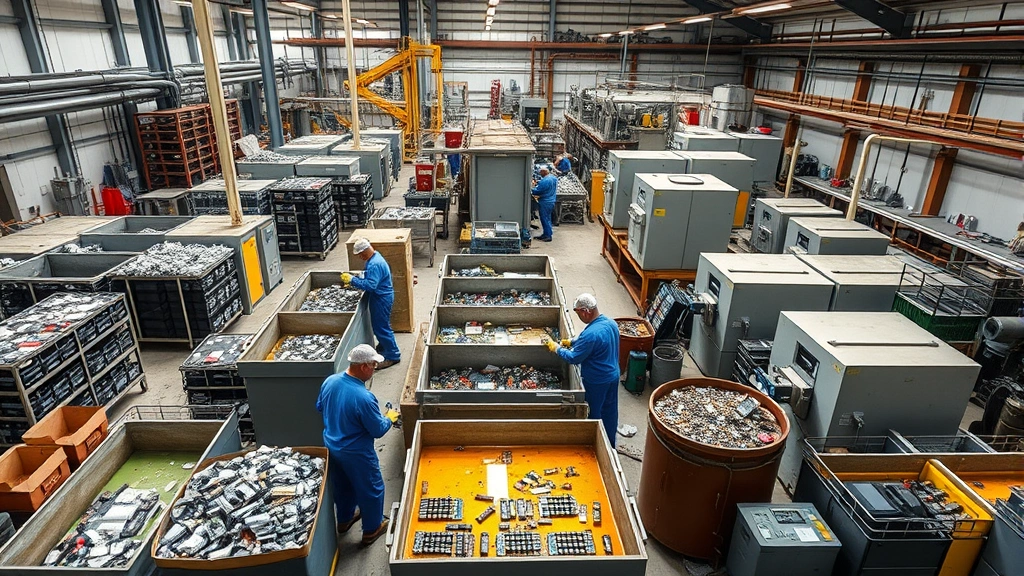
As the EV fleet ages, battery recycling emerges as a critical environmental and economic issue. While battery recycling can recover 95%+ of cobalt and nickel, current infrastructure remains underdeveloped. Only approximately 5% of lithium-ion batteries are recycled globally, with most ending up in landfills or informal recycling operations in developing countries. Informal recycling processes expose workers to toxic materials and release heavy metals into the environment without proper containment.
Battery recycling itself is energy-intensive and generates hazardous waste streams. The process requires dissolving battery components in strong acids, creating caustic residues that demand careful management. Pyrometallurgical recycling (using heat to extract metals) generates significant CO2 emissions, potentially offsetting some environmental benefits from reduced mining. Hydrometallurgical processes are less energy-intensive but require careful wastewater treatment to prevent environmental contamination.
The circular economy concept—wherein battery materials are continuously recycled—remains largely aspirational. Current recycling economics are marginally profitable only for high-cobalt batteries; as battery chemistry shifts toward cobalt-free compositions for cost reduction, recycling economics deteriorate further. This creates perverse incentives where manufacturers design batteries for low-cost manufacturing rather than easy recycling, perpetuating linear material flows and ongoing mining dependence.
Comparative Lifecycle Analysis
Comprehensive lifecycle assessments comparing EVs to conventional vehicles reveal nuanced outcomes. Studies published in Ecological Economics Review demonstrate that EVs achieve carbon parity with gasoline vehicles after 15,000-30,000 kilometers of driving in moderate-carbon grids, and after 50,000+ kilometers in coal-heavy grids. Over a vehicle’s 200,000-kilometer lifetime, EVs typically generate 50-70% lower lifecycle emissions than comparable gasoline vehicles in decarbonized grids, but only 10-30% reductions in coal-dependent regions.
However, lifecycle assessments typically exclude several environmental impacts. Ecosystem disruption from mining, water depletion, biodiversity loss, and soil contamination are often monetized at artificially low values or omitted entirely. If environmental costs were fully internalized—reflecting true ecological damage—the lifecycle advantage of EVs in coal-dependent regions would diminish substantially. Conversely, in renewable-powered grids, EVs would appear even more advantageous.
A critical gap in lifecycle analysis involves temporal dynamics. Mining impacts occur concentrated in space and time—destroying ecosystems immediately and intensely. Carbon emissions from grid electricity spread diffusely across decades and geographic regions. From an ecological perspective, concentrated, irreversible habitat destruction may warrant greater concern than distributed, temporally extended emissions, yet economic frameworks struggle to capture this distinction.
Policy Solutions and Sustainable Pathways
Addressing electric vehicles’ environmental challenges requires multifaceted policy interventions. First, mining regulation must be strengthened dramatically. UNEP environmental policy research recommends establishing binding international standards for mining operations, with enforcement mechanisms and significant penalties for violations. Mining companies should be required to restore ecosystems to pre-extraction conditions or establish permanent conservation areas of equivalent ecological value. Current remediation bonds are grossly inadequate, often covering less than 10% of actual restoration costs.
Second, grid decarbonization must accelerate alongside EV deployment. Renewable energy expansion, nuclear power development, and energy storage infrastructure should receive policy priority equal to or exceeding vehicle electrification initiatives. Carbon pricing mechanisms that reflect true environmental costs could incentivize grid transformation while making EV benefits more transparent to consumers.
Third, battery chemistry innovation must prioritize reducing reliance on problematic minerals. Research into sodium-ion, solid-state, and other alternative battery chemistries could reduce cobalt and nickel dependence. Policies should incentivize breakthrough battery technologies through R&D funding and preferential procurement policies. Simultaneously, battery efficiency improvements that reduce per-vehicle mineral demands deserve investment.
Fourth, recycling infrastructure must be developed before battery waste accumulates. Mandatory producer responsibility schemes could fund recycling facility development while incentivizing design-for-recycling approaches. Investment in advanced recycling technologies that recover lithium and other materials cost-effectively would reduce future mining pressure.
Fifth, supply chain transparency and accountability mechanisms are essential. Blockchain technology and supply chain tracing could identify mining practices and environmental impacts, allowing consumers to make informed choices. Certification systems similar to conflict minerals initiatives could exclude batteries from mines violating environmental standards. World Bank environmental governance programs could support developing nations in strengthening mining regulations and enforcement capacity.
Finally, understanding how to reduce carbon footprint comprehensively requires moving beyond vehicle electrification alone. Reducing overall transportation demand through land use planning, public transit investment, and remote work policies offers greater environmental benefits per dollar spent than vehicle electrification. Prioritizing sustainable transportation system redesign rather than simply replacing gasoline vehicles with electric ones represents a more ecologically rational approach.
FAQ
Are electric cars actually worse for the environment than gasoline cars?
Not universally. In renewable-powered grids, EVs offer 50-70% lower lifecycle emissions than gasoline vehicles. In coal-dependent grids, advantages diminish to 10-30%. However, mining and manufacturing impacts create concentrated ecological damage that carbon metrics alone don’t capture. The answer depends on grid composition, mining practices, and which environmental dimensions you prioritize.
How much water is lost to lithium mining?
Lithium extraction consumes approximately 500,000 gallons of water per ton produced. In the Atacama Desert, this has depleted aquifers by over 60 centimeters, directly threatening indigenous agriculture and local ecosystems. This represents one of the most significant environmental costs of EV production.
What percentage of EV batteries are recycled?
Currently, only about 5% of lithium-ion batteries are recycled globally. Most end up in landfills or informal recycling operations. Recycling infrastructure remains underdeveloped, though expansion is accelerating as older EVs reach end-of-life.
Can renewable energy grids make EVs truly sustainable?
In renewable-powered grids, EVs approach genuine sustainability from a carbon perspective. However, mining impacts remain problematic regardless of electricity source. Sustainable EVs require both grid decarbonization and mining practice reform simultaneously.
What alternative battery chemistries might reduce environmental impacts?
Sodium-ion, solid-state, and lithium iron phosphate batteries can reduce cobalt and nickel dependence. Research into alternative chemistries is ongoing, with some promising candidates reducing reliance on problematic minerals by 50-80%.
Should consumers avoid buying electric vehicles?
Not necessarily. In decarbonized grids and with responsible mining practices, EVs offer genuine environmental benefits. However, consumers should recognize that EV purchases alone don’t guarantee sustainability. Broader transportation system changes and mining regulation reform are equally important.


