
Siberian Tiger’s Role in Ecosystems: A Study on Environmental Impact and Conservation Economics
The Siberian tiger, scientifically known as Panthera tigris altaica, represents one of Earth’s most critically endangered apex predators, with fewer than 600 individuals remaining in the wild. This magnificent feline inhabits the Russian Far East, primarily in the Sikhote-Alin mountain range and surrounding temperate forests, where it serves as a keystone species whose ecological presence profoundly influences entire ecosystem dynamics. Understanding the Siberian tiger’s role in ecosystems extends beyond simple wildlife conservation—it encompasses complex ecological relationships, economic implications, and the interconnected nature of biodiversity loss with broader environmental challenges.
The significance of the Siberian tiger cannot be overstated in ecological terms. As an apex predator occupying the highest trophic level in its habitat, this species exerts what ecologists call “top-down control” on prey populations and vegetation patterns. The economic implications of preserving this species intertwine with landscape-scale conservation efforts, regional development policies, and the valuation of ecosystem services. Recent research demonstrates that apex predator conservation generates measurable economic returns through ecosystem stability, carbon sequestration, and sustainable tourism opportunities.
Ecological Significance and Trophic Cascades
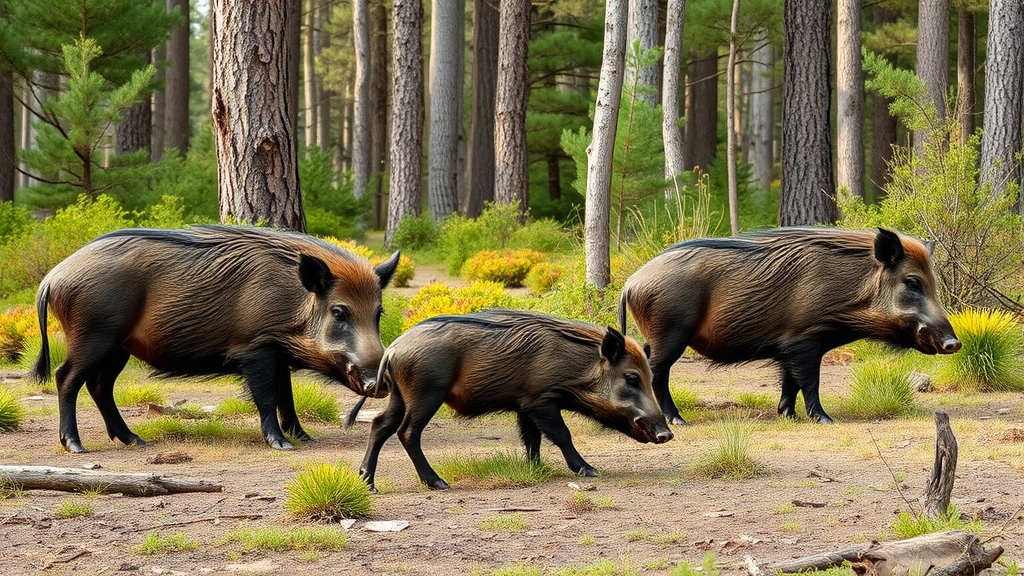
The Siberian tiger functions as a critical regulator within its ecosystem through mechanisms known as trophic cascades—indirect effects that propagate through food webs when apex predator populations change. When Siberian tigers hunt their primary prey species, including wild boar, sika deer, and red deer, they prevent herbivore overgrazing and maintain vegetation community structure. This cascading effect ultimately influences forest composition, nutrient cycling, and carbon storage capacity within the ecosystem.
Research from the World Bank‘s environmental economics division has documented how apex predator loss correlates with degraded ecosystem services valued at millions of dollars annually. In the case of the Siberian tiger, predation pressure on ungulate populations prevents the overpopulation that would otherwise lead to vegetation depletion, soil degradation, and reduced forest regeneration. The presence of a healthy tiger population essentially provides a natural population management service that would otherwise require costly human intervention.
The trophic cascade effects extend beyond immediate prey species. When tiger predation maintains appropriate herbivore densities, forests retain structural complexity, understory vegetation flourishes, and habitat quality improves for countless other species including birds, insects, and smaller mammals. This biodiversity support generates what economists term “option value”—the worth of preserving genetic and species diversity for potential future applications in medicine, agriculture, and biotechnology.
Habitat Requirements and Forest Ecosystem Health
Siberian tigers require vast territories of intact temperate forest, typically 400-1,000 square kilometers per individual, depending on prey availability and terrain. These requirements make them landscape-scale architects whose conservation necessitates protection of enormous forest blocks. The forests they inhabit—mixed conifer-deciduous systems at the temperate-boreal interface—represent some of Earth’s most productive carbon-sequestering ecosystems.
The economic connection between tiger habitat and climate mitigation has emerged as a crucial argument in conservation funding. Siberian tiger forests sequester approximately 200-400 tons of carbon per hectare in biomass and soils. Protecting the estimated 5,000-8,000 square kilometers of critical tiger habitat therefore represents a climate mitigation strategy worth billions in carbon sequestration value. This ecological-economic linkage aligns tiger conservation with global climate commitments under the Paris Agreement framework.
Forest health within tiger territories demonstrates measurable improvements compared to unprotected areas. Protected forests show greater tree species diversity, more complex age structure, and enhanced resilience to disturbances including disease and insect outbreaks. These characteristics directly correlate with sustained timber production, non-timber forest product availability, and long-term ecosystem stability. Research indicates that human-environment interaction within tiger conservation zones, when properly managed, can generate sustainable economic returns while maintaining ecological integrity.

Prey Population Dynamics and Predator-Prey Economics
The Siberian tiger’s diet consists almost entirely of large ungulates, with wild boar and sika deer comprising approximately 80% of prey biomass consumed. A single tiger requires approximately 2,000-2,500 kilograms of prey annually, translating to roughly 50-80 individual ungulates depending on size. This consumption pattern creates complex population dynamics that ripple through the ecosystem and directly impact human economic interests.
Wild boar populations, when unchecked by predation, expand dramatically and cause significant agricultural damage to surrounding regions. In areas where tiger populations have declined, wild boar populations have surged, resulting in crop damage estimates exceeding $10 million annually across the Russian Far East and northeastern China. From an economic perspective, maintaining viable tiger populations represents a cost-effective biological control mechanism compared to culling programs, fencing, and agricultural compensation schemes.
Sika deer populations similarly benefit from predator-mediated population regulation. Overabundant deer populations strip vegetation, increase forest fire susceptibility, and reduce forest regeneration—creating cascading economic losses in timber production and ecosystem services. Studies employing ecological economics methodologies demonstrate that the value of predator-mediated population control exceeds the economic losses from occasional livestock predation, even in regions with significant pastoralist communities.
The predator-prey relationship also influences nutrient cycling patterns. Tiger kills create carrion subsidies that support scavenging species including bears, wolves, wolverines, and corvids. This trophic subsidy effectively distributes nutrients across the landscape, enhancing soil fertility in localized patches and supporting biodiversity hotspots around kill sites. The economic valuation of these nutrient distribution services remains underexplored but potentially significant for understanding the full value of apex predator presence.
Human-Environment Interaction and Conservation Challenges
The relationship between Siberian tigers and human communities represents one of conservation’s most complex challenges, particularly regarding human-environment interaction in the Russian Far East. Local communities depend on forest resources including timber, hunting, and gathering for subsistence and income. Tiger conservation efforts must therefore balance ecological objectives with human economic needs—a challenge requiring sophisticated policy frameworks and community engagement strategies.
Poaching represents the most significant threat to Siberian tigers, driven by international demand for tiger parts in traditional medicine markets and trophy hunting. The economic incentives for poaching are substantial—a single tiger pelt can command $10,000-30,000 in black markets, while tiger bone products fetch premium prices in Asian markets. Combating this requires enforcement infrastructure, alternative livelihood programs, and demand reduction strategies that address the underlying economic drivers of illegal wildlife trade.
Habitat loss and fragmentation from logging, infrastructure development, and agricultural expansion continue degrading tiger range. The economic pressures driving habitat conversion are immense—timber extraction, mining, and agricultural expansion generate significant short-term revenues for regional governments and corporations. Transitioning toward sustainable forestry and alternative development pathways requires economic instruments including payments for ecosystem services, conservation easements, and sustainable forestry certification programs.
Community-based conservation initiatives have demonstrated promising results in several tiger range countries. These programs provide direct economic benefits to local communities through ecotourism revenue sharing, sustainable resource management opportunities, and employment in conservation programs. Research from UNEP indicates that community-based approaches generating local economic benefits show significantly higher long-term success rates compared to fortress conservation models excluding human communities.
Economic Valuation of Apex Predator Conservation
The economic case for Siberian tiger conservation rests on multiple value categories that extend far beyond traditional wildlife protection arguments. Economists increasingly employ ecosystem services valuation methodologies to quantify the economic worth of apex predator presence, demonstrating that conservation investment generates substantial returns.
Ecotourism represents a direct economic benefit measurable in current markets. Tiger viewing tourism in Russia generates approximately $5-10 million annually, with potential for significant expansion through sustainable tourism development. Comparative analysis of tiger range countries demonstrates that protected tiger populations support tourism industries worth hundreds of millions annually—far exceeding the economic returns from extractive industries like logging or hunting in equivalent landscapes.
Carbon sequestration services provided by tiger habitat forests represent a substantial economic value increasingly recognized in climate finance mechanisms. Using conservative carbon pricing of $50-100 per ton, the 5,000-8,000 square kilometers of critical tiger habitat provides annual carbon sequestration services valued at $500 million to $3.2 billion. This valuation transforms tiger conservation from a conservation cost into a climate mitigation investment generating measurable economic returns.
Biodiversity option value—the economic worth of preserving genetic diversity for potential future pharmaceutical and biotechnological applications—adds another dimension to conservation economics. Pharmaceutical discoveries derived from organisms in biodiverse ecosystems generate billions in annual revenues. The probability of pharmaceutical breakthroughs increases with preserved biodiversity, creating an expected value calculation that favors conservation investment even with modest probability assumptions.
Watershed protection and hydrological services provided by intact tiger habitat forests merit quantification. Forest ecosystems regulate water cycling, reduce flooding, improve water quality, and support fisheries. The economic value of these services to downstream communities and regional economies runs into hundreds of millions annually. Research employing hedonic pricing and contingent valuation methodologies supports these ecosystem services valuations.
Climate Change and Future Ecosystem Resilience
Climate change poses emerging threats to Siberian tiger populations through multiple pathways including prey habitat degradation, range shifts, and increased human-wildlife conflict. Simultaneously, maintaining apex predator populations enhances ecosystem resilience—the capacity to absorb disturbances and maintain function. This resilience has substantial economic value in contexts of increasing climate volatility.
Warmer temperatures are shifting the distribution of tiger prey species, with potential range expansions northward and upslope. These range shifts threaten to fragment tiger habitat and reduce prey availability in critical regions. Paradoxically, maintaining tiger populations with diverse genetic backgrounds enhances adaptive capacity and evolutionary potential—factors that improve long-term species viability under climate change scenarios.
The interconnection between tiger conservation and forest carbon storage becomes increasingly important as climate change accelerates. Forests supporting healthy tiger populations demonstrate greater structural complexity and carbon storage capacity. Protecting these forests aligns apex predator conservation with climate mitigation objectives, creating multiple value streams that justify investment from both biodiversity and climate perspectives.
Future ecosystem resilience depends critically on maintaining functional diversity including apex predators. Economic models incorporating climate uncertainty suggest that resilient ecosystems—those retaining apex predators and associated trophic complexity—provide more stable ecosystem services and economic returns under variable climate conditions. This resilience value, while difficult to quantify precisely, represents an increasingly important justification for apex predator conservation in contexts of accelerating environmental change.
Adaptive management frameworks incorporating climate projections are essential for long-term tiger conservation success. These frameworks must identify climate-resilient habitat corridors, anticipate prey species range shifts, and develop flexible conservation strategies responsive to emerging conditions. Investment in adaptive management infrastructure and monitoring systems represents essential infrastructure for maintaining apex predator populations amid climate change.
FAQ
How many Siberian tigers remain in the wild?
Current estimates indicate fewer than 600 Siberian tigers remain in wild populations, with approximately 400-500 in the Russian Far East and smaller populations in northeastern China. Population trends have stabilized in recent decades due to intensive conservation efforts, though numbers remain critically low.
What do Siberian tigers eat?
Siberian tigers primarily hunt large ungulates including wild boar, sika deer, and red deer. A single tiger requires approximately 2,000-2,500 kilograms of prey annually. They occasionally hunt smaller prey and may scavenge kills from other predators when preferred prey is scarce.
How does tiger predation affect forest ecosystems?
Through trophic cascades, tiger predation regulates herbivore populations, preventing overgrazing and maintaining vegetation community structure. This maintains forest health, enhances carbon storage, supports biodiversity, and provides ecosystem services including water regulation and nutrient cycling.
What threatens Siberian tigers today?
Primary threats include poaching for illegal wildlife trade, habitat loss from logging and development, prey depletion, and climate change impacts on habitat and prey species. Human-wildlife conflict in agricultural areas also contributes to tiger mortality.
How much does tiger conservation cost?
Conservation expenditures vary widely but typically range from $1-5 million annually per range country. These costs are substantially offset by ecosystem services value, ecotourism revenue, and climate mitigation benefits from forest protection.
Can tigers and humans coexist?
Yes, community-based conservation initiatives demonstrate that tigers and human communities can coexist when conservation generates local economic benefits through ecotourism, sustainable resource management, and direct compensation programs. Success requires genuine community engagement and equitable benefit distribution.
What is the connection between tiger conservation and climate change?
Tiger habitat forests provide significant carbon sequestration services, with conservation aligning apex predator protection with climate mitigation objectives. Additionally, maintaining functional ecosystems enhances resilience to climate change impacts, providing economic and ecological benefits.


