
Can Ecosystems Boost the Economy? Expert Insights on Natural Capital and Economic Growth
The relationship between ecosystems and economic prosperity has evolved from academic curiosity to urgent policy imperative. Governments, corporations, and financial institutions worldwide are recognizing that healthy ecosystems are not merely environmental amenities—they are foundational economic assets. This paradigm shift challenges the traditional separation of environmental and economic planning, suggesting instead that ecological integrity and economic vitality are inseparably linked.
Recent research demonstrates that ecosystem services generate trillions of dollars annually in economic value. From pollination supporting global agriculture to carbon sequestration mitigating climate impacts, natural systems perform functions that would be astronomically expensive to replicate artificially. The question is no longer whether ecosystems boost the economy, but rather how to quantify, protect, and optimize these relationships for sustainable prosperity.
Understanding this connection requires examining the mechanisms through which ecosystems create economic value, analyzing real-world case studies, and exploring the barriers to implementing ecosystem-based economic strategies. This analysis bridges environmental science, ecological economics, and policy development to provide comprehensive insights into nature’s economic contributions.
Ecosystem Services: The Foundation of Economic Value
Ecosystem services represent the tangible and intangible benefits that human populations derive from natural systems. These services operate across four primary categories: provisioning services (food, water, timber), regulating services (climate regulation, water purification, pollination), supporting services (nutrient cycling, soil formation), and cultural services (recreation, spiritual fulfillment, scientific knowledge).
The economic implications of ecosystem services are profound. A healthy forest ecosystem simultaneously produces timber (provisioning), regulates local climate and water cycles (regulating), maintains soil fertility and biodiversity (supporting), and provides recreation and cultural value (cultural). Traditional economic models often capture only the timber value, ignoring the 75-90% of total economic value derived from other services.
Research published by the United Nations Environment Programme indicates that ecosystem services worth approximately $125 trillion annually support global economic activity. This figure dwarfs global GDP of approximately $100 trillion, illustrating the critical importance of natural capital to all economic systems.
The concept of natural capital has gained prominence in environmental economics, treating ecosystems as productive assets requiring investment, maintenance, and sustainable management. Unlike manufactured capital, natural capital regenerates if managed properly, providing perpetual economic benefits. Understanding and valuing human environment interaction becomes essential for recognizing how economic activities depend on ecosystem health.

Quantifying Natural Capital in Economic Terms
Translating ecosystem services into economic metrics presents methodological challenges that economists and ecologists continue addressing. Several approaches have emerged to value natural capital: market price methods, replacement cost methods, contingent valuation, and benefit transfer approaches.
Market price methods assign value based on observable market transactions. Timber, fish, and agricultural products have established markets, making valuation straightforward. However, most ecosystem services lack direct markets, necessitating alternative approaches.
Replacement cost methodology estimates what it would cost to replace ecosystem functions artificially. Water purification provides a compelling example: natural wetlands filter water at costs ranging from $100-$1,000 per hectare annually, while constructed treatment facilities cost $5,000-$10,000 annually for equivalent capacity. This analysis demonstrates that maintaining natural wetlands represents superior economic investment compared to building engineered replacements.
Contingent valuation surveys people about their willingness to pay for environmental improvements, revealing non-market values. Studies consistently demonstrate that populations value ecosystem protection highly, suggesting markets significantly underestimate ecosystem worth by ignoring non-extractive values.
The World Bank’s environmental economics initiatives have pioneered inclusive wealth accounting, incorporating natural capital into national accounting systems. Countries implementing these frameworks discover that traditional GDP growth often masks natural capital depletion, revealing that apparent prosperity masks genuine economic decline.
Agriculture, Pollination, and Food Security Economics
Agricultural productivity depends fundamentally on ecosystem services, yet conventional accounting separates farming from its ecological foundations. Pollination services alone generate estimated $15-$20 billion in annual global economic value, with honeybees, wild bees, butterflies, and other pollinators essential for 75% of global food crops.
The economic vulnerability created by pollinator decline has motivated substantial research into valuation and protection strategies. Regions experiencing pollinator collapse face yield reductions, increased production costs, and food price inflation. California’s almond industry, dependent on honeybee pollination, has witnessed pollination costs triple over two decades as wild pollinator populations declined and managed hive rental prices increased proportionally.
Soil health represents another critical ecosystem service with profound economic implications. Healthy soils support agricultural productivity, store carbon, regulate water infiltration, and filter contaminants. Soil degradation costs the global economy an estimated $400 billion annually through reduced productivity and increased input requirements. Conversely, regenerative agriculture practices that enhance soil ecosystem function demonstrate yield increases of 10-30% while reducing input costs and building natural capital.
Biodiversity within agricultural systems provides economic resilience. Polyculture systems and agroforestry approaches that maintain diverse plant and animal communities demonstrate greater productivity stability, reduced pest pressures requiring chemical intervention, and enhanced adaptive capacity to climate variability. The economic case for sustainable practices that support natural systems extends beyond environmental ethics to fundamental business economics.
Water Systems and Hydrological Services
Freshwater ecosystems provide essential hydrological services including water filtration, storage, and regulation. Forests, wetlands, and riparian zones function as natural water infrastructure, performing services that otherwise require expensive engineered systems.
Watershed protection through ecosystem conservation often proves more cost-effective than water treatment infrastructure. New York City’s watershed protection strategy exemplifies this approach: investing $1.5 billion in ecosystem restoration and agricultural best practices protection proved more economical than constructing $8-10 billion in water treatment facilities. This 6-7 fold cost advantage demonstrates the economic logic of ecosystem preservation.
Water-dependent industries including agriculture, manufacturing, and power generation collectively consume 70% of global freshwater. Ecosystem degradation reducing water quality and availability creates cascading economic costs. Industrial water treatment expenses rise, agricultural productivity declines, and hydroelectric power generation decreases. Quantifying these impacts reveals that protecting water-related ecosystems represents fundamental economic protection for water-dependent sectors.
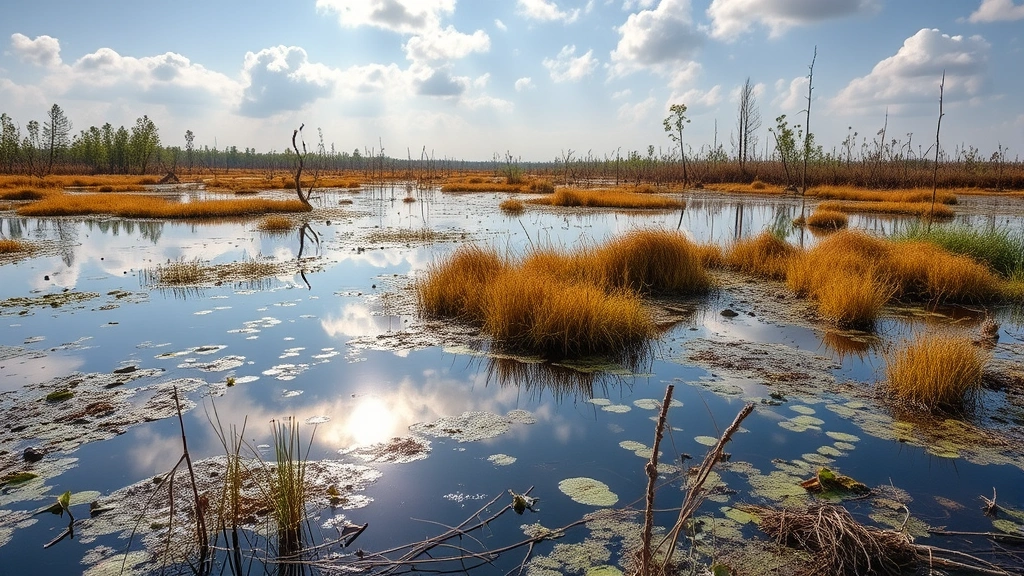
Wetland ecosystems provide particularly high-value hydrological services. Wetlands regulate water flows, reducing flood damages while building water reserves during dry periods. A single hectare of wetland provides flood protection services valued at $2,000-$5,000 annually, while simultaneously supporting biodiversity, fisheries, and carbon storage.
Carbon Sequestration and Climate Economics
Ecosystem-based climate mitigation has gained prominence as carbon markets expand and climate damages accelerate. Forests, wetlands, grasslands, and marine ecosystems sequester atmospheric carbon, providing climate regulation services with increasing economic value as carbon pricing mechanisms emerge.
Forest carbon sequestration rates vary by ecosystem type, age structure, and management practices. Mature tropical forests sequester 2-4 metric tons of carbon annually per hectare, while temperate forests sequester 1-2 metric tons annually. At current carbon prices ranging from $10-$100 per metric ton, forest carbon sequestration generates $20-$400 in annual value per hectare—often exceeding timber harvest values in sustainability analyses.
Nature-based climate solutions including reforestation, wetland restoration, and grassland protection offer co-benefits beyond carbon sequestration. These approaches simultaneously enhance biodiversity, improve water quality, support livelihoods, and build community resilience. Research from ecological economics journals demonstrates that integrated approaches addressing multiple ecosystem services generate greater total economic value than single-purpose interventions.
The economic case for ecosystem protection strengthens as climate damages accelerate. Extreme weather events, agricultural disruption, and infrastructure damage impose escalating costs on global economies. Protecting ecosystems that buffer climate impacts represents investment in economic resilience, with returns magnified by avoided climate damages.
Understanding how to reduce carbon footprint through ecosystem restoration connects individual action to broader economic benefits. Ecosystem protection efforts generate measurable climate mitigation value while providing immediate local economic benefits through employment and enhanced resource productivity.
Tourism and Recreation Economy
Ecosystem-based tourism generates substantial economic value, supporting livelihoods while creating incentives for ecosystem protection. Global nature tourism generates estimated $600-$800 billion annually, supporting millions of jobs while funding ecosystem conservation.
Protected areas and natural landscapes attract tourists willing to pay premium prices for authentic nature experiences. Costa Rica’s ecotourism sector generates $3-4 billion annually, representing 15-20% of national tourism revenue despite the country comprising only 0.03% of global land area. This concentration of economic value on small geographic areas demonstrates the premium value of pristine, biodiverse ecosystems.
Economic multiplier effects amplify direct tourism spending. Tourist expenditures support local businesses, transportation providers, hospitality workers, and guide services, generating indirect economic impacts 1.5-2.5 times direct tourism spending. Communities protecting ecosystems benefit from sustained economic activity supporting local livelihoods while maintaining natural capital.
The economic resilience of nature-based tourism exceeds extractive industries. While timber, mining, and fishing operations deplete natural capital, tourism maintains ecosystem integrity essential for long-term viability. This distinction creates fundamentally different economic trajectories: extractive industries generate short-term revenues followed by economic collapse as resources deplete, while tourism sustains economic activity indefinitely if ecosystem health is maintained.
Case Studies: Ecosystems Driving Regional Prosperity
Real-world examples demonstrate ecosystem economic contributions across diverse contexts and scales. These case studies illustrate mechanisms through which ecosystem protection generates measurable economic benefits.
Madagascar’s Mangrove Restoration Economy: Mangrove ecosystems provide fishery support, coastal protection, and carbon sequestration. Madagascar’s mangrove restoration initiatives have expanded fishery productivity by 20-30% while reducing coastal vulnerability to cyclones and sea-level rise. The economic value of avoided storm damage alone justifies restoration investments, with fishery improvements providing additional returns.
Kenya’s Maasai Conservancies: Community-managed conservation areas protecting wildlife ecosystems generate $500-$1,000 per hectare annually through tourism, compared to $20-$50 annually from livestock grazing. This 10-25 fold economic advantage has motivated ecosystem protection while supporting community livelihoods and maintaining cultural practices.
Indonesia’s Peatland Protection: Peatland ecosystems store vast carbon quantities while supporting biodiversity and providing livelihoods through sustainable extraction. Protecting peatlands from conversion generates estimated $3-5 billion annually in climate mitigation value while avoiding agricultural productivity losses and community disruption.
Germany’s Renewable Energy Transition: Ecosystem-based energy systems including renewable energy for homes demonstrate how ecosystem protection aligns with economic competitiveness. Germany’s renewable energy sector employs 300,000+ workers while reducing fossil fuel dependency and ecosystem damage from coal mining.
Barriers to Ecosystem-Based Economic Integration
Despite compelling economic evidence, ecosystem considerations remain marginalized in economic planning. Multiple structural barriers impede integration of natural capital into economic decision-making.
Temporal Misalignment: Ecosystem service flows operate on decadal and centennial timescales, while financial markets emphasize quarterly returns. This temporal mismatch creates incentives to liquidate natural capital rapidly rather than manage it sustainably. Short-term financial gains from ecosystem conversion exceed the present value of perpetual sustainable flows under standard discount rates.
Market Failures: Ecosystem services lacking commercial markets receive zero economic value in conventional accounting. This systematic undervaluation of non-market services perpetuates decisions that destroy ecosystem value while appearing economically rational within incomplete accounting frameworks.
Externality Blindness: Ecosystem damage remains unpriced in most economic transactions. Agricultural products reflecting water pollution costs, atmospheric carbon emissions, and biodiversity loss fail to capture these externalities in market prices. Consumers and producers lack price signals indicating true resource scarcity and ecosystem impacts.
Institutional Fragmentation: Environmental and economic institutions operate independently, preventing integrated decision-making. Environmental ministries lack authority over economic policy, while economic planners ignore environmental impacts. This institutional separation ensures that economic growth proceeds without ecosystem constraints.
Capital Concentration: Short-term financial returns from ecosystem conversion concentrate in narrow corporate interests, while ecosystem service benefits disperse across society. This distribution asymmetry creates political power imbalances favoring conversion despite aggregate economic losses.
Policy Frameworks and Implementation Strategies
Overcoming barriers to ecosystem-based economic integration requires policy innovations addressing market failures, institutional fragmentation, and temporal misalignment.
Natural Capital Accounting: Integrating ecosystem services into national accounting systems reveals true economic productivity. Countries implementing inclusive wealth accounting discover that natural capital depletion offsets GDP growth, indicating genuine economic decline masked by conventional metrics. This accounting transparency creates political pressure for ecosystem protection policies.
Payment for Ecosystem Services: Direct payments for ecosystem service provision create market mechanisms valuing non-market services. Programs compensating landowners for forest carbon sequestration, water purification, or biodiversity protection align private incentives with ecosystem conservation. While imperfect, these mechanisms generate revenue streams supporting ecosystem management.
Carbon Pricing: Carbon taxes or cap-and-trade systems pricing atmospheric carbon create economic incentives for ecosystem protection and restoration. As carbon prices rise, ecosystem-based climate solutions become increasingly competitive with fossil fuel alternatives, driving investment in nature-based mitigation.
Environmental Impact Pricing: Extending carbon pricing to other ecosystem impacts—water pollution, biodiversity loss, soil degradation—would comprehensively price environmental externalities. This pricing structure would align market signals with ecological reality, making ecosystem-destructive activities economically unattractive.
Institutional Integration: Creating integrated environmental-economic institutions enables holistic decision-making. Governments consolidating environmental and economic planning can evaluate development proposals against ecosystem impacts, preventing decisions generating short-term economic gains at the cost of long-term ecological and economic losses.
Long-Term Investment Frameworks: Pension funds, sovereign wealth funds, and development banks increasingly allocate capital to ecosystem-based projects with long-term returns. These institutional investors, managing multigenerational time horizons, naturally align with ecosystem management timescales, creating capital flows supporting ecosystem protection.
The Ecorise Daily blog explores these policy innovations in depth, examining implementation challenges and success stories across diverse contexts. Understanding environmental perspectives from diverse stakeholders illuminates the values and interests shaping ecosystem policy.
FAQ
How much economic value do ecosystems provide annually?
Ecosystem services generate approximately $125 trillion in annual economic value globally, according to UNEP estimates. This vastly exceeds global GDP of ~$100 trillion, demonstrating that natural capital exceeds all human-produced capital combined. However, substantial ecosystem service value remains unpriced in markets, leading to systematic underestimation in economic decision-making.
Which ecosystem services provide the greatest economic value?
Climate regulation, water purification, and pollination represent the highest-value ecosystem services. Climate regulation through carbon sequestration and temperature moderation provides ~$30-40 trillion annually. Water purification and supply provide ~$20-30 trillion. Pollination services support $15-20 billion in agricultural production. These services are fundamental to all economic activity, making their protection essential for economic prosperity.
Can ecosystem restoration generate positive economic returns?
Yes, extensive research demonstrates that ecosystem restoration typically generates positive economic returns within 5-20 years, with returns accelerating thereafter. Wetland restoration, forest regeneration, and grassland protection generate returns through improved water quality, carbon sequestration, biodiversity support, and enhanced productivity. The challenge lies in financing restoration during the initial investment period before returns materialize.
How do carbon markets value ecosystem sequestration?
Carbon markets assign monetary value to carbon sequestration through trading mechanisms. Current carbon prices range from $10-100 per metric ton, with prices rising as climate policy strengthens. At these prices, forest carbon sequestration generates $20-400 annually per hectare, often exceeding timber harvest value and creating economic incentives for ecosystem protection over conversion.
What barriers prevent ecosystem protection from becoming standard economic practice?
Temporal misalignment between ecosystem timescales (decades to centuries) and financial markets (quarterly returns), market failures leaving non-market ecosystem services unpriced, institutional fragmentation separating environmental and economic planning, and capital concentration benefiting short-term conversion over long-term sustainability create barriers to ecosystem-based economics. Overcoming these barriers requires policy innovation addressing these structural issues.
How do regents living environment concepts relate to ecosystem economics?
Regents living environment curriculum emphasizes understanding human-environment relationships, ecosystem structure and function, and sustainable resource management—foundational concepts for recognizing ecosystem economic contributions. These educational frameworks prepare students to integrate ecological knowledge with economic analysis, essential for addressing sustainability challenges in professional contexts.


