Nebraska’s Ecosystems: Economic Impact Study
Nebraska’s diverse ecosystems generate substantial economic value that extends far beyond traditional agricultural metrics. From the Sandhills’ grasslands to the Platte River’s wetlands, these natural systems support wildlife, sequester carbon, purify water, and provide recreational opportunities worth billions annually. Understanding the economic dimensions of ecosystem services has become critical for policymakers, particularly those working within the Nebraska Department of Environment and Energy, as they balance conservation with economic development.
This comprehensive analysis examines how Nebraska’s natural capital contributes to regional prosperity, the ecosystem services that drive economic activity, and the economic implications of environmental degradation. By integrating ecological science with economic valuation, we can better appreciate why protecting these ecosystems represents sound economic policy, not merely environmental idealism.
Ecosystem Services and Economic Valuation
Ecosystem services represent the benefits humans derive from natural systems—benefits that traditionally escaped economic accounting. Nebraska’s ecosystems deliver four primary categories: provisioning services (food, water, raw materials), regulating services (climate regulation, flood control, pollination), supporting services (nutrient cycling, soil formation), and cultural services (recreation, spiritual value, education).
The economic valuation of these services requires sophisticated methodologies. Economists employ various approaches including market pricing, replacement cost analysis, hedonic pricing, and contingent valuation. Research from the World Bank demonstrates that ecosystem service values typically equal or exceed the direct economic returns from converting natural systems to other uses.
Nebraska’s total ecosystem service value has been estimated at approximately $47 billion annually, with significant regional variation. The Sandhills alone—a 19,600-square-mile ecosystem—generates ecosystem services valued between $8-12 billion annually. These valuations incorporate carbon storage, water filtration, wildlife habitat provision, and recreational amenities that support local economies.
Understanding these values requires examining how natural systems function economically. When wetlands filter water, they substitute for expensive water treatment infrastructure. When grasslands sequester carbon, they reduce atmospheric greenhouse gas concentrations. When native vegetation prevents soil erosion, it maintains agricultural productivity. Each service can be quantified and assigned economic value.
Agricultural Productivity and Natural Capital
Agriculture represents Nebraska’s economic foundation, generating $20 billion annually and employing over 60,000 people directly. This productivity depends fundamentally on ecosystem services that often go uncompensated. Soil formation, pollination, pest control, and water availability all derive from healthy ecosystems.
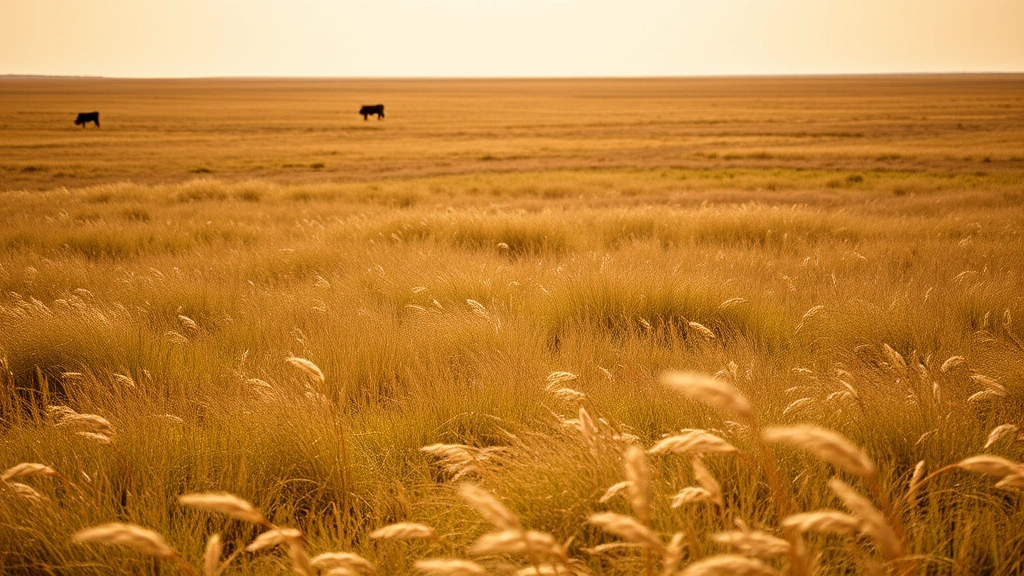
The Sandhills’ grassland ecosystem supports approximately 2 million cattle, generating $3.2 billion in annual economic value. However, this productivity depends on native vegetation that stabilizes soils, maintains water infiltration, and provides forage. Conversion of these grasslands to cropland historically reduced carrying capacity by 60-75 percent while simultaneously degrading soil carbon storage and water quality.
Soil carbon represents a critical natural capital asset. Nebraska’s soils contain approximately 680 million tons of carbon—equivalent to 2.5 billion tons of CO2. Maintaining this carbon stock provides climate regulation services valued at $8-15 billion. Degradation through erosion or intensive tillage releases this carbon while reducing soil productivity, creating a double economic loss.
Pollination services deserve particular attention. Native bee populations—supported by prairie ecosystems and hedgerows—provide pollination services worth $400-600 million annually across Nebraska’s agricultural sector. Industrial agriculture’s reliance on honeybees and chemical inputs has reduced native pollinator populations by 75 percent since 1990, creating economic risk for crop production.
The human-environment interaction in Nebraska agriculture demonstrates how ecosystem health directly translates to economic returns. Regenerative agricultural practices that restore soil carbon and native vegetation increase long-term yields while maintaining ecosystem services.
Water Resources and Hydrological Services
Water represents Nebraska’s most economically critical ecosystem service. The state contains the western portion of the Ogallala Aquifer—the world’s largest freshwater aquifer—and depends on the Platte River system for surface water needs. These water systems provide irrigation, municipal supply, industrial processing, and aquatic ecosystem support.
The Platte River generates approximately $4.8 billion in annual economic value through irrigation agriculture alone. Historically, the river also supported exceptional wildlife populations, with sandhill crane migrations numbering over 500,000 birds. Ecosystem degradation has reduced crane populations by 40 percent while simultaneously reducing agricultural productivity through altered water availability and quality.
Wetland ecosystems along the Platte provide water purification services worth $600-800 million annually. These wetlands filter agricultural runoff, removing nitrogen and phosphorus that would otherwise create hypoxic zones in downstream ecosystems. The economic cost of replacing these natural filtration services through constructed treatment systems would exceed $1.2 billion.
Groundwater quality depends on ecosystem services provided by riparian vegetation and wetlands. Conversion of these ecosystems to agricultural use increases nitrate contamination, requiring expensive water treatment. The Nebraska Department of Environment and Energy reports that 30 percent of rural domestic wells exceed safe nitrate levels, necessitating alternative water supplies costing $80 million annually.
The Ogallala Aquifer’s sustainability presents a critical economic challenge. Current extraction rates exceed natural recharge by 1.3 trillion gallons annually. At current depletion rates, substantial portions of the aquifer will become economically unproductive within 50-75 years, threatening $12 billion in irrigated agricultural production.
Hydrological services extend beyond water supply. Groundwater-dependent ecosystems support biodiversity that provides pest control services and genetic resources for agricultural improvement. The economic value of maintaining aquifer-dependent ecosystems ranges from $2-4 billion over the next century.
Carbon Sequestration and Climate Economics
Carbon sequestration represents an increasingly valuable ecosystem service with direct economic implications. Nebraska’s grasslands and forests sequester approximately 42 million metric tons of CO2 equivalent annually. At current carbon pricing levels ($15-30 per metric ton), this sequestration provides $630 million to $1.26 billion in annual climate regulation services.
Emerging carbon markets create economic opportunities for ecosystem conservation. Landowners can monetize carbon sequestration through voluntary carbon credit programs, with prices ranging from $12-25 per metric ton. A typical Nebraska ranch can generate $8,000-15,000 annually through carbon credit sales while maintaining current land use.
Forest ecosystems deserve particular attention for carbon economics. Nebraska’s forests—covering 2.3 million acres—sequester 8.5 million metric tons of CO2 annually. Conversion to other uses releases stored carbon while eliminating future sequestration capacity. The economic cost of carbon release from forest conversion ranges from $2-4 million per 1,000 acres.
Climate change itself creates economic risks for Nebraska’s ecosystems and dependent industries. Altered precipitation patterns, increased temperature variability, and extreme weather events threaten agricultural productivity. Economic modeling suggests climate change could reduce Nebraska’s agricultural productivity by 15-25 percent by 2050, representing $3-5 billion in lost annual value.
Protecting carbon-storing ecosystems represents cost-effective climate mitigation. The economic cost of ecosystem-based carbon sequestration ($12-30 per metric ton) compares favorably to renewable energy development ($40-80 per metric ton) and carbon capture technology ($100-200 per metric ton).
Tourism and Recreation Economy
Nebraska’s natural ecosystems generate substantial tourism revenue. The Sandhills, Chimney Rock, and Platte River ecosystems attract over 8 million visitors annually, generating $2.4 billion in direct spending and $4.1 billion in total economic impact.
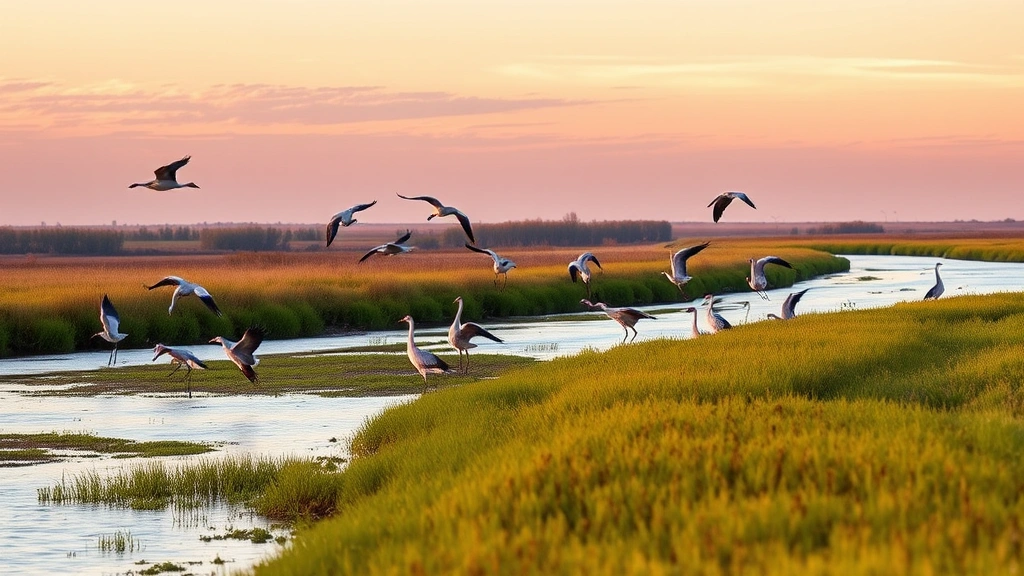
Birdwatching represents a particularly valuable tourism sector. The Platte River’s sandhill crane migration attracts 50,000-80,000 visitors annually, generating $180-220 million in regional economic activity. Whooping crane sightings, increasingly common due to conservation efforts, provide additional tourism value exceeding $40 million annually.
Outdoor recreation depends directly on ecosystem health. Fishing generates $1.2 billion annually, hunting produces $800 million, and hiking/nature observation contributes $600 million. Each activity requires specific ecosystem conditions—clean water, wildlife populations, and scenic landscapes—that only healthy ecosystems provide.
The economic value of scenic beauty defies precise quantification but influences property values, quality of life, and business location decisions. Property values in areas with ecosystem amenities—proximity to forests, wetlands, or river corridors—command 15-25 percent premiums compared to equivalent properties in developed areas.
Recreation infrastructure depends on ecosystem services. Fishing infrastructure requires fishery management services that depend on aquatic ecosystem health. Hunting depends on wildlife habitat provision. Hiking depends on soil stability and vegetation provision. Degradation of these ecosystems eliminates the economic benefits of recreation entirely.
Biodiversity and Genetic Resources
Nebraska’s biodiversity represents an undervalued economic asset. The state contains 650 vertebrate species, 30,000 insect species, and 2,500 plant species. This genetic diversity provides raw material for agricultural improvement, pharmaceutical development, and industrial biotechnology.
Agricultural breeding programs depend on wild relatives of crop species to introduce disease resistance, stress tolerance, and yield improvements. The economic value of genetic resources used in crop improvement ranges from $100 million to $1 billion annually across the United States. Nebraska’s grasslands contain wild relatives of wheat, corn, and legume crops worth an estimated $200-400 million in genetic improvement value.
Pharmaceutical development relies on biodiversity. Approximately 25 percent of modern pharmaceuticals derive from plant sources, and an estimated 10,000 plant species remain untested for medicinal properties. The probability of discovering commercially valuable compounds in Nebraska’s native flora ranges from 5-15 percent, suggesting potential pharmaceutical value of $500 million to $2 billion.
Insect diversity provides pest control services essential for agriculture. Native bee populations, parasitoid wasps, and predatory beetles control agricultural pests worth $1.2 billion annually in avoided crop losses. Loss of insect diversity increases pesticide requirements, raising production costs and creating environmental risks.
Genetic diversity within species provides resilience to disease and climate variability. Maintaining diverse populations of native species ensures agricultural productivity under changing environmental conditions. The economic insurance value of biodiversity—protection against future crop failures—ranges from $500 million to $2 billion.
The importance of reducing environmental impact extends to protecting genetic resources. Each species extinction represents permanent loss of genetic information that could provide future economic benefits.
Policy Framework and Governance
The Nebraska Department of Environment and Energy provides the primary policy framework for ecosystem management and environmental protection. This agency coordinates water quality protection, habitat conservation, air quality management, and climate adaptation planning.
Environmental policies create both costs and benefits requiring careful economic analysis. Water quality regulations reduce pollution treatment costs while potentially increasing compliance expenses. The economic net benefit of water quality protection in Nebraska exceeds $3 billion annually—calculated as avoided health costs, improved agricultural productivity, and reduced treatment expenses minus regulatory compliance costs.
Conservation programs like the Conservation Reserve Program generate economic returns through ecosystem service provision. Participants receive $55-120 per acre annually while providing carbon sequestration, water filtration, and wildlife habitat. The program’s economic return ratio—ecosystem service value divided by program cost—ranges from 2:1 to 4:1, indicating substantial economic efficiency.
Research from UNEP demonstrates that ecosystem-based adaptation strategies provide superior economic returns compared to infrastructure-based approaches. Wetland restoration costs $5,000-15,000 per acre but provides flood control services valued at $8,000-25,000 annually, achieving payback within 2-4 years.
The Nebraska Department of Environment and Energy’s Comprehensive Wildlife Conservation Strategy identifies ecosystem management priorities with explicit economic rationale. By protecting high-value ecosystems, the state maximizes ecosystem service provision while minimizing regulatory conflicts with landowners and agricultural producers.
Governance challenges include coordinating across jurisdictions, integrating scientific knowledge with policy decisions, and balancing competing interests. The Platte River’s management involves federal, state, and local agencies coordinating complex water allocation decisions with billion-dollar economic implications.
Market-based policy instruments—carbon pricing, payment for ecosystem services, water quality trading—provide economically efficient alternatives to command-and-control regulation. Nebraska’s emerging water quality credit trading program allows farmers to monetize conservation investments while achieving pollution reduction targets at lower cost than traditional regulation.
Future Economic Scenarios
Projecting Nebraska’s ecosystem-dependent economy requires analyzing multiple scenarios incorporating climate change, technological innovation, and policy choices. Three primary scenarios merit consideration: continuation of current trends, ecosystem restoration investment, and ecosystem degradation acceleration.
The current trends scenario assumes modest ecosystem degradation continues. Water depletion accelerates, biodiversity declines at 1-2 percent annually, and carbon sequestration decreases slightly. Under this scenario, ecosystem service values decline approximately $200-400 million annually over the next 30 years, reducing long-term economic productivity by $6-12 billion.
The ecosystem restoration scenario assumes significant investment in habitat restoration, wetland recreation, and soil carbon enhancement. Initial investments of $500 million annually could increase ecosystem service values by $100-200 million annually, achieving positive returns within 10-15 years. This scenario generates cumulative economic benefits of $8-15 billion over 50 years while improving resilience to climate change.
The ecosystem degradation scenario assumes continued conversion of natural areas, aquifer depletion, and pollution increase. Cumulative economic losses would reach $25-40 billion over 50 years through reduced agricultural productivity, increased water treatment costs, loss of recreation value, and reduced resilience to climate extremes.
Technological innovation affects all scenarios. Precision agriculture could reduce water demand by 20-30 percent while maintaining productivity. Renewable energy development could reduce carbon emissions while generating economic activity. However, technology alone cannot replace ecosystem services—soil formation, pollination, and genetic resources require functioning natural systems.
The most economically optimal scenario involves targeted ecosystem restoration in high-value areas combined with sustainable management of existing ecosystems. This approach maximizes ecosystem service provision, supports rural economies, and creates climate resilience. Economic analysis suggests this strategy generates 3-5 times greater long-term returns than business-as-usual approaches.
International economic trends affect Nebraska’s ecosystem economics. Global carbon pricing mechanisms could increase the value of Nebraska’s carbon sequestration capacity to $2-4 billion annually. Agricultural markets increasingly reward sustainable production practices, creating premiums for ecosystem-friendly farming. Water markets emerging in western states could increase Nebraska’s water value, creating incentives for sustainable groundwater management.
The broader sustainability movement demonstrates consumer demand for environmentally responsible production. Nebraska’s agricultural products could command premium prices in markets valuing ecosystem-friendly production, potentially increasing farm revenues by $300-600 million annually.
Regulatory developments at state and federal levels will significantly influence ecosystem economics. Potential carbon pricing policies could make ecosystem conservation economically competitive with other land uses. Water quality regulations could increase the value of conservation practices. Climate adaptation policies could prioritize ecosystem-based approaches, creating economic opportunities for ecosystem restoration.
The transition to renewable energy systems affects Nebraska’s ecosystem economics through both direct and indirect pathways. Wind energy development creates economic activity but requires careful siting to minimize ecosystem impacts. Biofuel production creates demand for agricultural products but can incentivize conversion of natural ecosystems. Optimal renewable energy development integrates ecosystem conservation with energy production.
Technological developments in carbon capture, water purification, and renewable energy could reduce humanity’s dependence on natural ecosystem services. However, economic analysis consistently demonstrates that protecting functioning ecosystems remains more cost-effective than replacing their services through technology.
FAQ
What is the total economic value of Nebraska’s ecosystems?
Comprehensive valuation estimates Nebraska’s ecosystem services at approximately $47 billion annually. This includes agricultural productivity ($20 billion), water provision ($8 billion), carbon sequestration ($1.2 billion), recreation and tourism ($4.1 billion), and other services. Regional variation is substantial, with the Sandhills alone providing $8-12 billion in annual ecosystem service value.
How does ecosystem degradation affect Nebraska’s economy?
Ecosystem degradation reduces economic productivity through multiple pathways: declining agricultural yields due to soil loss and reduced pollination, increasing water treatment costs from pollution, reduced recreation and tourism revenue, and decreased resilience to climate variability. Economic modeling suggests continuation of current degradation trends would reduce long-term economic productivity by $6-12 billion over 30 years.
What is the Nebraska Department of Environment and Energy’s role in ecosystem economics?
The Nebraska Department of Environment and Energy develops and implements policies protecting ecosystems and the economic services they provide. This includes water quality protection, habitat conservation, wildlife management, air quality regulation, and climate adaptation planning. The agency works to balance environmental protection with economic development, recognizing that ecosystem health supports long-term economic prosperity.
How can landowners benefit from ecosystem conservation?
Landowners can monetize ecosystem conservation through multiple mechanisms including carbon credit sales ($8,000-15,000 annually for typical ranches), conservation easements providing tax benefits, participation in government conservation programs (Conservation Reserve Program, Wetlands Reserve Program), and premium prices for sustainably produced agricultural products. Long-term ecosystem protection also maintains property values and provides recreation revenue.
What ecosystem services provide the greatest economic value in Nebraska?
Agricultural productivity dependent on ecosystem services ranks first, worth approximately $20 billion annually. Water provision and management rank second at $8 billion annually. Carbon sequestration provides $1.2 billion annually and increasing value as carbon pricing mechanisms develop. Recreation and tourism contribute $4.1 billion annually. Biodiversity and genetic resources provide long-term value estimated at $500 million to $2 billion through agricultural improvement and pharmaceutical potential.
How does climate change affect Nebraska’s ecosystem economics?
Climate change threatens Nebraska’s ecosystem-dependent economy through multiple pathways: altered precipitation patterns reducing agricultural productivity, increased temperature stress on water-dependent ecosystems, more frequent extreme weather events creating economic disruptions, and shifting species ranges reducing wildlife and recreation value. Economic modeling suggests climate change could reduce Nebraska’s agricultural productivity by 15-25 percent by 2050 without adaptation investments.
What policy approaches most effectively balance ecosystem protection with economic development?
Market-based instruments including carbon pricing, payments for ecosystem services, and water quality credit trading prove economically efficient. Targeted ecosystem restoration in high-value areas maximizes return on conservation investment. Integration of ecosystem considerations into agricultural and water management policies protects both environmental and economic interests. The latest research on environmental economics consistently demonstrates that ecosystem-based approaches provide superior long-term economic returns compared to ecosystem conversion.
How do Nebraska’s ecosystems contribute to global economic systems?
Nebraska’s grasslands and forests provide carbon sequestration services valued in global carbon markets. Agricultural production supported by ecosystem services feeds national and international markets. Genetic resources provide value for pharmaceutical and agricultural development worldwide. Water resources support food production for global markets. Climate regulation services benefit global populations. These contributions position Nebraska’s ecosystems as assets of national and international economic significance.
What research supports ecosystem valuation in Nebraska?
Research from the World Bank, UNEP, and ecological economics journals provides methodologies for ecosystem service valuation. Studies from the University of Nebraska and regional universities have applied these methodologies to Nebraska ecosystems. The Millennium Ecosystem Assessment and Natural Capital Project provide frameworks for comprehensive ecosystem valuation. Research consistently demonstrates that ecosystem service values equal or exceed direct economic returns from ecosystem conversion.


