
Can Nature and Economy Coexist? Research Insights on Ecological Economics
The tension between economic growth and environmental preservation has defined policy debates for decades. Yet emerging research across ecological economics, systems science, and environmental policy suggests this framing presents a false dichotomy. Nature and economy are not inherently opposed forces—rather, they operate as deeply interconnected systems where degradation of one inevitably undermines the other. This article examines cutting-edge research demonstrating that sustainable coexistence is not merely possible but economically rational.
Contemporary ecological economics reframes the relationship between human economic activity and natural systems through a lens of biophysical accounting and systems thinking. Rather than treating the environment as an externality—a cost imposed outside market calculations—ecological economists recognize that all economic activity depends fundamentally on ecosystem services, natural capital, and the regenerative capacity of living systems. Understanding this interdependence requires examining how economic valuation, policy frameworks, and technological innovation can align profit incentives with ecological stewardship.
The Economics of Ecosystem Services
Ecosystem services—the benefits humans derive from natural systems—represent a quantifiable economic asset. The United Nations Environment Programme estimates that ecosystem services globally generate approximately $125 trillion annually in economic value. This includes pollination, water purification, climate regulation, soil formation, and nutrient cycling. When economists calculate the true cost of environmental degradation, they discover that industrial practices externalize enormous expenses onto society.
Pollinator services alone—primarily provided by bees and other insects—generate an estimated $15-20 billion annually in agricultural value across the United States. Yet agricultural intensification, pesticide use, and habitat loss have decimated pollinator populations, creating a scenario where short-term profit maximization destroys the biological infrastructure supporting long-term agricultural productivity. Research from the World Bank demonstrates that countries investing in pollinator habitat restoration experience yield increases of 10-25% within five years, with returns on conservation investment exceeding 500%.
Water purification services provide another compelling example. Natural wetlands filter contaminants, reduce flooding, and recharge aquifers at a cost far below constructed treatment systems. A study of the Catskill watershed found that protecting natural filtration systems cost $1.5 billion compared to $6-8 billion for building artificial filtration infrastructure—while simultaneously maintaining biodiversity and recreational value. This analysis reveals a fundamental economic truth: ecosystem preservation often represents the most cost-effective approach to resource management when calculations include all relevant variables.
Climate regulation services—the carbon sequestration capacity of forests, wetlands, and marine ecosystems—have become increasingly central to economic analysis. Tropical rainforests sequester approximately 150-200 tons of carbon per hectare, representing stored value in climate stabilization. When carbon pricing mechanisms account for reducing carbon footprint through ecosystem preservation rather than technological solutions alone, forest conservation becomes economically superior to deforestation for short-term timber extraction.
Natural Capital Accounting and GDP Alternatives
Traditional gross domestic product measurements fail to account for natural capital depletion, creating perverse policy incentives. A nation can clear-cut all forests, deplete fisheries, and degrade soil while GDP increases—because these activities are counted as income rather than capital destruction. An economy harvesting its natural capital at unsustainable rates appears prosperous by conventional metrics while actually experiencing decline in genuine wealth.
Natural capital accounting corrects this fundamental flaw by treating environmental assets like manufactured capital. The World Bank’s Genuine Progress Indicator adjusts GDP by accounting for environmental degradation, social inequality, and resource depletion. Countries implementing genuine progress accounting reveal starkly different economic trajectories than conventional GDP measurements suggest. Costa Rica, for example, appears less economically impressive using GDP metrics than when natural capital accounting incorporates its extensive protected ecosystems and biodiversity preservation.
Research in ecological economics journals demonstrates that when nations transition to comprehensive environmental accounting, policy priorities shift fundamentally. Countries recognizing that fishery depletion represents capital destruction rather than income begin implementing sustainable harvest quotas. Nations accounting for forest carbon sequestration value invest in reforestation. The accounting framework itself becomes a tool for aligning economic incentives with ecological sustainability.
Several countries have pioneered natural capital accounting frameworks. Bhutan famously measures progress through Gross National Happiness rather than GDP, explicitly incorporating environmental sustainability. Botswana’s accounting system values diamond reserves as capital depletion, creating awareness that mining represents wealth transfer rather than wealth creation. These approaches demonstrate that economic systems can be redesigned to reflect ecological reality through accounting innovations.
The transition to comprehensive environmental accounting requires integrating data from multiple disciplines. Economists must collaborate with ecologists to establish defensible valuations for ecosystem services. This learning environment interdisciplinary approach reveals how economic policy emerges from ecological understanding rather than existing in isolation.
Circular Economy Models and Industrial Symbiosis
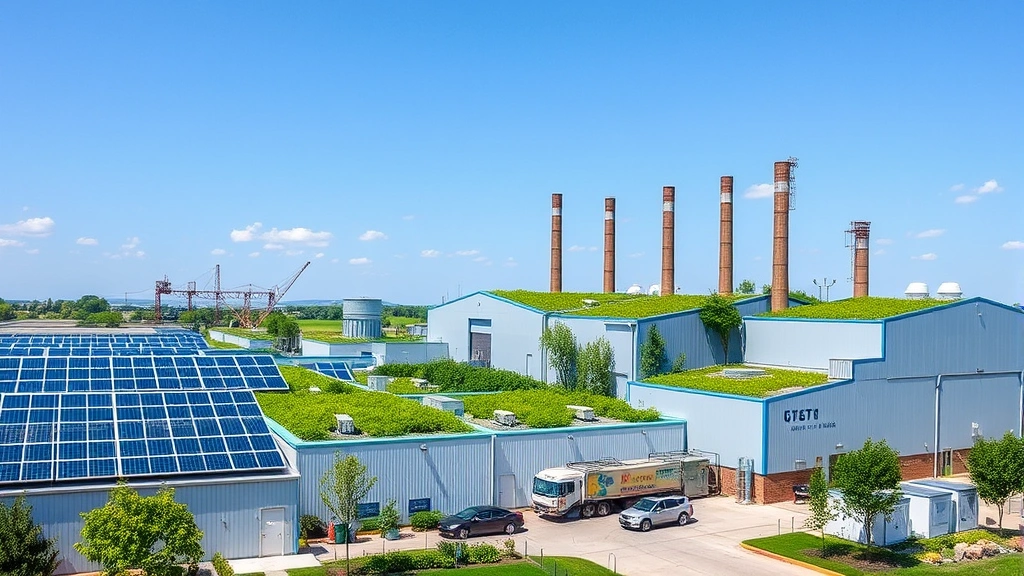
Linear economic models—extract, manufacture, dispose—assume infinite resource availability and unlimited waste absorption capacity. Circular economy frameworks reverse this logic, designing production systems where outputs from one process become inputs for another, minimizing waste and resource extraction. Research demonstrates circular models simultaneously reduce environmental impact and improve profitability through resource efficiency.
Industrial symbiosis networks provide concrete examples of circular principles generating economic returns. The Kalundborg Symbiosis in Denmark connects multiple industries in a system where waste streams become raw materials. A refinery’s excess steam heats nearby buildings. Pharmaceutical production residues become fertilizer. Power plant ash becomes construction material. This network has eliminated millions of tons of waste while reducing material costs across participating companies by 15-20% annually.
Circular economy adoption creates competitive advantages in resource-constrained markets. Companies reducing material inputs decrease vulnerability to commodity price volatility. Waste elimination reduces regulatory compliance costs. Product redesign for material recovery generates innovation opportunities. Research from environmental economics institutes shows companies implementing circular strategies achieve 5-10% cost reductions while simultaneously reducing environmental impact by 30-50%.
The transition from linear to circular production requires technological innovation and systems integration. Renewable energy systems pair effectively with circular manufacturing by eliminating fossil fuel inputs while enabling energy-intensive recycling processes. Companies implementing circular principles alongside renewable energy achieve the greatest cost reductions and environmental benefits.
Fashion and packaging industries demonstrate both the potential and challenges of circular transitions. Sustainable fashion brands implementing circular models report lower material costs and stronger brand loyalty despite initial implementation expenses. Packaging companies transitioning to recyclable and compostable materials find that consumer demand premiums offset higher production costs within 2-3 years.
Market Mechanisms and Conservation Incentives
Economic theory suggests that when environmental degradation imposes costs on society, market mechanisms can align private incentives with public welfare. Carbon pricing, payments for ecosystem services, conservation easements, and tradable permits create financial incentives for ecological stewardship. Research evaluates whether these mechanisms successfully bridge the nature-economy gap.
Carbon pricing mechanisms—either through carbon taxes or cap-and-trade systems—increase the cost of greenhouse gas emissions, making low-carbon alternatives economically competitive. The European Union’s Emissions Trading System has reduced covered sectors’ emissions 35% since 2005 while maintaining economic growth, demonstrating that carbon pricing can decouple emissions from economic activity. Companies respond by investing in renewable energy and efficiency improvements that reduce both emissions and operating costs.
Payments for ecosystem services programs directly compensate landowners for conservation activities. Costa Rica’s Payment for Ecosystem Services program has preserved over 1 million hectares of forest by compensating landowners at rates below market value for alternative land uses. Participants report that conservation payments enable rural income diversification, reducing pressure to convert forests to agriculture. The program demonstrates that environmental preservation can provide sustainable rural livelihoods when properly structured.
Conservation easements create legal mechanisms where landowners receive compensation for restricting development while retaining property ownership. These easements have protected millions of acres in North America while providing landowners with tax benefits and guaranteed income streams. The mechanism proves particularly effective in regions where development pressure threatens high-value ecosystems.
Tradable permit systems for pollution control create incentives for firms to exceed regulatory requirements. Companies reducing pollution below mandated levels can sell excess permits, generating revenue from environmental performance. This approach has proven effective for acid rain control in North America and ozone-depleting substance phase-out globally.
However, research reveals important limitations of market mechanisms. When externalities prove difficult to quantify, pricing mechanisms generate inaccurate valuations. Market mechanisms work best for specific, measurable impacts like greenhouse gas emissions but struggle with complex ecosystem interactions. Human environment interaction often generates ecological consequences that resist simple economic valuation. Effective policy typically combines market mechanisms with regulatory standards, technological mandates, and direct investment in ecosystem restoration.
Corporate Sustainability Performance Data
Empirical analysis of corporate sustainability initiatives reveals measurable economic returns from environmental investments. Companies implementing comprehensive sustainability strategies report improved financial performance, reduced risk profiles, and enhanced market valuations. Research from the World Bank tracks 500+ multinational corporations implementing science-based sustainability targets.
Renewable energy adoption by corporations demonstrates direct economic benefits. Companies transitioning to 100% renewable energy report average electricity cost reductions of 20-30% within 5-7 years as renewable technology costs decline and energy efficiency improvements compound. Microsoft’s commitment to carbon negativity by 2030 involves renewable energy procurement, energy efficiency, and carbon removal investments projected to generate net cost savings through avoided climate damages and efficiency gains exceeding investment costs by 2040.
Supply chain sustainability improvements generate both cost reductions and risk mitigation. Companies auditing supplier environmental practices identify efficiency improvements reducing material costs. Reducing supply chain water consumption, for example, decreases production costs while improving water security. Research demonstrates that companies implementing comprehensive supply chain sustainability initiatives achieve 10-15% cost reductions while simultaneously reducing environmental impact by 25-40%.
Water stewardship initiatives in water-stressed regions improve both environmental outcomes and operational resilience. Companies investing in water recycling, rainwater harvesting, and watershed restoration secure reliable water supplies while reducing extraction pressure on shared water resources. In regions facing water scarcity, corporate water investments generate social license benefits and regulatory advantages alongside operational improvements.
Waste reduction programs demonstrate consistent economic returns. Companies implementing zero-waste initiatives report 5-10% cost reductions through material recovery, reduced disposal expenses, and operational efficiency improvements. Patagonia’s commitment to circular business models involves taking back used products for recycling, creating revenue streams while extending product lifecycles and reducing raw material requirements.
These corporate examples demonstrate that environmental sustainability and economic profitability increasingly align as technologies mature and regulatory frameworks evolve. The business case for sustainability strengthens as renewable energy costs decline, circular economy technologies improve, and market valuations increasingly reward environmental performance.

Policy Integration and Governance Structures
Research on successful environmental policies reveals that integration across government levels and sectors proves essential for achieving ecological sustainability alongside economic prosperity. Fragmented policies create contradictions where environmental regulations conflict with economic incentives, undermining both objectives.
Integrated coastal zone management demonstrates how coordinated policy across marine conservation, fisheries management, tourism development, and industrial regulation can maintain ecosystem health while supporting economic activity. Countries implementing integrated coastal management report improved fishery sustainability, reduced coastal erosion, enhanced tourism value, and stronger local economies compared to regions with sectoral policies optimized independently.
Agricultural policy integration proves particularly important given farming’s dual role as both major environmental degrader and ecosystem service provider. Policies simultaneously supporting regenerative agriculture, soil conservation, and farmer incomes create alignment between environmental and economic objectives. Subsidizing regenerative practices rather than conventional input-intensive agriculture reduces environmental impact while maintaining farm profitability and rural employment.
Urban planning that integrates green infrastructure with development creates cities supporting both ecological function and economic vitality. Green spaces provide cooling, stormwater management, air purification, and recreation while supporting urban property values and attracting skilled workers. Cities investing in comprehensive green infrastructure report 15-25% improvements in property values, 10-15% reductions in infrastructure costs, and measurable improvements in public health outcomes.
International policy coordination becomes increasingly important as environmental challenges transcend borders. Climate change, ocean acidification, and transboundary pollution require coordinated policy frameworks that align national economic incentives with global environmental objectives. Research demonstrates that countries participating in international environmental agreements achieve greater emissions reductions and environmental improvements than those pursuing unilateral policies.
The transition toward integrated governance structures reflects growing recognition that nature and economy represent interconnected systems requiring coordinated management. Siloed policies optimizing individual sectors at the expense of system-wide outcomes generate perverse consequences. Integrated approaches recognizing ecological and economic interdependence achieve superior outcomes across both dimensions.
Our blog explores emerging research on policy integration and governance innovation. Research institutions worldwide are documenting successful policy frameworks where environmental sustainability and economic growth reinforce rather than contradict each other.
FAQ
Can economies grow indefinitely while maintaining ecological sustainability?
Research distinguishes between material growth and value growth. Indefinite material expansion proves ecologically impossible given planetary boundaries. However, economies can achieve indefinite growth in value—delivering improved quality of life through efficiency, innovation, and dematerialization—while reducing material throughput. This requires decoupling economic value from resource consumption through technological innovation and system redesign.
Do market mechanisms adequately address environmental challenges?
Market mechanisms work effectively for specific, quantifiable impacts like greenhouse gas emissions but struggle with complex ecosystem interactions. Research demonstrates that optimal policy combines market mechanisms with regulatory standards, technological mandates, and direct ecosystem investment. Market mechanisms alone prove insufficient for comprehensive environmental protection.
What timeline is required for sustainable economy transitions?
Research suggests 20-30 year transitions are achievable with sustained policy commitment and technological investment. Renewable energy systems can replace fossil fuels, circular economy models can replace linear production, and natural capital accounting can replace GDP within this timeframe. However, delays in policy implementation extend transition timelines and increase ultimate costs.
How do developing economies balance immediate economic needs with long-term sustainability?
Research demonstrates that sustainable development strategies reduce long-term poverty more effectively than unsustainable extraction-focused approaches. Countries investing in renewable energy, sustainable agriculture, and ecosystem restoration achieve better long-term economic outcomes than those pursuing extractive development. International support for sustainable development acceleration proves cost-effective for both developing and developed economies.
Do sustainability investments reduce economic competitiveness?
Contemporary research shows sustainability investments enhance competitiveness through cost reduction, risk mitigation, and innovation opportunities. Companies leading in sustainability often achieve superior financial performance compared to laggard competitors. First-mover advantages in renewable energy, circular economy adoption, and ecosystem service markets create competitive advantages rather than disadvantages.


