
Economic Impact of Deforestation: A Study Review
Deforestation represents one of the most significant economic paradoxes of our time. While the conversion of forests into agricultural land, urban development, and timber extraction generates substantial short-term financial gains for corporations and governments, the long-term economic costs far exceed these immediate benefits. This comprehensive review examines the multifaceted economic implications of deforestation, integrating findings from ecological economics, environmental accounting, and policy analysis to demonstrate why forests are economically invaluable ecosystems that warrant urgent protection.
The global deforestation crisis costs the world economy an estimated $2-5 trillion annually when accounting for ecosystem services, carbon sequestration, and biodiversity loss. Yet conventional GDP measurements fail to capture these losses, creating a dangerous disconnect between reported economic growth and actual ecological and economic decline. Understanding this gap is essential for policymakers, investors, and citizens seeking to align economic development with environmental sustainability.
Understanding Deforestation and Economic Valuation
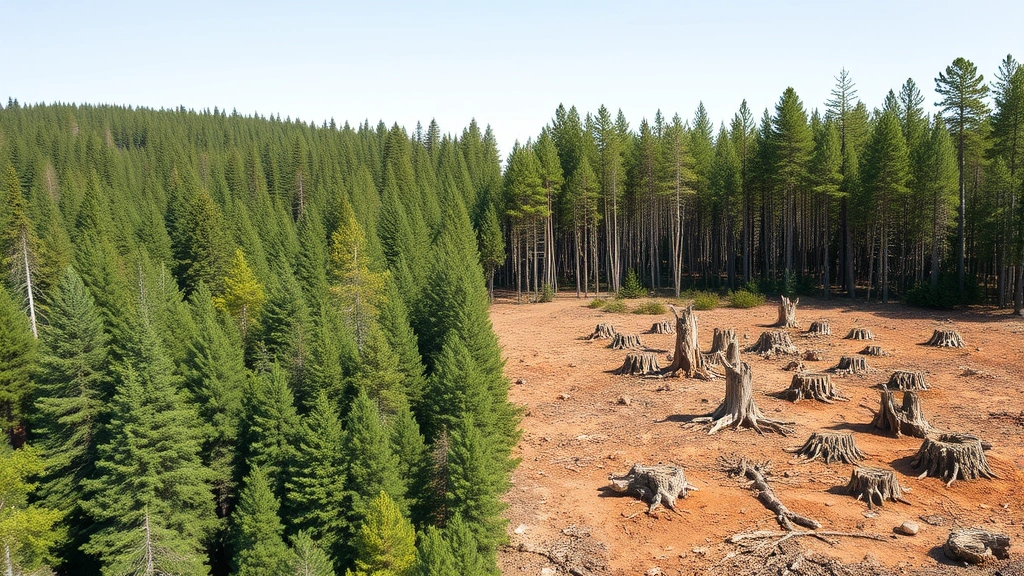
Deforestation occurs at an alarming rate of approximately 10 million hectares annually, according to FAO forest assessments. The economic framework surrounding forest loss remains fundamentally flawed because traditional accounting systems treat forests as static resources rather than dynamic economic systems generating continuous value. When economists measure the economic impact of deforestation, they typically focus on timber revenue and land conversion value while ignoring the ecosystem services these forests provide.
The concept of natural capital accounting attempts to correct this oversight by assigning monetary values to ecosystem functions. Forests provide watershed protection, climate regulation, pollination, soil formation, and genetic resources—services that would cost trillions to replicate artificially. Yet these benefits rarely appear on balance sheets or in GDP calculations. This accounting invisibility creates perverse incentives where deforestation appears economically rational to individual actors even though it destroys collective wealth. Understanding how to measure these hidden values is crucial for economic policy reform and investment decisions regarding forest conservation.
Environmental economics distinguishes between use values (direct human utilization) and non-use values (existence value, option value for future generations). Tropical rainforests, for instance, contain approximately 80% of terrestrial species despite occupying only 7% of Earth’s land surface. The genetic and pharmaceutical value of undiscovered species in these forests represents an enormous economic asset that disappears permanently with deforestation. Recent studies suggest that pharmaceutical compounds derived from rainforest plants could be worth hundreds of billions of dollars, yet we destroy these potential sources of innovation for short-term timber profits.

Direct Economic Costs and Market Failures
Deforestation creates multiple categories of direct economic damage that extend far beyond the immediate region. Agricultural productivity declines as deforestation reduces rainfall and soil quality in adjacent areas. Infrastructure costs increase when floods and landslides—previously prevented by forest root systems—damage roads, bridges, and buildings. The economic impact of deforestation on water systems alone is staggering: forests regulate water cycles, maintain groundwater reserves, and filter water naturally. When forests disappear, communities must invest in expensive water treatment infrastructure or face contaminated supplies.
Market failures fundamentally explain why deforestation persists despite its negative economic impacts. The benefits of forest destruction accrue to private actors—timber companies, agricultural producers, and developers—while costs are dispersed across society and future generations. This externality creates a classic tragedy of the commons where rational individual behavior produces collectively irrational outcomes. World Bank research on forest economics consistently demonstrates that without government intervention through pricing mechanisms or regulations, markets will continue destroying forests because the private discount rate exceeds the social discount rate.
The economic impact of deforestation on agricultural systems reveals another layer of complexity. While deforestation initially increases arable land, soil degradation typically renders this land economically unproductive within 5-15 years. The Amazon rainforest, which some economists view as merely undeveloped land suitable for cattle ranching, actually generates more economic value through climate services, watershed functions, and pharmaceutical potential than through agricultural conversion. Studies examining the long-term profitability of land use changes consistently show that deforestation creates short-term gains followed by long-term economic collapse in affected regions.
Labor market impacts deserve greater attention in deforestation economics. While logging and agricultural expansion create temporary employment, forest-dependent communities lose sustainable livelihoods as ecosystems degrade. Indigenous peoples and forest-dependent populations number approximately 1.6 billion globally, with many deriving economic security from non-timber forest products. The economic impact of deforestation on these communities—measured through income loss, food insecurity, and social disruption—represents a significant but often-ignored cost that disproportionately affects vulnerable populations.
Ecosystem Services and Hidden Economic Value
Ecosystem services represent the economic foundation upon which all human economic activity rests, yet they remain largely invisible in conventional accounting. Forests provide four categories of services: provisioning (timber, water, food), regulating (climate, water cycle, pollination), supporting (soil formation, nutrient cycling), and cultural (recreation, spiritual value). The economic impact of deforestation becomes apparent only when attempting to replace these services artificially.
Carbon sequestration represents perhaps the most quantifiable ecosystem service. Forests store approximately 296 gigatons of carbon in biomass and soil, acting as the planet’s primary carbon sink. The economic value of this climate regulation service depends on the social cost of carbon—estimates range from $50-200 per ton, suggesting that forest carbon storage alone is worth $14.8-59.2 trillion globally. Deforestation releases this stored carbon, contributing approximately 15% of global greenhouse gas emissions. The economic impact of deforestation through climate change includes increased disaster recovery costs, agricultural losses, infrastructure damage, and health expenses that far exceed the timber value extracted.
Watershed services demonstrate deforestation’s economic impact on water security. Forests regulate precipitation patterns, maintain groundwater recharge rates, and filter water naturally. The economic value of watershed protection in tropical forests has been estimated at $2,000-5,000 per hectare annually. Cities dependent on forested watersheds benefit from naturally filtered water, while deforested regions face enormous water treatment costs. Costa Rica, which has reforested significant areas, now generates substantial revenue from payment for ecosystem services programs—demonstrating that conservation can be economically profitable when ecosystem services are properly valued.
Pollination services provide another critical but undervalued ecosystem function. Approximately 75% of global food crops depend partially on animal pollinators, with bees providing the majority of pollination services. Forest ecosystems support diverse pollinator populations; deforestation disrupts these communities, reducing agricultural productivity. The economic impact of pollinator loss through deforestation has been estimated at $15 billion annually in lost crop production. Yet this cost rarely influences land-use decisions because it is diffuse and indirect, affecting farmers downstream rather than the entity making deforestation decisions.
Biodiversity conservation represents a final ecosystem service category with enormous economic implications. Forests contain the vast majority of Earth’s genetic diversity, representing potential sources of food crops, medicines, and industrial compounds. The economic impact of losing this genetic library through deforestation is incalculable—we cannot know the value of species we never discover. However, economic analyses of pharmaceutical development suggest that each plant species in tropical rainforests has an expected value of $300-3,000 based on discovery rates and market values of plant-derived drugs. The loss of these potential innovations represents a permanent reduction in humanity’s economic options.
Regional Economic Impacts and Case Studies
The Amazon rainforest exemplifies the economic paradox of deforestation at the largest scale. Often characterized as an economically underutilized region, the Amazon actually generates tremendous economic value through climate regulation, water cycle maintenance, and biodiversity support. Research indicates that Amazon deforestation destabilizes regional precipitation patterns, potentially reducing agricultural productivity across South America by $1-2 billion annually. The economic impact of deforestation extends beyond Amazonian nations to affect global grain prices and food security. Some studies suggest that continued Amazon deforestation could trigger a tipping point where the forest transitions to savanna, an irreversible change with catastrophic economic consequences for global agriculture and climate stability.
Southeast Asian deforestation, driven primarily by palm oil plantation expansion, demonstrates how the economic impact of deforestation concentrates costs on vulnerable populations while concentrating benefits on multinational corporations. Indonesia and Malaysia have lost over 40% of their forest cover in recent decades, generating short-term export revenues while destroying the economic foundations of forest-dependent communities. The economic impact includes increased flooding, soil degradation, and reduced fish stocks in coastal areas that depend on mangrove forests for nursery habitat. Economic analyses comparing palm oil revenues to ecosystem service losses consistently show that deforestation is economically irrational when full costs are calculated, yet it persists because corporations capture benefits while communities bear costs.
African deforestation presents unique economic challenges. While timber extraction and agricultural expansion drive forest loss, poverty and lack of alternative income sources make deforestation appear economically necessary at the local level. However, research on how to reduce carbon footprint through forest conservation demonstrates that payment for ecosystem services programs can provide sustainable income alternatives. Countries like Uganda and Kenya have begun implementing forest carbon payment schemes that generate revenue for conservation while providing rural income, suggesting that the economic impact of deforestation can be reversed through appropriate policy mechanisms.
Brazil’s Atlantic Forest case study illustrates both the costs of deforestation and the potential for economic recovery through restoration. Originally covering 130 million hectares, the Atlantic Forest has been reduced to approximately 12% of its original extent. The economic impact of this deforestation includes reduced water availability for major cities like São Paulo and Rio de Janeiro, increased flood and landslide damage, and loss of pharmaceutical potential. However, recent restoration initiatives have begun generating economic returns through ecotourism, watershed protection payments, and potential carbon credits, demonstrating that forest recovery can become economically attractive when ecosystem services are properly valued.
Carbon Economics and Climate Finance
The economic impact of deforestation on climate systems represents perhaps the most globally significant cost. Forests act as carbon sinks, removing CO2 from the atmosphere through photosynthesis. Deforestation reverses this process, releasing stored carbon while eliminating future carbon sequestration capacity. The economic implications are enormous: if we value carbon at the social cost of carbon ($100-200 per ton), each hectare of tropical forest lost represents $10,000-20,000 in uncompensated climate damage.
Carbon markets and REDD+ (Reducing Emissions from Deforestation and Degradation) programs attempt to address this economic failure by creating financial incentives for forest conservation. These mechanisms assign monetary value to standing forests, theoretically making conservation economically competitive with deforestation. However, implementation challenges limit their effectiveness. Carbon credit prices remain too low ($5-15 per ton) to compete with agricultural land values ($500-2,000 per hectare), and monitoring difficulties create opportunities for fraud. Nevertheless, carbon finance represents a crucial mechanism for aligning economic incentives with forest conservation.
The economic impact of deforestation on climate finance extends to disaster recovery costs. Forests reduce flood severity, landslide risk, and hurricane damage. Deforestation increases these risks, requiring larger public investments in disaster prevention and recovery infrastructure. UNEP research on environmental economics documents that countries with significant forest loss experience 2-3 times higher disaster recovery costs than comparable forested regions. These costs represent a hidden subsidy for deforestation—the public bears disaster costs while private actors capture timber profits.
Climate adaptation economics also reveals deforestation’s true cost. As climate change intensifies, forests become increasingly valuable for maintaining stable local climates, water availability, and agricultural productivity. The economic impact of deforestation becomes more severe as climate instability increases, suggesting that forest conservation represents increasingly valuable climate insurance. Economic models incorporating climate feedback loops demonstrate that forest preservation has option value far exceeding current market valuations, yet this future value receives minimal weight in current investment decisions due to short time horizons and high discount rates.
Policy Solutions and Economic Instruments
Addressing the economic impact of deforestation requires policy mechanisms that align private incentives with social welfare. Payment for ecosystem services (PES) programs represent one approach, directly compensating forest owners for conservation. These programs have shown promise in Costa Rica, where PES payments have helped reforest significant areas while providing rural income. However, PES programs require substantial public funding, and payments must exceed opportunity costs of alternative land uses to be effective. The economic impact of deforestation can only be reversed if conservation payments reach $1,000-3,000 per hectare annually in tropical regions—a significant but economically justified investment given ecosystem service values.
Carbon pricing mechanisms, including carbon taxes and cap-and-trade systems, attempt to internalize climate costs of deforestation. However, current carbon prices remain too low to effectively incentivize conservation. Economic analysis suggests that carbon prices must reach $50-100 per ton to make forest conservation financially competitive with agricultural conversion. Implementing such prices faces political resistance, but the economic impact of continued deforestation—measured in climate damages, lost productivity, and disaster costs—far exceeds the cost of carbon pricing.
Regulatory approaches, including forest protection laws and logging restrictions, represent another policy tool. While regulations can prevent deforestation, they often create economic resentment in communities dependent on forest extraction. More effective approaches combine regulations with positive incentives, providing alternative income sources for forest-dependent populations. Environmental awareness programs paired with economic opportunities have proven more successful than regulation alone in achieving long-term forest conservation.
Supply chain interventions address deforestation by creating market demand for sustainably produced goods. Certification programs (FSC, RSPO) attempt to distinguish deforestation-free products, allowing consumers and businesses to support sustainable practices. Economic research on these programs shows mixed results—they can reduce deforestation in some regions but may displace it to areas with weaker enforcement. However, supply chain transparency combined with corporate commitments has proven effective in some sectors. The economic impact of deforestation can be reduced through consumer awareness and corporate accountability, though these mechanisms work best when combined with strong government regulation and positive incentives for conservation.
International agreements and debt-for-nature swaps represent macroeconomic approaches to forest conservation. These mechanisms recognize that developing countries face pressure to convert forests to agricultural production to service external debt and generate government revenue. Debt forgiveness in exchange for forest protection addresses this root cause of deforestation. Similarly, international climate finance mechanisms should channel resources to forest conservation as a cost-effective climate mitigation strategy. Economic analyses consistently show that forest conservation costs far less per ton of CO2 reduced than renewable energy or other climate mitigation strategies, yet it receives only 3-5% of climate finance.
Integrating forests into national accounting systems represents a crucial long-term policy reform. Adjusted Net Savings calculations that subtract natural capital depletion from GDP would reveal that many countries reporting economic growth are actually experiencing economic decline when forest loss is properly accounted. This accounting reform would create political pressure for forest conservation by making environmental destruction visible in official economic statistics. How fossil fuels impact the environment receives substantial policy attention partly because carbon emissions appear in climate accounting; similar visibility for deforestation would likely increase conservation priority.
Corporate accountability and investor pressure increasingly influence deforestation rates. Institutional investors managing trillions in assets have begun divesting from companies with significant deforestation exposure. This financial pressure creates economic incentives for sustainable practices independent of government policy. However, investor pressure remains limited to large corporations with transparent supply chains; smaller producers and informal sectors continue deforestation with minimal scrutiny. Economic impact reduction requires combining investor pressure with government regulation and community-level incentives for sustainable forest management.
FAQ
What is the total economic value of forests?
Global forest ecosystem services are estimated at $100-125 trillion annually based on comprehensive natural capital accounting. This includes carbon sequestration ($14.8-59.2 trillion), water cycle regulation ($20-30 trillion), pollination and pest control ($15-30 trillion), and other services. These valuations dwarf the $300-400 billion in annual timber and forest product revenues, demonstrating that conservation is economically rational when full values are considered.
How does deforestation affect food security and agricultural economics?
Deforestation destabilizes precipitation patterns, reduces soil quality, and eliminates pollinator habitat, reducing agricultural productivity in surrounding regions. The economic impact extends beyond deforested areas to affect regional food prices and global commodity markets. Additionally, short-term agricultural expansion through deforestation creates long-term soil degradation that renders land economically unproductive, resulting in net economic loss within 10-20 years.
Can economic development occur without deforestation?
Yes. Countries including Costa Rica, Vietnam, and parts of India have achieved economic growth while increasing forest cover through reforestation and sustainable forest management. Emerging green economy sectors including renewable energy, sustainable agriculture, and ecotourism demonstrate that economic development can be decoupled from forest destruction. However, this requires intentional policy choices and investment in sustainable alternatives rather than default reliance on forest conversion.
Why do markets continue driving deforestation if it is economically irrational?
Market failures create misaligned incentives where private actors benefit from deforestation while society bears costs. Timber companies capture timber revenues but do not pay for lost ecosystem services, water contamination, or climate damages. Time horizon mismatches also matter—corporations discount future ecosystem service losses heavily, making short-term timber profits appear more valuable than long-term forest benefits. Addressing this requires government intervention through pricing mechanisms, regulations, and incentive programs that align private interests with social welfare.
What is the economic impact of deforestation on indigenous peoples?
Indigenous communities derive economic security from forest products including timber, medicines, food, and materials for crafts. Deforestation destroys these income sources and traditional livelihoods, forcing economic transition to wage labor or agriculture. The economic impact is particularly severe because indigenous communities rarely receive compensation for lost forest access, and alternative employment opportunities are limited. Economic justice requires recognizing indigenous land rights and ensuring that forest-dependent communities benefit from conservation through payment programs and secure tenure.
How can individuals reduce the economic impact of deforestation?
Consumer choices support forest conservation through demand for sustainably produced goods including timber, palm oil, and agricultural products. Supporting sustainable fashion brands and other products certified as deforestation-free creates market incentives for sustainable practices. Additionally, supporting organizations implementing payment for ecosystem services programs and forest restoration projects channels resources toward conservation. Individual choices create market signals that encourage corporate sustainability commitments and policy reform.
What role should international climate finance play in forest conservation?
Forest conservation represents one of the most cost-effective climate mitigation strategies, typically costing $5-15 per ton of CO2 reduced compared to $50-200 for renewable energy. International climate finance should allocate substantially more resources to forest conservation through mechanisms including REDD+, debt-for-nature swaps, and direct support for sustainable forest management. UNEP climate finance analysis recommends that forest conservation receive at least 25% of climate finance to reflect its cost-effectiveness and mitigation potential.
How does littering affect forests economically?
While littering primarily impacts aquatic ecosystems, it affects forest economics indirectly through ecosystem degradation and reduced ecotourism potential. Forests with visible pollution attract fewer tourists, reducing economic returns from ecotourism. Additionally, plastic waste in forests harms wildlife that provides ecosystem services including pollination and pest control. Maintaining forest cleanliness and ecosystem health preserves the economic value of recreation and ecosystem service provision.


