Can Green Jobs Boost the Economy? Analyst Insights
The intersection of environmental sustainability and economic growth has become one of the most pressing questions facing policymakers, investors, and economists worldwide. As climate change accelerates and resource depletion threatens long-term prosperity, the green economy emerges as a potential solution—one that promises to create jobs while simultaneously addressing ecological crises. But can green jobs genuinely boost economic performance, or is this narrative oversimplified?
Recent data from the International Labour Organization suggests that the renewable energy sector alone could generate 24 million jobs by 2030. Yet skeptics argue that green job creation merely redistributes employment rather than expanding overall economic output. This analysis explores the multifaceted relationship between environmental employment and macroeconomic growth, examining evidence from leading economies, theoretical frameworks, and emerging trends in the transition to sustainable industries.

Understanding Green Jobs and Economic Impact
Green jobs represent employment in industries and activities that produce goods or provide services contributing to preserving or restoring environmental quality. The United Nations Environment Programme (UNEP) defines these positions broadly to include roles in renewable energy installation, energy efficiency retrofitting, sustainable agriculture, waste management, and ecosystem restoration. Understanding their economic impact requires examining both direct employment effects and indirect contributions to productivity, innovation, and competitiveness.
The fundamental economic question centers on whether green jobs generate net positive economic growth or simply reallocate existing employment opportunities. Conventional economic theory suggests that resources devoted to environmental compliance represent costs that reduce overall productivity. However, newer environmental economics perspectives argue that ecosystem degradation imposes hidden costs—externalities—that green jobs help internalize and address.
A UNEP report on green jobs found that employment in the clean energy sector grew at three times the rate of overall employment between 2015 and 2020. This acceleration reflects both policy support and technological advancement reducing renewable energy costs below fossil fuel alternatives in many markets. The economic stimulus derives from multiple channels: capital investment in infrastructure, operational employment, supply chain development, and technological innovation spillovers.
Understanding the broader relationship between human economic activity and environmental systems proves essential for assessing long-term job sustainability. Green jobs that restore degraded ecosystems or prevent resource depletion contribute to maintaining the natural capital stock upon which all economic activity ultimately depends.

Employment Growth in Renewable Energy Sectors
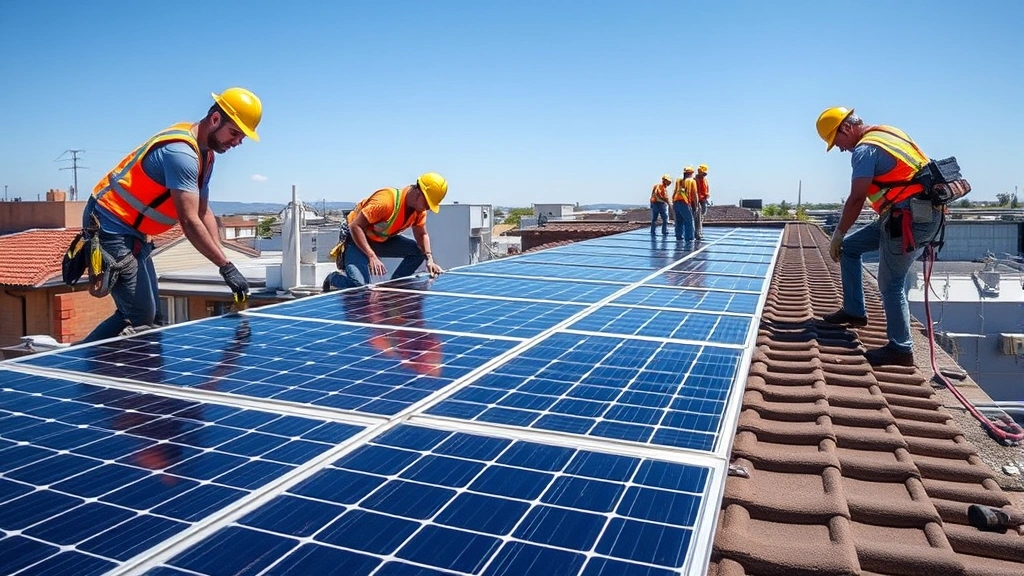
The renewable energy industry demonstrates the most quantifiable green job creation. Solar photovoltaic installation employed approximately 4.3 million workers globally in 2021, while wind energy supported 1.2 million positions. These sectors have experienced compound annual growth rates exceeding 15 percent over the past decade, substantially outpacing overall employment growth in most developed economies.
Economic analysis reveals several mechanisms through which renewable energy employment generates broader economic benefits:
- Capital intensity and local investment: Solar and wind projects require substantial upfront capital, typically financed through domestic financial institutions, creating banking sector employment and retaining capital within local economies rather than purchasing imported fossil fuels.
- Labor intensity of installation and maintenance: Unlike fossil fuel plants requiring minimal ongoing workforce expansion, renewable installations demand continuous labor for manufacturing, installation, operation, and maintenance—activities difficult to automate and typically performed locally.
- Supply chain development: Growing renewable capacity stimulates manufacturing of inverters, mounting systems, electrical components, and battery storage technologies, establishing new industrial clusters and supplier networks.
- Innovation and technology advancement: Competitive pressure in renewable markets drives research and development investment, creating high-skilled employment in engineering, materials science, and software development.
A comprehensive analysis from the World Bank found that renewable energy investments generate 7.5 to 13.6 jobs per million dollars invested, compared to 2.7 to 7.3 jobs for fossil fuel infrastructure. This employment advantage reflects the labor-intensive nature of renewable technology deployment and the localized character of installation work, which cannot be offshored.
However, employment quality varies significantly across regions and skill levels. Developed economies typically capture higher-wage engineering and manufacturing positions, while developing countries often concentrate on lower-wage installation labor. Ensuring equitable distribution of green job benefits requires intentional policy design and workforce development investment.
The Multiplier Effect of Green Investment
Beyond direct employment, green investment generates economic multiplier effects as workers spend wages and companies purchase supplies from other sectors. Economic modeling suggests that green infrastructure investment produces multiplier effects ranging from 1.5 to 2.5 times the initial investment, meaning a billion-dollar green investment generates 1.5 to 2.5 billion dollars in total economic activity.
These multipliers operate through several pathways:
- Household consumption: Green sector workers earn wages comparable to or exceeding fossil fuel industry positions, spending money in local retail, housing, food, and service sectors.
- Business-to-business transactions: Green energy companies purchase materials, components, and professional services from upstream suppliers, creating derived demand throughout the economy.
- Tax revenue generation: Green sector employment generates income and sales tax revenue, funding public services and infrastructure that enhance broader economic productivity.
- Technology spillovers: Innovations developed for renewable energy applications often find uses in other industries, enhancing overall productive capacity.
Research on different environmental contexts reveals that multiplier effects vary based on regional economic structure. Regions with strong manufacturing bases and technical workforce experience larger multipliers from green investment, while economies dependent on single industries may face displacement effects if green transition occurs without complementary workforce development.
The economic stimulus dimension of green jobs became particularly relevant during post-pandemic recovery. Several economies, including Germany, South Korea, and the United States, prioritized green infrastructure investment as stimulus spending, combining employment creation with infrastructure modernization and climate objectives.
Sectoral Transitions and Labor Market Challenges
While green jobs create new employment opportunities, the transition from fossil fuel-dependent industries presents significant labor market disruption. Coal mining regions, petroleum-dependent economies, and fossil fuel manufacturing centers face employment losses as demand shifts. The economic viability of green job creation depends substantially on managing these transitions equitably.
Key challenges include:
- Geographic mismatch: Coal mines and oil refineries concentrate in specific regions, while renewable energy resources and manufacturing hubs develop differently. Workers cannot easily relocate, creating regional unemployment and social disruption.
- Skill transferability: While some fossil fuel industry skills transfer to green sectors, many do not. Coal miners cannot directly transition to solar installation without retraining, creating workforce development costs and income disruption.
- Wage disparities: Green jobs in developing regions often pay substantially less than fossil fuel positions, creating perceived losses even when employment remains stable.
- Pension and benefit obligations: Fossil fuel workers often enjoy union protections, pension benefits, and health coverage. Green sector employment frequently lacks equivalent protections, particularly in developing economies.
Economist research on just transition policies—government programs supporting affected workers and communities—suggests that successful green transitions require investment equal to 0.5-2 percent of GDP over 10-15 year transition periods. Without such investment, green job growth may occur alongside social disruption and political backlash against climate policies.
The relationship between environmental policy and economic outcomes depends critically on implementation design. Rapid, unmanaged transitions generate economic losses despite green job creation, while carefully designed programs can achieve simultaneous employment and environmental gains.
Cost-Benefit Analysis of Green Economy Transition
Rigorous cost-benefit analysis of green job creation requires comparing transition costs against benefits from avoided environmental damage and resource conservation. Traditional economic accounting often underestimates environmental benefits because ecosystem services remain unpriced in market transactions.
Quantifiable benefits from green job-driven transitions include:
- Avoided climate damages: Each ton of greenhouse gas emissions prevented saves estimated 50-200 dollars in future climate impact costs through avoided storms, sea-level rise, agricultural disruption, and health impacts.
- Air quality improvements: Replacing fossil fuel combustion reduces particulate matter, nitrogen oxides, and sulfur dioxide, preventing respiratory diseases, heart conditions, and premature mortality valued at thousands of dollars per prevented case.
- Resource conservation: Renewable energy eliminates water consumption for thermal power generation, preserving water for agriculture and human consumption in water-scarce regions.
- Energy independence: Domestic renewable energy reduces fossil fuel imports, improving trade balances and reducing exposure to global energy price volatility.
Conversely, transition costs encompass stranded assets in fossil fuel infrastructure, workforce retraining expenses, regional economic disruption, and technological transition costs. Comprehensive analyses from ecological economics research institutes find that properly designed green transitions generate positive net benefits within 15-25 year timeframes, with benefits accelerating as renewable technology costs continue declining.
A critical analytical insight involves recognizing that green job creation represents investment in natural capital restoration and maintenance. From this perspective, asking whether green jobs boost the economy parallels asking whether maintaining factory equipment boosts production—it does, by preventing degradation that would reduce future output.
Regional Economic Models and Case Studies
Examining specific regional experiences reveals how context shapes green job outcomes. Denmark generates approximately 30 percent of electricity from wind power while maintaining 8 percent unemployment rates comparable to global averages. The transition succeeded through decades of gradual policy implementation, substantial public investment in workforce development, and industrial policy supporting turbine manufacturing.
Germany’s Energiewende (energy transition) created approximately 300,000 green jobs between 2010 and 2020, primarily in renewable installation and manufacturing. However, industrial electricity costs increased 45 percent, raising concerns about manufacturing competitiveness. This experience demonstrates that green job creation alone proves insufficient without managing energy costs for broader economic competitiveness.
Brazil’s renewable energy sector, encompassing hydroelectric, sugarcane ethanol, and increasingly wind and solar energy, employs approximately 850,000 workers. The sector contributes substantially to export-oriented manufacturing and agricultural industries, demonstrating how green employment can integrate into broader economic strategies rather than representing isolated sectors.
Developing economies in Africa and Southeast Asia represent emerging green job frontiers. Countries including Kenya, Rwanda, and Vietnam have prioritized renewable energy investment as development strategy, combining climate objectives with electrification goals. These cases reveal that green jobs can simultaneously address poverty reduction and environmental sustainability when embedded in comprehensive development frameworks.
The ongoing analysis of green economy development across diverse contexts demonstrates that employment creation outcomes depend heavily on policy design, workforce investment, and integration with broader economic strategies rather than on renewable energy deployment alone.
FAQ
What percentage of economic growth can green jobs realistically generate?
Economic modeling suggests green investment can contribute 0.5-1.5 percentage points to annual GDP growth in developed economies, depending on investment scale and implementation quality. This represents meaningful but not transformative contribution to overall growth, typically complementing rather than replacing other growth drivers.
How do green jobs compare to fossil fuel employment in terms of wages and benefits?
Green sector wages vary substantially by skill level and region. High-skilled positions in renewable manufacturing and engineering often match or exceed fossil fuel sector compensation. However, installation and maintenance positions frequently offer lower wages and fewer benefits than unionized fossil fuel work, particularly in developing countries.
Can green job creation address structural unemployment?
Green jobs address unemployment through creating new positions and retraining opportunities, but effectiveness depends on geographic alignment between job locations and unemployed populations, and on adequate training programs. Without targeted workforce development, geographic mismatches can persist despite overall employment growth.
What role does government policy play in green job creation?
Government policy proves essential through renewable energy subsidies, carbon pricing, workforce development investment, research funding, and just transition support. Markets alone generate insufficient green investment because environmental benefits remain unpriced; policy corrects this market failure.
Are green jobs sustainable long-term or will they disappear as technology matures?
Green energy employment should remain stable long-term as renewable infrastructure requires ongoing operation and maintenance. However, manufacturing employment may concentrate in lower-cost regions as technology matures, requiring developed economies to focus on high-value-added services and advanced manufacturing to maintain employment.


