
Understanding Environments: Economist Insights into Types and Economic Implications
The concept of “environment” extends far beyond the natural world. Economists recognize multiple distinct environment types, each with profound implications for resource allocation, policy design, and sustainable development. Understanding these environmental categories requires an interdisciplinary approach that integrates ecological science, economic theory, and practical policy considerations. This comprehensive analysis examines how economists classify and evaluate different environment types, from natural ecosystems to constructed economic spaces.
Environmental economics has evolved significantly over the past four decades, moving from simple pollution-control frameworks to sophisticated models that account for ecosystem services, natural capital depreciation, and long-term sustainability constraints. The classification of environment types matters because different environments require different economic valuation methods, policy instruments, and management strategies. Whether examining pristine natural systems, degraded landscapes, or human-constructed environments, economists apply specialized analytical tools to understand trade-offs and optimize outcomes.
Natural Environments and Ecosystem Economics
Natural environments represent the foundational category in environmental economics. These include forests, wetlands, grasslands, coral reefs, and other ecosystems that function with minimal direct human manipulation. Economists studying natural environments focus on quantifying ecosystem services—the tangible and intangible benefits humans derive from functioning ecosystems. The World Bank has pioneered extensive research into natural capital accounting, demonstrating that ecosystem services generate trillions of dollars annually in global economic value.
The economic valuation of natural environments involves multiple methodologies. Contingent valuation methods estimate willingness-to-pay for environmental preservation. Hedonic pricing techniques reveal environmental values through real estate markets. Travel cost methods estimate recreational ecosystem values. These approaches attempt to assign monetary values to previously “free” natural resources, enabling cost-benefit analysis for development projects and conservation investments. For instance, wetland ecosystems provide water filtration, flood control, and nursery habitats for commercial fisheries—services economists estimate at thousands of dollars per hectare annually.
Understanding human environment interaction within natural systems reveals critical economic dynamics. When humans extract resources—timber, minerals, fish, agricultural products—from natural environments, they reduce ecosystem service provision. This creates a fundamental economic problem: private extraction benefits accrue to resource users, while ecosystem service losses are distributed across society. This divergence between private profit and social costs drives overexploitation and environmental degradation. Economists address this through property rights frameworks, Pigouvian taxes, and tradeable permit systems that internalize environmental costs into market prices.

Urban and Built Environments
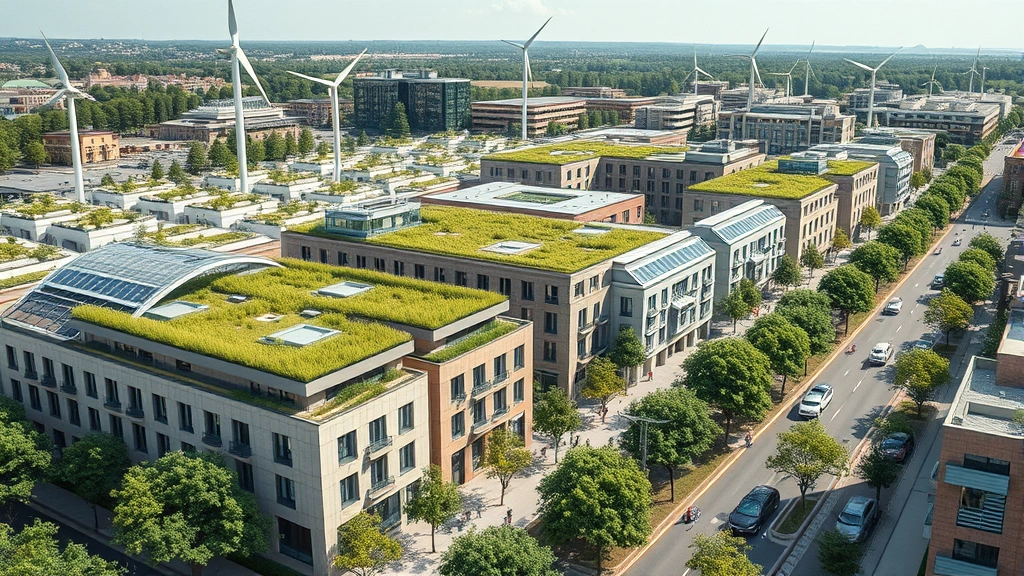
Urban environments represent humanity’s most extensively modified ecosystem type. Cities concentrate economic activity, population, and infrastructure into defined spatial areas. Economists analyze urban environments through multiple lenses: land use optimization, agglomeration economies, infrastructure investment, and environmental quality management. The economic productivity of cities—measured through GDP per capita, innovation rates, and employment concentration—demonstrates that dense built environments generate substantial economic benefits through reduced transaction costs and knowledge spillovers.
However, urban environments present distinct economic challenges. Congestion costs, air pollution, water contamination, and heat island effects impose significant economic externalities. Economists estimate that air pollution alone costs developed nations 4-6% of GDP annually through health impacts, lost productivity, and environmental damage. Green infrastructure investments—urban forests, parks, green roofs, permeable pavements—provide ecosystem services within built environments while generating economic co-benefits through property value increases, reduced cooling costs, and improved public health.
The economics of environment and natural resources trust fund renewal increasingly incorporates urban renewal strategies that balance development with ecological restoration. Cities worldwide implement payment for ecosystem services schemes, where residents and businesses fund urban green space maintenance. These mechanisms recognize that urban natural environments—parks, street trees, waterfront restoration—generate economic value through multiple channels: recreation, property appreciation, stormwater management, and psychological well-being.
Understanding urban environment economics requires examining land value capture mechanisms. As cities invest in infrastructure and environmental improvements, property values increase, creating opportunities for public revenue through land taxes or development fees. These mechanisms can fund additional environmental investments, creating positive feedback loops where environmental quality improvements generate revenue for further enhancement. This economic dynamic differs fundamentally from rural or natural environments, where property values remain more disconnected from public environmental investments.
Workplace Environments and Economic Productivity
Economists increasingly recognize that workplace environments significantly impact human capital productivity and economic output. A hostile work environment reduces worker productivity, increases turnover costs, and generates legal liabilities. Research demonstrates that environmental quality in workplaces—air quality, lighting, temperature, noise levels, spatial organization—directly correlates with employee performance, creativity, and retention rates. Organizations that invest in optimal workplace environments achieve productivity gains that exceed their environmental investment costs.
The economic implications of workplace environment quality extend beyond individual productivity. When employees work in poor environmental conditions—inadequate ventilation, excessive noise, poor ergonomics—they experience increased stress, health problems, and absenteeism. These costs translate into reduced organizational output and increased healthcare expenditures. Conversely, investments in workplace environmental improvements yield measurable returns through reduced absenteeism (typically 2-5% improvements), increased productivity (5-15% gains documented), and lower turnover rates (10-20% reductions).
Understanding the definition of a hostile work environment requires recognizing both explicit hostility and environmental degradation as distinct but related phenomena. While hostile work environments involve interpersonal conflict or discrimination, poor physical environments—inadequate lighting, temperature extremes, air quality problems—create stress and health impacts that parallel hostile workplace effects. Economists model these environmental stressors as negative externalities that organizations can reduce through investment in workplace quality.
The economic valuation of workplace environment improvements involves calculating return on investment through multiple channels: reduced healthcare costs, decreased turnover expenses, increased productivity output, and reduced legal liability. Companies implementing comprehensive workplace environmental programs report payback periods of 2-4 years, with ongoing annual benefits exceeding initial investments. This economic case supports widespread adoption of workplace environment optimization strategies.
Degraded and Polluted Environments
Degraded environments result from resource overexploitation, pollution accumulation, or ecosystem damage. Economists classify these as environments where natural capital has been substantially depleted or compromised, reducing ecosystem service provision below historical levels. Examples include desertified rangelands, polluted waterways, contaminated industrial sites, and deforested regions. The economic challenge with degraded environments involves calculating remediation costs, assessing irreversible damage, and determining optimal restoration investment levels.
Pollution represents a specific degradation type that economists model as a negative externality. Industrial emissions, agricultural runoff, plastic accumulation, and chemical contamination impose costs on society that polluters don’t pay directly. UNEP estimates that pollution costs developing nations 4-6% of GDP annually. Economists address pollution through regulatory approaches (emission standards), market-based mechanisms (carbon pricing, tradeable permits), and liability frameworks (polluter-pays principle) that internalize pollution costs into production decisions.
The economic analysis of degraded environments must account for restoration possibilities and costs. Some degraded environments can recover through natural regeneration if stressors are removed; others require active restoration. Restoration economics involves comparing restoration costs against ecosystem service values that would be recovered. For contaminated sites, remediation costs often exceed the land’s economic value for development, creating orphaned brownfields. Innovative financing mechanisms—tax incentives, green bonds, payment for ecosystem services—increasingly fund remediation projects that generate long-term economic and environmental benefits.
Understanding how to reduce carbon footprint connects directly to preventing environmental degradation from climate-related pollution. Economists emphasize that preventing degradation through emissions reduction costs substantially less than remediating climate-damaged environments. This economic logic supports aggressive decarbonization policies that reduce greenhouse gas emissions before they cause irreversible environmental damage.
Virtual and Digital Environments
Emerging economic analysis recognizes virtual and digital environments as distinct economic spaces with unique characteristics. These environments—online platforms, metaverse applications, digital marketplaces—operate according to different economic rules than physical environments. Digital environments exhibit zero marginal cost reproduction, network effects, and data-driven value creation mechanisms. While virtual environments don’t directly consume natural resources, they enable economic activities that influence physical environmental outcomes.
The economic significance of digital environments lies in their role as intermediaries for physical economy transactions. E-commerce platforms, digital payment systems, and online information services reduce transaction costs for environmental goods and services. Digital platforms enable carbon markets, environmental monitoring systems, and nature-based solution financing that would be economically infeasible without technology. Simultaneously, digital environments consume substantial energy through data centers and network infrastructure, creating environmental costs that economists increasingly incorporate into analyses.
Environmental economists recognize that digital transformation can reduce or increase physical environmental impacts depending on implementation. Dematerialization—replacing physical goods with digital services—reduces environmental impact. Conversely, rebound effects where digital efficiency enables increased consumption can offset environmental benefits. Economists model these dynamics through lifecycle assessment frameworks that account for digital infrastructure environmental costs alongside direct activity impacts.
Economic Valuation Across Environment Types
Different environment types require specialized valuation approaches reflecting their unique characteristics. Natural environments’ valuation emphasizes ecosystem service quantification using methods like contingent valuation, revealed preference techniques, and benefit transfer approaches. Urban environments’ valuation incorporates real estate market data, hedonic pricing models, and agglomeration economy calculations. Workplace environments’ valuation focuses on productivity metrics, health cost reduction, and employee retention benefits. Degraded environments’ valuation involves remediation cost assessment and restoration benefit calculations.
The challenge of valuing environmental services across these different types reflects fundamental economic disagreements about environmental value. Some economists argue that all environmental values can be monetized and incorporated into standard cost-benefit analysis. Others contend that certain environmental attributes—biodiversity, ecosystem integrity, cultural values—resist monetary valuation and require alternative decision frameworks. This debate shapes policy recommendations for environmental policy design and implementation.
Monetary valuation methods include market prices for traded environmental goods (timber, fish, agricultural products), willingness-to-pay estimates for non-traded services (recreational value, existence value), and cost-based approaches (replacement cost, avoided damage cost). Each method has strengths and limitations. Market prices reflect actual transactions but undervalue environmental services that lack markets. Willingness-to-pay estimates capture broader social values but depend on survey respondents’ income and information. Cost-based approaches provide objective benchmarks but may underestimate total environmental value.
Policy Implications and Management Strategies
Understanding environment types enables economists to design targeted policy interventions matching specific environmental challenges. Natural environments require conservation policies, sustainable use regulations, and payment for ecosystem services mechanisms that reward stewardship. Urban environments benefit from land use optimization, green infrastructure investment, and congestion pricing that internalizes urban environmental costs. Workplace environments improve through occupational health standards, ergonomic requirements, and environmental quality certifications.
Policy instruments vary significantly across environment types. Natural environment protection typically employs protected area designation, species protection laws, and resource extraction regulations. Urban environment management uses zoning codes, building standards, environmental impact assessment requirements, and density regulations. Workplace environment standards involve occupational safety regulations, air quality requirements, and ergonomic guidelines. This differentiated policy approach recognizes that one-size-fits-all environmental policies fail to address diverse environmental challenges effectively.
Innovative economic mechanisms increasingly coordinate across environment types. Integrated landscape management approaches recognize that natural, urban, and agricultural environments function as interconnected systems where management decisions in one domain affect outcomes in others. Payments for ecosystem services schemes can operate across environment types, compensating landowners for conservation activities that generate benefits across natural, urban, and economic domains. These integrated approaches reflect sophisticated environmental economics that acknowledges complex interdependencies.
The economic case for environmental investment has strengthened substantially as research documents returns on environmental spending. Investments in natural environment conservation generate economic returns through ecosystem service provision, tourism revenue, and climate resilience. Urban environmental improvements generate returns through property value increases, health cost reduction, and productivity gains. Workplace environmental investment yields returns through productivity improvement and health cost reduction. Collectively, these findings demonstrate that environmental investment represents sound economic policy, not merely ethical obligation.
Climate change mitigation and adaptation strategies increasingly integrate across environment types. Reducing emissions requires transforming urban environments through transit-oriented development, renewable energy infrastructure, and energy-efficient buildings. Natural environment conservation becomes critical for carbon sequestration through forest protection and restoration. Workplace environments adapt through climate-resilient design and heat stress management. This integrated approach recognizes that addressing climate change requires coordinated environmental management across all environment types simultaneously.
FAQ
What is the primary difference between natural and urban environments from an economic perspective?
Natural environments function with minimal human manipulation and generate economic value primarily through ecosystem services—water filtration, climate regulation, pollination, recreation. Urban environments concentrate human economic activity and generate value through agglomeration economies, infrastructure services, and employment concentration. However, both environment types face economic challenges from externalities and degradation that market prices don’t capture.
How do economists measure the value of ecosystem services?
Economists employ multiple valuation methods including contingent valuation (surveys asking willingness-to-pay), hedonic pricing (revealed preferences through real estate markets), travel cost methods (recreation value estimation), and benefit transfer (applying values from similar ecosystems). Each method has strengths and limitations; comprehensive environmental assessments typically employ multiple approaches to triangulate ecosystem service values.
Why does workplace environment quality impact economic productivity?
Workplace environment quality affects human performance through multiple mechanisms: physical health impacts from poor air quality or ergonomics, cognitive performance effects from noise and distraction, psychological stress from uncomfortable conditions, and motivation effects from environmental quality signals. Research demonstrates that optimal workplace environments increase productivity 5-15%, reduce absenteeism 2-5%, and lower turnover 10-20%.
What economic instruments address environmental degradation?
Economists recommend multiple instruments: regulatory standards (emission limits, water quality requirements), market-based mechanisms (carbon pricing, tradeable permits, payment for ecosystem services), liability frameworks (polluter-pays principle), and tax incentives (green tax credits, conservation easements). Effective environmental policy typically combines multiple instruments to address different aspects of environmental problems.
How do digital environments influence physical environmental economics?
Digital environments reduce transaction costs for environmental goods and services, enabling carbon markets and ecosystem service trading that would be economically infeasible without technology. However, digital infrastructure consumes substantial energy, creating environmental costs. The net environmental impact depends on whether dematerialization benefits exceed digital infrastructure costs—a question requiring careful lifecycle assessment analysis.
What is natural capital accounting and why does it matter economically?
Natural capital accounting integrates environmental assets into national accounting systems alongside traditional economic capital. Rather than treating natural resources as infinite free goods, natural capital accounting measures ecosystem asset depletion and degradation as economic costs. This reveals that GDP growth may accompany declining natural capital—indicating unsustainable economic development. Incorporating natural capital into economic accounting enables better long-term sustainability assessment.


