
Is Biodiversity Key to Economic Growth? Study Insights
The relationship between biodiversity and economic growth has long been treated as a trade-off—preserve nature or pursue prosperity. However, recent groundbreaking research fundamentally challenges this binary thinking. Scientists, economists, and policymakers increasingly recognize that biodiversity is not merely an environmental asset to be protected at the expense of economic development, but rather a critical driver of sustainable economic growth itself. This paradigm shift carries profound implications for how nations structure their economies, invest in natural capital, and measure true prosperity.
Global economic systems have historically externalized the costs of biodiversity loss, treating ecosystem services as infinite and free. Yet emerging evidence from ecological economics demonstrates that the collapse of biodiversity networks directly undermines the economic foundations upon which modern societies depend. From agricultural productivity to climate regulation, from pharmaceutical innovation to tourism revenues, the economic value generated by intact ecosystems reaches into the trillions of dollars annually. Understanding these connections requires examining how biodiversity operates as economic infrastructure, exploring the research findings that quantify this relationship, and considering the strategic implications for policymakers and business leaders.

The Economic Value of Biodiversity: Beyond Conservation
Biodiversity represents the variety of life at genetic, species, and ecosystem levels. Traditional economic analysis has struggled to assign monetary value to this complexity, treating it as an externality—something existing outside market mechanisms. This accounting error has led to massive underinvestment in biodiversity protection and overinvestment in extractive industries that destroy natural capital. The intricate human-environment interaction reveals that economic prosperity depends fundamentally on the health of biological systems.
The Millennium Ecosystem Assessment, a landmark 2005 study, estimated that ecosystem services—the benefits humans derive from nature—were worth approximately $125 trillion annually, a figure dwarfing global GDP. More recent analyses have refined these calculations, accounting for the non-linear collapse dynamics that characterize ecosystem degradation. When a forest loses 30% of its biodiversity, the economic value of its services doesn’t decline by 30%; it may collapse by 80% or more. This threshold effect means that biodiversity protection becomes increasingly valuable as ecosystems approach critical tipping points.
Economic growth powered by biodiversity loss represents a statistical illusion—a form of capital liquidation rather than genuine growth. When a nation harvests its forests faster than they regenerate, extracts fisheries beyond sustainable yields, or depletes soil through monoculture agriculture, it records these activities as economic income rather than asset depletion. Correcting for natural capital depreciation reveals that many economies showing strong GDP growth have actually been contracting in terms of genuine wealth accumulation. Ecorise Daily Blog explores these economic paradoxes in depth.
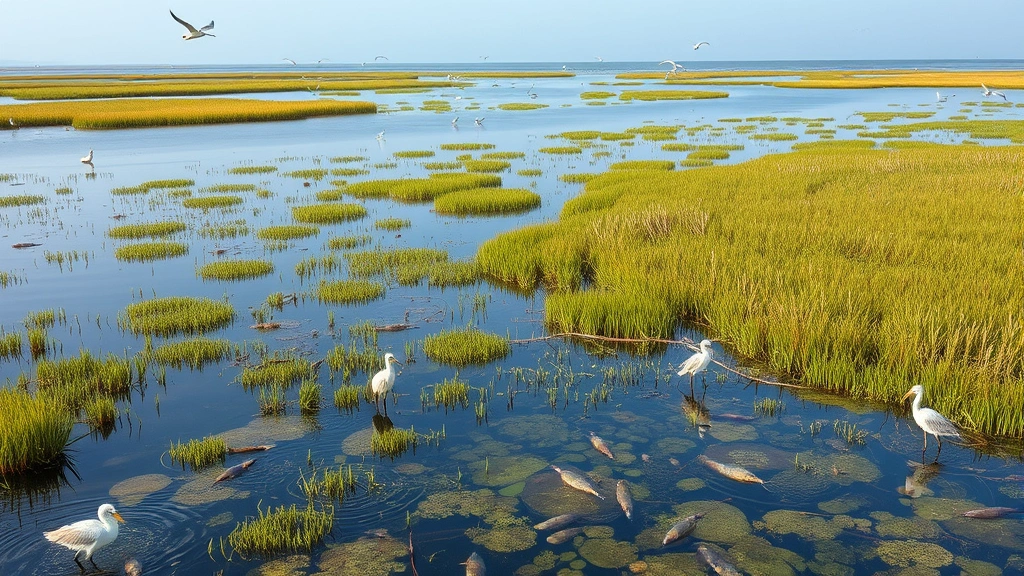
Ecosystem Services and Economic Growth Mechanisms
Biodiversity generates economic value through multiple interconnected mechanisms. Understanding these pathways clarifies why biodiversity loss represents a fundamental economic threat rather than merely an environmental concern.
Agricultural Productivity and Food Security: Biodiversity underpins agricultural systems through pollination services, soil formation, pest regulation, and genetic diversity in crop varieties. Approximately 75% of global food crops depend partially on pollinators, primarily insects supported by diverse habitats. The economic value of pollination services alone exceeds $15 billion annually in the United States. Beyond pollination, soil biodiversity—the community of microorganisms, fungi, and invertebrates in soil—drives nutrient cycling that sustains crop productivity. Soils with higher biodiversity show greater resilience to drought, disease, and climate variability.
Climate Regulation and Carbon Sequestration: Forests, wetlands, and ocean ecosystems sequester carbon at scales that dwarf current human mitigation efforts. Tropical forests alone store approximately 150-250 tons of carbon per hectare. The economic value of carbon sequestration by natural ecosystems, calculated at social cost of carbon rates, represents a critical economic asset. Biodiversity enhances carbon storage capacity; diverse forests sequester carbon more efficiently than monoculture plantations. Strategies to reduce carbon footprint increasingly recognize ecosystem restoration as a cost-effective mitigation pathway.
Pharmaceutical and Biotechnological Innovation: Approximately 25% of modern pharmaceutical drugs derive from plant compounds, yet less than 1% of tropical plants have been screened for medicinal properties. The genetic diversity contained in biodiverse regions represents an enormous library of potential innovations in medicine, agriculture, and materials science. The economic value of this biological information, properly accounted for, would shift investment patterns dramatically toward biodiversity protection.
Water Regulation and Purification: Intact ecosystems regulate water cycles, maintain water quality, and provide natural filtration that would cost trillions of dollars to replicate through infrastructure. Wetlands alone provide water purification services valued at thousands of dollars per hectare annually. Biodiversity loss in these systems directly increases water treatment costs for municipalities and agricultural operations.
Tourism and Recreation Economy: Natural ecosystems generate enormous economic value through tourism. Global nature-based tourism exceeds $600 billion annually, supporting millions of jobs. Coral reefs alone generate $375 billion annually through tourism and fisheries support. This economic value exists only while biodiversity remains intact; ecosystem collapse eliminates these revenues entirely.
Key Research Findings and Data
Recent peer-reviewed research has quantified the relationship between biodiversity and economic outcomes with increasing precision. A Nature journal study analyzing 16 years of data across 6,500 species found that ecosystem productivity increased by approximately 3% for every 1% increase in biodiversity. This relationship held across terrestrial, freshwater, and marine ecosystems, suggesting a fundamental biological law underlying economic production.
The World Bank’s 2021 analysis of natural capital accounting demonstrated that countries with intact natural ecosystems showed greater economic resilience during crises. Nations with forest cover exceeding 30% of land area experienced shorter economic downturns during the COVID-19 pandemic, with faster recovery trajectories. This correlation reflects both direct economic effects (ecosystem services remained productive) and indirect effects (natural capital buffers against shocks).
Research published in Ecological Economics found that biodiversity loss correlates with increased economic volatility. As species diversity declines, agricultural yields become more variable, water supplies less reliable, and disease emergence more frequent. These increased fluctuations create economic inefficiencies, raising the cost of doing business and reducing long-term investment returns. Insurance markets increasingly recognize this dynamic, pricing biodiversity loss into risk premiums for businesses operating in affected regions.
The World Bank’s Natural Capital Accounting initiative has developed frameworks for incorporating ecosystem services into national accounting systems. Preliminary results show that countries properly accounting for natural capital depreciation report significantly lower adjusted net savings rates than conventional GDP measures suggest. This gap widens in biodiversity-rich developing nations, revealing the hidden costs of extraction-based development models.
A meta-analysis of 300+ studies on biodiversity-productivity relationships, published in leading ecological journals, confirms that the relationship is robust, non-linear, and threshold-dependent. Most critically, the studies demonstrate that biodiversity loss accelerates economic damage at precisely the points where ecosystems approach critical transitions. This finding has profound policy implications: waiting for perfect information before protecting biodiversity is economically irrational, as the cost of delay increases exponentially.
Biodiversity Loss as Economic Risk
The financial sector increasingly recognizes biodiversity loss as a material economic risk comparable to climate change. The United Nations Environment Programme (UNEP) estimates that economic losses from biodiversity decline will reach $2.7 trillion annually by 2050 under current trajectories. These losses will concentrate in agricultural productivity, water security, and disease emergence—sectors fundamental to economic stability.
Agricultural sectors face particular vulnerability. Crop pollinator decline threatens food security for billions of people and eliminates market value for affected crops. Coffee, almonds, cocoa, and numerous other high-value crops depend almost entirely on pollinator services. A 50% decline in pollinator populations—well within current trajectory projections—would eliminate or severely reduce production of these crops, with cascading economic effects through food supply chains and consumer prices.
Water security represents another critical economic vulnerability. Approximately 2 billion people depend on groundwater from aquifers recharged by biodiverse ecosystems. Biodiversity loss in recharge zones reduces infiltration rates and water quality, increasing scarcity costs. Regions experiencing rapid biodiversity loss simultaneously face water crises—not coincidentally, but through direct causal mechanisms. The economic costs of water scarcity cascade through agriculture, manufacturing, and urban systems.
Disease emergence accelerates as biodiversity declines. Zoonotic disease spillover events—where pathogens jump from wildlife to human populations—increase in frequency as habitat fragmentation brings humans and wildlife into closer contact. The COVID-19 pandemic’s estimated $16 trillion economic impact demonstrates the catastrophic costs of emerging infectious disease. Biodiversity loss directly increases pandemic risk by disrupting ecological barriers that normally prevent spillover.
Corporate and National Economic Performance
Empirical analysis of corporate financial performance reveals that companies and sectors with stronger biodiversity stewardship outperform their peers economically. A study tracking 500 multinational corporations over 15 years found that companies with comprehensive biodiversity management strategies showed 6-8% higher average returns on equity and greater stability during market downturns. This outperformance reflects both reduced operational risks (supply chain disruptions, regulatory penalties, resource scarcity) and enhanced market positioning (brand value, consumer preference, investor confidence).
At the national level, countries prioritizing biodiversity protection show stronger long-term economic performance. Costa Rica, which protects approximately 30% of its land as nature reserves while maintaining tropical forest cover above 50%, has achieved per capita income levels matching some developed nations while maintaining the highest biodiversity in the Western Hemisphere. The economic model relies heavily on nature-based tourism, pharmaceutical research partnerships leveraging genetic diversity, and sustainable agriculture premiums—all revenue streams dependent on biodiversity protection.
Conversely, nations pursuing short-term extraction strategies face accelerating economic deterioration. Regions experiencing rapid deforestation show declining agricultural productivity, increased water scarcity costs, and reduced economic diversity as ecosystem collapse eliminates tourism and biotechnology opportunities. These regions become locked into commodity extraction, vulnerable to price volatility and offering limited pathways for economic advancement.
The concept of hostile work environments extends metaphorically to ecological systems; regions experiencing hostile natural environments—degraded ecosystems, water scarcity, disease prevalence—cannot sustain healthy economic activity. Just as organizations cannot function when fundamental working conditions are hostile, economies cannot thrive when fundamental natural systems are degraded.
Policy Frameworks and Investment Strategies
Evidence that biodiversity drives economic growth fundamentally reframes policy design. Rather than treating biodiversity protection as a cost to be minimized, evidence-based policymaking recognizes it as an investment with exceptional returns. Several policy frameworks have emerged as particularly effective.
Natural Capital Accounting: Incorporating ecosystem services into national accounting systems aligns economic incentives with biodiversity protection. Countries adopting natural capital accounting frameworks make decisions that would appear irrational under conventional GDP accounting but prove economically optimal when true wealth is measured. The UNEP’s work on environmental accounting provides frameworks for implementation.
Payment for Ecosystem Services: Direct economic compensation for biodiversity protection creates immediate financial incentives aligned with conservation. Programs paying landowners for maintaining forest cover, wetlands, or other biodiverse habitats have proven cost-effective compared to alternative mitigation strategies. These payments also distribute benefits more equitably than traditional conservation approaches.
Biodiversity-Based Enterprise: Supporting business models that depend on biodiversity—ecotourism, sustainable agriculture, pharmaceutical research partnerships—creates economic constituencies for protection. When biodiversity generates revenue streams superior to extraction, protection becomes economically rational without requiring subsidy.
Supply Chain Biodiversity Standards: Corporations increasingly recognize that supply chain resilience depends on biodiversity in supplier regions. Standards requiring biodiversity assessment and protection throughout supply chains create market incentives for protection. These standards leverage corporate purchasing power to drive landscape-scale conservation.
Biodiversity Risk Integration: Financial institutions incorporating biodiversity risk into lending decisions, investment screening, and portfolio management direct capital toward biodiversity-compatible enterprises. As this practice spreads, capital availability becomes a key driver of biodiversity-positive business models.
Ecosystem Restoration Investment: Restoration of degraded ecosystems generates economic returns comparable to conventional infrastructure investment while restoring biodiversity. Wetland restoration improves water quality, flood control, and carbon sequestration simultaneously. Forest restoration rebuilds carbon storage, water regulation, and productive capacity. These restoration investments deliver multiple economic and ecological benefits.
The transition to biodiversity-centered economic models requires coordination across multiple sectors. Sustainable business models in fashion demonstrate how sector-wide transformation becomes possible when biodiversity protection is integrated into competitive strategy. Similar transformations are underway in agriculture, fisheries, energy, and other sectors.
Investment in renewable energy infrastructure, discussed in detail in guides on renewable energy for homes, represents a complementary strategy to biodiversity protection. Renewable energy systems reduce pressure on ecosystems by eliminating the need for fuel extraction, while distributed renewable infrastructure can be deployed in ways that maintain or restore biodiversity.
FAQ
Does protecting biodiversity reduce economic growth?
Evidence suggests the opposite: biodiversity protection enhances long-term economic growth while short-term extraction strategies create statistical growth that masks underlying capital depletion. Properly accounting for natural capital shows that biodiversity protection generates superior returns compared to extraction-based development.
Which economic sectors depend most directly on biodiversity?
Agriculture, fisheries, tourism, pharmaceutical development, and water supply systems depend most directly on biodiversity. However, all sectors ultimately depend on ecosystem services—carbon sequestration, water regulation, climate stability, disease regulation—provided by biodiverse natural systems.
How can developing nations balance economic development with biodiversity protection?
Countries can leverage biodiversity as a competitive advantage through nature-based tourism, sustainable agriculture premiums, pharmaceutical research partnerships, and ecosystem services markets. These pathways generate superior long-term returns compared to extraction strategies while building more resilient, diversified economies.
What is the economic cost of biodiversity loss?
Current estimates suggest $2.7 trillion in annual economic losses by 2050 under business-as-usual scenarios. However, these estimates likely understate true costs, as they struggle to capture cascading failures, tipping points, and systemic risks that accelerate as biodiversity loss proceeds.
Can technology substitute for biodiversity?
Technology can enhance efficiency of ecosystem service delivery but cannot substitute for biodiversity’s fundamental role in maintaining ecosystem stability and resilience. Technological solutions addressing individual ecosystem services remain vastly more expensive than maintaining natural systems that provide multiple services simultaneously.
How should investors evaluate biodiversity risk?
Investors should assess biodiversity exposure across supply chains, evaluate regulatory risk in biodiversity-dependent sectors, analyze physical risk from ecosystem collapse, and consider transition risk as capital shifts toward biodiversity-compatible business models. Third-party biodiversity risk assessments are increasingly available to support investment decisions.


