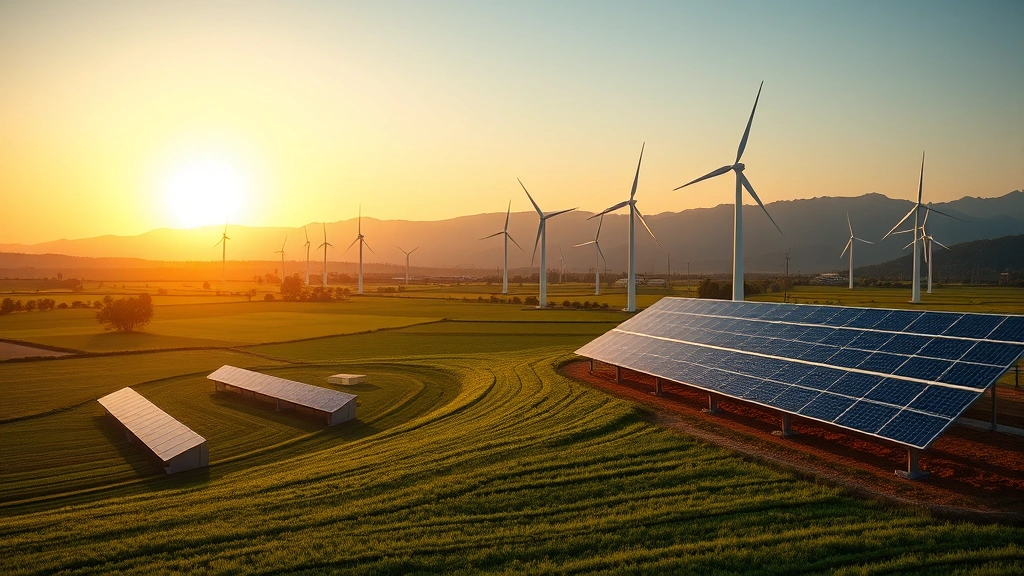
How New Environments Affect Economies: Study Insights
Environmental transitions represent one of the most underexplored intersections between ecological systems and economic performance. Just as a great dane puppy introduction to a new environment requires careful adaptation and resource allocation, economies face profound structural shifts when confronted with new environmental conditions. These transitions—whether driven by climate change, resource depletion, regulatory frameworks, or technological disruption—fundamentally reshape market dynamics, labor patterns, and capital allocation mechanisms across entire sectors.
Recent interdisciplinary research reveals that economic systems exhibit surprising parallels to biological adaptation processes. When organisms encounter novel environmental parameters, they must reorganize internal structures to maintain viability. Similarly, economies must reconfigure production systems, supply chains, and investment strategies when environmental conditions shift. The financial implications are staggering: studies indicate that environmental transitions could redirect between $4-6 trillion in global capital flows over the next decade, fundamentally altering competitive advantages and creating both unprecedented opportunities and systemic risks.
This analysis synthesizes cutting-edge research from ecological economics, environmental policy studies, and macroeconomic modeling to illuminate how new environmental conditions reshape economic structures. We examine mechanisms of economic adaptation, sectoral transformation patterns, and the complex feedback loops that determine whether environmental transitions strengthen or destabilize economic systems.

Environmental Transitions and Economic Restructuring
Environmental transitions occur when external ecological conditions fundamentally alter the operational parameters within which economies function. These transitions range from gradual shifts—such as progressive climate warming affecting agricultural productivity—to acute disruptions like resource scarcity or regulatory regime changes. The economic response depends critically on transition speed, magnitude, and predictability.
Understanding these dynamics requires examining how environment and environmental science define these interconnections. Environmental science provides the baseline data: carbon concentration thresholds, biodiversity loss metrics, resource extraction rates, and ecosystem service valuations. Economics then translates these biophysical constraints into market signals, price mechanisms, and capital allocation decisions.
Consider the energy transition as a paradigmatic case. Global economies historically organized around fossil fuel extraction and combustion, creating embedded infrastructure worth trillions of dollars. As climate science demonstrated the necessity of carbon reduction, new environmental constraints emerged. Economies must now simultaneously: (1) maintain energy supply reliability, (2) transition to renewable sources, (3) retrofit existing infrastructure, and (4) manage stranded asset valuations. This multidimensional adjustment process mirrors biological adaptation—organisms cannot simply abandon existing physiological systems but must gradually integrate new capabilities while maintaining core functions.
Research from the World Bank documents that economies with rapid environmental transitions experience GDP volatility 30-40% higher than baseline periods during transition years. However, economies that proactively manage transitions show recovery periods 50% shorter than reactive counterparts, suggesting that strategic anticipation provides significant economic advantages.

Mechanisms of Economic Adaptation to New Environments
Economic adaptation operates through multiple reinforcing mechanisms. Price signals constitute the primary transmission channel: as environmental constraints tighten, resource scarcity drives price increases, incentivizing substitution, efficiency improvements, and innovation. However, price mechanisms operate with substantial lags and often fail to internalize full environmental costs, creating market failures that require regulatory intervention.
Technological innovation represents the secondary adaptation mechanism. Environmental constraints stimulate research investment in alternative technologies, process improvements, and novel business models. The renewable energy sector exemplifies this dynamic: solar photovoltaic costs declined 89% between 2010-2020 as environmental policy created market demand, driving manufacturing scale and technological refinement. This cost reduction then cascaded through economic systems, enabling rapid deployment even in price-sensitive markets.
Institutional adaptation constitutes the tertiary mechanism. Economies develop new regulatory frameworks, accounting standards, financial instruments, and governance structures to manage environmental transitions. Carbon pricing mechanisms, environmental impact assessments, sustainability reporting standards, and green financing protocols represent institutional innovations that reshape economic decision-making architecture.
Examining human environment interaction patterns reveals how behavioral and organizational adaptation cascades through economies. Supply chain reorganization, workforce retraining, consumer preference shifts, and investor reorientation collectively constitute economic adaptation. These processes exhibit complex feedback dynamics: consumer demand for sustainable products creates market opportunities, attracting capital and talent; increased sustainable product availability further reinforces consumer preference shifts.
Research in ecological economics emphasizes that adaptation speed depends critically on three factors: (1) capital stock flexibility—the ease with which existing productive assets can be repurposed or retired, (2) human capital mobility—workforce capacity to transition between sectors and roles, and (3) institutional responsiveness—governance systems’ ability to implement coordinated policy adjustments. Economies with flexible capital stocks, highly educated workforces, and adaptive institutions transition more smoothly, while rigid economies experience greater disruption costs.
Sectoral Transformation and Competitive Dynamics
Environmental transitions trigger profound sectoral reorganization. Declining sectors—fossil fuel extraction, high-emission manufacturing, resource-intensive agriculture—face contraction as environmental constraints bind. Simultaneously, emerging sectors—renewable energy, sustainable materials, ecosystem restoration, environmental monitoring—expand rapidly. This sectoral reallocation generates both economic opportunity and dislocation.
The agriculture sector exemplifies complex sectoral transformation. Climate change alters precipitation patterns, temperature regimes, and pest dynamics, requiring crop selection changes, irrigation system redesign, and cultivation practice modifications. Simultaneously, environmental regulations restrict pesticide and fertilizer use, necessitating transition to regenerative and precision agriculture approaches. These transitions simultaneously reduce yields in transition periods while eventually improving long-term sustainability and profitability. Farmers adopting sustainable practices experience 15-25% yield reductions in years 2-5 of transition, but achieve 20-30% yield improvements by year 10, alongside 40-50% input cost reductions.
Competitive dynamics shift fundamentally in transitional environments. First-mover advantages emerge for firms developing environmental solutions, creating temporary monopolistic rents. However, as technologies mature and scale, competitive intensity increases, driving profit margins downward. Firms that successfully navigate environmental transitions typically combine technological innovation with business model adaptation—developing new revenue streams rather than simply improving existing products.
The automotive sector demonstrates these dynamics vividly. Early electric vehicle (EV) manufacturers like Tesla achieved extraordinary valuations (price-to-earnings ratios exceeding 1000x) by capturing environmental transition momentum. However, as legacy automakers entered the market with capital, scale, and distribution advantages, competitive dynamics normalized. Current EV market economics require genuine manufacturing efficiency and product superiority rather than environmental novelty premiums.
Capital Reallocation and Investment Patterns
Environmental transitions redirect capital flows at unprecedented scales. Global sustainable finance reached $35.3 trillion in 2020, representing approximately 36% of professionally managed assets. This reallocation reflects both regulatory mandates and investor recognition that environmental transitions create systematic risks and opportunities affecting long-term asset valuations.
Capital reallocation operates through multiple channels. Direct investment in environmental solutions—renewable energy infrastructure, sustainable agriculture, green building, environmental technology—absorbs increasing capital proportions. Divestment campaigns systematically reduce capital flows to high-emission sectors, increasing their cost of capital and accelerating transition pressures. Regulatory requirements—such as European Union taxonomy standards and SEC climate disclosure rules—force institutional investors to systematically reassess portfolio environmental risks.
The financial implications are substantial. Stranded asset literature estimates that $1-4 trillion in fossil fuel infrastructure faces valuation impairment as environmental transitions progress. Conversely, renewable energy infrastructure investments generate 2-3x higher employment per dollar invested compared to fossil fuel equivalents, creating economic stimulus effects that partially offset transition costs.
Exploring strategies to reduce carbon footprint illuminates investment decision-making processes. Organizations reducing carbon footprints typically invest in energy efficiency, renewable energy, supply chain optimization, and circular economy approaches. These investments generate positive financial returns (average payback periods 3-7 years) while simultaneously reducing environmental impacts, creating alignment between financial and environmental objectives.
However, capital reallocation creates distributional challenges. Capital-intensive sectors require sustained investment to maintain functionality; premature divestment from transition-phase sectors can create infrastructure deficits. Developing economies particularly face challenges: renewable energy transitions require upfront capital investments that many developing nations struggle to finance, potentially exacerbating global inequality unless accompanied by technology transfer and climate finance mechanisms.
Labor Market Evolution in Transitional Economies
Environmental transitions fundamentally reshape labor markets. Employment in declining sectors contracts while emerging sectors expand, requiring workforce reallocation across occupations, industries, and geographies. These transitions create both opportunity and dislocation, with distributional consequences that vary substantially across demographic groups.
Energy transition employment effects exemplify these dynamics. Coal mining employment in the United States declined from 81,000 workers (2011) to 43,000 (2021), reflecting environmental policy and technological change. Simultaneously, renewable energy employment expanded from 77,000 (2010) to 249,000 (2021). However, these employment transitions rarely occur in identical locations or involve identical workers; coal mining communities experience unemployment and economic decline while renewable energy employment concentrates in different regions.
Workforce adaptation requires substantial human capital investment. Workers transitioning from declining to emerging sectors require retraining, often necessitating 2-4 years of educational investment with associated income loss. Government support programs—wage insurance, relocation assistance, educational subsidies—partially offset transition costs but rarely achieve complete compensation. Research indicates that workers displaced by environmental transitions experience lifetime earnings reductions of 15-30% even with support programs, reflecting both skill transferability limitations and geographic relocation challenges.
Sectoral employment growth varies substantially. Renewable energy, energy efficiency, sustainable agriculture, environmental restoration, and circular economy sectors demonstrate strong employment growth (4-8% annually). However, these emerging sectors often require different skill sets—electrical engineering, data analytics, systems thinking—compared to declining sectors. This skills mismatch creates both unemployment in transitioning regions and labor shortages in emerging sectors.
Equitable transition requires deliberate policy design. Just transition frameworks—combining income support, educational investment, community economic development, and worker participation in transition planning—can substantially improve outcomes. However, implementation remains inconsistent; wealthy economies implement more comprehensive support while developing economies often lack resources for adequate transition assistance.
Risk Assessment and Economic Resilience
Environmental transitions create complex risk structures affecting economic stability. Physical risks—infrastructure damage from climate impacts, resource supply disruptions, agricultural productivity shocks—directly threaten economic functionality. Transition risks—stranded assets, policy uncertainty, technology disruption—affect long-term asset valuations and capital allocation decisions. Systemic risks—financial system instability from concentrated environmental exposures, supply chain cascading failures—threaten macroeconomic stability.
Risk assessment requires integrating biophysical and economic modeling. Climate models project temperature, precipitation, and extreme event probabilities under various emissions scenarios. Economic models then translate these projections into sectoral impacts, regional effects, and systemic consequences. However, substantial uncertainty persists: climate sensitivity estimates range across 1.5-4.5°C warming for doubled CO₂, and economic impact models exhibit enormous confidence intervals reflecting uncertain adaptation responses and technological trajectories.
Economic resilience—the capacity to absorb environmental shocks and maintain functionality—depends on multiple factors. Diversified economies demonstrate greater resilience than specialized ones; economies with flexible labor markets adapt more readily than rigid ones; economies with strong institutions implement coordinated responses more effectively than fragmented ones. Research from the United Nations Environment Programme emphasizes that environmental resilience and economic resilience reinforce each other: ecosystem protection provides insurance against environmental shocks while economic diversity enables ecosystem restoration investment.
Stress testing financial systems for environmental risks has become increasingly important. Central banks and financial regulators now conduct climate stress tests evaluating portfolio resilience to environmental transition scenarios. These exercises reveal that financial systems exhibit substantial environmental risk concentrations, particularly in real estate (climate physical risks) and fossil fuel sectors (transition risks). Addressing these concentrations requires sustained capital reallocation toward environmental solutions and away from high-risk exposures.
Policy Frameworks for Environmental Economic Transitions
Effective environmental economic transitions require comprehensive policy frameworks addressing multiple dimensions simultaneously. Carbon pricing mechanisms—carbon taxes or cap-and-trade systems—create financial incentives for emission reductions by internalizing environmental costs into market prices. However, carbon pricing alone proves insufficient; complementary policies addressing market failures, equity concerns, and coordination problems are essential.
Regulatory standards—fuel efficiency requirements, renewable energy mandates, emission limits—directly constrain high-impact activities while incentivizing alternative approaches. Standards prove particularly effective when combined with technology support, as they create guaranteed markets for solutions while regulatory certainty enables long-term investment planning. The renewable energy mandate framework in the European Union, combined with feed-in tariff mechanisms, created sufficient demand certainty to attract massive capital investment and drive cost reductions.
Innovation policy—research funding, patent protection, technology deployment support—accelerates technological solutions enabling environmental transitions. Government research investment in renewable energy, battery technology, and carbon capture has generated spillover innovations benefiting entire industries. However, innovation policy requires long-term commitment; clean energy research demonstrates 15-20 year lags between initial research investment and commercial deployment at scale.
Examining specific environment examples reveals how policy frameworks operate in practice. Costa Rica’s renewable energy transition, powered by hydroelectric and geothermal resources combined with supportive policies, achieved 99% renewable electricity by 2019 while maintaining economic growth and reducing energy costs. Denmark’s wind energy dominance emerged from decades of consistent policy support, manufacturing investment, and grid integration planning. These examples demonstrate that environmental and economic objectives align when policy frameworks deliberately design this alignment.
Just transition policies—worker support, community development, regional equity provisions—address distributional consequences of environmental transitions. Effective just transition combines income support for displaced workers with educational investment, economic diversification assistance for affected communities, and meaningful participation of affected populations in transition planning. However, just transition implementation remains incomplete globally; wealthy nations implement more comprehensive programs while developing nations often lack resources.
International policy coordination proves critical for environmental transitions in globalized economies. Unilateral carbon pricing creates competitive disadvantages for domestic producers, incentivizing carbon leakage to unregulated jurisdictions. Carbon border adjustment mechanisms—tariffs on imports from jurisdictions with inadequate climate policy—address this problem but create trade tensions. International climate agreements attempt to coordinate national policies, though implementation remains inconsistent.
The World Bank’s climate change initiatives emphasize that environmental economic transitions require massive capital mobilization. Transitioning global energy systems alone requires approximately $4 trillion annually through 2050. Mobilizing this capital requires combining public investment, private capital attraction through policy certainty, and innovative financing mechanisms including green bonds, blended finance, and debt-for-climate swaps.
Reviewing environmental economic topics on the Ecorise Daily Blog provides current perspectives on emerging transition challenges and solutions. Sustainable transitions remain dynamic fields with evolving understanding of optimal policy approaches, technological trajectories, and economic impacts.
FAQ
How do environmental transitions affect GDP growth?
Environmental transitions create complex GDP effects. Short-term transition periods often involve GDP volatility and potential contraction as existing capital becomes stranded and economies reorganize production systems. However, research indicates that economies managing proactive, well-designed transitions achieve stronger long-term growth than reactive counterparts. Renewable energy deployment, energy efficiency improvements, and circular economy transitions generate productivity gains, innovation spillovers, and employment growth offsetting transition costs within 5-15 years. The International Monetary Fund estimates that climate action investments generate 4x economic returns through productivity improvements and avoided climate damage.
Which sectors face greatest economic disruption from environmental transitions?
Fossil fuel extraction, high-emission manufacturing, and resource-intensive agriculture face most direct disruption. However, disruption spreads through supply chains affecting automotive, aviation, shipping, and construction sectors. Financial services face disruption through stranded asset write-downs and credit quality deterioration in high-emission sectors. Conversely, renewable energy, sustainable materials, environmental monitoring, ecosystem restoration, and circular economy sectors experience strong growth. Transition winners and losers depend substantially on policy design and business model adaptation.
How do developing economies manage environmental transitions differently than wealthy nations?
Developing economies face distinct transition challenges: limited capital for infrastructure investment, weaker institutions for policy implementation, greater dependence on carbon-intensive sectors like resource extraction, and competing development priorities. However, developing economies also possess advantages: opportunity to deploy latest technologies avoiding legacy infrastructure, rapidly growing energy demand enabling renewable energy dominance, and strong renewable resource endowments in many regions. Equitable global transitions require climate finance, technology transfer, and differentiated responsibilities reflecting historical responsibility for atmospheric carbon accumulation.
What role does technological innovation play in environmental transitions?
Technological innovation proves essential for environmental transitions; policy constraints alone cannot achieve necessary emission reductions. Innovation reduces solution costs—solar photovoltaic costs declined 89% over a decade through technological improvement and manufacturing scale. Innovation enables new business models—platform economies, sharing arrangements, digital optimization. Innovation creates competitive advantage for first-movers developing superior environmental solutions. However, innovation requires research investment, regulatory certainty enabling long-term planning, and capital availability for commercialization. Innovation policy must combine basic research funding, deployment incentives, and intellectual property frameworks balancing innovation incentives with technology access.
How do financial markets respond to environmental transition information?
Financial markets increasingly price environmental transition risks and opportunities. Renewable energy stocks outperformed fossil fuel stocks substantially over the past decade. Bond markets demand higher yields from high-emission companies reflecting default risk concerns. Real estate markets incorporate climate physical risk into property valuations. However, market responses remain incomplete; substantial mispricing persists reflecting uncertainty about transition timing and policy trajectories. Improved environmental disclosure standards, climate stress testing, and financial regulation incorporating environmental risks gradually improve market efficiency in environmental risk pricing.


