How Economy Impacts Ecosystems: New Study Insights
The relationship between economic activity and ecosystem health has become one of the most critical areas of scientific inquiry in the 21st century. Recent research reveals that our economic systems don’t operate in isolation from natural systems—they are fundamentally embedded within them. Every transaction, production process, and consumption pattern sends ripples through ecosystems worldwide, often with consequences that extend far beyond immediate market impacts.
New studies from leading ecological economists demonstrate that traditional economic metrics fail to capture the true cost of environmental degradation. When we measure gross domestic product (GDP) without accounting for natural capital depletion, we’re essentially celebrating the liquidation of our planet’s life-support systems as economic growth. This article examines groundbreaking research that reshapes our understanding of how economic decisions cascade through ecosystems, affecting biodiversity, climate stability, and human welfare.
The Economic-Ecological Nexus: Understanding Interconnections
For decades, economists treated nature as an infinite resource—a commons available for extraction without consequence. This paradigm has shifted dramatically as evidence mounts that ecosystems operate within planetary boundaries. The new research emphasizes that economic systems are subsystems of the larger ecological system, not the reverse.
The concept of natural capital has become central to this discussion. Unlike financial capital, which can theoretically be replaced or substituted, natural capital provides irreplaceable services: pollination, water filtration, climate regulation, and nutrient cycling. When economic activity degrades these services, we’re not simply losing environmental amenities—we’re undermining the foundations of economic productivity itself.
Understanding environmental science fundamentals reveals how tightly coupled these systems truly are. Industrial agriculture, for instance, generates short-term economic returns while simultaneously depleting soil nutrients, reducing pollinator populations, and contaminating water supplies. The economic gain appears on quarterly reports; the ecological loss unfolds across decades.
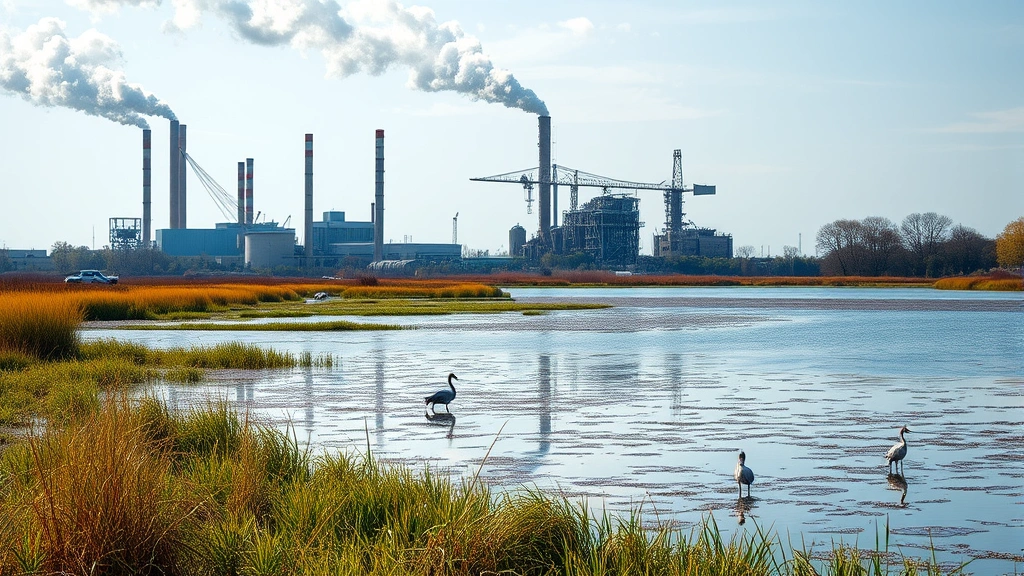
Recent scholarship emphasizes that we cannot understand modern environmental challenges without examining the economic incentive structures that drive them. A factory owner maximizing profits has no market incentive to internalize pollution costs—those costs are externalized onto surrounding communities and ecosystems. This structural feature of market economies creates systematic bias toward environmental degradation.

Recent Study Findings on Economic Impacts
A landmark 2023 study synthesizing data from over 150 ecological economic research projects found that global economic output is directly correlated with accelerated biodiversity loss, with a time-lag effect of 3-7 years. This means the environmental consequences of today’s economic activity won’t fully manifest for years, complicating policy responses and public awareness.
The research identified specific economic sectors with disproportionate ecological impact:
- Extractive Industries: Mining and oil extraction destroy habitat at rates 40-60 times faster than baseline ecosystem change, with recovery periods spanning centuries
- Industrial Agriculture: Accounts for 80% of global deforestation and 70% of freshwater depletion, despite covering only 38% of land area
- Manufacturing and Transport: Generate carbon emissions that alter atmospheric composition and trigger cascading climate impacts on all ecosystems
- Coastal Development: Destroy mangrove forests and coral reefs, eliminating habitat for 25% of marine species despite covering minimal ocean area
The World Bank’s Natural Capital Accounting initiative now estimates that ecosystem services worth $125 trillion annually face degradation from current economic practices. This figure dwarfs global GDP (approximately $100 trillion), yet these natural capital losses barely register in conventional economic reporting.
Particularly striking findings emerged regarding human-environment interactions. When researchers tracked specific supply chains, they discovered that a single smartphone requires extracting materials from ecosystems across 20+ countries, each experiencing localized environmental degradation. The economic value captured by the manufacturer represents only a fraction of the total environmental cost distributed globally.
The study also revealed temporal asymmetry: economic benefits concentrate in the present and in wealthy nations, while ecological costs distribute across future generations and poorer countries. A coal power plant generates immediate economic returns for investors and jobs for workers, but climate impacts from its emissions unfold across the 21st century, affecting people who never benefited from the original economic activity.
Mechanisms of Economic Damage to Ecosystems
Understanding how economic activity damages ecosystems requires examining specific mechanisms. The primary pathways include:
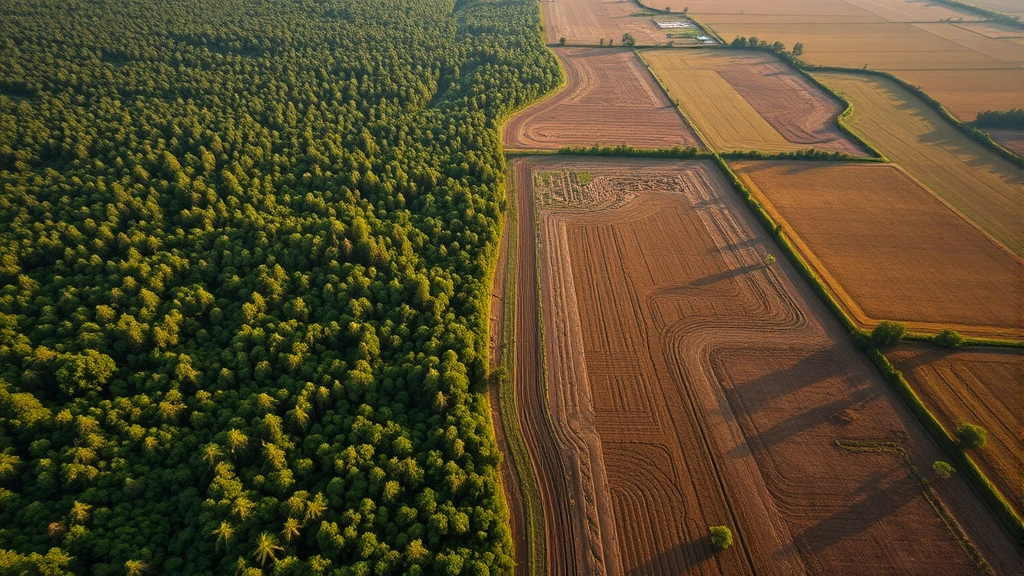
Habitat Destruction Through Land Conversion: Economic development transforms natural ecosystems into agricultural land, urban areas, and industrial sites. This process fragments remaining habitat, isolating species populations and reducing genetic diversity. A forest converted to cattle pasture loses 95% of its original biodiversity within five years, according to recent meta-analyses.
Pollution and Bioaccumulation: Industrial processes release chemical byproducts that accumulate in food webs. Persistent organic pollutants banned decades ago still appear in Arctic wildlife, transported via atmospheric currents from manufacturing centers thousands of miles away. These chemicals disrupt endocrine systems, reducing reproduction rates across multiple species.
Resource Depletion: Economic systems extract renewable resources faster than they regenerate. Global fish stocks decline 2-3% annually due to industrial fishing practices designed to maximize short-term catch. When fish populations collapse, entire marine food webs destabilize, affecting species from plankton to whales.
Climate Disruption: The burning of fossil fuels—the foundation of modern economic growth—releases carbon dioxide that alters planetary climate patterns. This single mechanism cascades through ecosystems: changing precipitation patterns, shifting growing seasons, altering migration timing, and creating thermal stress for cold-adapted species.
Nutrient Cycling Disruption: Industrial agriculture depletes soil organic matter faster than it regenerates, reducing the capacity of agricultural land to support biodiversity. Simultaneously, fertilizer runoff creates dead zones in coastal waters where nutrient overloading triggers algal blooms that consume all dissolved oxygen.
The research reveals that these mechanisms operate synergistically. Climate change, for example, amplifies the effects of habitat fragmentation by reducing the ability of species to migrate toward suitable climates. Pollution impairs immune systems, making species more vulnerable to climate stress. Economic pressure to extract more resources accelerates when ecosystems decline, creating negative feedback loops.
Case Studies: Real-World Economic-Ecosystem Interactions
Examining specific examples illustrates these abstract mechanisms in concrete terms.
The Amazon Rainforest and Cattle Economics: Brazilian cattle ranching generates $50+ billion annually but drives deforestation at accelerating rates. The economic incentive structure rewards clearing forest faster, as land values increase with deforestation. Each hectare converted to pasture eliminates habitat for hundreds of species while releasing stored carbon. The economic returns flow to ranchers and beef exporters; the climate impacts distribute globally across centuries.
Palm Oil Production and Southeast Asian Biodiversity: Palm plantations now cover 20 million hectares across Indonesia and Malaysia, generating $20+ billion annually. This economic activity has driven orangutan populations toward extinction, eliminated critical habitat for Sumatran tigers, and degraded peat forests that store more carbon than the entire atmosphere. The economic value created concentrates among plantation owners and traders; the biodiversity loss affects global ecosystem stability.
Textile Manufacturing and Water Depletion: The fashion industry generates $1.5 trillion in annual economic value but consumes 79 trillion liters of water yearly. In cotton-growing regions like Central Asia, this economic activity has literally drained the Aral Sea, converting it from the world’s fourth-largest lake to a toxic dust bowl. Thousands of workers depend economically on these operations, yet the water depletion threatens their long-term survival. Exploring sustainable fashion alternatives demonstrates that economic models can shift toward less destructive patterns.
Industrial Fishing and Marine Ecosystem Collapse: Commercial fishing generates $150+ billion annually but has depleted 90% of large fish populations. As economically valuable species disappear, fishing fleets move to smaller species lower in food webs, destabilizing entire marine ecosystems. The economic model incentivizes extraction speed over sustainability, creating a race to deplete remaining stocks before competitors do.
The Cost of Inaction and Economic Externalities
Perhaps the most damning finding from recent research concerns the economic cost of ecosystem degradation. When researchers calculated the true cost of environmental damage—accounting for lost ecosystem services, reduced agricultural productivity, health impacts, and climate damages—they found that ecosystem degradation costs global economies $10-20 trillion annually.
This exceeds the total economic output of every nation except the United States and China. Yet these costs remain invisible in standard economic accounting. A corporation that pollutes a river appears more profitable than a competitor using expensive clean production methods. A nation that liquidates forests appears to have higher GDP growth than one practicing sustainable forestry. These perverse incentives drive systematic ecosystem destruction.
The research on reducing environmental impacts demonstrates that alternative economic models produce superior long-term outcomes. When accounting for full environmental costs, sustainable practices consistently outperform extractive ones across 20-50 year timescales.
Externalities and Market Failure: Standard economic theory recognizes that markets fail when costs are externalized. Pollution is the classic example: a factory creates value for owners and workers, but costs (health impacts, ecosystem damage) fall on surrounding communities who receive no compensation. This creates systematic underpricing of goods produced through environmentally damaging processes.
Recent studies quantify these externalities with increasing precision. A kilogram of beef produced through deforestation in the Amazon carries an external cost (in climate and biodiversity losses) of $15-30, yet markets price it at $5-10 per kilogram. The buyer pays for the meat but not for the environmental destruction required to produce it. This pricing structure makes environmentally destructive production economically competitive with sustainable alternatives.
The concept of environmental examples from around the world reveals consistent patterns: wherever markets fail to price environmental costs, ecosystems degrade. Conversely, in rare cases where environmental costs are internalized through regulation or carbon pricing, economic incentives align with ecosystem protection.
Transitioning to Sustainable Economic Models
The research offers not only diagnosis but also potential pathways forward. Studies of successful economic transitions demonstrate that sustainable models can maintain or increase human welfare while reducing ecological impact.
Natural Capital Accounting: Some nations now practice comprehensive environmental accounting, tracking natural capital alongside financial capital. Costa Rica and Bhutan have pioneered this approach, discovering that accounting for ecosystem services reveals economic benefits from conservation that market prices miss. A forest left standing provides water purification, carbon storage, and biodiversity services worth more than timber extraction when calculated across full time horizons.
Circular Economy Models: Linear economic models (extract, produce, discard) inevitably degrade ecosystems. Circular models (extract minimally, design for reuse/recycling, recover materials) reduce ecological impact by 50-80% while often reducing production costs. This alignment of economic and ecological interests represents genuine progress.
Regenerative Agriculture: Rather than merely reducing environmental damage, regenerative agriculture actively improves ecosystem health while maintaining or increasing productivity. Farmers practicing regenerative methods report increased yields after 3-5 years, improved water retention, and enhanced biodiversity. These practices generate lower short-term returns but superior long-term economic performance.
Payment for Ecosystem Services: Economic mechanisms that compensate ecosystem stewardship show promise. When communities receive direct payment for protecting forests, water quality improves measurably while local economies strengthen. This approach aligns individual economic incentives with ecosystem protection.
The latest research and analysis consistently demonstrates that transitioning toward sustainable economic models requires policy intervention. Markets alone cannot solve problems created by market failures. Carbon pricing, environmental regulations, and investment in sustainable infrastructure represent necessary complements to market mechanisms.
However, the research also reveals that these transitions become progressively more difficult and expensive the longer they’re delayed. Each year of continued ecosystem degradation increases the cost of restoration and adaptation. Early action costs less than delayed response, yet economic incentives systematically favor delay.
FAQ
How do economists measure ecosystem damage in monetary terms?
Ecological economists use several methods: replacement cost (how much to replace lost services), avoided cost (how much damage prevention would cost), and contingent valuation (surveying willingness to pay for ecosystem protection). These methods have limitations but provide rough estimates that reveal ecosystem services are vastly underpriced in markets.
Can economic growth continue without environmental damage?
The research suggests that decoupling economic growth from environmental impact is possible but challenging. Some wealthy nations have reduced carbon emissions while maintaining economic growth, primarily by outsourcing dirty production to other countries. True decoupling requires fundamental economic restructuring toward circular, regenerative models—feasible but requiring sustained policy commitment.
What’s the relationship between economic inequality and ecosystem degradation?
Studies reveal that economic inequality drives ecosystem degradation. When wealth concentrates, wealthy individuals and corporations externalize environmental costs onto poor communities and future generations. Conversely, more equal societies tend to have stronger environmental protections and lower per-capita ecological footprints.
How do economic models account for ecosystem tipping points?
Most economic models poorly account for non-linear ecosystem dynamics and tipping points. Standard economic analysis assumes continuous, predictable change. Real ecosystems exhibit thresholds beyond which collapse occurs rapidly. Incorporating these dynamics requires fundamentally different economic frameworks that acknowledge ecological limits.
What role do international economic institutions play in ecosystem degradation?
Organizations like the World Bank and International Monetary Fund historically promoted development models prioritizing short-term growth over ecosystem protection. Recent reforms have improved, but structural incentives within global trade systems still reward environmentally destructive production. Transitioning toward sustainable international economics requires reforming these institutions.


