Is Urbanization Hurting Ecosystems? Study Insights
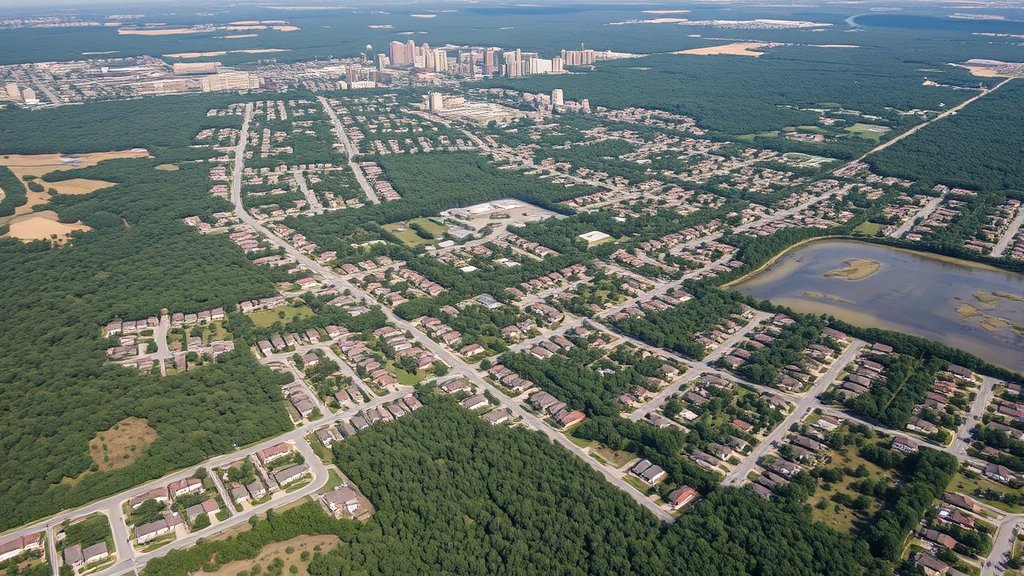
Urbanization stands as one of the most transformative forces reshaping our planet. By 2050, the United Nations projects that nearly 70% of humanity will live in urban areas, up from approximately 55% today. This unprecedented migration to cities represents both economic opportunity and profound ecological risk. The rapid expansion of urban infrastructure—from sprawling residential developments to industrial zones—fundamentally alters landscapes, fragments habitats, and disrupts the intricate ecological systems that sustain all life. Understanding the mechanisms through which urbanization damages ecosystems has become critical for policymakers, urban planners, and environmental scientists alike.
Recent comprehensive studies reveal a sobering picture: urbanization is not merely hurting ecosystems but actively accelerating biodiversity loss, altering hydrological cycles, and intensifying climate impacts. The transformation of natural landscapes into built environments eliminates critical habitat, increases pollution loads, and creates cascading effects throughout food webs and ecosystem services. Yet this narrative is not entirely deterministic. Emerging research demonstrates that strategic urban planning, green infrastructure integration, and ecological restoration can mitigate significant portions of urbanization’s negative impacts. This article synthesizes current scientific evidence to explore how cities damage ecosystems while examining pathways toward more sustainable urban futures.
Habitat Loss and Fragmentation
Habitat destruction represents the primary mechanism through which urbanization damages ecosystems. When cities expand, they consume natural landscapes at unprecedented rates. A 2023 study published in Nature Sustainability documented that urban expansion consumes approximately 6,000 square kilometers of land annually worldwide—an area equivalent to the size of Delaware. This conversion is particularly devastating in biodiversity hotspots, where endemic species with limited geographic ranges face immediate extinction risk.
The process of habitat fragmentation deserves particular attention. Unlike complete habitat destruction, fragmentation creates isolated patches of remaining natural habitat surrounded by urban development. This isolation fundamentally disrupts ecological processes. Species requiring large home ranges—such as apex predators, migratory birds, and wide-roaming herbivores—cannot sustain viable populations within fragmented habitats. Research from the World Bank environmental economics division demonstrates that habitat fragmentation reduces ecosystem resilience, making remaining natural areas increasingly vulnerable to climate variability, disease, and invasive species.
Consider the case of tropical rainforest urbanization. In the Amazon Basin and Southeast Asian regions, urban expansion combined with agricultural development has created a mosaic of small forest fragments. These fragments experience elevated edge effects—increased temperature fluctuations, altered moisture levels, and greater predation pressure—that native species evolved in continuous forest environments cannot tolerate. Meta-analysis of 150+ studies on edge effects reveals that forest fragments smaller than 100 hectares lose approximately 50% of interior-dependent species within 20 years.
The economic implications are staggering. The United Nations Environment Programme estimates that habitat loss through urbanization costs global economies $125 trillion annually in lost ecosystem services—from pollination to water purification to climate regulation. This figure exceeds global GDP, illustrating the unsustainable economic trajectory of unchecked urban expansion.
Biodiversity Decline in Urban Areas
Empirical data paint a troubling picture of biodiversity loss in urbanizing regions. The Living Planet Index, tracking 32,000+ vertebrate populations globally, documents an average 73% decline in animal populations since 1970, with urbanization identified as a primary driver. Urban areas themselves function as biodiversity deserts—typically supporting only 20-30% of the species richness found in comparable natural habitats.
Urban biodiversity loss follows predictable patterns. Specialist species—those adapted to specific habitat conditions—disappear first, replaced by generalist species capable of tolerating human-dominated landscapes. This creates ecological homogenization, where diverse ecosystems converge toward similar species compositions dominated by rats, pigeons, cockroaches, and weeds. While some species thrive in urban environments, the overall trend represents a catastrophic simplification of ecological communities.
Insect populations deserve particular emphasis given their disproportionate ecological importance. Studies from German nature reserves document a 76% decline in insect biomass over three decades, with urbanization as a significant contributor. Since insects comprise the foundation of terrestrial food webs—serving as primary consumers, pollinators, and decomposers—their collapse cascades through entire ecosystems. The extinction of insect species simultaneously threatens the birds, bats, reptiles, and small mammals that depend on them for food.
Aquatic biodiversity faces comparable pressures. Freshwater ecosystems, already the most threatened on Earth, suffer disproportionately from urbanization. Urban stormwater runoff, sewage discharge, and altered stream morphology degrade aquatic habitats at accelerating rates. The World Wildlife Fund reports that freshwater vertebrate populations have declined 84% since 1970, with urbanization and pollution as primary drivers. River systems flowing through major metropolitan areas typically support less than 10% of pre-urbanization fish species.
Water Pollution and Hydrological Disruption
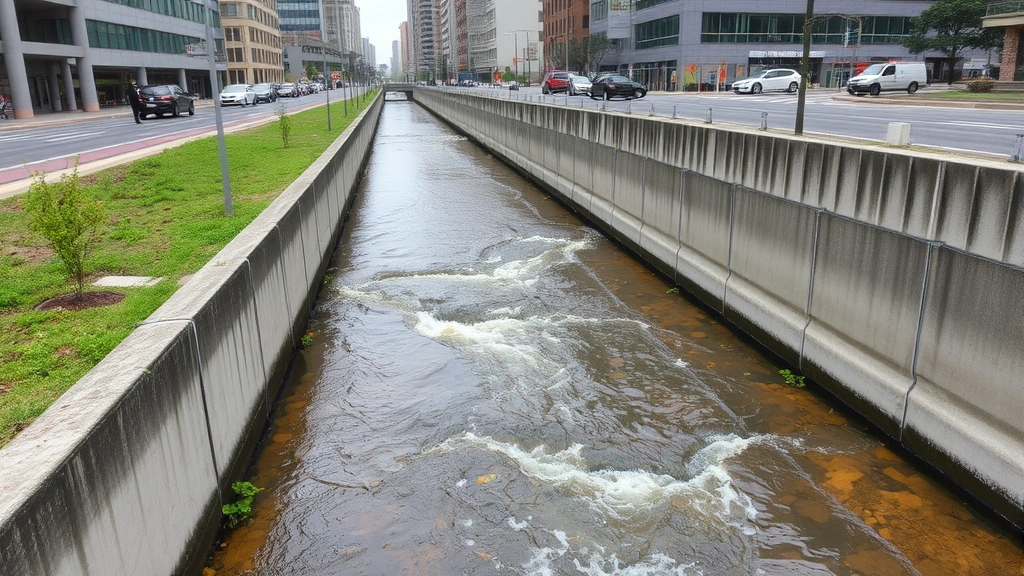
Urbanization fundamentally alters water cycles through multiple mechanisms. Impervious surfaces—asphalt, concrete, rooftops—cover 25-50% of urban land in developed cities, preventing water infiltration and groundwater recharge. This increases stormwater runoff by 200-600% compared to natural landscapes, overwhelming aquatic ecosystems with sudden floods and sediment pulses.
Urban stormwater carries a toxic cocktail of pollutants accumulated from roads, rooftops, and industrial facilities. This “first flush” phenomenon—the initial stormwater discharge carrying concentrated pollutants—delivers heavy metals, petroleum hydrocarbons, polycyclic aromatic compounds, and microplastics into aquatic systems. Research from the Journal of Environmental Engineering documents that a single storm event in urban areas can deposit more pollutants into receiving waters than weeks of non-urban runoff.
The hydrological consequences extend beyond water quality. Urban water abstraction—pumping groundwater and surface water for municipal supply—fundamentally alters ecosystem water availability. In arid and semi-arid regions, urban water demands often exceed renewable supplies, causing aquifer depletion and streamflow reduction. The Indus River, for example, now rarely reaches the ocean due to irrigation and urban water extraction, destroying deltaic ecosystems that supported millions of organisms.
Thermal pollution represents another critical but understudied impact. Urban stormwater, heated by passage across hot pavement, raises stream temperatures by 1-5°C above natural levels. This seemingly modest increase triggers cascading ecological changes: reduced oxygen solubility, accelerated metabolic rates in aquatic organisms, altered reproductive timing, and range shifts in temperature-sensitive species. Cold-water fish species like trout cannot survive in urbanized streams with elevated temperatures.
Sewage treatment systems, while removing gross contaminants, fail to eliminate pharmaceutical residues, endocrine-disrupting chemicals, and synthetic compounds that accumulate in aquatic organisms. These chemicals alter fish reproduction, impair immune function in amphibians, and bioaccumulate through food webs. The emerging science of ecotoxicology reveals that urbanization creates chemical environments unprecedented in evolutionary history, to which ecosystems cannot adapt.
Urban Heat Islands and Climate Amplification
Urban heat island effects represent a localized amplification of climate change. Cities are typically 1-7°C warmer than surrounding rural areas, with nighttime temperature differences exceeding daytime variations. This warming results from reduced vegetation, increased heat-absorbing surfaces, and anthropogenic heat from vehicles, air conditioning, and industrial processes.
The ecological consequences are profound. Urban heat islands extend growing seasons, alter flowering and breeding phenologies, and create thermal refugia for some species while excluding others. Nocturnal animals experience sleep disruption from artificial nighttime lighting combined with elevated temperatures. Migratory birds, navigating by celestial cues and timing migration based on photoperiod and temperature, become disoriented in illuminated urban areas, resulting in massive collision mortality and disrupted migration timing.
Plant physiology responds dramatically to urban warming. Some species experience earlier flowering, desynchronizing with pollinator emergence and disrupting mutualistic relationships honed over millennia. Pest species simultaneously extend their ranges and breeding seasons, increasing herbivory and disease pressure on native plants. Urban warming also increases evapotranspiration, exacerbating drought stress in urban vegetation despite proximity to water supplies.
The intersection of urban heat islands with broader climate change creates compounding impacts. Cities already warming 2-3°C above regional background climate experience additional warming from global climate change, potentially reaching 4-5°C above pre-industrial baselines by 2100. Few ecosystems can tolerate such rapid warming without experiencing species turnover and functional collapse.
Air and Soil Pollution Cascades
Urban air pollution extends ecological impacts far beyond city boundaries. Particulate matter, nitrogen oxides, and ozone alter plant physiology, reducing photosynthetic efficiency and increasing susceptibility to pests and pathogens. Acid rain and nitrogen deposition acidify soils and water bodies, disrupting nutrient cycling and increasing toxic metal mobility.
Soil contamination in urban and peri-urban areas creates persistent ecological damage. Heavy metals—lead, cadmium, chromium, mercury—accumulate in soils from vehicle emissions, industrial discharge, and waste disposal. These metals bioaccumulate in plants and soil organisms, moving through food chains and concentrating in predators. Urban soil organisms—earthworms, arthropods, microbes—experience reduced diversity and altered community composition in contaminated soils, compromising soil ecosystem services including nutrient cycling and water infiltration.
The carbon footprint of urbanization extends beyond direct emissions. Urban expansion eliminates carbon-sequestering vegetation, converting forests and grasslands that store carbon into areas with reduced carbon storage capacity. Simultaneously, urban residents typically consume resources extracted from distant ecosystems—timber from tropical forests, agricultural products from converted grasslands—creating “embodied” ecosystem impacts distributed globally.
Persistent organic pollutants—chemicals resistant to degradation—accumulate in urban soils and bioaccumulate in wildlife. Polychlorinated biphenyls, once used in industrial applications, persist in urban soils decades after prohibition, continuing to contaminate aquatic organisms and wildlife. Microplastics, ubiquitous in urban environments from synthetic textiles and degraded plastics, permeate soils and aquatic systems, with unknown but potentially severe long-term consequences.
Evidence-Based Mitigation Strategies
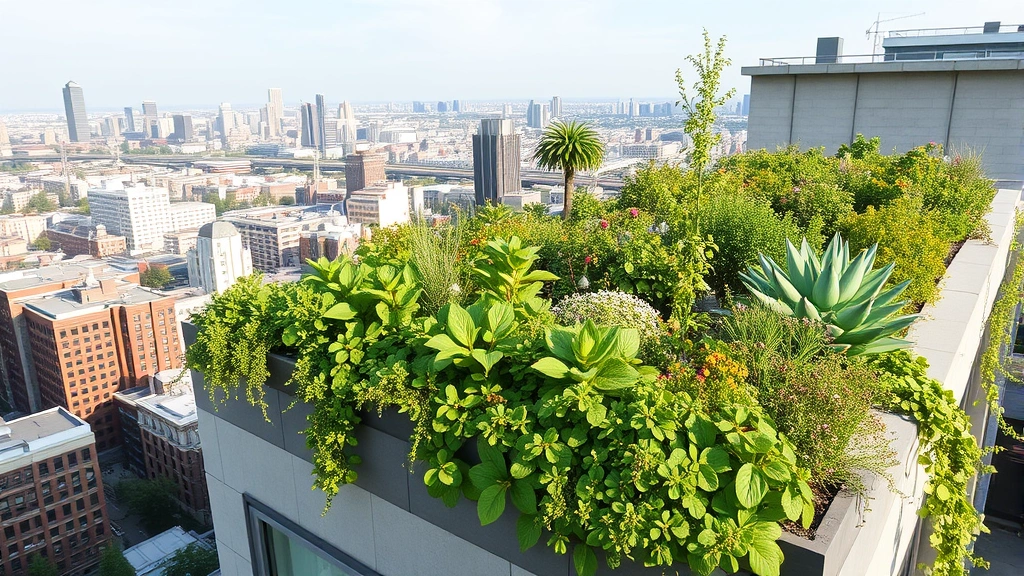
Despite urbanization’s substantial ecological costs, emerging research identifies intervention pathways that can substantially mitigate negative impacts. Green infrastructure—integrating vegetation into urban design—demonstrates measurable ecological and hydrological benefits. Green roofs and living walls reduce stormwater runoff by 40-80%, lower surface temperatures by 20-45°C, and provide habitat for insects and birds. Studies from urban ecology journals document that cities with 20%+ tree canopy cover maintain 30-40% higher biodiversity than comparable cities with minimal vegetation.
Urban rewilding initiatives show promising results. Restoring degraded urban habitats to native plant communities increases arthropod diversity by 200-400% within 3-5 years. Wildlife corridors—continuous or stepping-stone habitat patches connecting fragmented areas—enable species movement and genetic exchange, maintaining viable populations in fragmented landscapes. The community garden movement demonstrates that distributed green space, while small-scale, collectively provides significant habitat and reduces urban heat island effects.
Water infrastructure redesign offers substantial benefits. Green stormwater infrastructure—rain gardens, permeable pavements, constructed wetlands—reduces runoff by 50-90% while filtering pollutants, recharging groundwater, and creating habitat. Cities implementing comprehensive green infrastructure programs report 40% reductions in combined sewer overflows, improved aquatic ecosystem health, and increased property values in greened neighborhoods.
Planning frameworks emphasizing compact development reduce per-capita land consumption. Research from ecological economics journals demonstrates that dense, mixed-use urban development consumes 50-70% less land per capita than sprawling development patterns. Transit-oriented development—concentrating housing and employment near public transportation—reduces vehicle miles traveled by 20-40%, decreasing both urban pollution and the ecosystem impacts of resource extraction and transportation infrastructure.
Renewable energy transition, detailed in our renewable energy guide, directly reduces urbanization’s climate amplification effects. Solar and wind energy infrastructure, while requiring land, occupy space compatible with ecological function far more than fossil fuel extraction. Urban solar installations on existing structures minimize additional land consumption while reducing energy-related ecosystem impacts.
Sustainable consumption patterns address embodied ecosystem impacts. The fast fashion effect on environment exemplifies how urban consumption drives distant ecosystem destruction. Transitioning to sustainable fashion brands and circular economy models reduces resource extraction pressures on ecosystems globally. Research from the Ellen MacArthur Foundation demonstrates that circular economy implementation could reduce material extraction by 28-55% by 2050.
Policy interventions prove essential. The Convention on Biological Diversity now includes targets for urban biodiversity protection. Cities implementing biodiversity action plans—setting specific targets for habitat restoration, species conservation, and ecosystem service provision—achieve measurable biodiversity gains. Zoning regulations requiring habitat preservation, ecological impact assessment for development projects, and compensation mechanisms for ecosystem damage create financial incentives for conservation.
Nature-based solutions to urban challenges increasingly gain scientific validation. Wetland restoration provides flood control, water purification, and habitat provision simultaneously. Urban forests reduce air pollution, moderate temperatures, and sequester carbon while providing aesthetic and recreational benefits. Research from urban forestry programs documents that each dollar invested in urban tree planting returns $5-15 in ecosystem services and property value increases.
FAQ
How much do cities contribute to global biodiversity loss?
Urban areas directly cover approximately 3-4% of global land surface but drive ecosystem impacts across 15-20% of terrestrial ecosystems through habitat fragmentation, pollution, and resource extraction. Cities consume resources from distant ecosystems, extending their ecological footprint far beyond their geographic boundaries. Urban residents in developed nations require 2-3 times more ecosystem services than rural residents, necessitating resource extraction and waste absorption across vast areas.
Can cities be designed to support biodiversity?
Yes. Ecological urbanism principles—integrating habitat corridors, green infrastructure, native vegetation, and reduced impervious surfaces—enable cities to support substantial biodiversity. Singapore’s “City in a Garden” initiative and Copenhagen’s rewilded harbor demonstrate that dense urban areas can maintain diverse ecosystems. Research indicates that cities designed with ecological principles support 50-70% of the biodiversity of comparable natural habitats, substantially higher than conventional urban design.
What ecosystem services are most threatened by urbanization?
Pollination, water purification, flood regulation, and climate regulation face the most severe threats. Pollinator populations decline 75%+ in heavily urbanized regions, threatening crop production and plant reproduction. Water purification capacity collapses as wetlands and riparian zones are converted to development. Flood regulation diminishes with loss of wetlands and increased impervious surfaces. Climate regulation capacity decreases as carbon-sequestering vegetation is eliminated and urban heat islands amplify warming.
How long do ecosystems take to recover from urbanization?
Recovery timescales vary dramatically. Soil contamination recovery requires 20-100+ years depending on pollutant type and concentration. Aquatic ecosystem recovery typically requires 10-30 years after pollution reduction, though full community composition recovery may require centuries. Habitat recovery for specialist species requires habitat restoration plus 20-50 years for population reestablishment and genetic recovery. Tropical forest recovery requires 50-100+ years to approach pre-disturbance composition. This extended recovery timeline necessitates prevention-focused strategies.
Are urban ecosystems inherently inferior to natural ecosystems?
Urban ecosystems differ fundamentally from natural ecosystems rather than being simply degraded versions. Urban ecosystems support different species assemblages, often dominated by generalists and non-native species, with altered food webs and energy flows. However, well-designed urban ecosystems can provide substantial ecosystem services, support surprising biodiversity, and offer unique opportunities for human-nature interaction. The challenge involves designing urban ecosystems that maximize both human wellbeing and ecological function rather than accepting ecological homogenization as inevitable.


