
Balancing Economy & Ecosystems: Economist Insights on Economic Environment Integration
The relationship between economic systems and natural ecosystems represents one of the most pressing challenges of our time. Economists increasingly recognize that sustainable prosperity cannot be achieved by treating the environment as an external variable or infinite resource. Instead, integrating ecological health into economic models has become essential for long-term growth and stability. This paradigm shift reflects decades of research demonstrating that environmental degradation imposes substantial costs on economies, from healthcare expenditures to infrastructure damage and lost productivity.
Modern economic theory acknowledges what classical economics overlooked: natural capital—forests, fisheries, freshwater systems, and atmospheric stability—underpins all economic activity. When ecosystems collapse, economies follow. The challenge lies in designing economic policies and business models that recognize this interdependence while maintaining growth and prosperity. Leading economists from institutions worldwide now emphasize that environmental protection and economic development are not opposing forces but complementary objectives requiring sophisticated integration.
Understanding how to balance these competing interests demands interdisciplinary knowledge combining ecological science, economic theory, policy analysis, and business innovation. This article explores economist insights on achieving this critical balance, examining frameworks, mechanisms, and real-world applications that demonstrate viable pathways toward genuine sustainability.
Understanding Economic Environment Integration
The concept of economic environment encompasses the complex interactions between human economic systems and natural ecosystems. This relationship extends far beyond simple resource extraction; it involves understanding how economic decisions ripple through environmental systems and how environmental changes affect economic outcomes. Economists studying this relationship have developed increasingly sophisticated models demonstrating that environmental degradation represents a significant economic cost rather than merely an ethical concern.
The traditional economic model treated nature as either a source of free inputs or a sink for waste absorption. This approach, dominant throughout the industrial era, created what economists call externalities—costs imposed on society that markets don’t naturally account for. Pollution, deforestation, and species extinction occurred at accelerating rates because their true costs remained invisible in market prices. Contemporary economic analysis reveals that this invisibility enabled massive misallocation of resources, leading to overproduction of environmentally damaging goods and underinvestment in conservation.
Understanding the human environment interaction from an economic perspective requires recognizing feedback loops and tipping points. When ecosystems degrade beyond certain thresholds, recovery becomes exponentially more expensive or impossible. This reality has prompted economists to advocate for preventive investment in ecosystem protection rather than remediation spending that often arrives too late.
The shift toward integration reflects a fundamental realization: the economy exists within the environment, not vice versa. This hierarchical understanding changes how economists prioritize different objectives and how they evaluate policy tradeoffs. Rather than asking whether environmental protection costs too much, integrated economic thinking asks what the cost of environmental degradation truly is and whether it exceeds the investment required for protection.
Natural Capital and Economic Valuation
One of the most significant contributions of modern ecological economics involves developing methods to value natural capital in economic terms. Natural capital includes renewable resources like forests and fisheries, non-renewable resources like mineral deposits, and critical ecosystem services like pollination, water purification, and climate regulation. Economists have created frameworks to assign monetary values to these assets, making environmental protection economically visible and comparable to other investments.
The valuation challenge is substantial because many ecosystem services have no market price. A forest provides timber (marketable), but also carbon sequestration, watershed protection, and biodiversity habitat (largely unpriced). Economists use several approaches to estimate these values: replacement cost methods (calculating what it would cost to replace ecosystem functions artificially), contingent valuation (surveying willingness to pay for environmental preservation), and hedonic pricing (inferring environmental value from property price differences). While imperfect, these methods provide far better estimates than assuming ecosystem services have zero value.
Research from the World Bank and other institutions demonstrates that natural capital comprises substantial portions of total national wealth, particularly in developing economies where natural resources represent larger shares of economic assets. Countries dependent on agriculture, fisheries, or forestry face direct economic consequences from environmental degradation. A fishery collapse eliminates not just a resource but employment, food security, and export revenue simultaneously.
Integrating natural capital into national accounting systems represents crucial progress. Traditional GDP measurements ignore resource depletion, treating harvesting all trees as income rather than capital depletion. Adjusted Net Savings calculations and Natural Capital Accounting attempt to correct this distortion, revealing that many nations’ apparent growth masks underlying asset depletion. When natural capital losses are properly accounted for, growth rates decline substantially, sometimes turning positive growth into negative adjusted growth.
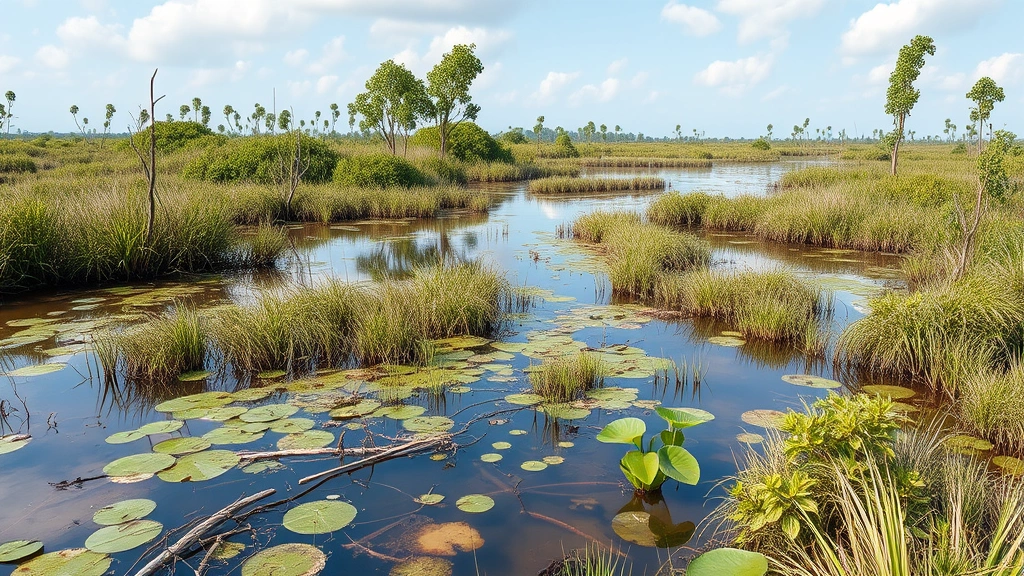
The economic case for protecting natural capital strengthens further when considering that ecosystem restoration typically costs far more than prevention. Wetland restoration costs thousands per acre; preventing wetland loss through regulation costs nothing. Fishery rebuilding requires decades of reduced harvest; preventing overfishing requires only management adjustment. This economic reality aligns perfectly with environmental science, creating powerful incentives for preventive approaches.
” alt=”Natural forest ecosystem with diverse vegetation demonstrating ecological and economic value” style=”width: 100%; max-width: 600px; height: auto;”>
Market Failures and Environmental Economics
Environmental degradation persists not primarily because people disvalue nature, but because market mechanisms fail to price environmental costs accurately. Understanding these market failures provides economists with diagnostic tools for identifying where intervention becomes necessary and what forms that intervention should take.
The fundamental market failure in environmental economics is the tragedy of the commons: when resources lack clear ownership and access restrictions, individual economic actors have incentives to exploit them maximally, even though collective overexploitation makes everyone worse off. Fisheries exemplify this tragedy; individual fishermen profit from catching more fish, but collective overfishing destroys the fishery for all. Market prices for fish reflect only current scarcity and demand, not the resource’s declining productivity or approaching collapse.
Information asymmetries create additional market failures. Consumers cannot easily observe whether products were produced sustainably or whether supply chains involved environmental destruction. Companies have limited incentives to adopt costly environmental practices if competitors don’t and consumers can’t verify the difference. This information gap allows environmentally destructive practices to persist despite consumer preferences for sustainability.
Temporal mismatches between economic and ecological timescales generate profound market failures. Markets heavily discount future costs and benefits, reflecting how investors value immediate returns over distant consequences. Environmental degradation often involves present gains and future costs—precisely the scenario where market discounting fails most severely. Logging provides immediate revenue; forest loss imposes costs decades later. Markets systematically undervalue these delayed environmental consequences relative to their true importance.
Understanding these market failures guides policy design. When markets fail to price environmental costs, government intervention through regulation, taxation, or subsidy can correct the failure. The choice among instruments depends on specific circumstances, but the economic logic remains: environmental science identifies problems that market prices ignore, and economic policy must fill this gap.
Policy Instruments for Ecosystem Protection
Economists have developed diverse policy instruments for addressing environmental market failures, each with particular strengths and limitations. Effective environmental policy typically combines multiple instruments tailored to specific contexts.
Carbon pricing mechanisms represent perhaps the most economically sophisticated environmental policy innovation. Carbon taxes or cap-and-trade systems put a price on greenhouse gas emissions, allowing markets to find cost-effective reduction strategies. Rather than mandating specific technologies or behaviors, carbon pricing harnesses market forces toward emissions reduction. Companies invest in efficiency, renewable energy, or other mitigation wherever costs are lowest. This flexibility makes carbon pricing economically efficient compared to prescriptive regulations.
Command-and-control regulation remains essential where market mechanisms prove insufficient. Emission standards, pollution limits, and conservation requirements directly constrain harmful activities. While less economically efficient than pricing mechanisms, regulations provide certainty and prevent worst-case outcomes. Many environmental standards (clean air regulations, endangered species protections) reflect judgments that certain outcomes are unacceptable regardless of economic costs.
Subsidy and tax incentive programs encourage positive environmental behaviors. Tax credits for renewable energy, subsidies for sustainable agriculture, or payments for ecosystem services directly incentivize desired activities. These instruments work particularly well for encouraging innovation and adoption of new technologies, though they require careful design to avoid unintended consequences and ensuring cost-effectiveness.
Property rights and tradeable permit systems harness market mechanisms for conservation. Fishery quota systems, water rights markets, and biodiversity credits create tradeable property rights in environmental assets. Holders of these rights benefit from conservation and sustainable management, aligning private incentives with environmental protection. The success of these systems depends critically on secure property rights, effective enforcement, and appropriate initial allocation.
Payments for ecosystem services compensate landowners for maintaining environmental benefits. Programs paying for forest conservation, wetland protection, or agricultural practices that enhance water quality directly value ecosystem services. These programs work best where environmental benefits are clearly defined and measurable, and where payments exceed opportunity costs of alternative land uses.
The most effective environmental policies typically combine instruments. Carbon pricing establishes economy-wide incentives for emissions reduction; regulations prevent unacceptable practices; subsidies accelerate technology adoption; and property rights mechanisms protect specific resources. This policy portfolio approach recognizes that different instruments address different market failures and environmental challenges.
Corporate Sustainability and Profitability
A critical insight from contemporary economic analysis challenges the assumption that environmental protection requires sacrificing profitability. Evidence increasingly demonstrates that sustainable business practices can enhance long-term returns while reducing environmental impact. This convergence reflects multiple economic mechanisms.
Cost reduction through efficiency improvements represents the most straightforward path to profitable sustainability. Reducing energy consumption, minimizing waste, and improving resource efficiency lower operating costs directly. Companies implementing comprehensive efficiency programs often recover initial investments within years while achieving ongoing savings. These wins represent pure profit opportunities, explaining why many profitable companies have adopted efficiency measures independent of environmental motivation.
Risk reduction through environmental management protects long-term profitability. Supply chain disruption from resource scarcity, regulatory changes, or environmental liability poses substantial financial risks. Companies managing these risks proactively through sustainable sourcing, pollution prevention, and climate adaptation protect shareholder value. Environmental risk management has become standard in financial analysis; institutional investors increasingly screen for environmental risks affecting long-term returns.
Market opportunity expansion drives corporate sustainability investment. Growing consumer demand for sustainable products creates market segments with premium pricing potential. Sustainable fashion brands and organic food companies demonstrate that environmental positioning can support premium pricing and customer loyalty. As environmental awareness grows, competitive advantage increasingly depends on sustainability credentials.
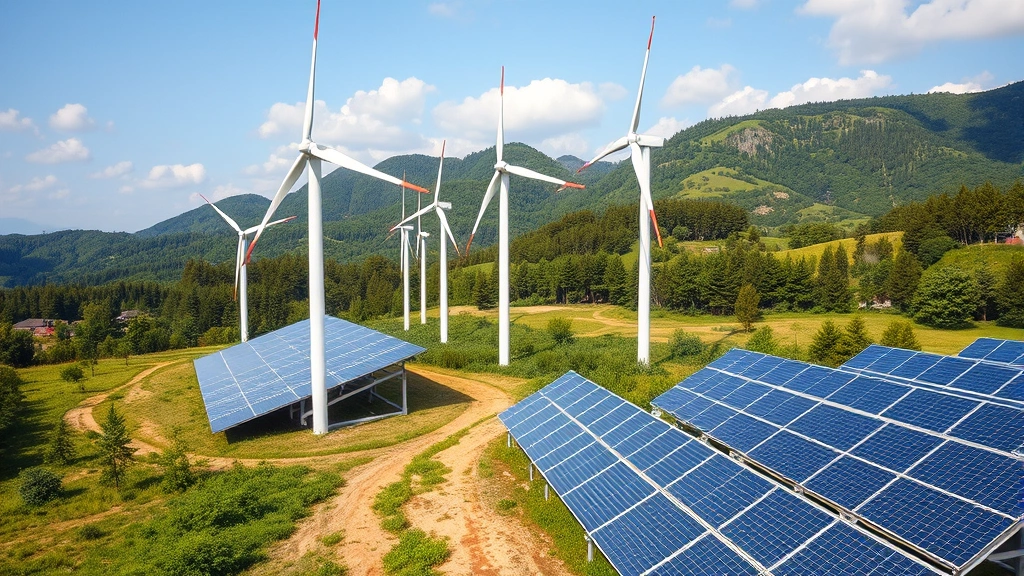
Innovation stimulus from environmental constraints generates both cost savings and new business opportunities. Regulations requiring efficiency improvements or pollution reduction spur technological innovation yielding competitive advantages. The renewable energy industry emerged largely from environmental policy requirements; today it represents one of the fastest-growing economic sectors. Companies that innovate ahead of regulatory requirements gain first-mover advantages in expanding markets.
Talent attraction and retention improve through environmental commitment. Younger workers increasingly prioritize working for environmentally responsible companies; recruiting and retaining talented employees becomes easier for sustainability leaders. Employee productivity and engagement improve when workers believe their employer acts responsibly regarding environmental and social issues.
The economic case for corporate sustainability strengthens as environmental costs become increasingly visible. Companies failing to address environmental risks face growing financial consequences: regulatory penalties, supply chain disruption, market access restrictions, and shareholder pressure. Conversely, sustainability leaders gain competitive advantages through efficiency, innovation, risk reduction, and market expansion. This economic logic increasingly aligns private incentives with environmental protection, though policy support remains necessary for markets to properly value environmental outcomes.
” alt=”Renewable energy installation with wind turbines and solar panels showing sustainable economic development” style=”width: 100%; max-width: 600px; height: auto;”>
Measuring Progress: Metrics Beyond GDP
Traditional economic measurement through Gross Domestic Product has fundamental limitations for assessing economic environment integration. GDP measures economic activity but not sustainability or welfare. An economy could grow while environmental assets decline, natural resources deplete, and quality of life deteriorates—GDP would register only as positive growth. This measurement gap has prompted economists to develop alternative metrics capturing broader prosperity dimensions.
Adjusted Net Savings (also called Genuine Saving) accounts for natural capital depletion and environmental degradation alongside economic growth. This metric subtracts resource depletion and pollution costs from net savings, revealing whether economic growth represents genuine wealth accumulation or unsustainable asset depletion. Many nations’ adjusted savings rates differ dramatically from standard savings rates, indicating unsustainable economic trajectories masked by conventional accounting.
The Genuine Progress Indicator adjusts GDP for environmental and social factors including ecosystem services, resource depletion, pollution costs, inequality, and leisure time. This comprehensive approach reveals that in many developed nations, genuine progress has stagnated or declined despite GDP growth, suggesting that recent economic growth has not translated into genuine welfare improvements.
Environmental Performance Indices track specific environmental outcomes—emissions, resource use, ecosystem health—providing direct measures of environmental progress independent of economic metrics. These indices reveal environmental trends that GDP obscures and identify where policy intervention succeeds or fails.
Natural Capital Accounting integrates ecosystem assets into national accounting frameworks, measuring environmental assets alongside produced capital and human capital. This comprehensive accounting reveals natural capital’s contribution to economic welfare and tracks depletion or growth in environmental assets over time.
The measurement challenge reflects a deeper conceptual issue: what constitutes economic success? If success means maximizing GDP, environmental protection appears as a cost reducing growth. If success means maximizing genuine welfare—health, security, environmental quality, opportunity, equity—environmental protection becomes central to economic success. This measurement debate ultimately reflects values and priorities; economists cannot resolve it independently but can clarify what different metrics reveal about economic performance.
Leading economists increasingly advocate for moving beyond GDP-focused measurement toward more comprehensive welfare assessment. The United Nations Environment Programme and national governments have begun implementing natural capital accounting and adjusted savings metrics, recognizing that conventional GDP measurement provides inadequate guidance for sustainable development policy.
Challenges and Future Directions
Despite growing economic understanding of environment-economy integration, substantial challenges remain for implementing sustainable economic systems at scale.
Political economy barriers present significant obstacles. Industries benefiting from environmental externalization have strong incentives to resist policy change. Coal, oil, logging, and intensive agriculture industries have historically opposed environmental regulation, sometimes successfully delaying or weakening policies. Overcoming entrenched interests requires sustained political commitment and broad coalition-building, challenges that vary substantially across countries and political systems.
Global coordination problems complicate environmental policy implementation. Pollution, climate change, and resource depletion cross borders; national policies alone cannot solve inherently global problems. International agreements prove difficult to negotiate and enforce, particularly when countries face different development stages and resource constraints. Free-rider incentives—where countries benefit from others’ conservation efforts without bearing costs—create persistent cooperation challenges.
Technological limitations constrain some sustainability transitions. Decarbonizing certain industries (aviation, heavy industry, agriculture) remains technically difficult and expensive with current technology. Renewable energy expansion requires substantial infrastructure investment and grid modernization. Biodiversity protection requires land-use changes that compete with agricultural production. These technical challenges don’t make sustainability impossible but require sustained innovation investment and realistic timelines.
Distributional concerns create political and ethical complexities. Environmental policies impose costs on specific groups (coal miners, farmers, industrial workers) while benefits accrue broadly and often delayed. Managing these distributional impacts through just transition programs, retraining, and regional development becomes essential for politically sustainable policies. Wealthy nations and individuals can more easily bear transition costs than poor nations and workers, raising fairness questions about how sustainability burdens are shared.
Future economic analysis must increasingly address these challenges through more sophisticated policy design, institutional innovation, and international cooperation. The World Bank’s environmental economics research and work by ecological economics journals demonstrates growing sophistication in addressing these complexities.
Green finance represents an emerging frontier where economists and financial markets collaborate on sustainability. Sustainable investment funds, green bonds, and environmental impact investing direct capital toward sustainable economic activities. As environmental risks become quantifiable and priced into financial markets, capital increasingly flows toward sustainability-aligned investments.
Circular economy approaches offer economic models fundamentally reimagining production and consumption. Rather than linear take-make-waste systems, circular models emphasize recycling, reuse, and regeneration. These approaches promise both environmental benefits and economic opportunities through extended product lifespans, reduced resource requirements, and new business models based on service provision rather than product sales.
Nature-based solutions represent cost-effective environmental strategies with economic co-benefits. Protecting forests, restoring wetlands, and regenerating grasslands provide carbon sequestration, biodiversity protection, and water regulation while supporting rural livelihoods and recreation. These solutions often cost less than technological alternatives while providing multiple environmental and economic benefits.
The future of economic environment integration depends on continued research, policy innovation, and institutional change. Economists have provided increasingly clear evidence that sustainable development and economic prosperity are compatible objectives requiring deliberate integration rather than tradeoff. The challenge now involves translating this understanding into policies, practices, and institutions capable of achieving sustainable prosperity at the scale required by global environmental challenges.
FAQ
What is the primary difference between environmental economics and ecological economics?
Environmental economics treats the environment as a system providing resources and absorbing waste within otherwise standard economic frameworks. Ecological economics views the economy as embedded within and dependent on ecological systems, fundamentally restructuring economic analysis around biophysical limits. Ecological economics emphasizes that infinite growth is impossible on a finite planet, while environmental economics often assumes technological adaptation can overcome resource constraints.
How can governments effectively price environmental externalities?
Governments can implement carbon taxes directly pricing emissions, establish cap-and-trade systems creating tradeable emission permits, mandate pollution controls and emissions standards, provide subsidies for sustainable alternatives, and implement payments for ecosystem services. The most effective approaches combine multiple instruments suited to specific environmental problems and political contexts. UNEP emissions research provides evidence on policy effectiveness across contexts.
Why do companies resist environmental regulations despite long-term profitability benefits?
Companies often have short-term profit incentives conflicting with long-term sustainability. Managers evaluated on quarterly earnings prioritize immediate costs over delayed benefits. Competitors not adopting sustainability measures gain short-term advantages, creating races to the bottom. Information gaps prevent companies from recognizing efficiency benefits. Regulatory uncertainty discourages investment. These barriers explain why market forces alone don’t automatically drive sustainability despite economic logic supporting it.
How does carbon footprint reduction create economic opportunities?
Reducing carbon footprints typically requires efficiency improvements lowering operating costs, renewable energy adoption gaining from declining costs, supply chain optimization reducing waste, and innovation developing new competitive advantages. Markets for carbon-reduction services, renewable energy, and sustainable products grow rapidly, creating employment and business opportunities. Early adopters gain competitive advantages in expanding markets increasingly demanding low-carbon products and services.
What role does natural capital accounting play in sustainable development?
Natural capital accounting makes ecosystem assets and their depletion economically visible, allowing governments and companies to measure whether development is sustainable. By tracking environmental assets alongside produced and human capital, natural capital accounting reveals whether economic growth represents genuine wealth accumulation or unsustainable resource depletion. This information guides policy decisions toward development paths protecting environmental assets essential for long-term prosperity.
How can developing nations balance environmental protection with economic growth?
Developing nations need not replicate the environmental destruction accompanying developed nations’ industrialization. Green technology costs continue declining, making sustainable development economically competitive. International support through climate finance, technology transfer, and market access for sustainable products enables developing nations to leapfrog environmentally destructive technologies. Natural capital protection often provides essential services (watershed protection, pollination, fisheries) supporting development. Economic environment research increasingly demonstrates that sustainable development pathways exist supporting both environmental protection and prosperity.


