Macroenvironment & Economy: A Critical Link Explained
The macroenvironment is also known as the external environment, representing the broader set of forces and conditions that shape economic systems and business operations. This interconnected landscape extends far beyond individual organizations, encompassing natural ecosystems, regulatory frameworks, technological innovations, and societal structures that collectively influence how economies function and evolve. Understanding this relationship is essential for policymakers, business leaders, and environmental scientists seeking to navigate the complexities of sustainable economic development.
The distinction between microenvironmental factors—such as suppliers, competitors, and customers—and macroenvironmental forces reflects a fundamental principle in both business strategy and ecological economics. While micro-level decisions affect individual entities, macro-level changes ripple through entire systems, creating cascading effects that can either stabilize or destabilize economic and ecological equilibria. This article explores the multifaceted connections between macroenvironmental conditions and economic performance, examining how natural capital, regulatory environments, and global systems interact to shape our future.

What is the Macroenvironment?
The macroenvironment encompasses all external factors that influence economic activities, organizational strategies, and societal well-being. This broad conceptualization includes natural environmental systems, demographic trends, economic indicators, technological developments, political structures, and cultural values. When we refer to the macroenvironment as the external environment, we emphasize its position outside individual control, yet within our collective sphere of influence and responsibility.
The concept emerged from systems thinking in business and environmental management, recognizing that organizations operate within larger contexts that define opportunities and constraints. Unlike the microenvironment—which consists of industry-specific actors and immediate stakeholders—the macroenvironment represents the systemic backdrop against which all economic activity occurs. This includes natural resource availability, climate patterns, regulatory regimes, consumer preferences, and technological capabilities that shape competitive landscapes and economic viability.
Understanding the definition of environment and environmental science provides foundational knowledge for comprehending macroenvironmental dynamics. The macroenvironment integrates environmental science principles with economic analysis, recognizing that ecological processes directly determine resource availability, production costs, and long-term economic sustainability. This interdisciplinary approach challenges traditional economic models that treat environmental factors as external variables rather than fundamental constraints.

Natural Capital and Economic Systems
Natural capital—comprising forests, fisheries, mineral deposits, freshwater systems, and atmospheric functions—forms the material foundation of all economic activity. The macroenvironment’s most critical dimension involves understanding how natural capital stocks support economic production and human well-being. When natural capital depletes faster than regeneration rates, economies face fundamental constraints that no technological innovation can entirely overcome.
The relationship between natural capital and economic performance challenges conventional GDP measurements, which fail to account for environmental degradation. A country might show strong economic growth while simultaneously depleting fisheries, degrading soil, and accumulating atmospheric carbon—a phenomenon economists call uneconomic growth. The macroenvironment reveals these contradictions by demonstrating that short-term economic gains often come at the expense of long-term environmental stability and economic resilience.
Ecosystem services—including pollination, water filtration, climate regulation, and soil formation—represent critical economic inputs that function largely outside market mechanisms. The macroenvironment framework acknowledges that these services have economic value, even when markets fail to price them accurately. The World Bank has increasingly integrated natural capital accounting into development frameworks, recognizing that sustainable economic growth requires protecting and restoring environmental systems.
Biodiversity loss, ocean acidification, and soil degradation represent macroenvironmental stressors with profound economic implications. When agricultural soils lose productivity, fishing stocks collapse, or pollinator populations decline, entire economic sectors face disruption. The macroenvironment perspective emphasizes that these ecological changes are not peripheral to economic performance—they are central determinants of future prosperity.
The External Environment Framework
The external environment framework—another term for the macroenvironment—typically encompasses six major dimensions: natural/ecological, technological, political/legal, economic, social/cultural, and demographic. This PESTEL analysis (Political, Economic, Social, Technological, Environmental, Legal) helps organizations and policymakers systematically evaluate how external forces might affect their operations and strategic planning.
The ecological dimension of the external environment includes climate patterns, resource availability, pollution levels, and ecosystem health. The technological dimension encompasses innovation rates, digital infrastructure, renewable energy development, and efficiency improvements. Political and legal factors include regulatory frameworks, international agreements, taxation policies, and governance structures that shape economic incentives. Economic dimensions involve interest rates, inflation, employment, and global trade patterns. Social and cultural factors reflect consumer values, labor practices, and societal priorities. Demographic trends encompass population growth, aging, migration, and urbanization patterns.
These dimensions interact dynamically, creating complex feedback loops that characterize the macroenvironment. For example, technological innovations in renewable energy can alter political coalitions, which then modify regulatory frameworks, shifting economic incentives and consumer preferences. Understanding these interconnections requires sophisticated analysis that integrates perspectives from ecology, economics, engineering, and social science.
The human environment interaction within macroenvironmental contexts reveals how societal decisions reshape ecological systems, which subsequently constrain future economic options. This feedback loop demonstrates that the external environment is not truly external to human agency—our choices actively construct the macroenvironmental conditions we subsequently confront.
Regulatory and Policy Dimensions
The regulatory and policy environment represents a critical macroenvironmental factor that governments use to align private economic behavior with public interests. Environmental regulations, labor standards, consumer protection laws, and financial oversight mechanisms all constitute the external environment within which businesses operate. These regulations reflect societal values regarding sustainability, fairness, and risk management.
Carbon pricing mechanisms, emission standards, and renewable energy mandates exemplify how policy shapes macroenvironmental conditions. When governments implement carbon taxes or cap-and-trade systems, they alter the relative costs of different production methods, shifting investment patterns and innovation incentives. Similarly, regulations restricting plastic use, limiting pesticide applications, or protecting endangered species reshape entire industries and supply chains.
International agreements like the Paris Climate Accord create macroenvironmental policy frameworks that influence national regulations and corporate strategies globally. These agreements acknowledge that environmental problems transcend borders, requiring coordinated international action. The macroenvironment thus includes both national regulatory systems and transnational governance structures that attempt to address collective action problems.
The United Nations Environment Programme (UNEP) monitors macroenvironmental conditions and advocates for policy reforms that integrate environmental protection with economic development. UNEP’s work demonstrates that the external environment cannot be improved through individual corporate action alone—systemic policy change across multiple jurisdictions is necessary.
Tax incentives for renewable energy, subsidies for sustainable agriculture, and investments in green infrastructure represent positive policy interventions that reshape macroenvironmental conditions. Conversely, fossil fuel subsidies, deforestation incentives, and lax environmental enforcement perpetuate unsustainable macroenvironmental trajectories. The policy dimension of the macroenvironment thus reflects political choices about what kind of future society desires.
Technological Innovation and Adaptation
Technological change represents one of the most dynamic macroenvironmental forces, offering both opportunities for sustainability and risks of unintended consequences. Renewable energy technologies, precision agriculture, circular economy solutions, and carbon capture innovations demonstrate how technological progress can decouple economic activity from environmental degradation. However, technology also enables resource extraction and consumption at unprecedented scales.
The macroenvironment’s technological dimension includes information technology infrastructure, biotechnology capabilities, manufacturing processes, and energy systems. Digitalization enables more efficient resource use through real-time monitoring and optimization, yet also increases energy consumption and electronic waste. Artificial intelligence can optimize complex systems, but its computational demands consume substantial electricity. The external environment thus contains technological possibilities that require careful governance to ensure they support rather than undermine sustainability.
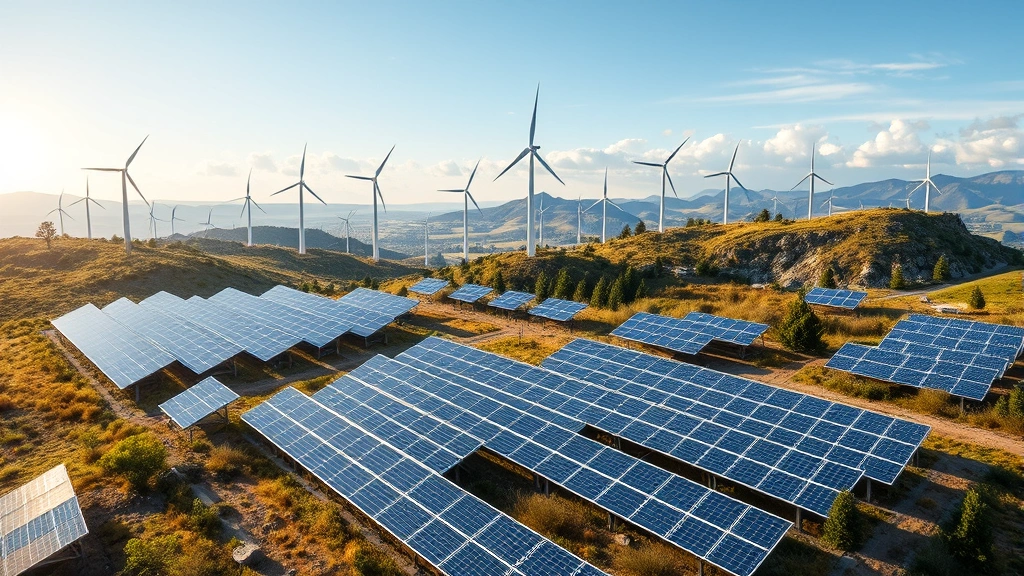
Renewable energy adoption exemplifies how technological change reshapes macroenvironmental conditions. Renewable energy for homes and businesses represents a macroenvironmental shift that reduces fossil fuel dependence and associated emissions. As renewable technologies become cost-competitive with conventional energy sources, the macroenvironment increasingly favors decentralized, clean energy systems. This technological transformation reshapes energy markets, employment patterns, and geopolitical relationships.
The macroenvironment also includes technological risks such as unintended consequences of genetic engineering, nanotechnology hazards, or artificial intelligence misalignment. Responsible innovation requires anticipating how technologies might interact with complex ecological and social systems, potentially creating unforeseen problems. The external environment thus demands precautionary approaches that balance innovation enthusiasm with genuine risk assessment.
Climate Change as a Macroenvironmental Force
Climate change represents the quintessential macroenvironmental challenge, affecting every economic sector while transcending national borders and political jurisdictions. Rising temperatures alter precipitation patterns, increase extreme weather frequency, threaten agricultural productivity, and destabilize ecosystems that human economies depend upon. The climate macroenvironment shapes long-term economic viability across all industries and regions.
Physical climate impacts create direct economic costs through infrastructure damage, agricultural losses, and health expenses. Simultaneously, climate mitigation and adaptation require massive capital investments in clean energy, sustainable infrastructure, and ecosystem restoration. The macroenvironment increasingly incorporates climate risk assessment into financial markets, as investors recognize that carbon-intensive assets face stranded asset risks.
Climate change also generates macroenvironmental tipping points—thresholds beyond which systems exhibit irreversible changes. Arctic ice loss, Amazon rainforest dieback, and coral reef collapse represent potential tipping points that would fundamentally alter planetary conditions. The external environment thus includes not only current conditions but also risks of catastrophic system shifts that could devastate economic systems unprepared for rapid change.
Adaptation to climate change requires transforming macroenvironmental infrastructure, from agricultural systems to coastal development to energy grids. This transformation represents both economic burden and opportunity, as new industries emerge around climate adaptation and mitigation. The macroenvironment increasingly reflects the reality that climate stability represents essential infrastructure for economic functioning.
Measuring Macroenvironmental Impact
Quantifying macroenvironmental conditions requires sophisticated measurement frameworks that capture ecological, social, and economic dimensions simultaneously. Traditional GDP measurements fail to account for natural capital depletion, pollution accumulation, or inequality increases—all critical macroenvironmental factors. Alternative frameworks like Genuine Progress Indicator (GPI), Inclusive Wealth Index, and Ecological Footprint Analysis attempt to measure macroenvironmental conditions more comprehensively.
Environmental accounting systems track natural capital stocks and flows, measuring how economic activity affects forests, fisheries, minerals, water, and atmospheric composition. These accounts reveal that many nations are experiencing declining natural capital despite rising GDP—a macroenvironmental condition indicating unsustainable economic trajectories. Scientific research on ecological economics increasingly emphasizes that macroenvironmental sustainability requires maintaining or expanding natural capital stocks rather than merely managing their depletion rates.
Carbon accounting and lifecycle assessment methodologies measure how products and services affect macroenvironmental conditions throughout their production, use, and disposal phases. Understanding how to reduce carbon footprint at individual and organizational levels contributes to broader macroenvironmental improvement. However, individual actions require systemic support through infrastructure, policy, and technological systems that make sustainable choices accessible and economically viable.
Biodiversity indices, water quality measurements, soil health assessments, and air quality monitoring all contribute to macroenvironmental evaluation. These biophysical indicators complement economic metrics, providing holistic understanding of how economic systems interact with ecological systems. The macroenvironment thus requires multidisciplinary measurement approaches that integrate natural science data with economic analysis.
Business sustainability reporting and corporate environmental disclosure frameworks increasingly attempt to measure how individual organizations affect macroenvironmental conditions. However, aggregating millions of individual corporate impacts into coherent macroenvironmental assessments remains challenging. The external environment ultimately determines whether individual sustainability efforts contribute to genuine systemic improvement or merely represent greenwashing that obscures ongoing environmental degradation.
Integration and Future Directions
The macroenvironment concept integrates understanding that economies operate within ecological boundaries that cannot be transgressed without fundamental consequences. This perspective contrasts with conventional economics that treats environmental factors as external to core economic analysis. Recognizing the macroenvironment as the external environment emphasizes that ecological systems define the constraints and possibilities within which all economic activity occurs.
Future economic development must explicitly account for macroenvironmental conditions, incorporating ecological limits into business strategy, policy design, and investment decisions. This requires transforming financial systems to accurately price natural capital, redirecting innovation toward sustainability, and redesigning governance structures to balance short-term interests with long-term macroenvironmental stability. The external environment will increasingly determine which economic models, business strategies, and national policies prove viable in coming decades.
Emerging fields like ecological economics, environmental accounting, and sustainability science all attempt to integrate macroenvironmental considerations into economic analysis. These disciplines recognize that the economy is embedded within the environment, not the reverse—a fundamental reframing that has profound implications for how societies organize production, consumption, and distribution. The macroenvironment thus represents not merely a constraint to be managed but a foundation to be stewarded.
Visit the Ecorise Daily Blog for ongoing analysis of how macroenvironmental conditions shape economic systems and opportunities for sustainable transformation. Understanding the macroenvironment is essential for anyone seeking to contribute meaningfully to economic and ecological sustainability.
FAQ
What does the macroenvironment include?
The macroenvironment encompasses all external factors affecting economic systems: natural/ecological conditions (climate, biodiversity, resources), technological capabilities, political and legal frameworks, economic indicators, social and cultural values, and demographic patterns. It represents the broader systemic context within which all economic activity occurs.
Why is the macroenvironment important for business?
The macroenvironment creates opportunities and constraints that shape long-term business viability. Companies that understand and adapt to macroenvironmental conditions—including climate change, resource scarcity, regulatory evolution, and technological disruption—position themselves for sustainable success. Ignoring macroenvironmental trends exposes businesses to stranded assets, supply chain disruption, and market obsolescence.
How does the macroenvironment differ from the microenvironment?
The microenvironment includes industry-specific factors like competitors, suppliers, customers, and direct stakeholders. The macroenvironment represents broader systemic forces like climate patterns, technological infrastructure, regulatory systems, and resource availability. Micro-level decisions affect individual organizations; macro-level changes affect entire economic systems and societies.
Can economies grow indefinitely within current macroenvironmental conditions?
No. Physical limits on natural resource availability, waste absorption capacity, and ecosystem regeneration create absolute constraints on economic expansion. The macroenvironment increasingly reveals that infinite growth on a finite planet is impossible. Future economic models must decouple growth from resource consumption and environmental degradation.
What is the external environment in economics?
The external environment (synonymous with macroenvironment) represents all factors outside organizational control that influence economic performance. This includes natural systems, regulatory frameworks, technological capabilities, market conditions, and societal preferences. Understanding the external environment is essential for strategic planning and policy design.
How can organizations adapt to macroenvironmental changes?
Organizations can adapt by monitoring macroenvironmental trends, building resilience into supply chains, investing in sustainable technologies, engaging with policy processes, and redesigning business models for circular economy principles. Adaptation requires proactive engagement with external environmental conditions rather than reactive responses to crises.


