
Can Economic Growth Harm Ecosystems? Study Insights
The relationship between economic growth and ecosystem health represents one of the most pressing paradoxes of our time. For decades, policymakers have pursued GDP expansion as the primary measure of national success, yet mounting scientific evidence suggests this growth trajectory comes at substantial environmental cost. Recent studies demonstrate that conventional economic models frequently externalize ecological degradation, treating natural capital as an infinite resource rather than a finite system with critical thresholds and tipping points.
Understanding whether economic growth inherently harms ecosystems requires examining the mechanisms through which expansion affects natural systems, the empirical evidence from multiple sectors, and emerging alternative frameworks that decouple prosperity from environmental destruction. This comprehensive analysis synthesizes recent research findings to illuminate how economic activities cascade through ecological networks, where the greatest vulnerabilities exist, and what policy interventions show promise in reconciling growth with sustainability.
The Decoupling Debate: Growth vs. Environmental Impact
The central question animating ecological economics is whether absolute decoupling—achieving economic growth while reducing environmental impact—remains theoretically possible or practically achievable. Proponents argue that technological innovation, efficiency improvements, and service-based economies can expand prosperity without proportional resource consumption. Critics counter that relative decoupling (improving efficiency while growing) merely delays inevitable ecological collapse by masking underlying material flows.
Research from the World Bank and ecological economics institutes reveals a troubling pattern: while some nations have reduced domestic carbon emissions, this achievement frequently reflects outsourcing production to nations with weaker environmental standards rather than genuine absolute decoupling. Global material extraction has accelerated consistently alongside GDP growth, with biomass, fossil fuels, metals, and minerals reaching 100 billion tons annually—a 300% increase since 1970.
The relationship between human environment interaction and economic systems becomes clearer when examining material flows rather than monetary values. Economic growth measured in GDP terms captures value creation but systematically ignores depletion of natural capital. A forest converted to agricultural land generates positive GDP through timber sales and crop production, yet the ecosystem services lost—carbon sequestration, water filtration, biodiversity habitat, soil stabilization—never appear as economic costs.
Resource Extraction and Ecosystem Degradation
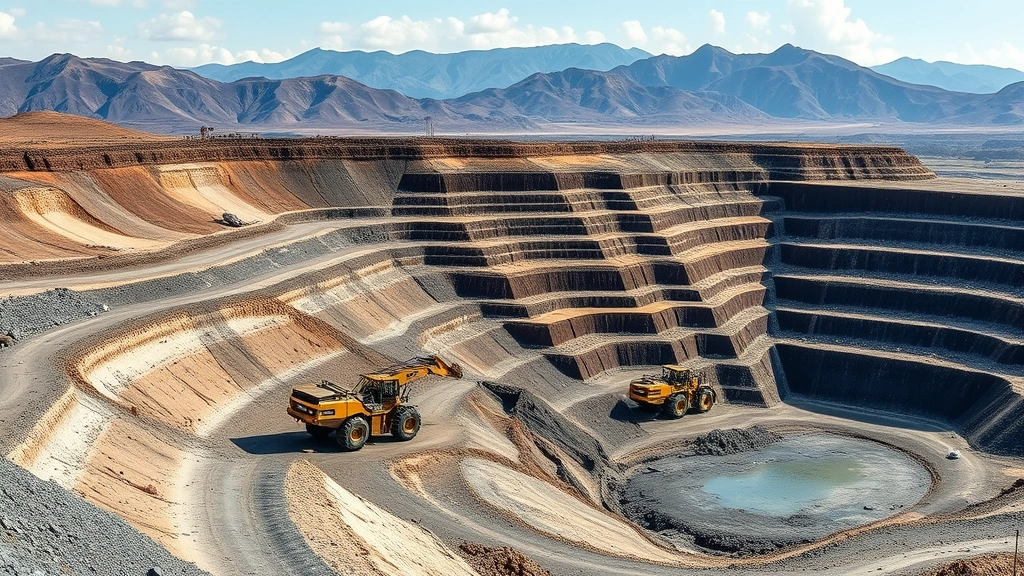
Economic expansion fundamentally depends on extracting resources from natural systems at rates exceeding regeneration capacity. This creates a throughput economy where materials flow from extraction, through manufacturing, to disposal in linear patterns incompatible with closed-loop ecological systems. The expansion of mining, logging, agriculture, and fisheries to feed growing consumer demand directly correlates with habitat loss, species extinction, and ecosystem service collapse.
Tropical deforestation illustrates this mechanism clearly. Between 2000 and 2020, approximately 400 million hectares of forest were converted to other land uses, primarily for cattle ranching and commodity agriculture. Each hectare destroyed represents not merely timber value but the elimination of carbon storage capacity, water cycle regulation, and biodiversity refuge. Yet economic accounting treats this conversion as positive growth when agricultural output increases, despite simultaneous loss of ecosystem capital orders of magnitude more valuable than the short-term production gains.
Understanding the definition of environment and environmental science becomes essential for recognizing what conventional economics overlooks. Ecosystems function as integrated networks where components provide mutually reinforcing services. When economic growth fragments these systems through resource extraction, the remaining ecosystem often collapses non-linearly, with cascading failures exceeding the direct impact of initial extraction.
Marine fisheries demonstrate this principle. Industrial fishing expansion—economically rational for individual operators and nations—has depleted 90% of large predatory fish stocks since 1950. The economic value captured during this expansion pales compared to the lost ecosystem functions: reduced carbon cycling, disrupted nutrient transport, and altered marine food webs. Yet GDP accounting records only the fish catch, not the ecosystem capital liquidated.
Sectoral Analysis: Where Growth Causes Greatest Harm
Different economic sectors generate vastly different ecological impacts per unit of growth. Energy production remains the largest driver of environmental damage, with fossil fuel extraction, refining, and combustion responsible for 73% of global greenhouse gas emissions. The economic growth generated by expanding energy production—particularly in developing nations expanding electricity access—simultaneously locks in carbon emissions trajectories incompatible with climate stability.
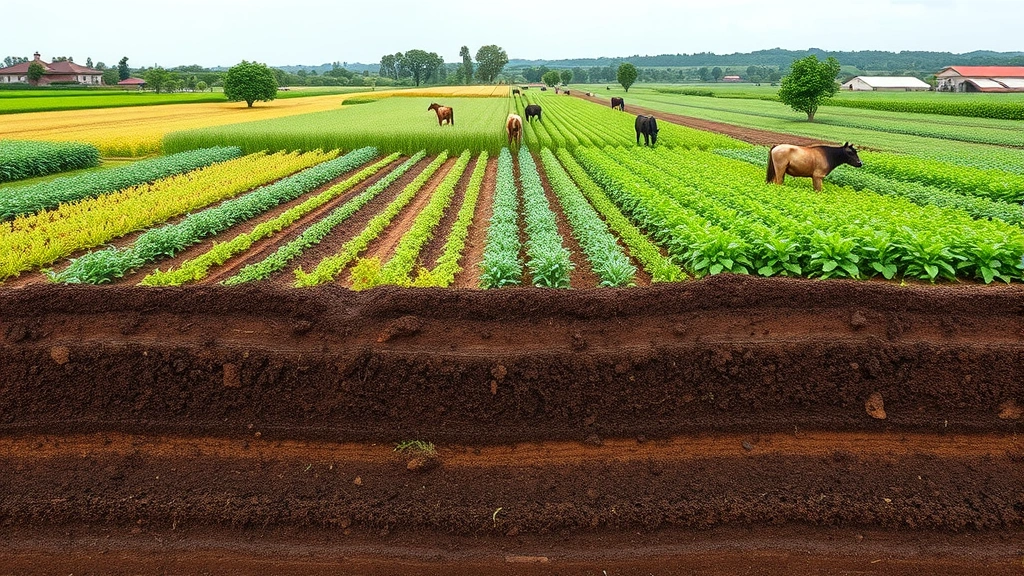
Agriculture and land use change constitute the second major impact vector, accounting for 24% of greenhouse gas emissions while consuming 70% of global freshwater and driving 80% of terrestrial biodiversity loss. Economic growth in agricultural sectors frequently depends on intensification strategies—synthetic fertilizers, pesticides, monoculture expansion—that degrade soil health, contaminate groundwater, and eliminate habitat heterogeneity essential for ecosystem resilience.
Manufacturing and consumption growth in wealthy nations generates outsourced environmental impacts in production regions. Textile manufacturing, electronics production, and resource-intensive goods involve toxic chemical releases, water pollution, and labor practices that concentrate environmental burdens on vulnerable populations in low-income nations. This spatial decoupling allows wealthy economies to claim environmental improvements while global impacts intensify.
The relationship between human environment interaction and sectoral growth reveals how economic expansion systematically exploits ecological vulnerabilities. Service sectors and digital economies generate lower direct environmental impacts per unit of value than extraction or manufacturing, yet they depend on material infrastructure—data centers, telecommunications networks, manufacturing supply chains—with substantial hidden ecological costs.
The Carbon Economy and Climate Cascades
Economic growth powered by fossil fuels creates the most consequential ecosystem harm through climate destabilization. The carbon economy—where growth depends on extracting and combusting fossilized carbon—generates atmospheric CO2 concentrations not seen for 3 million years. This relatively rapid atmospheric composition change exceeds ecosystem adaptation capacity, triggering cascading disruptions across all biomes.
Climate impacts cascade through ecosystems via multiple pathways simultaneously. Rising temperatures shift species ranges, disrupt breeding cycles, and alter precipitation patterns. Coral bleaching, forest die-back, permafrost thaw, and ocean acidification represent ecosystem responses to climate change driven by economic growth in carbon-intensive sectors. These responses then feedback into economic systems through agricultural productivity losses, infrastructure damage, and forced human migration.
Recent research demonstrates that climate tipping points—irreversible transitions in Earth systems—approach with continued carbon-intensive growth. The Atlantic Meridional Overturning Circulation weakens as freshwater from melting ice sheets disrupts ocean density gradients. Amazon rainforest approaches a savannization threshold where continued warming and deforestation eliminate the system’s capacity to generate rainfall. Arctic sea ice loss accelerates warming through albedo feedback. These tipping points exist independent of economic preferences; they represent physical thresholds that economic growth cannot overcome through market mechanisms.
Strategies to reduce carbon footprint at individual and sectoral levels provide necessary steps but prove insufficient without decoupling growth from carbon emissions at macroeconomic scale. Renewable energy expansion, electrification, and efficiency improvements represent essential transitions, yet economic growth in wealthy nations continues outpacing emissions reductions, requiring absolute reductions in material throughput rather than merely cleaner growth.
Measuring True Costs: Beyond GDP Metrics
The fundamental problem with assessing economic growth’s impact on ecosystems lies in measurement frameworks that ignore natural capital. Gross Domestic Product captures monetary transactions but excludes ecosystem service valuation, resource depletion accounting, and pollution externalities. A nation could simultaneously experience GDP growth and ecosystem collapse if resource extraction exceeded regeneration and pollution exceeded assimilation capacity.
Alternative accounting frameworks attempt to correct these measurement failures. Genuine Progress Indicator (GPI) adjusts GDP for environmental and social factors, frequently showing decline in wealthy nations despite rising GDP. Natural Capital Accounting integrates ecosystem asset valuation into national accounting systems, revealing that many nations experience declining true wealth despite economic growth. Ecosystem Service Valuation assigns monetary values to functions like pollination, water purification, and climate regulation, demonstrating their enormous value relative to extracted resources.
The United Nations Environment Programme and ecological economics research institutes increasingly emphasize that economic growth cannot continue indefinitely on a finite planet with finite regenerative capacity. Biophysical limits—the maximum sustainable harvest rates of renewable resources and maximum waste absorption capacity of ecosystems—represent hard constraints, not negotiable parameters.
Measuring ecosystem health requires integrating multiple indicators: biodiversity indices, nutrient cycling rates, water cycle integrity, soil health, carbon sequestration capacity, and pollinator abundance. Economic growth that improves one metric while degrading others represents net negative outcomes when ecosystem function depends on system integrity. Fragmented measurement approaches miss these systemic interactions, leading to false conclusions about growth sustainability.
Alternative Economic Models and Pathways Forward
Recognizing that conventional economic growth harms ecosystems has prompted development of alternative frameworks prioritizing ecological stability and human wellbeing over GDP expansion. Doughnut Economics proposes meeting human needs within planetary boundaries, creating an economic model that maximizes wellbeing while respecting ecological thresholds. Circular Economy frameworks aim to eliminate waste through closed-loop material flows mimicking natural systems. Steady-State Economics advocates stabilizing physical throughput while improving efficiency and distribution.
These alternative models share common features: recognizing natural capital as essential rather than supplementary, prioritizing sufficiency and distribution over perpetual expansion, and integrating ecological thresholds into economic decision-making. They require fundamental shifts in how societies measure progress, allocate resources, and structure production systems.
Policy pathways implementing these alternatives include carbon pricing mechanisms that internalize climate costs, natural capital accounting requirements for corporations and nations, regenerative agriculture subsidies replacing extractive agriculture support, and circular economy regulations requiring product design for durability and recyclability. Awareness about the environment among policymakers and consumers increasingly drives these transitions, though implementation remains limited relative to the scale of required change.
Research from ecological economics journals and environmental economics institutes demonstrates that decoupling growth from environmental impact at the scale and speed required by climate science and biodiversity targets remains theoretically possible but requires immediate, comprehensive policy transformation. Incremental efficiency improvements and technological substitution prove insufficient; systemic economic restructuring toward regenerative, circular, and distributive models becomes necessary for long-term ecosystem and human stability.
The evidence increasingly suggests that economic growth as conventionally measured—GDP expansion—and ecosystem health operate as conflicting objectives within current economic structures. Pursuing growth while expecting simultaneous ecosystem recovery represents a logical contradiction unsupported by empirical evidence. Instead, prosperous, stable societies require economic models that treat ecosystem integrity as foundational rather than incidental, measuring success through human wellbeing and ecological regeneration rather than monetary expansion.
Emerging research from Ecological Economics journals and interdisciplinary sustainability institutes demonstrates that the most prosperous societies will likely be those that transition earliest to post-growth or steady-state economic models. Nations investing in ecosystem regeneration, renewable energy infrastructure, and equitable distribution of finite resources position themselves for long-term stability while continuing to pursue genuine progress in human health, education, and wellbeing.
The transition away from growth-dependent economics faces substantial obstacles: entrenched interests in extractive industries, cultural narratives equating consumption with success, and political systems captured by growth-dependent corporations. Yet the alternative—continuing expansion until ecological collapse forces involuntary contraction—guarantees far greater disruption and suffering. Proactive economic transformation toward regenerative models represents the only pathway to reconciling human prosperity with ecosystem health.
FAQ
Does all economic growth harm ecosystems?
Not all growth harms ecosystems equally. Service-based and digital economies generate lower direct environmental impacts than extraction or manufacturing. However, research suggests absolute decoupling at global scale remains unachieved; wealthy nations’ apparent emissions reductions frequently reflect outsourced production rather than genuine impact reduction. Growth in renewable energy, regenerative agriculture, and ecosystem restoration can improve environmental conditions, though current growth remains predominantly extractive and degradative.
Can technology solve the growth-ecosystem conflict?
Technological improvements increase efficiency and enable cleaner production, yet they fail to decouple growth from environmental impact at required scales. This occurs because efficiency gains often enable increased consumption (rebound effects), technology deployment requires material inputs and energy, and biophysical limits remain fixed regardless of technological advancement. Technology remains necessary but insufficient without fundamental economic restructuring.
What does the evidence show about GDP growth and biodiversity loss?
Empirical evidence demonstrates strong positive correlation between GDP growth and biodiversity loss across most regions and time periods. Nations expanding economically consistently experience habitat loss, species extinction, and ecosystem degradation. No nation has achieved substantial GDP growth while simultaneously increasing biodiversity, suggesting these objectives conflict under current economic structures.
How quickly must economic systems transition away from growth?
Climate science and biodiversity research indicate that carbon emissions must decline 50% by 2030 and reach zero by 2050, while biodiversity loss must reverse immediately. Wealthy nations must achieve this faster—net-zero by 2040 or earlier—to allow developing nations equitable development space. This timeline requires immediate economic restructuring; incremental transitions prove too slow to prevent catastrophic ecological disruption.
What would post-growth economies look like?
Post-growth or steady-state economies would stabilize physical throughput (material and energy flows) while improving efficiency and distribution. They would prioritize human wellbeing, ecosystem health, and equitable access to resources over GDP expansion. Work would likely involve greater focus on care, maintenance, and regeneration rather than extraction and expansion. Leisure would expand as material production stabilizes, potentially improving quality of life despite lower consumption.


